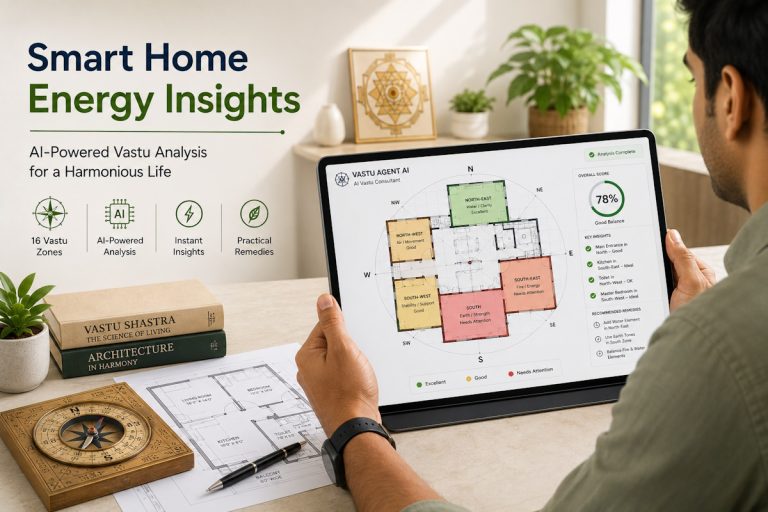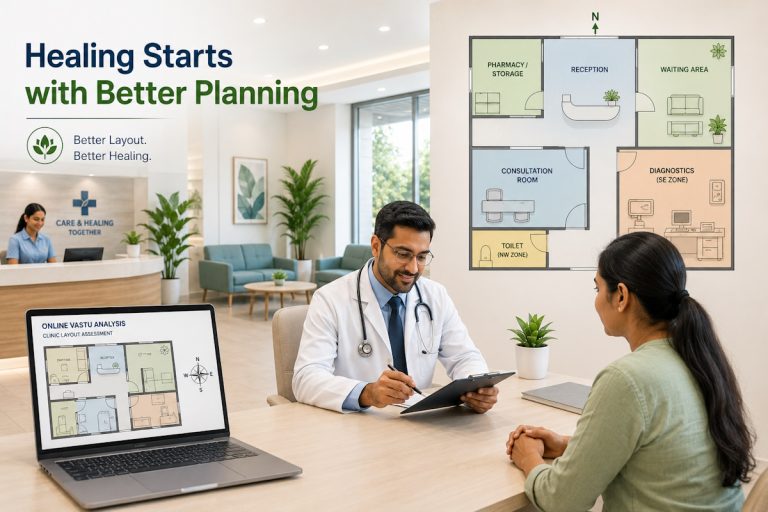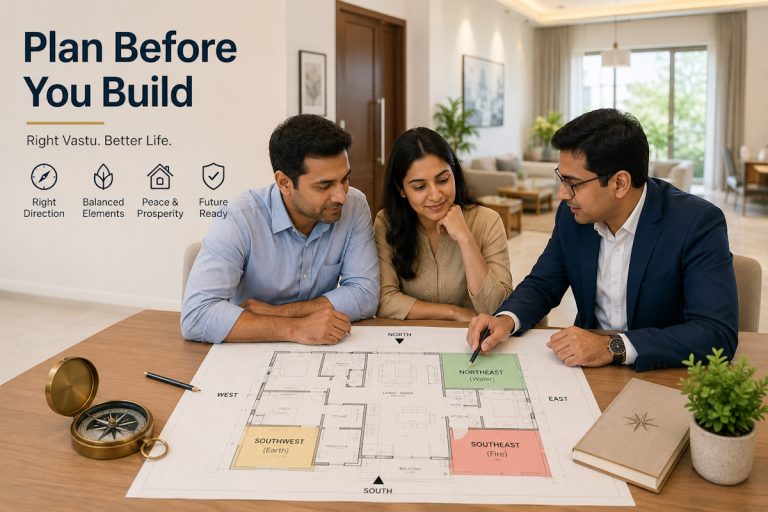
In the competitive world of modern business, the physical environment of an office acts as more than just a place of work. It is a living, breathing container for the collective energy of your team. Many business leaders focus on culture, benefits, and management styles, yet they often overlook the silent influence of spatial energy. The science of Office Vastu provides a sophisticated framework for understanding how the layout of your workspace affects decision making, employee retention, and overall productivity. When an office is aligned with natural laws, the friction within teams often dissipates, replaced by a sense of purpose and clarity that drives measurable growth.
The layout of your office is not merely about aesthetics or ergonomics, it is about creating a resonant frequency that supports human potential. When we analyze a workplace through the lens of Vastu Shastra, we look for imbalances in the five elements: water, air, fire, earth, and space. For a growing company, these elements must be calibrated to foster innovation and stability simultaneously. Whether you are operating from a startup hub or a corporate headquarters, applying targeted Office Vastu principles can serve as a catalyst for professional excellence and team harmony.
Understanding the Energy of Ambition and Stability
Every commercial space is divided into zones that govern different aspects of business operations. In Office Vastu, the direction of an office entrance and the placement of core departments determine the flow of opportunities. A business that struggles with stagnant growth often has an imbalance in the North or East zones, while a business that experiences high turnover or internal conflict may have issues in the South-West or South-East zones. Understanding these nuances allows a business owner to make strategic changes that align the physical space with their corporate goals.
The North Zone and Career Opportunities
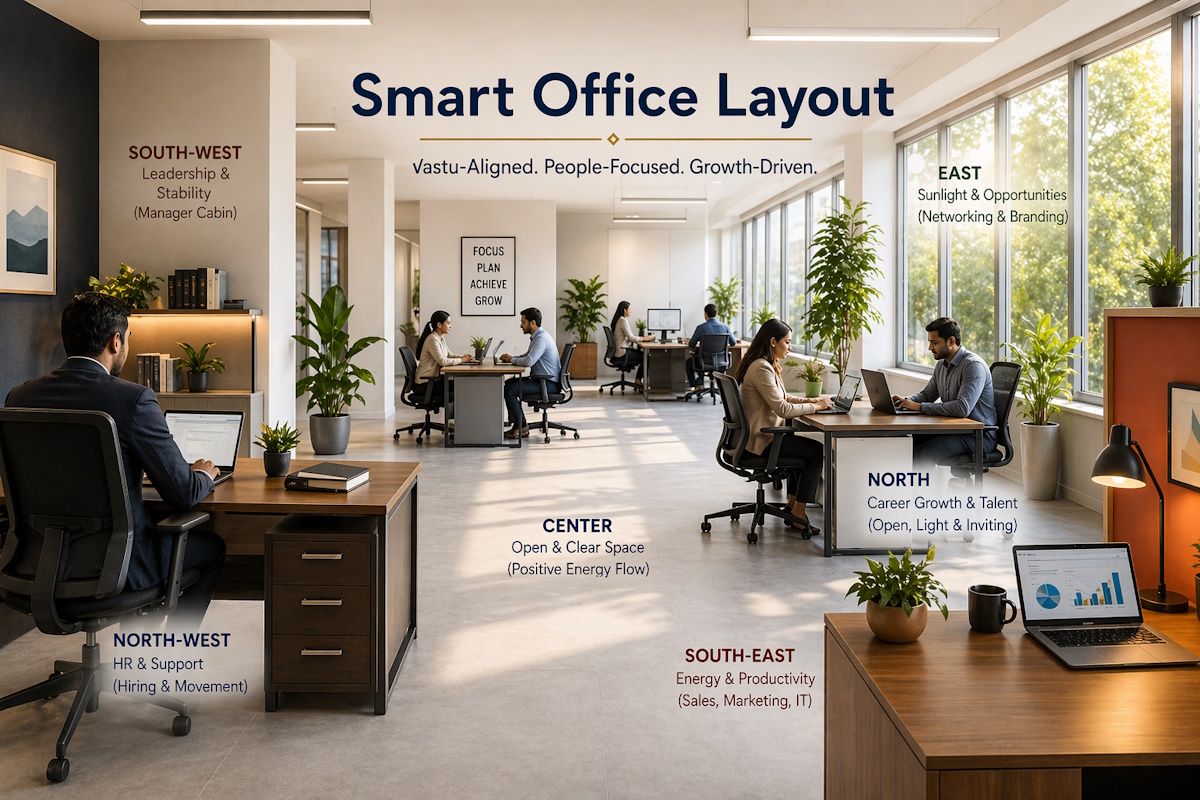
The North is governed by the element of water and is associated with new opportunities and financial growth. In an Office Vastu context, this zone must be kept open, clean, and free of heavy storage. If this area is blocked or cluttered, the business may find it difficult to attract new clients or high quality talent. Placing blue or green accents here can help stimulate the energy of growth, ensuring that the company remains a magnet for success.
Water Elements in the North
Introducing a small, clean water feature or even imagery of calm water in the North can enhance the flow of ideas. This is particularly beneficial for sales and marketing teams who rely on a constant influx of new leads and connections. However, the water must be moving and fresh, as stagnant water can represent stalled progress in professional ventures.
The East Zone for Networking and Social Connectivity
The East is ruled by the sun and represents social connectivity and brand presence. For a team to grow, the company must be well-regarded in its industry. A strong East zone ensures that your team feels connected to the outside world and that your brand’s reputation remains untarnished. Large windows or bright lighting in this area can significantly boost the morale and enthusiasm of the workforce.
The Power Seat: Seating Hacks for Leadership and Decision Making
In any organization, the leadership team acts as the anchor. The physical placement of the CEO, founders, or senior managers dictates the stability of the entire office. According to Office Vastu, the South-West direction is the zone of the earth element, representing strength, authority, and stability. This is the ideal location for the heads of the company.
The South-West for Senior Management
When leadership sits in the South-West, they are better positioned to make grounded decisions. This zone provides the “weight” necessary to manage complex team dynamics and financial pressures. The desk should ideally be placed so the occupant faces North or East while working. This combination of a stable back (South-West) and a growth-oriented view (North/East) is a powerful configuration for long term success.
Avoiding Vulnerability in Leadership Placements
Sitting in the North-East or the center of the office can make a leader feel overwhelmed or distracted. The North-East is too sensitive and high-energy for the heavy demands of management, while the center (Brahmasthan) should remain open to allow energy to circulate. By grounding leadership in the South-West, the business gains a foundation that can weather market volatility.
The West for Gains and Expansion
The West zone is associated with profits and the realization of goals. This is an excellent area for senior managers who are focused on execution and bottom-line results. If a team is consistently hitting targets but failing to see actual profit growth, a correction in the West zone of the office layout might be required. Keeping this area organized and well-lit encourages a culture of accountability and achievement.
Attracting Talent: Vastu for Hiring Success and HR
Hiring is one of the most critical aspects of team growth. If a company consistently attracts the wrong candidates or struggles to close top tier talent, the spatial energy of the HR department or interview rooms might be the cause. Office Vastu identifies the North-West and the North as key areas for recruitment activities.
The North-West for Support and Movement
The North-West is governed by the air element and is the zone of “support and helpful people.” This is the most logical place for the Human Resources department. When HR is located here, the company finds it easier to get support from external recruiters, legal advisors, and high quality job seekers. It facilitates smooth communication and ensures that the hiring process moves quickly without unnecessary bureaucratic delays.
Creating a Welcoming Interview Space
The area where candidates are interviewed should be vibrant and energetic. Avoid placing interview rooms in the South-West, as this can make the candidate feel intimidated or make the company appear too rigid. Instead, use the North or East zones for talent interactions to project an image of a forward-thinking and welcoming organization.
The North for Talent Acquisition
As the zone of career opportunities, the North must be activated to attract talent. If your company is scaling rapidly, ensure the North of your office is not used for heavy machinery, toilets, or waste storage. A clean, bright North zone sends a signal to the universe that the company has “space” for new people and new ideas.
Boosting Productivity Through Elemental Balance
Team productivity is often a reflection of the Fire and Air elements within a workspace. Fire represents the drive to finish tasks, while Air represents the flow of communication and innovation. When these elements are out of balance, teams either burn out or become stagnant and uninspired.
The South-East for Energy and Execution
The South-East is the “Agneya” or Fire zone. In a modern office, this is the best place for high energy departments like Sales, Marketing, or IT server rooms. The fire element provides the “spark” needed to meet deadlines and close deals. If your team seems lethargic or lacks motivation, check for water leaks or blue colors in the South-East, as these can “drown” the productive fire of the office.
Color Psychology in the Fire Zone
Using subtle shades of red, orange, or warm wood tones in the South-East can help stimulate productivity. However, balance is key. Too much bright red can lead to irritability and arguments among team members. A professional Office Vastu assessment can help find the perfect equilibrium for your specific team size and industry.
The North-East for Mental Clarity and Innovation
The North-East is the zone of “Ishanya” or the Water/Space element. This is the most sacred and sensitive part of the office. It should be used for creative brainstorming, meditation, or quiet research. If this area is cluttered or holds a heavy pantry, the team may suffer from “brain fog,” making it difficult to innovate or solve complex problems. Keeping this area light and airy allows for the high-frequency energy needed for breakthroughs.
Practical Layout Hacks for Modern Open-Plan Offices
Modern offices often utilize open-plan layouts which can present unique Office Vastu challenges. Without walls, energy flows more freely but can also become chaotic. Using subtle hacks can help define zones and maintain the productivity of the team without sacrificing the collaborative feel of a modern workspace.
Using Cabinets and Plants as Energetic Dividers
In an open office, you can use low cabinets or indoor plants to create “virtual walls” that separate functional zones. For example, placing heavy storage units in the South or West can help anchor those directions even in an open room. Tall, healthy plants in the North or East can enhance the growth energy of those sectors while providing a natural screen for privacy.
The Impact of Desk Orientation
Regardless of the overall office shape, the individual desk orientation is vital. Employees should avoid sitting with their backs to a door or a large window, as this creates a sense of vulnerability and reduces focus. Ideally, everyone should have a solid wall behind them. If this is not possible, using high-backed chairs can provide a psychological and energetic sense of support.
Addressing the Center of the Office
The center of the office, known as the Brahmasthan, should ideally be left clear of heavy furniture or pillars. In many modern buildings, pillars are unavoidable. If a pillar exists in the center, it can be neutralized by placing mirrors on its sides or by surrounding it with greenery to soften its impact on the office energy flow.
FAQs
1. Can Vastu really improve my hiring process?
Yes. By activating the North and North-West zones, you align your office to attract helpful people and new opportunities. This reduces friction in the recruitment cycle and helps in identifying candidates who are a better cultural and energetic fit for your team.
2. What if my office is rented and I cannot change the layout?
Vastu Consult specializes in non-invasive remedies. Most Office Vastu issues can be corrected using color therapy, strategic placement of objects, elemental balancers, and changing the orientation of desks without any structural demolition.
3. Where should the pantry or coffee station be located?
The pantry involves the fire element, so the South-East is the most appropriate location. Avoid placing the pantry in the North or North-East, as the fire element there can clash with the water/clarity energy, leading to confusion and financial stress.
4. Does the shape of the office building matter?
Ideally, an office should be rectangular or square. Irregularly shaped buildings can have “missing corners” or extensions that create imbalances in specific life areas. However, these can often be corrected energetically using specific Vastu tools and layout adjustments.
5. What is the most important direction for a startup?
For a startup, the North (for opportunities) and the East (for brand building) are critical. However, the South-West is equally important to ensure the company doesn’t burn through its funding too quickly. A balanced approach across all zones is the best strategy for sustainable growth.