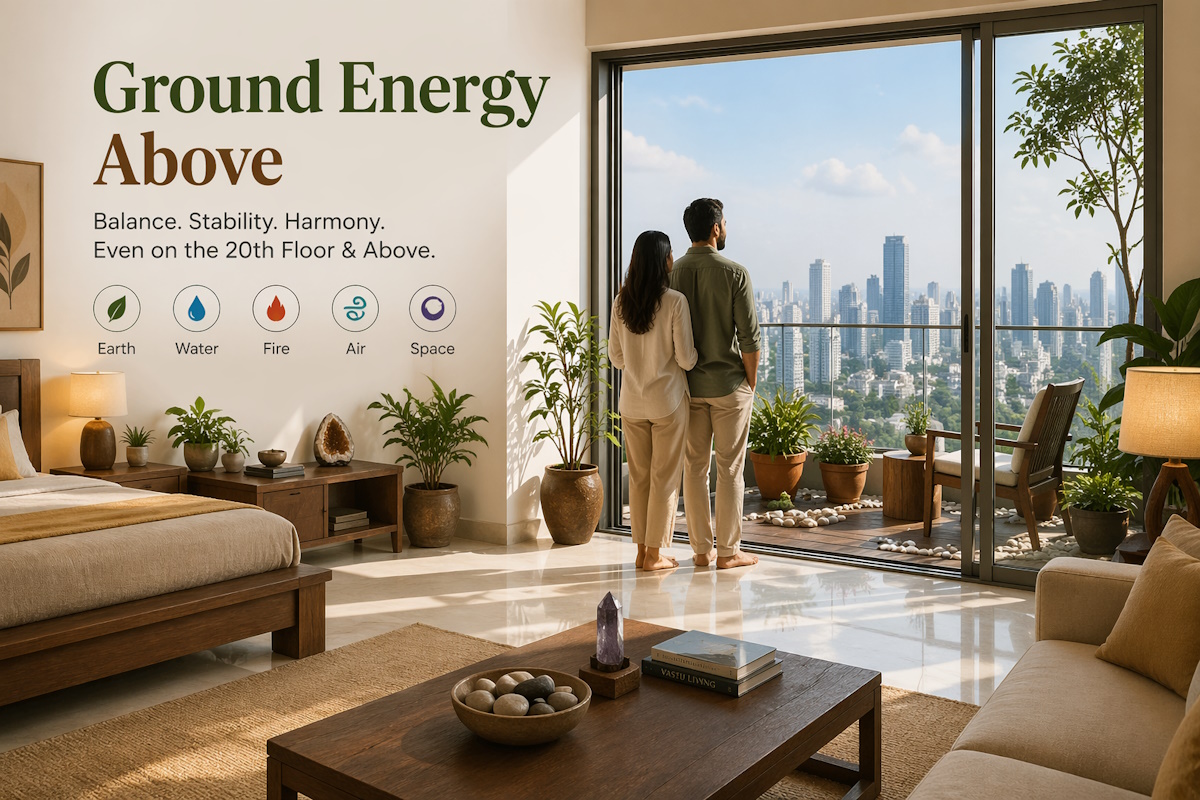
Modern urban living has shifted the landscape of residential architecture, moving from grounded independent homes to soaring high-rise complexes. While these vertical structures offer breathtaking views and a sense of luxury, they present a unique challenge in the realm of Apartment Vastu. Traditional Vastu Shastra was conceptualized for structures built directly on the soil, where the magnetic and telluric energies of the Earth are strongest. When you reside on the 20th floor or above, the connection to the Earth element, or Prithvi Tattva, becomes significantly diluted, leading to a dominance of the Air and Space elements.
This lack of grounding often manifests in the lives of occupants as a sense of restlessness, inconsistent financial growth, or a feeling of being unsettled. As a resident or prospective buyer of a high-rise flat, understanding how to recalibrate these energies is essential. The goal is not to fear the height, but to use sophisticated Apartment Vastu principles to bring the stability of the ground into the sky. By focusing on specific directional alignments and elemental balances, you can transform a high-altitude apartment into a sanctuary of balanced energy and productivity.
The Science of Grounding in Vertical Living
In traditional Vastu, the foundation of a building acts as a conduit for the Earth’s magnetic field. As we move higher into the atmosphere, the intensity of this grounding force diminishes. In an Apartment Vastu context, the 20th floor is a threshold where the influence of the “Vayu” (Air) and “Akash” (Space) elements becomes much more pronounced than the “Prithvi” (Earth) and “Jal” (Water) elements. This imbalance can lead to scattered thoughts, anxiety, and a lack of physical vitality if not addressed through conscious spatial planning.
The Importance of the Earth Element
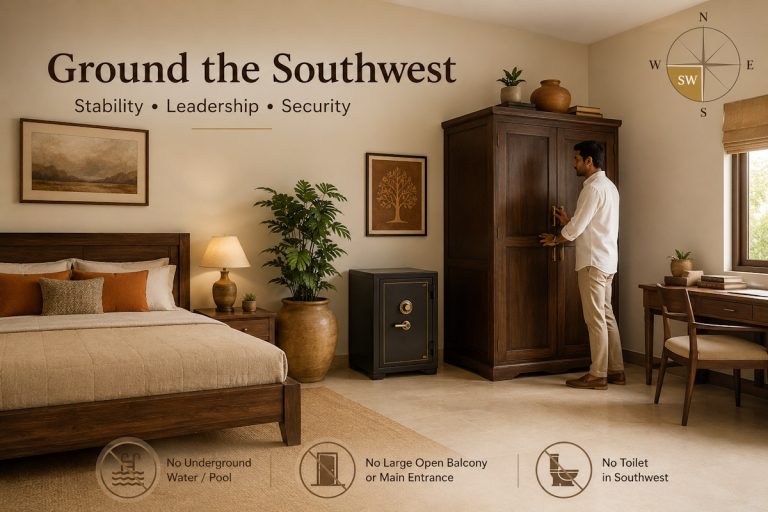
The Earth element provides the stability needed for financial security and emotional health. In high-rise Apartment Vastu, we compensate for the physical distance from the ground by introducing “Earth-heavy” materials and colors. Using heavier furniture in the South and West zones, or incorporating stones like yellow marble or granite, helps simulate the weight and stability that the ground naturally provides. When the Earth element is strong, the occupants feel more centered and capable of making sound decisions.
Managing the Dominance of Air and Space
At high altitudes, wind speeds and light intensity are generally higher than at the ground level. While light is a source of Prana, excessive or harsh light from the wrong direction can disrupt the nervous system. Apartment Vastu for high-floors involves managing these “thin” energies. Thick curtains, specific glass coatings, and strategic placement of indoor plants can help soften the impact of high-velocity air and intense solar radiation, creating a more nurturing indoor climate.
The Main Entrance and the Flow of Prana
In a high-rise, the “entrance” to your home is often a complex discussion. Is it the main gate of the building, the lift lobby, or the door to your specific flat? For the purpose of Apartment Vastu, the door to your individual unit is the primary gateway for energy. This is where the external Prana is filtered into your private living space. On higher floors, the energy in the corridors can often be stagnant or move too quickly depending on the building’s layout.
Directional Priority for High-Rise Doors
Ideally, an apartment entrance should be in the North, North-East, or East sectors to invite growth and clarity. However, in many modern complexes, you may find yourself with a South or West-facing door. In high-altitude Apartment Vastu, these directions require specific color therapies and metal strips to “gate” the energy correctly. A South-facing door on the 30th floor feels very different from one on the ground floor because the “Fire” element of the South is intensified by the proximity to the sun and the lack of ground-level shadows.
Enhancing the Threshold
The threshold is a critical point of transition. For high-rise flats, we recommend keeping the entrance area exceptionally well-lit and clutter-free. Since you are high above the ground, the “entry” of energy needs to be clearly defined to avoid a sense of spatial disorientation. Using a solid wooden door rather than a thin composite one can also help in providing a sense of “heaviness” and security that grounds the entry point.
Balancing the Five Elements in the Sky
The Panchabhuta, or five elements, must be in harmony for a home to prosper. In Apartment Vastu, the challenge is that the structural shell is often fixed, leaving the occupant with internal modifications as the only remedy. When you are on the 20th floor, the “Space” element is naturally high. To balance this, we must carefully curate the other four elements within the 16 Vastu zones of the flat.
The Water Element in the North
Water represents flow, opportunities, and health. In high-rise apartments, the North and North-East zones should be kept light and open. Since you cannot have a ground-level water tank, using blue accents, mirrors, or small indoor fountains can activate this zone. This prevents the “dryness” that often comes with high-altitude living, ensuring that career opportunities continue to flow into the household.
The Fire Element in the South-East
Fire is the energy of transformation and cash flow. In the sky, the sun’s heat is more direct. The South-East corner of your apartment should house the kitchen or red-toned decor to stabilize this energy. In Apartment Vastu, if the kitchen is misplaced in the North or North-East, it can lead to high stress and financial “burnout,” especially when combined with the high-energy environment of a skyscraper.
The Role of Balconies and Windows
In high-rise flats, balconies and large windows are the primary sources of light and air. From an Apartment Vastu perspective, they act as secondary “mouths” of the house. On the 20th floor, a balcony is not just a deck; it is a major energy portal. The direction in which your balcony opens can significantly alter the Vastu quality of the entire flat.
Balconies as Energy Lungs
A balcony in the North or East is a blessing, as it allows the morning sun and positive magnetic energy to flood the home. However, large balconies in the South or West can be problematic on high floors, as they allow excessive heat and “outgoing” energy to dominate. In such cases, Apartment Vastu suggests using heavy planters, darker blinds, or even specific glass tints to dampen the intensity. This helps in “retaining” the energy within the home rather than letting it escape into the vast open space outside.
Grounding Your Outdoor Space
To bring the Earth element to your balcony, use terracotta pots, stone pebbles, or heavy wooden outdoor furniture. This creates a “mini-ground” environment. Growing herbs or hardy plants also helps in anchoring the Vayu (Air) element. For residents who feel disconnected or ungrounded, spending time in a Vastu-optimized balcony can be highly therapeutic.
Room-Specific Alignment for Stability
The internal arrangement of a flat is where the most effective Apartment Vastu corrections take place. Since the outer walls and columns cannot be moved, we focus on the placement of furniture and the usage of zones to create stability.
The Master Bedroom: The Anchor
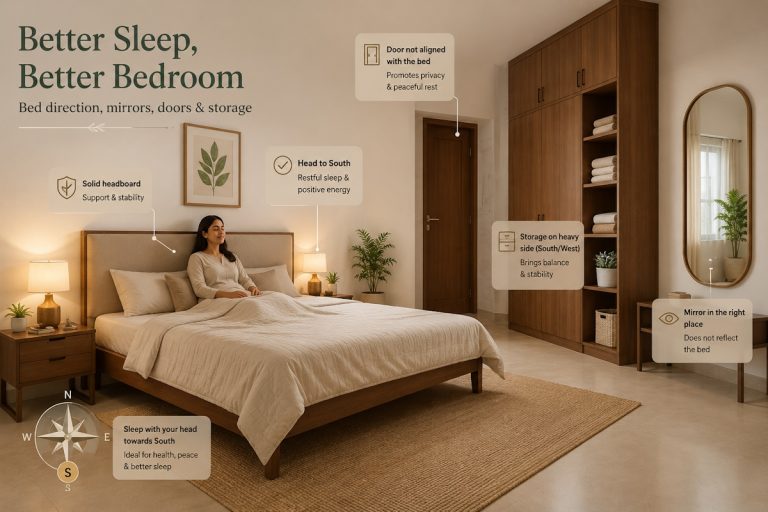
The South-West corner is the zone of the Earth element and is the most important area for grounding. The master bedroom should ideally be located here. To enhance the grounding effect on the 20th floor, use a solid wood bed without storage underneath to allow for clean energy circulation. Choosing earthy tones like beige, sand, or light yellow for the walls can further reinforce the feeling of being “on the ground.”
The Living Room: Social Prana
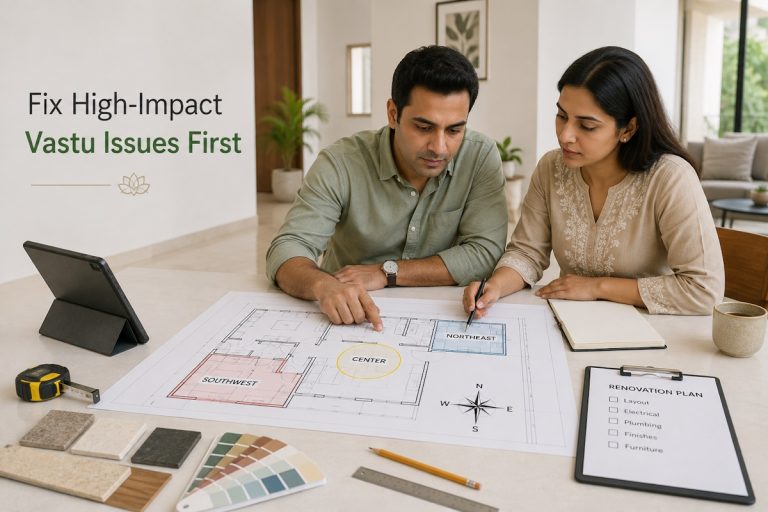
The living room is where the family’s social energy resides. In an apartment, this area is often central. It is crucial to keep the center of the flat, the Brahmasthan, as open as possible. In high-rise buildings, structural pillars often fall near the center. While you cannot remove them, you can use Apartment Vastu remedies like light colors or mirrors to “lighten” their energetic weight. This ensures that the heart of the home remains vibrant and free of blockages.
Practical Non-Invasive Remedies for High-Floor Flats
One of the biggest myths in Apartment Vastu is that you need to break walls to fix doshas. In modern high-rises, this is neither practical nor permitted. Instead, we use “Elemental Correction” techniques. This involves using specific metals (like brass, copper, or lead), colors, and geometric shapes to balance the energy of a zone.
Using Color as a Vibrational Tool
Color is one of the most potent tools in Apartment Vastu. Since colors are essentially light at different frequencies, they can be used to “add” an element that is missing. For instance, if your high-rise flat lacks the Earth element because it is mostly glass and steel, adding yellow and ochre tones in the South-West can work wonders. Conversely, adding light greens in the East can help tap into the “Growth” energy of the Air element without letting it become chaotic.
Crystals and Botanical Grounding
Crystals like Black Tourmaline or Smoky Quartz are known for their grounding properties. Placing these in the four corners of a high-rise apartment can help create a “grid” that mimics the Earth’s stability. Similarly, large-leafed plants like the Fiddle Leaf Fig or Rubber Plant bring a physical presence of nature that is often missing 200 feet above the ground. These simple additions make a significant difference in how the Apartment Vastu feels on a daily basis.
Choosing the Right Property with Vastu Consult
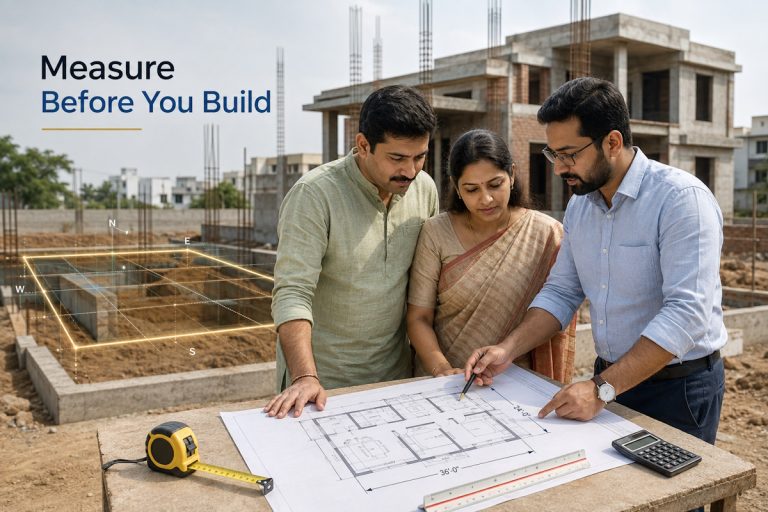
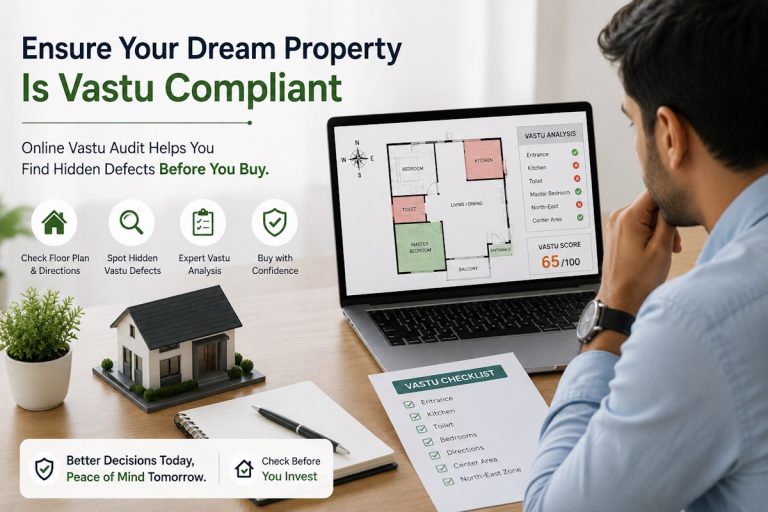
When you are looking at properties on the 20th floor and above, the decision-making process should be driven by more than just the view. A flat with a stunning vista might have a major Vastu imbalance that leads to stress or health issues over time. By evaluating the Apartment Vastu of a high-rise unit before you sign the lease or purchase agreement, you are investing in your future peace of mind. At Vastu Consult, we combine traditional wisdom with modern spatial analysis to help you find a home that supports your ambitions and provides a stable foundation, no matter how high you live.
Evaluating the Building’s Overall Energy
An individual flat does not exist in a vacuum. The Vastu of the entire building, the slope of the land it sits on, and the placement of water bodies around the complex all influence your apartment’s energy. A professional analysis looks at these macro-factors alongside the micro-factors of your specific floor plan. This holistic approach is what sets expert Apartment Vastu guidance apart from generic tips found online.
FAQs
1. Does Vastu really matter on higher floors?
Yes, Apartment Vastu is arguably more important on higher floors. As you lose the natural grounding of the Earth, the elemental balance becomes more fragile. Correcting the Vastu ensures you don’t feel “lost in the air” and helps maintain financial and emotional stability.
2. Which floor is best according to Vastu for an apartment?
While lower floors (1st to 4th) are naturally more grounded, any floor can be made Vastu-compliant. On floors 20 and above, the focus simply shifts toward “Earth-heavy” remedies and managing the increased Air and Space elements.
3. How do I ground the energy in my 25th-floor flat?
You can ground the energy by using heavier furniture in the South and West, incorporating Earth-toned colors like yellow and brown, and using stones or crystals. Keeping the South-West corner heavy and the North-East corner light is a fundamental rule of Apartment Vastu.
4. Is a North-facing balcony good for a high-rise?
Generally, yes. A North-facing balcony allows positive, cooling energy and light to enter the home. However, it must be balanced by ensuring the South and West sides of the apartment are solid and “closed” enough to prevent the energy from simply flowing through and out.
5. Can AI help in analyzing my apartment’s Vastu?
Absolutely. Modern AI tools can analyze floor plans against thousands of Vastu parameters, providing a data-driven look at energy flows. This is particularly useful for complex modern apartments where directions and zones are often skewed.