Category: 16 Zone Vastu

  • Rental Homes: Can 16 Zone Vastu Still Be Applied?

    Rental Homes: Can 16 Zone Vastu Still Be Applied?

    If you live in a rental home, you already know the limits. You can’t knock down walls. You can’t shift toilets. You can’t rotate the kitchen. Most owners don’t even allow drilling a nail. So the question comes up sooner or later. Can 16 Zone Vastu actually work in a rental home, or is it only for people building their own house?

    Short answer. Yes, it can work. Long answer. It works differently, and you need to be realistic about what you expect from it.

    This article is for tenants, investors holding rental units, realtors dealing with apartments, and anyone stuck in a layout they didn’t design. You’ll get clear guidance on what is possible, what is pointless, and where people usually waste effort.

    What 16 Zone Vastu Really Means in Daily Life

    16 Zone Vastu divides a home into sixteen directional zones, not just the common eight. Each zone is linked to specific life areas like income flow, stability, health, focus, relationships, and mental peace.

    In theory, it sounds strict. In real homes, especially rentals, it’s more flexible than people assume.

    The zones don’t demand reconstruction. They respond to usage, weight, cleanliness, light, movement, and intention. That’s why renters still get results when they stop treating Vastu like a construction-only system.

    You don’t need perfection. You need awareness.

    The First Reality Check for Rental Homes

    Before touching any zone, you need to accept three truths.

    One. You can’t correct structural Vastu defects fully in a rental. That’s fine.

    Two. Most rental homes already have mixed Vastu conditions. No house is all wrong.

    Three. Small corrections repeated daily matter more than dramatic fixes you can’t maintain.

    If someone tells you 16 Zone Vastu is useless unless you own the home, they don’t understand how people actually live.

    How to Identify the 16 Zones in a Rental Apartment

    This part scares people, but it shouldn’t.

    You don’t need a complicated compass ritual. Use a reliable compass app or a physical compass. Stand in the center of the home, not the living room corner, not near metal objects.

    Once directions are clear, divide the home into sixteen equal slices. Yes, some zones may fall partially inside walls, balconies, or toilets. That’s normal in apartments.

    The mistake renters make is ignoring zones that fall in awkward places. Even partial zones influence outcomes.

    Mark the zones lightly on a printed floor plan or even mentally. That’s enough.

    Zones Renters Can Actively Improve Without Structural Changes

    Let’s talk about what you can actually control.

    North and North-North-East Zones

    These zones affect income flow, opportunities, and clarity in decisions.

    In rental homes, these areas often become storage corners or junk spots. That’s the worst use.

    Keep these zones light. Fewer heavy items. Avoid stacking unused boxes. Let air and light move.

    If the landlord allows, use lighter wall shades. If not, work with lighting. Even a clean white bulb helps.

    People often report smoother work communication after fixing just this zone. Not miracles. Just fewer blocks.

    East and East-North-East Zones

    This zone relates to mental peace, sleep quality, and how settled you feel in the house.

    In rentals, this area often holds shoe racks or random furniture. Try shifting shoes away from this zone if possible.

    Avoid clutter here. Avoid dark curtains. Morning light matters.

    If the zone includes part of a bathroom, keep it extra clean and dry. Small habits matter more here than objects.

    South-East and East-South-East Zones

    This is the fire zone. It affects digestion, arguments, and emotional reactions.

    You can’t shift the kitchen in a rental. But you can control behavior and placement inside it.

    Use the stove regularly. Don’t let it sit unused. Keep the burners clean. Avoid placing water-heavy items directly next to the stove if space allows.

    If this zone is a bedroom, avoid red or aggressive colors. Keep electronics limited.

    Many tenants complain about constant irritation without knowing why. This zone is often the reason.

    South and South-South-West Zones

    These zones relate to strength, stability, and how supported you feel.

    In rental apartments, this area often feels heavy already. That’s not always bad.

    Use heavier furniture here if you have options. Beds, wardrobes, sofas fit better in these zones.

    Avoid mirrors facing beds in these areas. It unsettles sleep.

    If this zone includes a toilet, focus on maintenance. Leaks here affect mental pressure over time.

    West and West-North-West Zones

    This area connects to movement, guests, travel, and restlessness.

    In rentals, this zone often becomes the guest bedroom or TV area. That’s fine.

    Avoid overloading it with storage. Keep movement easy.

    If your sleep feels disturbed or plans keep changing, check if this zone is blocked or cluttered.

    Light furniture and flexibility suit this zone better.

    North-West and North-North-West Zones

    This zone affects networking, support from others, and emotional balance.

    Renters often ignore this area completely. They shouldn’t.

    If this zone is a bedroom, avoid heavy headboards. If it’s a living area, avoid unused furniture.

    Good ventilation here reduces emotional heaviness. Open windows regularly if possible.

    Zones Where Renters Should Be Extra Careful

    Not all zones are equal in a rental.

    Brahmasthan or Center of the Home

    You can’t rebuild it. But you can keep it open.

    Avoid heavy furniture at the exact center. Avoid clutter. Avoid dust accumulation.

    Even small apartments have a center point. Respect it.

    People who clear this area often notice a subtle mental shift. Less stuck feeling.

    Toilets in Sensitive Zones

    If a toilet falls in North-East, East, or center zones, don’t panic.

    You can’t move it. What you can do is manage hygiene, dryness, and usage.

    Keep doors closed. Fix leaks immediately. Use exhaust fans.

    Avoid placing trash bins inside sensitive zone toilets if possible.

    These steps won’t erase the defect, but they soften the impact.

    What Not to Do in Rental Homes

    This matters.

    Don’t drill walls for heavy remedies unless the owner allows it.

    Don’t use aggressive Vastu products that create fear.

    Don’t obsess over minor deviations you can’t change.

    Don’t chase perfect alignment. Rental living is about balance, not control.

    Many people quit Vastu because they try to force it in rentals. That’s the wrong approach.

    Furniture Placement Is the Renter’s Biggest Tool

    You might not own the walls, but you own how you live inside them.

    Beds, desks, dining tables, and sofas influence zones more than people think.

    Sleeping with your head supported by the South or West wall helps stability.

    Working desks placed facing North or East support focus and flow.

    Avoid blocking doors with furniture. Energy needs movement.

    You don’t need new furniture. You need smarter placement.

    Colors and Lighting as Silent Corrections

    Paint may not be allowed. Lighting usually is.

    Warm light in South and West zones. Neutral or cooler light in North and East zones.

    Avoid overly dim spaces. Darkness creates stagnation.

    Use table lamps if ceiling changes aren’t allowed.

    Curtains matter. Heavy curtains in wrong zones create weight where it’s not needed.

    Does 16 Zone Vastu Work for Short-Term Rentals?

    Yes, but with adjusted expectations.

    If you’re in a place for six months or less, focus on sleep zones, kitchen zone, and center.

    Don’t overcorrect.

    If you’re staying longer than a year, deeper alignment makes sense.

    Vastu responds to routine. The longer you stay, the more noticeable the effects.

    What About Fully Furnished Rentals?

    Fully furnished rentals come with fixed furniture layouts. Still workable.

    You may not move big items, but you can adjust how you use spaces.

    Change usage instead of furniture. A reading corner becomes storage. A cluttered desk becomes clear.

    Usage defines zones as much as walls do.

    Common Myths Renters Believe

    One myth is that renters shouldn’t bother with Vastu at all. False.

    Another myth is that remedies must be visible. Also false.

    The most powerful changes are behavioral. Cleanliness, order, light, and consistency.

    People who quietly follow these see better results than those chasing remedies.

    When 16 Zone Vastu Might Not Be Enough

    Be honest with yourself.

    If a rental has multiple toilets in sensitive zones, blocked light, and no ventilation, Vastu can only soften the experience.

    It won’t turn a stressful layout into a dream home.

    In such cases, awareness helps you plan your next move better.

    Sometimes the real value of Vastu is knowing when not to settle long-term.

    Investors and Realtors Take Note

    If you manage rental properties, understanding 16 Zone Vastu helps with tenant retention.

    Small adjustments before renting out make a difference.

    Clearing the center, improving light, fixing leaks, and mindful furniture placement improve how tenants feel.

    People may not say it’s because of Vastu. They’ll just say the place feels better.

    That’s enough.

    Final Thoughts You Can Actually Use

    You don’t need ownership to benefit from 16 Zone Vastu.

    You need observation.

    You need consistency.

    You need patience.

    Rental homes respond to subtle care. They don’t demand perfection.

    If you’re living somewhere right now, start with one zone. Clean it. Light it. Use it better.

    Watch how life inside the house responds.

    Then decide your next step.

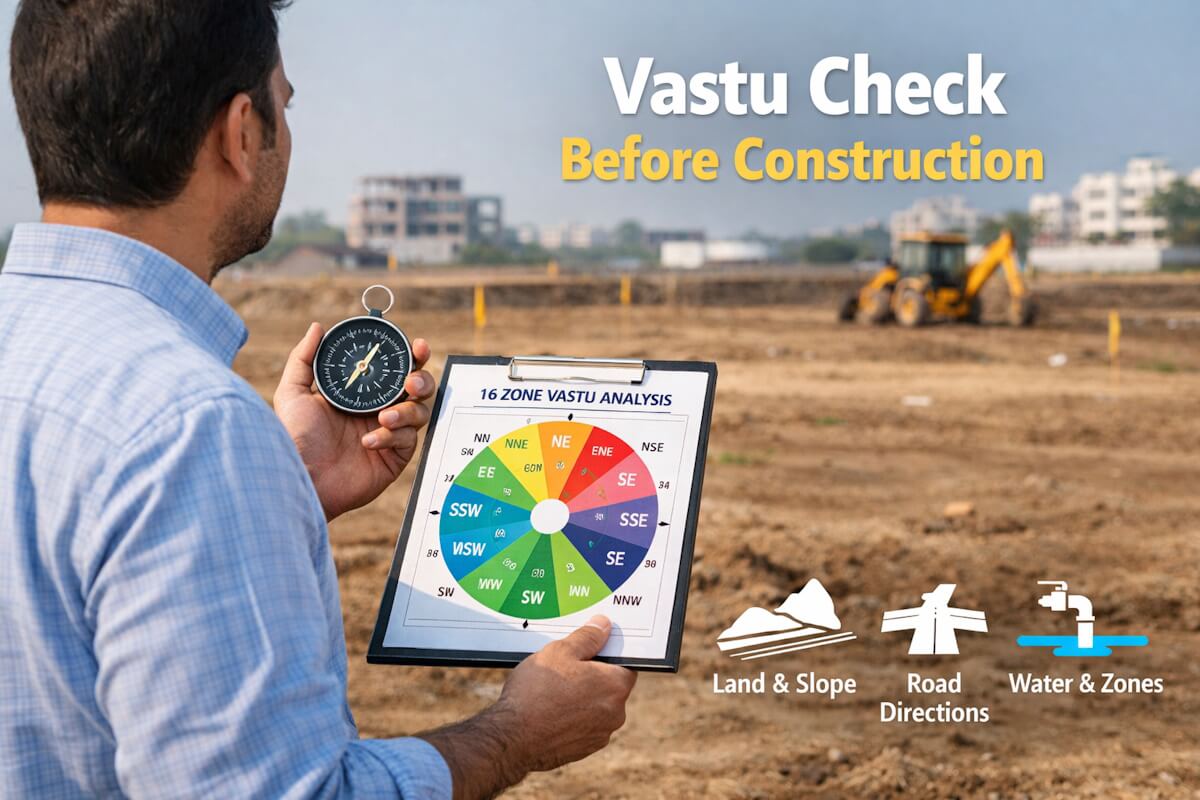
  • 16 Zone Vastu for Plots Before Construction – What to Check

    16 Zone Vastu for Plots Before Construction – What to Check

    When you buy a plot, the ground looks empty. No walls, no rooms, no obvious problems. This is exactly why plot-level Vastu matters more than house-level fixes later. Once concrete goes in, your choices shrink fast.

    The 16 zone Vastu system helps you read a plot like a map before construction begins. It breaks the land into precise directional zones instead of only the eight directions most people know. This matters for modern plots, irregular shapes, and gated layouts where small mistakes carry long-term effects.

    If you are a homeowner planning a house, a buyer choosing between plots, or a realtor advising clients, this approach gives clarity before money is locked in.

    Let’s walk through how to apply 16 zone Vastu for plots before construction in a practical, ground-level way.

    Why 16 Zones Matter Before Construction

    Traditional Vastu talks about North, South, East, West, and their corners. That helps, but it often feels vague when you stand on a real plot with uneven roads, slope issues, or odd boundaries.

    The 16 zone system divides each direction into sub-zones. Instead of one North, you get N, NNE, and NNW. Same for all sides.

    This gives you answers to questions people ask all the time.

    Why does one North-facing plot feel fine while another doesn’t?
    Why does water placement work on one site and fail on another?
    Why do some plots resist stability even with good construction?

    The answer often sits in sub-zone imbalance, not the main direction.

    Understand Your Vastu Zones

    How to Divide a Plot into 16 Zones

    Before checking anything, orientation matters.

    You need the exact North direction, not a guess. A proper compass reading or site plan with true North marked is non-negotiable. Magnetic drift and road alignment confuse people here.

    Once North is fixed, the plot is divided into 16 equal angular segments.

    Each zone controls specific aspects of life and construction behavior. Even an empty plot shows signs once you know where to look.

    The Northeast Family of Zones (NNE, NE, ENE)

    This is the most sensitive part of the plot.

    NNE (North-Northeast)

    This zone connects with movement of opportunities and external support.

    Before construction, check if:

    • The land here feels lighter and more open
    • No heavy storage, debris, or dumping happens here
    • Natural slope moves slightly away from this zone

    Roads touching NNE often bring networking benefits if the zone stays clean.

    NE (Exact Northeast)

    This is the heart of the plot.

    Water flow, underground tanks, or natural moisture here are usually supportive. Dry, rocky, or elevated NE often causes delays and mental stress once construction starts.

    You want openness here. Even fencing should feel lighter.

    ENE (East-Northeast)

    This zone affects clarity and decision-making.

    Watch for:

    • Sharp cuts or missing corners
    • Electrical poles or transformers hitting this zone
    • Overgrown trees blocking sunlight

    Plots with ENE disturbance often lead to repeated plan changes during construction.

    The East Zones (ENE, E, ESE)

    East controls growth and visibility.

    East (Exact East)

    Morning sunlight exposure matters more here than shape.

    Check:

    • Is there a road or open space here?
    • Are neighboring buildings casting long shadows?

    Blocked East reduces momentum even if other zones are strong.

    ESE (East-Southeast)

    This zone connects with fire and activity.

    Avoid:

    • Water bodies
    • Borewells
    • Low depressions

    If the plot naturally dips here, plan elevation correction before construction begins.

    The Southeast Family (ESE, SE, SSE)

    This side governs energy use, expenses, and action.

    SE (Exact Southeast)

    This is the fire zone.

    Good signs include:

    • Slight elevation
    • Dry soil
    • Exposure to sunlight

    Bad signs include underground water veins or marshy soil. These often cause budget overruns later.

    SSE (South-Southeast)

    This zone impacts consistency and discipline.

    Watch for:

    • Cracks in soil
    • Repeated digging history
    • Old pits filled without compaction

    Plots with SSE disturbance often feel productive at first and unstable later.

    The South Zones (SSE, S, SSW)

    South gets misunderstood. It is not bad. It just demands balance.

    South (Exact South)

    This zone prefers weight.

    Good indicators:

    • Higher ground
    • Solid boundary walls
    • Large trees outside the plot

    Open South roads are workable only if other zones are strong.

    SSW (South-Southwest)

    This zone supports long-term holding power.

    Avoid:

    • Deep slopes
    • Missing corners
    • Drainage lines cutting through

    Investors should watch this zone carefully. Weak SSW often causes resale delays.

    The Southwest Family (SSW, SW, WSW)

    This is the stability engine of the plot.

    SW (Exact Southwest)

    This zone anchors wealth and control.

    Before construction:

    • Ensure maximum elevation here
    • Avoid borewells or septic tanks
    • Check for soil firmness

    Plots that feel heavy here often support multi-story construction better.

    WSW (West-Southwest)

    This zone governs storage and endurance.

    Loose soil or frequent water seepage here leads to structural issues later. Fixing it before foundation saves serious money.

    The West Zones (WSW, W, WNW)

    West controls gains and completion.

    West (Exact West)

    Evening sunlight and airflow matter here.

    Check if:

    • The plot feels boxed in
    • There is excessive moisture retention

    Good West plots support steady income patterns.

    WNW (West-Northwest)

    This zone connects with movement and adaptability.

    Avoid heavy permanent obstructions here. Light structures work better.

    The Northwest Family (WNW, NW, NNW)

    This side governs transitions and support systems.

    NW (Exact Northwest)

    Air movement is key.

    Good signs:

    • Natural breeze flow
    • Open space or road

    Bad signs:

    • Tall solid walls nearby
    • Water stagnation

    Residential plots benefit when NW stays light.

    NNW (North-Northwest)

    This zone influences help from others.

    Plots with cuts here often create dependency issues later. Balanced NNW supports teamwork and external assistance.

    The North Zones (NNW, N, NNE)

    North deals with growth and liquidity.

    North (Exact North)

    This zone loves openness.

    Before construction:

    • Keep it clutter-free
    • Avoid heavy boundary extensions
    • Check if slope moves outward

    Commercial buyers should pay extra attention here.

    Plot Shape and 16 Zone Compatibility

    A perfect rectangle is rare now. What matters is how missing or extended portions fall within zones.

    Missing NE, SW, or SSE zones create deeper issues than missing mid-zones. Extensions in SE or SW need correction planning before layout finalization.

    Don’t reject a plot blindly. Assess which zones are affected and whether corrections are possible at ground level.

    Roads, Slopes, and Corners in 16 Zone Vastu

    Roads touching different zones behave differently.

    • NE roads support growth
    • SE roads increase activity and spending
    • SW roads need strong internal elevation

    Slope direction matters more than people think. A plot sloping from SW to NE usually supports smoother construction flow.

    Corner plots need extra attention since two zones stay exposed.

    Why Plot-Level 16 Zone Vastu Matters Across Countries

    Plot-related Vastu issues show up globally, especially where land is expensive and construction decisions are irreversible. The mistakes may look different, but the consequences follow similar patterns.

    In United States, buyers often focus on plot size, zoning permission, and resale value while ignoring orientation and sub-zone behavior. Corner plots with open South-West or disturbed North-East zones are common. Construction moves fast, but homeowners later face stability issues, repeated renovations, or difficulty settling into the house despite good design.

    In United Arab Emirates, villa plots in gated communities are tightly regulated. Buyers cannot shift boundaries, roads, or service lines. When transformer rooms, internal roads, or drainage lines cut through sensitive 16 zones like NE or SSE, residents often experience delays, cost overruns, or long-term discomfort that cannot be corrected after construction.

    In South Africa, uneven terrain and natural slopes are common. Plots frequently slope the wrong way or hold moisture in critical zones like SE or WSW. Builders who ignore zone-based slope behavior often face foundation stress, water issues, or repeated maintenance problems years after completion.

    Across these regions, one lesson stays consistent. Once construction begins, zone-level corrections become limited and expensive. Plot-level 16 Zone analysis helps buyers and builders spot long-term risks early, when adjustments are still practical.

    Borewells, Septic, and Underground Planning

    This is where early planning saves future regret.

    • Borewells work best in NNE, NE, or ENE
    • Septic zones suit WNW or S
    • Underground tanks avoid SE and SW

    Decide these before architectural drawings begin. Shifting later is messy and expensive.

    High-Rise and Gated Community Plots

    If you are buying within a layout or tower base plot, you still check zones.

    • Entry gate location
    • Open spaces inside the compound
    • Overhead tanks and transformer rooms

    Your individual plot zone balance still affects outcomes, even inside large projects.

    Discover Your 16 Vastu Zones

    Final Thoughts for Buyers and Builders

    16 zone Vastu for plots before construction is not about fear or superstition. It is about reading land behavior before locking yourself into concrete decisions.

    Spend time on the plot. Walk it. Stand in each zone. Notice soil, slope, light, and airflow. These signs show up before charts do.

    If something feels off, it usually is. Fixing it early costs planning. Fixing it later costs peace.

    If you’re serious about building something that lasts, this step is not optional.

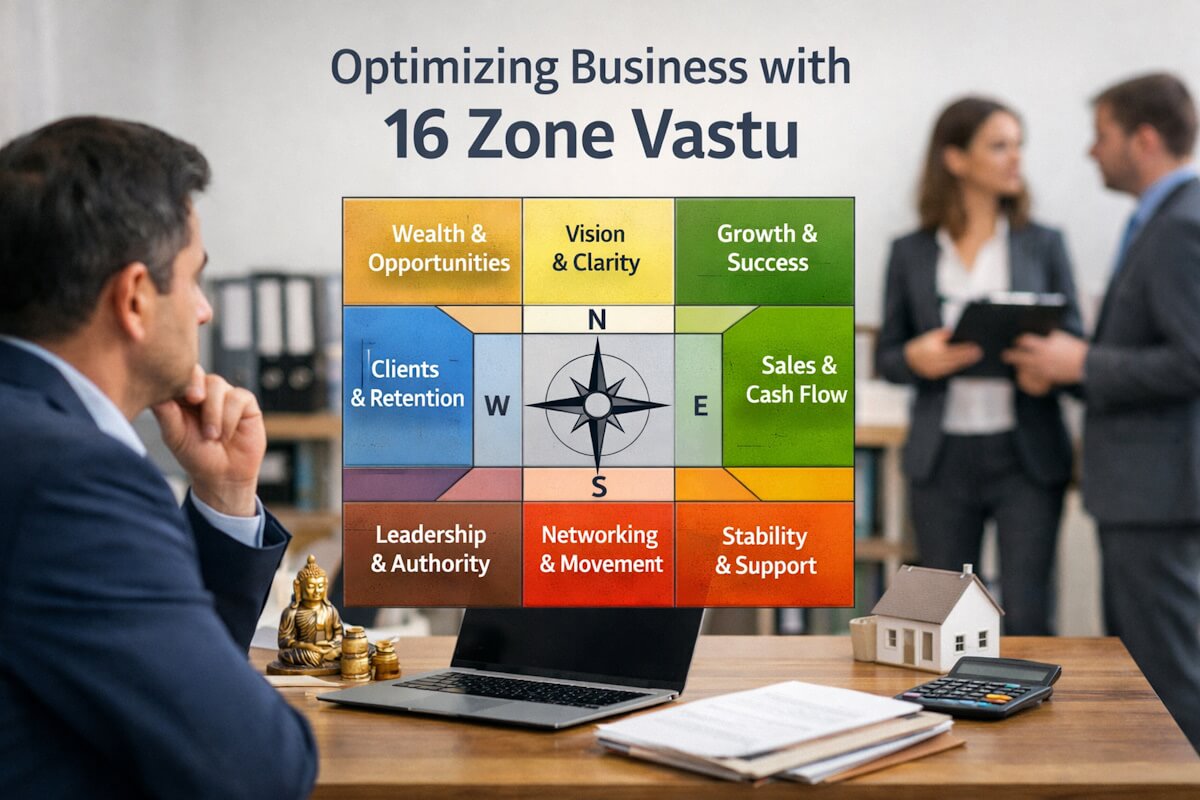
  • Office Vastu: Which 16 Zones Impact Growth and Stability

    Office Vastu: Which 16 Zones Impact Growth and Stability

    When people talk about office Vastu, most stop at directions like north or south. That’s surface-level thinking. Real office Vastu works deeper. It looks at how energy moves through 16 specific zones inside a workspace and how each zone quietly influences money flow, decision-making, staff behavior, and long-term stability.

    If you run a business, manage property, design offices, or invest in commercial spaces, these zones matter more than fancy interiors. They show up in everyday issues like delayed payments, team conflicts, leadership fatigue, and sudden growth that doesn’t last.

    This guide walks you through the 16 Vastu zones in a practical way. No rituals. No mysticism. Just how real offices work and what you should check.

    Why 16 Zones Matter in Office Vastu

    A workplace is not just four walls and desks. Energy divides the space into sixteen parts, each with a role. Some zones push growth. Some protect stability. Some control cash. Some affect people.

    Ignoring even one weak zone can slow things down without obvious reasons. You might work harder, hire better people, upgrade systems, yet feel stuck.

    That’s usually a zone problem.

    Most modern offices already have these zones. You don’t need a new building. You need awareness and smart adjustments.

    Let’s break them down.

    Check Your 16 Zone Vastu Balance

    1. North Zone – Income and Opportunities

    The north zone drives cash inflow and new opportunities. This zone decides how easily money enters your business.

    If this area feels heavy, cluttered, or blocked, payments tend to delay. Clients hesitate. Leads dry up.

    Best use:
    Keep it open, light, and active. Accounts teams, sales desks, or billing areas work well here. Glass partitions help.

    Avoid:
    Storage, junk, dark colors, broken furniture.

    If your business struggles with cash flow despite sales, check this zone first.

    2. North-Northeast Zone – Expansion and Visibility

    This zone supports expansion, branding, and market reach. It affects how visible your business feels to the outside world.

    Best use:
    Marketing teams, reception overflow, brainstorming spaces.

    Avoid:
    Toilets, heavy cabinets, or server racks.

    Weakness here shows up as slow brand growth or low recall, even when marketing budgets look fine.

    3. Northeast Zone – Clarity and Decision-Making

    This is the most sensitive zone in any office. It controls clarity, ethics, and long-term direction.

    When this zone is disturbed, leadership feels confused. Decisions take longer. Trust issues appear.

    Best use:
    Prayer room, meditation corner, or simply open space. Senior leadership seating works if the zone is clean and calm.

    Avoid:
    Pantry, toilets, clutter, or electrical overload.

    Many offices with sudden internal politics issues usually have a disturbed northeast.

    4. East-Northeast Zone – Innovation and Fresh Ideas

    This zone influences new ideas and adaptability.

    Best use:
    Design teams, research desks, innovation cells.

    Avoid:
    Storage or stagnant setups.

    If your business feels repetitive or outdated, this zone needs attention.

    5. East Zone – Growth and Daily Momentum

    The east zone controls daily progress and steady growth.

    Best use:
    Employee seating, meeting rooms, collaborative spaces.

    Avoid:
    High partitions blocking sunlight.

    When teams feel active in the morning but dull by afternoon, check lighting and layout here.

    6. East-Southeast Zone – Communication and Marketing Execution

    This zone supports communication, digital outreach, and execution of plans.

    Best use:
    Digital marketing teams, call centers, CRM desks.

    Avoid:
    Water elements or toilets.

    Misuse shows up as miscommunication, delayed campaigns, or messaging errors.

    7. Southeast Zone – Finance, Fire, and Aggression

    The southeast is the fire zone. It rules expenses, cash handling, and intensity.

    Best use:
    Accounts department, finance teams, pantry, electrical rooms.

    Avoid:
    CEO cabins or calm meeting rooms.

    If expenses rise faster than income, this zone often holds the answer.

    8. South-Southeast Zone – Legal and Compliance Pressure

    This zone influences legal matters, compliance stress, and hidden conflicts.

    Best use:
    Documentation storage, compliance teams.

    Avoid:
    Reception or open seating.

    Frequent notices, audits, or legal delays often point here.

    9. South Zone – Stability and Reputation

    The south zone defines reputation and public image.

    Best use:
    Awards display, brand story walls, senior management cabins.

    Avoid:
    Open entrances or heavy water features.

    If your business feels respected but not trusted, this zone needs balance.

    10. South-Southwest Zone – Control and Risk Management

    This zone deals with control over operations and risk handling.

    Best use:
    Operations heads, project management teams.

    Avoid:
    Loose seating or constant movement.

    Weakness here causes project delays and missed deadlines.

    11. Southwest Zone – Ownership and Long-Term Stability

    This is the backbone of the office. It governs ownership strength, authority, and stability.

    Best use:
    Owner’s cabin, founders’ office, strong storage.

    Avoid:
    Toilets, pantries, or temporary seating.

    If leadership feels shaky or partners clash, the southwest is usually disturbed.

    12. West-Southwest Zone – Retention and Loyalty

    This zone affects employee retention and loyalty.

    Best use:
    HR departments, counseling rooms.

    Avoid:
    High noise zones.

    High attrition without obvious HR issues often traces back here.

    13. West Zone – Gains and Results

    The west zone controls profits, results, and delayed gains.

    Best use:
    Meeting rooms, review rooms, performance tracking.

    Avoid:
    Blocked walls or unused space.

    If results come but with delays, this zone likely needs correction.

    14. West-Northwest Zone – Clients and Networking

    This zone influences client relationships and external support.

    Best use:
    Client meeting rooms, networking lounges.

    Avoid:
    Owner seating.

    Frequent client drop-offs or stalled deals often point here.

    15. Northwest Zone – Movement and Staff Turnover

    The northwest controls movement, travel, and staff changes.

    Best use:
    Sales teams, recruitment desks.

    Avoid:
    Finance or stability roles.

    High staff churn can sometimes be corrected by simple layout changes here.

    16. Center Zone – Balance and Overall Health

    The center holds everything together. When it’s blocked, the entire office feels off.

    Best use:
    Open space, reception overflow, movement area.

    Avoid:
    Heavy furniture, pillars clutter, storage.

    A blocked center creates confusion, stress, and lack of coordination.

    How These Zones Impact Growth Together

    Office Vastu is not about fixing one zone and waiting for magic. Growth happens when zones work together.

    For example:

    • A strong north brings money. A weak southwest leaks it.
    • A clean northeast gives clarity. A disturbed southeast burns cash.
    • An active northwest brings clients. A blocked west delays results.

    This is why some offices grow fast and crash. Others grow slowly but stay stable.

    Common Office Mistakes That Hurt Multiple Zones

    Modern offices unknowingly create Vastu problems.

    Glass cabins everywhere weaken control zones.
    Heavy storage in random corners blocks growth zones.
    Pantries placed wherever plumbing allows damage fire and water balance.
    CEO cabins placed for view instead of stability cause authority issues.

    These mistakes don’t show immediate damage. They build pressure quietly.

    Can You Apply This in High-Rise Offices?

    Yes. Vastu works inside the unit, not the building height.

    You don’t control the tower. You control your floor plan.

    Even leased offices can adjust seating, partitions, lighting, and activity zones.

    Small shifts matter.

    What to Prioritize If You Can’t Fix Everything

    Start with:

    • Northeast for clarity.
    • North for cash flow.
    • Southwest for stability.
    • Center for balance.

    These four zones alone solve most business pain points.

    Get a Detailed 16 Zone Vastu Report

    Final Thought for Business Owners

    Your office already tells a story. About control. About chaos. About growth. About stagnation.

    The 16 zones are not abstract ideas. They show up in everyday business struggles and wins.

    Before blaming the market, staff, or timing, look at your space. It might be quietly shaping your results.

    If you’re serious about long-term stability, office Vastu is not optional. It’s practical awareness.

    Walk your office today. Observe each zone. You’ll notice things you never questioned before.

    That’s where real change begins.

  • How 16 Zone Vastu Helps in Business & Commercial Properties

    How 16 Zone Vastu Helps in Business & Commercial Properties

    When a business space struggles, people often blame the market, staff, pricing, or timing. All of that matters, no doubt. Yet many owners miss something more basic – how the space itself behaves. Walls, doors, desks, cash counters, storage, and even unused corners quietly influence daily operations. This is where 16 Zone Vastu becomes practical rather than philosophical.

    Unlike basic Vastu that focuses on directions alone, 16 Zone Vastu breaks a property into precise energy sections. Each section affects a specific business function. When these zones work properly, decision-making feels clearer, staff stability improves, cash flow becomes smoother, and growth stops feeling forced. When ignored, even strong businesses feel stuck.

    This approach works especially well for offices, shops, factories, warehouses, hospitals, hotels, co-working spaces, and high-rise commercial units where traditional layouts rarely match textbook Vastu rules.

    Understanding the 16 Zone Vastu System in Business Spaces

    Most people are familiar with eight directions. North, South, East, West, and the corners. The 16 Zone system goes deeper. Each direction is further divided into micro zones. These zones are not symbolic. They are functional.

    In commercial properties, each zone connects with a specific business activity like leadership, finance, marketing, legal matters, inventory, networking, staff discipline, or innovation.

    This matters because modern buildings do not allow complete freedom. You might not be able to move a staircase or shift a lift shaft. The 16 Zone method works within these limits. Instead of redesigning everything, you correct what is possible inside each zone.

    Think of it as tuning a machine instead of replacing it.

    Start 16 Zone Vastu Assessment

    Why Direction-Based Vastu Alone Often Fails in Commercial Properties

    Many business owners try basic fixes. Place the owner in the southwest. Keep cash in the north. Avoid toilets in the northeast. These ideas are useful but incomplete.

    Here is the real issue. Large offices and commercial buildings have multiple activities happening at once. Sales teams, accounts, IT, storage, legal, HR, customer handling, and leadership all sit under one roof. One direction cannot support everything.

    That is why two businesses in the same building can perform very differently.

    The 16 Zone approach separates overlapping energies. It explains why a north-facing office can still suffer financial instability. Or why a well-located shop sees heavy footfall but poor conversions.

    How Each Zone Impacts Key Business Functions

    Let us break this down in a way that connects directly to real commercial situations.

    North Zone – Income Flow and Opportunities

    This zone governs cash inflow, new clients, and daily revenue movement. In many offices, this area is blocked by heavy storage, server rooms, or dead files. That slows money cycles.

    In retail stores, clutter or dark lighting here often results in steady walk-ins but inconsistent billing.

    Simple corrections like reducing weight, improving lighting, and keeping this zone active can make collections smoother.

    North East Zone – Vision, Trust, and Brand Perception

    This zone shapes how people perceive your business. Reputation, credibility, and long-term vision come from here.

    In clinics, law offices, and consulting firms, disturbance in this zone often shows up as trust issues, legal troubles, or confused branding.

    Avoid heavy cabins, toilets, or electrical panels here. Open space, clarity, and calm work best.

    East Zone – Growth, Marketing, and Expansion

    This area fuels growth ideas and outward expansion. Marketing teams placed here often perform better.

    If your business feels stagnant despite effort, check whether this zone is blocked or overloaded. Even small things like unused furniture or broken equipment can dull momentum.

    South East Zone – Sales, Cash Handling, and Energy

    This zone drives sales, billing, and transaction energy. It is ideal for accounts teams, cash counters, and sales operations.

    In restaurants and retail, incorrect use of this zone often leads to high expenses or unstable profits. Fire-related elements belong here. Water elements do not.

    South Zone – Stability and Process Discipline

    This zone controls discipline, compliance, and workflow structure. Factories and process-driven businesses benefit from proper usage here.

    When misused, staff become careless, timelines stretch, and systems feel chaotic even if software and SOPs exist.

    South West Zone – Leadership and Control

    This is one of the most critical zones for business owners, directors, and decision-makers.

    If this zone is weak, leadership feels unstable. Owners feel overworked, control slips, and staff dominance increases.

    In many commercial spaces, this zone is mistakenly used for storage or left unused. That quietly weakens authority.

    West Zone – Client Retention and Market Hold

    The west governs retention, repeat business, and long-term contracts.

    Businesses that get clients but struggle to keep them often have issues here. Service-based companies feel this sharply.

    Correct use supports sustainability rather than quick wins.

    North West Zone – Movement, Networking, and Staff Turnover

    This zone handles movement. Sales travel, logistics, networking, and staff changes.

    When balanced, it supports flexible growth. When disturbed, staff attrition rises and partnerships fail.

    This zone suits meeting rooms and dynamic teams rather than fixed leadership cabins.

    Applying 16 Zone Vastu in Offices and Corporate Spaces

    Most offices today operate inside glass boxes, shared floors, and leased spaces. Structural changes are limited. This is where the 16 Zone system shines.

    Instead of relocating walls, focus on:

    • Cabin placement within zones
    • Desk orientation
    • Storage load distribution
    • Lighting balance
    • Electronic equipment positioning

    For example, placing senior leadership cabins slightly shifted into the southwest sub-zone can improve decision control without breaking lease rules.

    Accounts teams positioned closer to the southeast sub-zone often see better coordination and fewer errors.

    Meeting rooms in the northwest zone support negotiations without dragging decisions endlessly.

    These are subtle shifts, yet the impact is noticeable over months.

    Retail Stores and Showrooms – Turning Footfall into Revenue

    Many shops have great locations but poor closure rates. Owners blame pricing or staff skills. Sometimes the problem is simpler.

    Retail stores rely heavily on:

    • Entrance zone activation
    • Cash counter placement
    • Product display flow
    • Storage weight balance

    The 16 Zone method helps align these without altering the shopfront.

    For instance, placing the billing counter in the southeast sub-zone improves transaction flow. Keeping the northeast light and open improves customer comfort and trust. Avoiding dead stock in the north keeps revenue cycles active.

    This matters more in malls where every store competes visually.

    Factories, Warehouses, and Industrial Units

    Industrial spaces deal with machinery, raw materials, finished goods, and staff movement. Basic Vastu advice often fails here.

    The 16 Zone approach separates:

    • Raw material storage zones
    • Production zones
    • Quality control zones
    • Finished goods holding areas
    • Admin and leadership sections

    Improper placement often causes machine breakdowns, wastage, labor disputes, or compliance issues.

    Balancing heavy loads in southwest sub-zones and keeping movement zones clear reduces friction. Offices placed carelessly inside factories often suffer burnout. Proper zoning changes that.

    Commercial Buildings and Mixed-Use Properties

    Builders and investors often overlook Vastu beyond entrance direction. That is risky.

    In mixed-use buildings with shops, offices, and services stacked vertically, internal zoning matters more than orientation.

    The 16 Zone method can be applied floor-wise and unit-wise. Even when entrances vary, internal layouts can be corrected.

    This is useful for:

    • Rental income stability
    • Tenant retention
    • Legal peace
    • Maintenance cost control

    Buildings with poor zone balance often see frequent tenant changes and disputes.

    Why 16 Zone Vastu Works Better Than Surface-Level Remedies

    Crystals, symbols, and color changes get attention. They rarely solve structural imbalance.

    16 Zone Vastu works because it is logic-based. Each zone supports a specific activity. When that activity sits elsewhere, friction appears.

    This method does not promise miracles. It removes invisible resistance.

    Businesses already doing well often use it to stabilize growth. Struggling businesses use it to identify blind spots they never considered.

    Common Mistakes Business Owners Make with Vastu

    One major mistake is copying someone else’s layout. Another is treating Vastu as decoration.

    Some assume one correction fixes everything. Business spaces are complex. They need layered adjustments.

    Ignoring unused zones is another error. Empty corners still carry influence.

    The 16 Zone approach forces you to look at the entire space honestly.

    When Should You Consider a 16 Zone Vastu Review

    If any of these sound familiar, it may be time:

    • Revenue is inconsistent despite effort
    • Staff turnover feels unusually high
    • Legal or compliance issues repeat
    • Expansion plans stall
    • Leadership feels overwhelmed
    • Expenses rise without clarity

    These are not always market problems. Often the space is working against you.

    Get Your 16 Zone Vastu Analysis

    Practical Takeaway for Business Owners and Investors

    You do not need blind belief. Treat 16 Zone Vastu like a diagnostic tool.

    Start by understanding what activity sits in which zone. Observe patterns over time. Make corrections that fit your operational reality.

    Commercial success is not only about strategy and execution. The space supporting that effort matters more than most people realize.

    If you want your business property to support growth instead of draining energy, the 16 Zone approach gives structure to that process. Quietly. Practically. Without drama.

    The space you work in every day should help you think clearly, act decisively, and grow steadily. If it does not, the zones deserve a closer look.

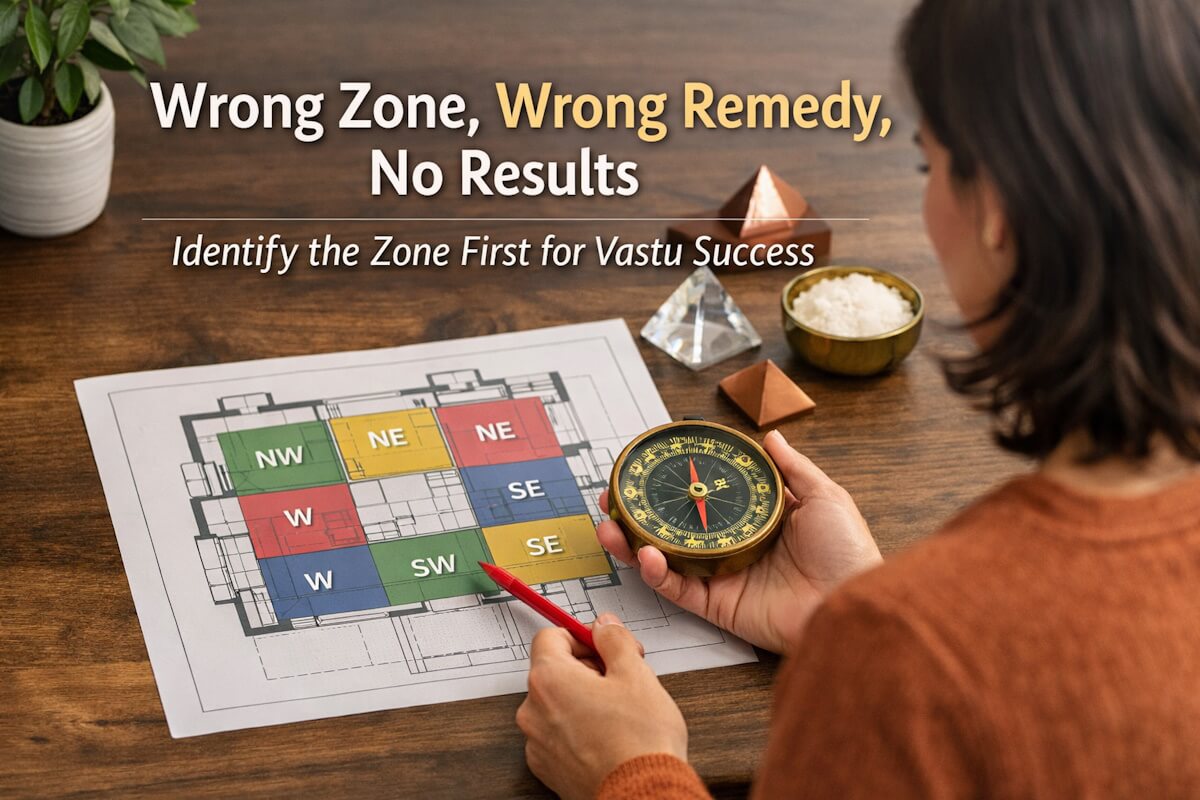
  • Why Vastu Remedies Fail Without Proper Zone Identification

    Why Vastu Remedies Fail Without Proper Zone Identification

    You move the mirror.
    You shift the bed.
    You place the pyramid, the metal strip, the crystal, the plant.

    Nothing changes.

    This is one of the most common frustrations people have with Vastu remedies. You followed advice that sounded reasonable. Someone said a salt bowl would fix money issues. Another said a copper item would settle stress. A third insisted the entrance was fine.

    Yet problems stay put.

    The real issue in most of these cases is simple. The remedy was applied without knowing which zone was actually disturbed. Vastu does not respond to guesswork. Remedies only work when they address the correct zone, for the correct purpose, in the correct way.

    If the zone is wrong, the remedy is noise.

    Let’s break down why this happens so often and how you can avoid wasting time, money, and patience.

    Vastu is Zone-Based, Not Object-Based

    Most people approach Vastu as a list of objects.

    Place this here.
    Remove that there.
    Add something heavy.
    Add something light.

    That approach skips the core structure of Vastu. Every home, apartment, or commercial space is divided into specific zones based on direction and energy function. Each zone governs certain aspects of life.

    If you don’t identify the zone first, the remedy has no target.

    Putting a water feature anywhere does not improve finances. Water placed in the wrong zone can do the opposite. A mirror does not always increase positivity. In some zones, mirrors increase instability.

    Vastu works on cause and effect. The cause lives in a zone. The effect shows up in your life.

    Fixing the effect without identifying the zone is like changing a bulb when the wiring is damaged.

    Find Vastu Imbalances

    The Same Problem Can Come From Different Zones

    This is where most people get misled.

    Let’s say you are dealing with money issues. Delays, instability, or sudden expenses.

    Many assume this always links to the north zone. That is partly true, but not always.

    Money-related stress can come from:

    • A blocked north zone
    • A damaged northeast
    • A heavy southwest
    • A disturbed southeast causing overspending
    • An incorrect entrance location

    If you assume north is the issue and apply remedies there, nothing changes if the real disturbance sits elsewhere.

    This is why copied remedies from friends, videos, or articles often fail. The symptom looks similar, but the source is different.

    Without zone identification, you are treating the wrong problem.

    Apartments Make Zone Errors Easier to Miss

    Independent homes make zones easier to read. Apartments complicate everything.

    Common apartment issues include:

    • Cut corners
    • Missing zones
    • Extended balconies
    • Shared walls affecting energy flow
    • Entrances not aligned with internal layouts

    Many remedies fail in apartments because people rely on compass direction alone without mapping the internal grid properly.

    For example, your flat may face east, but the internal northeast might be missing or occupied by a toilet. Remedies applied to the east wall will not correct a damaged northeast.

    You need to identify zones inside the flat, not just the facing.

    Remedies Cannot Override a Wrong Zone Function

    Every zone has a natural role.

    North relates to movement, cash flow, opportunities.
    Northeast relates to clarity, health, guidance.
    Southeast handles fire, spending, motivation.
    Southwest governs stability, authority, long-term growth.

    When a zone is forced to perform the wrong function, remedies stop working.

    Example.

    If your bedroom sits in the northeast and you add crystals or colors to improve sleep, it rarely works. That zone is not meant for rest. It supports lightness, clarity, and openness. Heavy use disrupts it.

    People keep adding remedies instead of questioning the zone placement.

    No object can override a zone’s core nature.

    Generic Remedies Ignore Severity Levels

    Another major reason remedies fail is lack of severity assessment.

    Not all Vastu defects are equal.

    A minor imbalance might respond to small changes like decluttering, color adjustment, or furniture shift.

    A major defect like:

    • Toilet in northeast
    • Kitchen in southwest
    • Missing corner in north
    • Staircase cutting the center

    will not respond to light remedies.

    People apply mild fixes to serious issues and expect results. When nothing changes, they assume Vastu does not work.

    The problem is not Vastu. The problem is misjudging the zone and its severity.

    One Remedy Cannot Fix Multiple Zones

    This mistake shows up a lot.

    Someone places one pyramid or one yantra and expects it to fix the entire home. Homes don’t work like that.

    Each zone operates independently. If three zones are disturbed, one remedy cannot correct all three.

    This is like locking one door and assuming the whole house is secure.

    Effective Vastu work identifies:

    • Which zones are affected
    • What function is blocked in each zone
    • Which remedy suits that specific disturbance

    Shortcuts rarely deliver results.

    Direction Alone Is Not Zone Identification

    People often say, “My problem is in the south” or “The entrance is in the west.”

    That is incomplete.

    Zone identification needs:

    • Accurate center of the home
    • Proper grid division
    • Understanding of extensions and cuts
    • Internal usage of each zone
    • Weight distribution and openness

    Without this, remedies get placed based on rough direction. Rough direction leads to rough results.

    A few inches can shift a remedy into the wrong sub-zone, especially in compact apartments.

    Commercial Spaces Suffer Even More From Wrong Zones

    Offices, shops, clinics, and restaurants see faster consequences when zones are misread.

    People complain about:

    • Staff turnover
    • Cash flow swings
    • Customer drop
    • Legal or compliance stress

    They often try remedies like:

    • Shifting desks
    • Adding plants
    • Using symbols near entrances

    If the leadership zone, cash zone, or activity zone is misidentified, these remedies barely scratch the surface.

    Commercial Vastu demands precision. Guesswork costs money.

    Emotional Bias Blocks Correct Zone Diagnosis

    Homeowners often resist hearing that a favorite room sits in a wrong zone.

    “This room feels fine.”
    “We’ve always used it this way.”
    “It’s not possible to change that.”

    This emotional attachment leads to selective remedies. People try to fix around the zone instead of fixing the zone.

    Vastu does not adjust to preferences. Zones respond to use and structure, not sentiment.

    Ignoring a zone issue because it is inconvenient guarantees remedy failure.

    Remedies Work After Correction, Not Before

    Another misunderstood point.

    Remedies are not magic switches. They work best after basic corrections are done.

    If clutter fills a zone, remedies struggle.
    If heavy storage blocks a light zone, remedies weaken.
    If water leaks persist, remedies fade.

    People often place remedies before correcting physical issues. That reverses the order.

    Zone identification should lead to:

    1. Physical correction
    2. Functional correction
    3. Supportive remedy if needed

    Skipping steps weakens results.

    Online Advice Misses Context

    Most online Vastu advice is context-free.

    It does not know:

    • Your home shape
    • Your floor level
    • Your internal layout
    • Your usage patterns

    When you follow this advice blindly, zone mismatch is almost guaranteed.

    What worked for someone else worked because their zone issue matched the remedy. Copying without checking zones is gambling, not planning.

    How to Know If Zone Identification Is Missing

    You might be dealing with wrong zone diagnosis if:

    • You applied multiple remedies with no result
    • Changes brought short relief then reversed
    • One problem improved while another worsened
    • You feel constant confusion about what to fix next

    These are classic signs that remedies are not addressing the root zone.

    Practical Way to Avoid Remedy Failure

    You do not need to memorize complex theory.

    You do need clarity.

    Before applying any remedy, ask:

    • Which zone is responsible for this issue?
    • Is that zone present, cut, extended, or overloaded?
    • What activity is happening in that zone right now?
    • Is the problem mild or structural?

    If these answers are missing, pause.

    Applying fewer remedies with accurate zone identification beats stacking dozens blindly.

    View Your 16 Zone Vastu Insights

    Zone Accuracy Creates Predictable Results

    When zone identification is done correctly, Vastu becomes predictable.

    Changes show up in patterns.
    Relief feels stable.
    Results do not swing wildly.

    That consistency is the biggest sign that remedies are working.

    Vastu is not mysterious. It is systematic. The system begins with zones.

    If you skip that step, remedies feel random. When you respect it, remedies start making sense.

    Before you buy another object or move another item, map the zone.

    That single step changes everything.

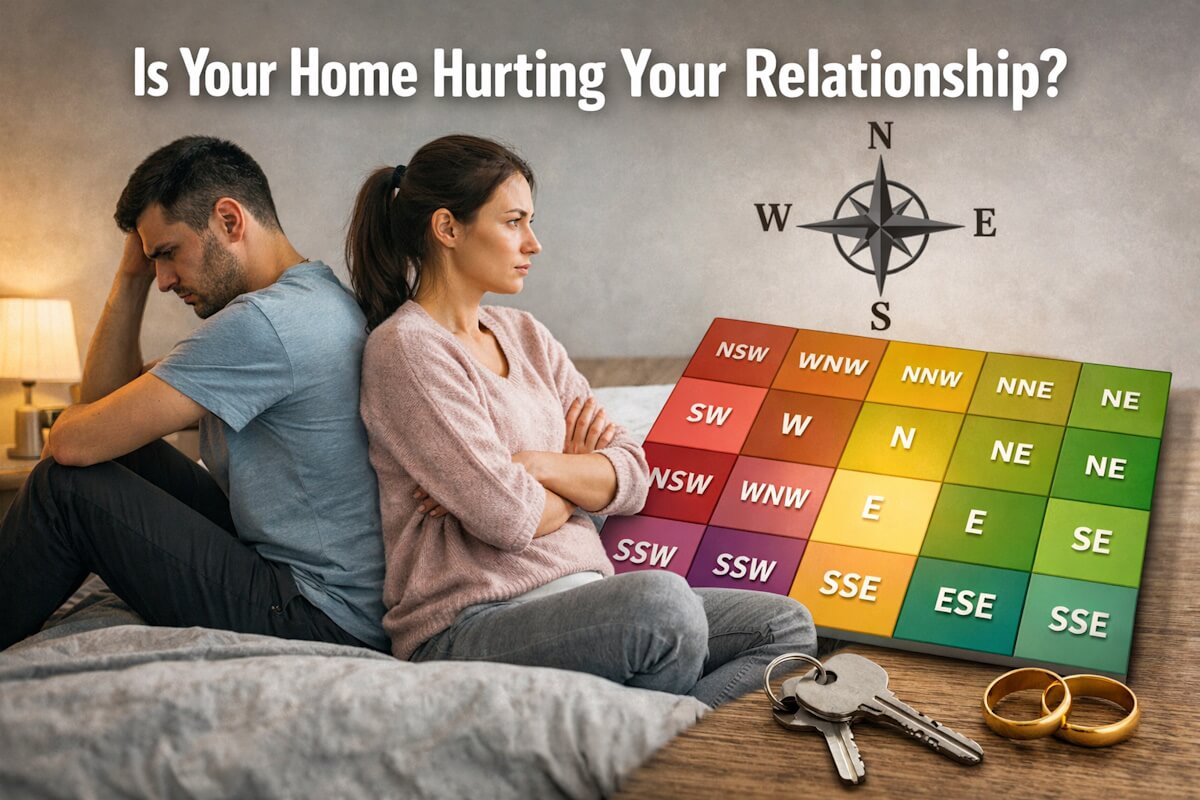
  • Relationship & Marriage Problems Explained Through 16 Zone Vastu

    Relationship & Marriage Problems Explained Through 16 Zone Vastu

    You and your partner can be doing everything “right” on the surface and still feel stuck. Conversations go nowhere. Small issues turn into long silences. Intimacy fades. Respect feels uneven. When this keeps repeating inside the same home, it is worth looking at the space itself, not just the people in it.

    This article breaks down how relationship and marriage problems often show up through the lens of 16 Zone Vastu. Not theory. Not spiritual fluff. Real patterns seen in apartments, villas, duplex homes, and even rented flats where couples feel disconnected without knowing why.

    If you live together and something feels off, read this slowly. You might recognize your home in it.

    Why relationships react strongly to space

    Relationships are emotional, physical, and mental. Your house constantly affects all three. Bedrooms influence intimacy. Kitchens affect communication. Toilets impact respect and patience. Storage areas quietly carry old emotional weight.

    In 16 Zone Vastu, each direction holds a specific role. When that role is disturbed, the impact often shows up first in close relationships. Marriage becomes the pressure point.

    You may think it is stress from work or money. Sometimes it is. Many times, the space is amplifying it.

    Understand Your Vastu Zones

    The South-West zone and emotional stability between partners

    South-West controls stability, commitment, and emotional grounding. When this zone is weak or misused, marriages feel shaky even if the bond is strong.

    Common real-life problems linked to South-West imbalance:

    • You feel insecure in the relationship for no clear reason
    • One partner dominates while the other withdraws
    • Fear of separation even during minor conflicts
    • Repeated trust issues without evidence

    Typical layout mistakes:

    • Master bedroom missing in South-West
    • Toilet or kitchen placed here
    • Lightweight furniture and empty corners
    • Cracked walls or water seepage

    When South-West lacks weight and structure, the relationship lacks emotional safety. Couples argue more because neither feels fully anchored.

    If your master bedroom is here and feels calm, heavy, and private, it often acts like glue for the marriage.

    South-East zone and constant arguments

    South-East represents fire, emotions, and impulsive reactions. This zone affects how couples fight and how quickly anger rises.

    When South-East is disturbed:

    • Arguments escalate fast
    • Small issues turn explosive
    • One partner becomes reactive or aggressive
    • Emotional outbursts followed by guilt

    Common triggers:

    • Bedroom in South-East
    • Red or overly bright colors in sleeping areas
    • Kitchen missing or wrongly placed
    • Electronic clutter and heat buildup

    Couples sleeping in South-East often report passion mixed with chaos. Attraction stays strong, peace disappears. Over time, this leads to emotional exhaustion.

    If this is your bedroom, you may notice that fights happen late at night or over trivial matters.

    North-West zone and instability in commitment

    North-West governs movement, uncertainty, and change. It plays a major role in commitment patterns.

    Relationship signs of North-West imbalance:

    • On-off relationships
    • One partner avoids responsibility
    • Third-party interference
    • Frequent thoughts of separation or escape

    Common layout issues:

    • Master bedroom in North-West
    • Excessive windows and airflow
    • Mirrors reflecting the bed
    • Too many travel-related items

    This zone makes energy restless. Couples living here often feel connected but unsettled. One foot always feels outside the relationship.

    If your marriage feels like it never fully settles, North-West deserves attention.

    North-East zone and emotional disconnect

    North-East is the mind and emotional clarity zone. When disturbed, couples stop understanding each other.

    Common relationship symptoms:

    • Miscommunication
    • Feeling unheard or unseen
    • Emotional distance without anger
    • Silent resentment

    Typical Vastu mistakes:

    • Toilet in North-East
    • Heavy storage blocking the corner
    • Dark colors and clutter
    • No natural light

    Couples often say, “We don’t fight, we just don’t talk.” This usually traces back to North-East issues.

    A clear, open North-East supports emotional honesty. When blocked, partners retreat inward.

    East zone and respect between partners

    East governs growth, respect, and how partners see each other.

    Signs of East imbalance:

    • Loss of mutual respect
    • Constant criticism
    • One partner feeling undervalued
    • Ego clashes

    Common causes:

    • Blocked windows
    • Heavy wardrobes in East
    • Bathroom or store room
    • Dirty or unused space

    Respect erosion kills marriages quietly. East-related issues show up slowly and feel personal, even when they are environmental.

    West zone and dissatisfaction

    West relates to fulfillment and expectations.

    When this zone is disturbed:

    • One partner feels unfulfilled
    • Comparison with others
    • Constant dissatisfaction
    • Complaints without solutions

    Common problems:

    • Bedroom cluttered with storage
    • Unused or dark spaces
    • Broken items left unattended

    West issues create the feeling that “something is missing” in the relationship. Even happy moments feel incomplete.

    South zone and control struggles

    South influences discipline and authority.

    Relationship patterns here include:

    • Power struggles
    • Stubbornness
    • Refusal to compromise
    • Silent dominance

    Typical mistakes:

    • Open entrances
    • Lightweight furniture
    • Excessive red or dark tones

    When South energy becomes aggressive, partners stop listening and start competing.

    North zone and emotional availability

    North is linked to openness and emotional exchange.

    Imbalance signs:

    • Emotional withdrawal
    • Overthinking
    • One-sided emotional effort

    Common causes:

    • Blocked pathways
    • Excess storage
    • No movement or airflow

    North problems often show up when one partner feels they are carrying the relationship alone.

    Kitchens, toilets, and their hidden impact on marriage

    Many couples focus only on bedrooms. Big mistake.

    Kitchen issues affect communication. A badly placed kitchen creates misunderstandings and sharp words.

    Toilets affect respect. Toilets near bedrooms or in sensitive zones slowly erode dignity and patience between partners.

    Repeated patterns seen in homes:

    • Toilet sharing a wall with bed
    • Kitchen in North-East or South-West
    • Leaking taps causing subconscious stress

    These things sound minor. Over time, they hit deep.

    Why 16 Zone Vastu explains problems that counseling misses

    Counseling looks at behavior. 16 Zone Vastu looks at triggers that never switch off.

    If you argue in the same rooms.
    If emotional distance feels stronger at home than outside.
    If vacations improve your bond but it falls apart again after returning.

    That is not coincidence.

    Space keeps repeating the same emotional cues.

    Can corrections help without moving homes?

    Yes, in many cases.

    Simple shifts like:

    • Changing sleeping direction
    • Reducing clutter in key zones
    • Adjusting room usage
    • Improving light and weight balance

    These changes often calm the relationship without a single conversation.

    Not magic. Just environment working with you instead of against you.

    Why These Relationship Patterns Repeat Across Countries

    Relationship stress linked to space is not limited to one culture. The same zone-related issues appear in modern homes across different countries, shaped by lifestyle and housing patterns.

    In United States, many couples live in large homes where bedrooms and workspaces are spread without emotional zoning. Home offices often cut into sleeping areas, weakening intimacy and increasing emotional distance. Couples often feel disconnected even while sharing the same house.

    In Australia, open-plan living is common. While it feels spacious, poor zone boundaries often overstimulate emotions. Bedrooms falling in South-East or North-West zones frequently lead to frequent arguments, impatience, and unresolved conflicts.

    In United Arab Emirates, homes are often well-built but heavily climate-controlled. Strong fire zones combined with long work hours create emotional exhaustion. Power struggles and lack of emotional availability between partners are common patterns.

    Across these regions, the takeaway stays the same. When zones supporting stability, communication, and emotional grounding are disturbed, relationships absorb the pressure first.

    When relocation becomes necessary

    Sometimes the layout is too extreme. Examples include:

    • Toilet exactly in North-East
    • Missing South-West
    • Entrance cutting through critical zones

    In such homes, emotional stress keeps returning. Couples feel relief only when they step out.

    Knowing this early saves years of frustration.

    Discover Your 16 Vastu Zones

    What to do next

    Walk through your home with fresh eyes. Notice where you fight. Notice where you avoid talking. Notice where you feel calm together.

    Your house is already telling you the story.

    16 Zone Vastu simply gives it language.

    If you are serious about fixing relationship or marriage problems, do not look only at words and promises. Look at walls, corners, directions, and usage.

    Your relationship lives there too.

  • Health Issues and Their Connection to Specific Vastu Zones

    Health Issues and Their Connection to Specific Vastu Zones

    Health problems rarely show up out of nowhere. In real homes, they often build slowly. You feel tired. Sleep feels off. Someone in the family keeps falling sick without a clear reason. You fix food, routines, and stress levels, yet something still feels unsettled. This is where Vastu zones quietly come into the picture.

    Vastu does not treat health as a single issue. It looks at how different parts of your home interact with different systems of the body. When a zone is blocked, overloaded, or misused, the body part connected to it often reacts. Not dramatically. Gradually.

    This article breaks down health issues and their connection to specific Vastu zones in a practical way. No theory-heavy explanations. Just what actually shows up in apartments, villas, high-rise buildings, and mixed-use spaces.

    You can walk through your home mentally as you read. That’s the point.

    Understanding Vastu Zones and Health in Daily Living

    Every home is divided into eight directional zones plus the center. Each zone carries a type of energy that supports certain organs and functions in the body. When the usage of that zone clashes with its nature, health problems tend to repeat.

    This does not mean one wrong placement causes illness overnight. It usually shows up as patterns. Repeated headaches. Chronic digestion trouble. Hormonal swings. Mood issues. Lingering joint pain.

    The goal is not fear. The goal is awareness.

    Most modern homes already have fixed walls. Vastu works by adjusting usage, weight, colors, and daily habits inside those limits.

    North East Zone and Mental and Immune Health

    The North East zone is linked to the brain, nervous system, immunity, and clarity of thought. This zone responds strongly to lightness, cleanliness, and openness.

    When disturbed, people often experience anxiety, overthinking, lack of focus, frequent infections, or autoimmune flare-ups. In children, this can show as poor concentration or fearfulness.

    Common real-life mistakes include toilets placed here, heavy storage units, clutter piles, or dark unused rooms. In apartments, this zone is often converted into a dump space because it feels “cornered.”

    If you live in such a home, notice patterns. Do you wake up mentally exhausted? Do illnesses linger longer than expected? That’s often the first sign.

    What helps is keeping this zone clean, bright, and calm. No heavy cupboards. No unused junk. Even removing extra furniture makes a difference. Soft light in the morning matters more than fancy decor.

    If your pooja space exists, this zone supports it naturally. If not, even a simple meditation corner helps stabilize mental health.

    East Zone and Respiratory Issues

    The East zone connects to lungs, breathing, chest, and overall vitality. It governs how energy enters the body.

    Health issues tied to this zone include asthma, allergies, sinus problems, frequent colds, and shallow breathing. People often complain of low stamina or morning lethargy.

    A blocked East side, especially with thick curtains, heavy walls, or storage racks, reduces airflow and light. In city apartments, balconies in the East are often shut permanently. That’s a problem.

    Bedrooms in the East are fine. Toilets or kitchens here often trigger breathing discomfort over time.

    Open this side as much as possible. Allow sunlight in during early hours. Avoid placing large wardrobes here. Even shifting a bed a few inches can change airflow patterns.

    If someone in your home has long-standing respiratory trouble, this zone deserves a close look.

    South East Zone and Digestive Disorders

    The South East zone governs fire energy. This directly affects digestion, metabolism, hormones, and blood sugar balance.

    Most kitchens naturally fall here, and that works well. Trouble begins when this zone is misused. Bedrooms, water-heavy areas, or clutter storage here often create digestive instability.

    Common health complaints include acidity, ulcers, IBS, diabetes fluctuations, and hormonal irregularities. Mood swings linked to blood sugar spikes also show up.

    In real homes, people often place refrigerators, washing machines, or water purifiers in this zone. Too much water dampens fire energy.

    If your kitchen is here, keep it active and clean. Use warm lighting. Avoid excess blue or black colors. If the stove is not in this zone, at least ensure cooking happens facing East.

    For homes without kitchens here, avoid sleeping long hours in this area. Short-term use is fine. Daily long-term use often isn’t.

    South Zone and Heart Health

    The South zone influences the heart, blood circulation, and physical stamina. It holds strong, heavy energy.

    Health issues connected here include high blood pressure, heart strain, circulation problems, and fatigue after physical activity.

    Problems arise when this zone is too open or light. Large windows without weight, empty spaces, or constant movement here weakens stability.

    In many homes, people place entrances or balconies in the South without balance. Over time, residents report restlessness and cardiovascular strain.

    This zone prefers weight. Master bedrooms often do well here. Heavy furniture supports grounding. Avoid placing water features or light decor elements.

    If heart-related issues exist in the family, this zone should feel calm and stable, not airy and restless.

    South West Zone and Chronic Conditions

    The South West zone governs bones, muscles, joints, and long-term stability. It also links to chronic illnesses that linger.

    Health issues tied to imbalance here include arthritis, joint pain, back problems, and slow recovery from injuries. Emotional heaviness and depression often coexist.

    In apartments, this zone is sometimes cut or left unused. That creates imbalance. Storage rooms, master bedrooms, or heavy furniture work best here.

    Avoid kitchens, toilets, or entrances in this zone when possible. Excessive movement disrupts grounding.

    If elders in the house struggle with mobility or long-standing pain, strengthening this zone helps. Use earthy colors. Keep it closed and quiet. Avoid mirrors.

    This zone is not about activity. It’s about rest and repair.

    West Zone and Hormonal Balance

    The West zone connects with kidneys, hormonal cycles, and reproductive health.

    Imbalances often show up as PCOS, thyroid irregularities, menstrual discomfort, fertility challenges, or urinary problems.

    In modern homes, this zone often houses children’s rooms or entertainment areas. Overstimulation can disrupt hormonal rhythms.

    Avoid placing heavy electronics here if health issues already exist. Toilets in the West increase water imbalance, affecting kidneys.

    Keep this zone moderately active but not chaotic. Balanced lighting helps. Avoid excessive red or harsh colors.

    Hormonal health improves when this area feels controlled, not overused.

    North West Zone and Sleep Disorders

    The North West zone influences movement, lungs, sleep cycles, and emotional restlessness.

    Health complaints tied here include insomnia, anxiety, frequent travel-related exhaustion, and breathing discomfort at night.

    Bedrooms here often create disturbed sleep. People fall asleep but wake up tired. Children become restless.

    Guest rooms work well in this zone because temporary stays match its energy. Long-term sleeping does not.

    If this is your bedroom, focus on calming elements. Reduce mirrors. Avoid loud colors. Keep windows manageable, not wide open at night.

    Good sleep begins with stabilizing this zone.

    North Zone and Metabolic Health

    The North zone relates to metabolism, circulation, and detox processes.

    Health issues linked here include sluggish metabolism, cold hands and feet, circulation problems, and low energy despite rest.

    Blocked North zones with heavy storage or dark spaces reduce energy flow. In offices, this shows as burnout. At home, it shows as fatigue.

    This zone benefits from openness. Light colors. Minimal furniture. Work desks placed here often support mental clarity and physical alertness.

    If weight issues or energy dips persist, look here.

    Center of the House and Overall Wellbeing

    The center, or Brahmasthan, governs overall balance. It connects all systems.

    Health issues tied here are widespread. Multiple minor problems. Weak immunity. Slow healing.

    In many homes, this area is blocked by pillars, staircases, or heavy furniture. That affects circulation of energy.

    Keep this space open as much as possible. Even a few inches of clearance helps.

    The body responds when the center breathes.

    How Health Signals Show Up Before Diagnosis

    Vastu imbalances rarely announce themselves loudly. They whisper first.

    You feel off after entering certain rooms. You avoid a corner without knowing why. You sleep better on the sofa than your bed.

    These are early signs.

    Before medical reports confirm patterns, the body already reacts to space. Vastu simply explains why.

    This does not replace medical care. It supports it by reducing unseen stress.

    What You Can Do Without Structural Changes

    Most people live in fixed layouts. That’s normal.

    You can still work with:
    Room usage changes
    Furniture placement
    Light exposure
    Storage reduction
    Daily habits tied to zones

    You don’t need perfection. You need direction.

    Start with the zone linked to the health issue showing up the most. Small corrections bring noticeable relief over time.

    Why These Health Patterns Show Up Across Countries

    Zone-related health issues are not limited to one culture or climate. They appear repeatedly in modern housing across different countries, mostly because layouts are fixed while lifestyles change.

    In United Kingdom, many homes sit within older structures that were never designed for modern sleep patterns, long indoor hours, or home offices. North East and center zones are frequently compromised by staircases, storage, or plumbing. Residents often report poor sleep, anxiety, and low immunity despite stable routines. Zone correction here focuses on light, decluttering, and usage changes rather than layout alteration.

    In Singapore, high-rise apartments dominate. Toilets and shafts commonly fall in sensitive health zones like North East or West. People often experience hormonal issues, disturbed sleep, or recurring fatigue while living in otherwise well-maintained homes. The zone-based approach works because it respects fixed plumbing while improving daily interaction with space.

    In Canada, long indoor seasons amplify the impact of blocked light and airflow. East and North zones often remain underused or heavily curtained, leading to respiratory issues, low energy, and sluggish metabolism. Here, zone correction focuses heavily on light access, furniture weight, and reducing overstimulation in sleeping areas.

    Across these regions, the pattern stays consistent. When health-related zones are ignored or overloaded, the body compensates quietly at first. When zones are corrected through simple, practical steps, the body often responds before anything else changes.

    Why Homes Feel Different After Corrections

    People often say something simple. “The house feels lighter.” Sleep improves. Arguments reduce. Recovery speeds up.

    That’s the body responding to supportive space.

    Health is not only inside you. It surrounds you.

    If you’re dealing with recurring health concerns, walk through your home again. Look at it differently this time. Each zone has something to say.

    And once you listen, the body usually follows.

  • Facing Financial Instability? How 16 Zone Vastu Analysis Helps

    Facing Financial Instability? How 16 Zone Vastu Analysis Helps

    Money stress has a way of sneaking into daily life. One month things feel manageable. Next month you are juggling payments, delaying plans, or wondering why income never seems to stay. You work hard, yet savings refuse to grow. If this sounds familiar, your space might be part of the issue.

    Not in a mystical way. In a practical one.

    Homes and workplaces influence how smoothly effort turns into results. Vastu looks at this connection through structure, layout, and usage. The 16 Zone Vastu Analysis goes deeper than basic direction advice. It breaks your space into functional zones and checks how each one supports or blocks financial stability.

    This article walks you through how that works in real homes, apartments, offices, and commercial properties. No hype. Just usable guidance.

    Why Financial Problems Often Show Up at Home First

    Before talking zones, let’s talk patterns.

    Many people facing money instability share similar living setups. Cluttered corners that never get attention. A kitchen that feels chaotic. A master bedroom placed where sleep never feels deep. A home office squeezed into a leftover space.

    You might dismiss these as minor issues. Yet money flow and daily habits are linked. When a space drains focus, energy, or routine discipline, financial decisions suffer. Bills get missed. Planning feels heavy. Motivation dips.

    Vastu does not promise sudden wealth. It focuses on removing friction. When friction reduces, effort gives better output.

    That is where the 16 Zone approach becomes useful.

    Check Your 16 Zone Vastu Balance

    What Is 16 Zone Vastu Analysis in Simple Terms

    Traditional Vastu often talks about eight directions. North, South, East, West, and the four corners. That helps, but modern homes are more complex. Apartments, high rises, and mixed-use buildings do not fit neatly into old layouts.

    The 16 Zone method divides a space into sixteen precise zones. Each zone has a specific role in life areas like income, savings, growth, stability, support systems, and decision making.

    Instead of general advice like “keep the north clean,” you look at what exactly is placed in the income zone, the expense zone, the debt zone, and the support zone.

    Small shifts here often create noticeable changes.

    How Financial Energy Actually Moves Through a Space

    Money does not sit in one corner. It moves through habits, opportunities, and decisions.

    In Vastu terms, financial flow depends on three things.

    First, entry points. Doors and windows decide what kind of opportunities enter your life.

    Second, storage and circulation. How money is handled, saved, or leaked reflects in storage areas, clutter, and broken zones.

    Third, command positions. Where you sleep, work, and plan decides how confident and consistent your actions are.

    The 16 Zone model tracks all three.

    The Wealth Activation Zone and Why It Often Gets Ignored

    North of North-East Zone

    This zone plays a key role in income opportunities and new financial channels. In many apartments, this area ends up being a toilet, store room, or overloaded balcony.

    When this zone is blocked, people often report these patterns.

    Money comes but does not stay
    Side incomes fail to sustain
    Opportunities appear and disappear quickly

    You do not need to demolish walls. Start with basics.

    Keep this zone light and open. Avoid heavy furniture here. Remove stored junk. If this zone is a toilet, keep it dry, well-lit, and spotless. Use light colors. Keep the door shut when not in use.

    Small actions matter here.

    The Expense Zone That Drains Savings Quietly

    South of South-East Zone

    This zone governs spending habits and financial leakage. When imbalanced, people often say they earn well but never know where the money goes.

    Common issues in this zone include.

    Fire elements placed incorrectly
    Leaking taps or faulty electricals
    Aggressive colors or clutter

    If your kitchen falls here, check how it is used. Is it always messy? Are appliances broken? Is there constant stress while cooking?

    Fixing leaks, organizing storage, and calming this zone reduces unnecessary expenses over time. It sounds basic because it is. Yet many ignore it.

    The Stability Zone That Supports Long-Term Wealth

    South of South-West Zone

    This zone relates to stability, retention, and long-term financial grounding. Think savings, assets, and security.

    Homes where this zone is weak often face repeated setbacks. Legal issues. Unplanned expenses. Property disputes. Delayed returns on investments.

    What weakens this zone.

    Open spaces where heaviness is needed
    Temporary furniture
    Constant movement or disturbance

    This zone prefers weight. Solid furniture. Calm colors. No shortcuts.

    If your master bedroom is here, you are on the right track. If it is a balcony or open area, add grounding elements like closed storage or heavier furniture.

    The Growth Zone That Impacts Income Rise

    East of North-East Zone

    This zone affects learning, expansion, and career progression. Many people stuck in the same income bracket for years have issues here.

    Blocked windows
    Dark corners
    Unused spaces

    If this zone feels dead, growth slows.

    Activate it with light, cleanliness, and purpose. Use it for study, planning, or creative work. Even placing a small work desk here can shift momentum.

    The Decision Zone That Controls Financial Judgment

    North of North-West Zone

    This area affects clarity, negotiations, and timing. When disturbed, people make impulsive financial decisions.

    Wrong investments
    Poor partnerships
    Signing deals under pressure

    Avoid placing heavy storage or clutter here. This zone benefits from movement and openness. If this is where your main door is, keep it welcoming and obstruction-free.

    Good decisions save more money than high income ever will.

    Why High-Rise Apartments Need Extra Care

    Apartments face unique challenges.

    Shared walls
    Fixed plumbing
    Limited layout changes

    The 16 Zone approach helps you work within these limits.

    You focus on what you can control. Furniture placement. Usage patterns. Lighting. Maintenance.

    For example, if your expense zone has a common shaft or duct, you compensate by strengthening nearby supportive zones. Balance matters more than perfection.

    Why This Pattern Shows Up Globally

    Financial layout issues are not limited to one country or culture. The same zone-related problems appear across modern housing worldwide.

    In United Kingdom, many homes and apartments sit within older building shells. Plumbing lines and structural walls are fixed, which makes non-demolition zone correction essential. Financial stress there often links back to blocked growth or stability zones that cannot be altered structurally but can be corrected through usage and placement.

    In Singapore, high-rise living is the norm. Compact apartments frequently place toilets, shafts, or balconies in critical financial zones. Residents often earn well yet struggle with retention. The 16 Zone approach works here because it focuses on control points like furniture, lighting, and daily activity zones rather than layout changes.

    In Australia, open-plan homes and work-from-home setups are common. Financial imbalance often comes from poor command positioning and weak decision zones rather than lack of opportunity. Zone-based correction helps bring structure back into otherwise free-flowing spaces.

    Across these regions, the pattern stays consistent. When zones linked to income, expense, and stability are misused or ignored, money stress follows. When those same zones are corrected, effort starts producing steadier results.

    Offices and Shops Facing Cash Flow Issues

    Financial instability is not limited to homes. Businesses struggle too.

    In offices, the zone of command and the cash flow zone matter most.

    If the owner sits in a weak zone, decisions suffer. If the accounts section sits in an unstable zone, cash flow becomes erratic.

    Retail shops often place heavy storage in the wrong zones, blocking customer movement and sales energy.

    A zone-based review often explains why footfall is high but conversion is low.

    How 16 Zone Analysis Differs From Quick Fix Advice

    You might have heard tips like place a locker facing north or keep a water feature here or there.

    These tips work only when zones support them.

    A locker in the right direction placed in the wrong zone still struggles. A water feature in an expense zone can increase outflow instead of income.

    The 16 Zone method avoids guesswork. You analyze first, then act.

    Real Signs Your Financial Zones Need Attention

    You do not need belief to notice signs.

    Income fluctuates without reason
    Savings get wiped repeatedly
    Money comes with stress attached
    Opportunities feel delayed

    If these patterns persist despite effort, check your space.

    Your home reflects your financial habits more honestly than your bank statements.

    Simple Steps to Start Without Overwhelm

    You do not need a full renovation.

    Start with these.

    Map your floor plan into 16 zones
    Identify which zones relate to income, expense, and stability
    Observe what exists there without judgment
    Remove clutter first
    Fix leaks, broken items, and unused storage

    Give changes time. Vastu works gradually because habits change gradually.

    Renting a Home? This Still Applies

    Many renters think Vastu is useless for them. That is not true.

    You control furniture, usage, and maintenance.

    Choose sleeping and working zones carefully. Avoid using weak zones for critical activities like planning or financial work.

    Even temporary adjustments help.

    Financial Stress Is Often a Signal, Not a Punishment

    Money problems feel personal. They feel like failure. Often they are signals.

    Signals that effort is not being supported. Signals that systems around you need correction.

    16 Zone Vastu Analysis treats financial instability as a solvable pattern, not a flaw.

    You fix the pattern. Life responds.

    Get a Detailed 16 Zone Vastu Report

    Final Thought for You

    If you are tired of pushing harder with little result, pause and look around your space.

    Where do you sit when you plan money matters?
    Where do you sleep when stress peaks?
    Which corners stay ignored year after year?

    Answers lie there.

    Your home is either helping your finances breathe or slowly choking them. Once you see which zones are doing what, the path forward becomes clear.

    Take action. One zone at a time.

  • Career Problems? Check These 16 Vastu Zones in Your Home

    Career Problems? Check These 16 Vastu Zones in Your Home

    You work hard. You upskill. You switch jobs or roles. Still something feels stuck. Growth slows down. Recognition doesn’t come. Money stays uneven. Before blaming luck or timing, it helps to look at where you live.

    Vastu isn’t about superstition. It’s about how space supports or drains your daily effort. Your home quietly affects your focus, confidence, networking, decision making, and stability. Career struggles often show up when certain zones are blocked, overloaded, or misused.

    Below are the 16 Vastu zones and how each one connects to career progress. Read this like a home check, not a belief test. Walk through your space mentally as you go.

    Start 16 Zone Vastu Assessment

    The Center Zone – Brahmasthan

    The center of your home controls balance. Career issues linked to confusion, lack of direction, or constant second guessing often trace back here.

    If the center is packed with heavy furniture, storage units, or pillars, your clarity drops. People living in such homes complain about being busy but not productive. Meetings go nowhere. Interviews feel flat.

    What helps is keeping the center open, clean, and breathable. No overhead beams if possible. Light colors. Natural light. Even a small open patch changes how you think.

    Ask yourself this. Do you feel mentally crowded at home? The center zone might be shouting.

    North Zone – Career Flow and Opportunities

    North is tied to movement, income, and opportunities. If your career feels slow or you miss chances, check this area.

    Blocked north zones show up as delayed promotions, stalled interviews, or offers that vanish. Heavy cupboards, junk, or dark corners here do real damage.

    Keep north light and active. Mirrors, water elements, and open walkways work well. Avoid toilets or storage overload in this direction.

    People working in sales, consulting, freelancing, or business feel this zone strongly. If north is wrong, networking becomes hard no matter how good you are.

    Northeast Zone – Vision and Decision Making

    Career confusion often starts here. Northeast governs clarity, long term vision, and the ability to see options.

    If this area has clutter, toilets, or heavy furniture, people struggle with choices. You overthink. You hesitate. You switch paths too often.

    This zone suits study areas, meditation corners, or light seating. Keep it calm. White, cream, or soft yellow tones help.

    If you feel lost even with experience and skills, don’t ignore the northeast. It quietly controls direction.

    East Zone – Growth and Recognition

    East is about growth through effort. Recognition from bosses, clients, or authorities connects here.

    Blocked east zones create situations where you work hard but remain unseen. Credit goes elsewhere. Appraisals disappoint.

    Windows, balconies, or open spaces in the east help career momentum. Avoid heavy wardrobes or closed walls here.

    Morning sunlight in this zone improves discipline and consistency. Sounds basic. It works.

    Southeast Zone – Action and Drive

    Southeast is the fire zone. It rules motivation, execution, and energy.

    When this zone is disturbed, people feel lazy, irritated, or burnt out. You plan well but execution falls apart.

    Kitchens work well here. So do devices and electronics. Avoid water elements or blue shades.

    If you feel exhausted even without heavy workload, check your southeast. Career growth needs sustained fire, not random bursts.

    South Zone – Stability and Responsibility

    South controls discipline, responsibility, and long term stability. Career instability often links here.

    Weak south zones create job hopping, sudden exits, or fear of responsibility. People avoid leadership roles without knowing why.

    Heavy furniture, solid walls, and earthy tones strengthen this zone. Avoid open balconies or water features here.

    If you struggle to hold a position or commit to a role, the south zone deserves attention.

    Southwest Zone – Authority and Control

    Southwest is power. Leadership. Authority.

    When this zone is weak, you feel controlled by others. Bosses dominate. Clients delay payments. Decision power stays outside your hands.

    Bedrooms or home offices suit this area well. Keep it heavy, stable, and clutter free.

    People aiming for managerial roles, business ownership, or senior positions should never ignore southwest issues.

    West Zone – Gains and Results

    West handles results of effort. Income stability. Performance outcomes.

    If west is blocked or messy, income becomes uneven. Projects finish but rewards feel delayed or reduced.

    Storage areas can exist here but should stay organized. Avoid water tanks or toilets if possible.

    If money comes but doesn’t stay, or recognition arrives late, west zone correction helps.

    Northwest Zone – Networking and Support

    Northwest controls people support. Mentors. Colleagues. Team dynamics.

    Disturbed northwest zones show up as office politics, unreliable coworkers, or broken partnerships.

    Guest rooms, light seating, or movement based areas work here. Avoid heavy storage.

    If you feel alone at work or unsupported by peers, look at this zone closely.

    North-Northeast Zone – Fresh Opportunities

    This sub zone controls new starts. Interviews. Fresh offers.

    Blockages here cause repeated rejections or silence after good interviews. Things almost work but stop short.

    Keep this area clean and light. Avoid clutter piles or closed cabinets.

    If you keep reaching final rounds without closure, this zone might explain it.

    East-Northeast Zone – Learning and Skill Growth

    Skill stagnation links here. You stop learning. Courses don’t stick. Confidence drops.

    This zone suits study desks and learning tools. Avoid distractions or storage junk.

    Career growth depends on constant skill upgrade. This zone decides how well you absorb knowledge.

    East-Southeast Zone – Execution Speed

    This sub zone affects speed. Deadlines. Responsiveness.

    Disturbances cause procrastination or rushed mistakes. You either delay or overreact.

    Keep this area active and clutter free. Light colors work best.

    If your boss complains about timelines, check this zone.

    South-Southeast Zone – Stress and Burnout

    This zone handles pressure handling.

    Weakness here creates anxiety, anger, or health issues tied to work stress.

    Avoid water elements. Keep lighting balanced. No clutter.

    If work stress follows you home and doesn’t switch off, this zone needs care.

    South-Southwest Zone – Job Security

    Job insecurity shows here. Fear of layoffs. Sudden exits.

    Strengthen this area with heavy furniture and closed storage. Keep it calm.

    If you constantly fear losing your job even when performance is good, look here.

    West-Southwest Zone – Authority Recognition

    This zone affects how seniors view you.

    Disturbances cause ignored emails, skipped promotions, or lack of authority despite role.

    Keep this zone solid and grounded. Avoid clutter.

    If juniors listen but seniors don’t, this zone plays a role.

    West-Northwest Zone – Client and Public Image

    Client facing roles feel this strongly.

    Issues here cause misunderstandings, delayed payments, or reputation concerns.

    Keep it clean and well lit. Avoid sharp clutter.

    If client relationships keep breaking, this zone deserves a look.

    North-Northwest Zone – Cash Flow

    Cash flow problems often hide here.

    Money comes but timing feels off. Payments delay. Expenses spike.

    Keep this area organized and active. Avoid leaks or water issues.

    If income feels unstable despite effort, don’t ignore this zone.

    Get Your 16 Zone Vastu Analysis

    Final Thought

    Career problems rarely come from one mistake. They build slowly through daily friction. Your home either supports your grind or quietly blocks it.

    You don’t need blind faith. Walk through your house. Observe honestly. Small spatial changes often bring mental clarity, stronger focus, and better outcomes.

    Your career doesn’t live only at the office. It lives where you sleep, think, and reset every day.

    If something feels off, your home might already be telling you why.

  • Can One Weak Zone Cancel the Benefits of Other Strong Zones?

    Can One Weak Zone Cancel the Benefits of Other Strong Zones?

    This question comes up all the time. You might be living in a home where the entrance feels right, the kitchen sits in a good direction, bedrooms are placed sensibly, and still something feels off. Money gets stuck. Health keeps wobbling. Relationships feel strained for no obvious reason. Then someone points out a weak zone in the house and suddenly panic sets in. Can that one flaw undo everything else?

    The short answer is no, not automatically. A weak zone does not magically erase all the good work done by stronger areas. But it can dilute results, slow progress, or create recurring friction in specific parts of life. The longer answer matters more, especially if you live in a modern apartment or a compact plot where perfection is rare.

    Let’s break this down in a way that actually helps you make decisions, not fear them.

    Understanding Zones as Working Parts, Not Switches

    Vastu zones are not light switches. They don’t work on an on off basis. Think of them more like departments in a company. One department underperforming does not shut down the entire business. It does create inefficiency, stress, or imbalance in specific functions.

    If your northeast is strong but the southwest is weak, you will not suddenly lose all benefits of the northeast. You may still feel mental clarity, spiritual grounding, or learning growth. At the same time, stability, authority, or long-term savings may struggle.

    This distinction matters because many homeowners assume one defect equals total failure. That belief leads to unnecessary anxiety and bad renovation choices.

    Analyze Vastu Zones Now

    Why One Weak Zone Feels Louder Than Many Strong Ones

    People often notice the weak zone more because pain speaks louder than comfort. If everything is mostly fine but one area keeps triggering the same issue, your attention naturally sticks there.

    For example, imagine a home where:

    • Kitchen placement supports health and routine
    • Bedrooms allow decent rest
    • Living area feels social and welcoming

    Yet the southeast has a toilet with constant plumbing issues. You might see repeated arguments, impulsive spending, or energy crashes. Those problems feel personal and urgent. The calm parts fade into the background.

    This doesn’t mean the good zones stopped working. It means the weak zone is creating a repeating pattern that needs attention.

    Zone Strength Is Relative, Not Absolute

    Not all weak zones carry the same weight. Some zones influence daily actions. Others affect long-term outcomes.

    A weak zone that impacts:

    • Sleep
    • Entry movement
    • Fire or water balance

    will feel more disruptive than one tied to storage or rarely used spaces.

    Also, the degree of weakness matters. A minor defect does not behave the same way as a heavy structural flaw.

    This is where online advice often misleads people. Statements like “a toilet here ruins everything” ignore context, usage, and scale.

    The Role of Usage Patterns in Real Homes

    Modern homes are lived in, not diagrammed.

    If a weak zone exists but is rarely used, its effect drops. If a strong zone exists but is cluttered, blocked, or ignored, its benefit drops too.

    For instance, a perfectly placed northeast room filled with junk, broken furniture, and no natural light won’t deliver much value. Meanwhile, a slightly off west zone used as a calm home office might perform better than expected.

    This is why Vastu cannot be applied without observing how you actually live.

    Ask yourself:

    • Which rooms do I spend the most time in
    • Which areas feel tense or avoided
    • Which spaces support routine without effort

    Your answers matter more than textbook labels.

    Apartments and High-Rises Change the Rules

    Most Vastu texts were written for independent homes. Apartments introduce shared walls, missing corners, vertical stacking, and fixed plumbing.

    In high-rises, expecting all zones to be perfect is unrealistic. One weak zone is almost guaranteed.

    What matters more is balance.

    If seven zones support you reasonably well and one zone has issues, the home can still function well overall. The weak zone may show up as a repeating nuisance, not a life-stopper.

    This is why experienced practitioners focus on damage control and strengthening, not demolition.

    When a Weak Zone Starts Overpowering Others

    There are situations where one weak zone does dominate. This usually happens when three factors combine.

    First, the zone is critical, like northeast, southwest, or the entrance.

    Second, the defect is heavy, such as underground water in the wrong place, major cuts, or constant fire-water clash.

    Third, daily usage keeps activating the problem.

    For example, a southwest bedroom converted into a kitchen with constant cooking heat can destabilize authority, decision-making, and health. Even if other zones are decent, this setup creates continuous friction.

    In such cases, the issue is not cancellation. It is interference.

    Cancellation Is the Wrong Word

    Nothing gets canceled. Effects overlap.

    Strong zones continue doing their job. Weak zones continue creating pressure. Your experience becomes mixed.

    This explains why some people say “Vastu works sometimes but not always.” It works consistently. Life outcomes feel inconsistent because multiple influences act at once.

    Think of it like diet and stress. Eating well helps your body. Chronic stress still causes problems. One does not cancel the other. They coexist.

    Why Remedies Work Even When Layout Cannot Change

    If cancellation were real, remedies would be useless. Yet practical corrections often bring noticeable relief.

    That alone proves that strong zones still function.

    Simple changes like:

    • Correcting usage of a room
    • Adjusting weight distribution
    • Improving light and ventilation
    • Reducing clutter in sensitive zones

    can reduce the pressure created by a weak area. When that pressure drops, benefits from strong zones become more visible.

    This is not magic. It is behavioral and environmental alignment.

    The Mistake of Over-Fixing One Zone

    Some homeowners obsess over the weak zone and ignore everything else. They repaint, rebuild, add remedies, and still feel stuck.

    Why?

    Because over-fixing can disturb working areas. Heavy remedies placed without logic can block airflow, light, or movement. That creates new issues.

    A balanced approach always works better. Strengthen what already supports you. Soften what creates friction. Don’t wage war on one corner.

    Commercial Spaces Face the Same Question

    Offices, shops, and studios deal with this too.

    A business might have:

    • Strong entrance flow
    • Good seating layout
    • Decent cash counter position

    Yet struggle due to a weak zone used for staff conflict or storage overload.

    The business does not fail outright. Growth slows. Turnover fluctuates. Decision fatigue increases.

    Fixing the weak zone often unlocks progress that was already waiting.

    Emotional Weight Makes Zones Feel Stronger Than They Are

    People attach emotions to problems. If a weak zone coincides with a painful life phase, the association becomes strong.

    You might move into a home, face job loss months later, and later discover a zone defect. The mind links the two tightly.

    That does not mean the house caused everything. It means the environment may have amplified stress during a vulnerable period.

    This distinction helps reduce fear-based decisions.

    Can You Live Well With One Weak Zone?

    Yes. Many people already do.

    Most successful homes are not textbook perfect. They work because major zones support daily life and weak zones are managed, not ignored.

    The goal is not perfection. It is stability, clarity, and reduced resistance.

    Ask yourself practical questions:

    • Is the weak zone affecting something specific or everything
    • Has the issue been consistent or situational
    • Can usage be changed without renovation

    Answers guide action better than fear.

    When Relocation Becomes a Consideration

    There are times when moving out makes sense. This usually happens when:

    • Multiple key zones are heavily disturbed
    • Remedies and adjustments bring no relief over time
    • Life areas affected are critical and ongoing

    Even then, the decision should be grounded, not rushed.

    One weak zone alone rarely justifies abandoning an otherwise supportive home.

    How to Evaluate Your Own Space Honestly

    Walk through your home slowly. Don’t label zones immediately.

    Notice:

    • Where you feel calm without trying
    • Where irritation builds quickly
    • Which rooms you avoid
    • Where clutter keeps returning

    These observations reveal more than diagrams.

    Then look at zone placement. Match feelings with structure. Patterns will show up.

    Identify Vastu Zone Issues

    The Real Answer, Without Drama

    One weak zone does not cancel the benefits of other strong zones.

    It can interfere, distract, slow down, or repeatedly poke the same life area. Strong zones still support you quietly in the background.

    Homes are systems, not scorecards.

    If you stop chasing perfection and start working with what you have, results become steadier and easier to trust.

    And if you are unsure, that’s normal. Most people are. The key is to respond thoughtfully, not react emotionally.

    Your home does not need to be flawless to support a good life. It needs to be understood.