Author: blog-vastu-consult

  • Kundli-Based Vastu: How Your Horoscope Determines the Perfect Directions for Rooms

    Kundli-Based Vastu: How Your Horoscope Determines the Perfect Directions for Rooms

    You already know that Vastu is about directions, elements, and balance. What most people miss is this simple truth. A house that feels perfect for someone else may never fully work for you. Same layout. Same building. Different lives.

    That is where Kundli-based Vastu steps in.

    Your horoscope is not just about marriage or career timing. It shows how you personally interact with space. It reflects what kind of energy supports you and what kind quietly drains you over time. When your home layout follows generic Vastu rules but clashes with your Kundli, the result is confusion. Things feel off even when everything looks right on paper.

    This approach is not mystical guesswork. It is practical. It helps you decide which direction suits your bedroom, where your kitchen should ideally sit, and how to choose workspaces that actually support your nature instead of fighting it.

    Let’s break it down in a way that makes sense for real homes and real people.

    Why One Vastu Rule Does Not Suit Everyone

    You have probably heard statements like “master bedroom must be in the southwest” or “kitchen should be in the southeast.” These rules come from classical Vastu texts. They are solid. But they were never meant to be applied blindly.

    Here is what happens in modern homes.

    You move into an apartment with a southwest master bedroom. According to standard Vastu, this should bring stability. Yet you struggle with sleep, arguments increase, or finances feel stuck. You start blaming the building or your luck.

    In reality, your Kundli may show a strong fire or air dominance. For such charts, heavy earth zones like the southwest can feel restrictive. The space is technically correct but personally mismatched.

    Kundli-based Vastu looks at your birth chart first, then adjusts room placement priorities around it. Not by breaking Vastu rules, but by choosing which rules matter most for you.

    Check Your Ideal Room Directions Using Your Kundli

    How Your Horoscope Connects With Directions

    Every Kundli carries a balance of five elements. Earth, water, fire, air, and space. Directions in Vastu also represent these same elements.

    This is the bridge.

    Your dominant planets and lagna tell you which elements support you naturally and which need control. When your daily spaces align with supportive elements, life feels smoother. When they don’t, effort increases for basic things.

    This is why two people living in the same house can have totally different experiences.

    The Role of Lagna in Room Direction

    Your ascendant or lagna is the foundation of Kundli-based Vastu. It represents your body, mindset, and how you approach life.

    For example:

    A fire-based lagna often feels energized in east and southeast zones. Too much time in north or northeast may lead to overthinking or emotional overload.

    An earth-based lagna usually feels grounded in southwest or west areas. Excess fire zones can bring restlessness or anger.

    An air-based lagna needs movement and openness. Heavy corners can feel suffocating over time.

    This does not mean you should redesign your entire house. It means you prioritize key rooms based on your lagna.

    Your bedroom, workspace, and prayer area matter far more than storage rooms or guest toilets.

    Bedroom Direction Based on Kundli, Not Just Vastu Charts

    Sleep is where your nervous system resets. If your bedroom direction clashes with your Kundli, no amount of decor fixes it.

    Traditional Vastu favors the southwest bedroom for stability. That works best for people whose charts need grounding. For others, it can feel dull or heavy.

    Some charts benefit from west-facing bedrooms. Others sleep better in the south or even northwest, especially if the moon and air elements dominate.

    Your Kundli shows whether you need calm, stimulation, or emotional comfort during rest. Once you know that, bedroom direction becomes a support system, not a struggle.

    Also, bed placement matters. Head direction should match your planetary strength, not just textbook advice. What works for your spouse may not work for you. This is common in shared bedrooms.

    Kitchen Placement Through Horoscope Lens

    The kitchen represents fire. Not everyone needs more fire in life.

    People with strong Mars or sun placements often feel overwhelmed when kitchens sit in intense fire zones. They may face irritability, digestion issues, or family tension.

    For such charts, a softer fire placement works better. Sometimes even a northwest kitchen can feel balanced when handled correctly.

    On the other hand, charts lacking fire benefit strongly from southeast kitchens. Energy improves. Motivation rises. Health stabilizes.

    Kundli-based Vastu does not move your kitchen overnight. It adjusts how you use it. Cooking direction, stove placement, color choices, and usage timing all come into play.

    Living Room Direction and Social Energy

    The living room controls interaction, reputation, and how others experience you.

    If your chart shows strong social planets, you benefit from open north or east living spaces. It boosts connections and recognition.

    Introverted or emotionally sensitive charts often feel drained in overly open layouts. For them, west or northwest living rooms offer better balance.

    This is especially important in apartments where living rooms double as dining and work zones. If this area clashes with your Kundli, you feel tired without knowing why.

    Work-from-Home Spaces and Career Planets

    This is where Kundli-based Vastu shines in modern life.

    Your career planets show whether you thrive with structure, creativity, authority, or communication. Your workspace direction should support that.

    Someone with strong Mercury works better facing north or northeast. Charts ruled by Saturn often prefer west or southwest work zones.

    If your job involves decision-making, east-facing desks help. If it involves analysis, north works better.

    Working from the wrong zone does not cause immediate failure. It causes slow burnout, distractions, and lack of clarity.

    Small changes here bring noticeable results within weeks.

    Find the Best Bedroom and Work Direction for You

    Children’s Rooms and Their Birth Charts

    Parents often focus only on adult Vastu. Kids absorb space energy faster.

    A child with high water influence may feel insecure in fire-heavy rooms. Another child with air dominance may struggle in heavy earth zones.

    Study rooms, bed direction, and even toy storage zones matter more than fancy furniture.

    When children’s rooms align with their Kundli, behavior improves naturally. Focus increases. Emotional meltdowns reduce.

    This is not magic. It is environmental psychology blended with traditional wisdom.

    Prayer and Meditation Spaces Based on Personal Charts

    Northeast is considered ideal for spiritual spaces. This holds true for most people. Still, some charts struggle with grounding in that zone.

    For them, meditation feels scattered. Sleepiness or distraction kicks in.

    Charts with strong earth or fire may connect better with south or east prayer zones.

    The goal is connection, not rule-following. Kundli-based Vastu focuses on experience, not dogma.

    Buying a New Home Using Kundli-Based Vastu

    This is where buyers gain a real advantage.

    Instead of rejecting good properties because of one flaw, you assess what truly matters for you.

    Your Kundli shows which directions must be strong and which can be adjusted. This widens options and prevents regret purchases.

    You stop chasing perfect layouts and start choosing supportive ones.

    Realtors who understand this approach help clients make confident decisions. Investors also benefit by matching properties to target buyers’ dominant chart types.

    What If You Already Live in a Fixed Layout

    Most people cannot change room positions. That is normal.

    Kundli-based Vastu works even in fixed homes. You adjust usage patterns, furniture placement, sleeping direction, and daily habits.

    Sometimes changing who uses which room solves long-standing issues.

    A guest room becomes your bedroom. A spare corner becomes your work zone. These shifts feel small but create big internal relief.

    When Spouses Have Different Charts

    This is a common challenge.

    One person loves the bedroom direction. The other feels restless. One thrives in the kitchen. The other avoids it.

    Kundli-based Vastu does not force equality. It creates balance.

    You prioritize shared zones for compatibility and adjust personal zones individually. Even bed head direction can differ slightly without conflict.

    Homes are lived spaces, not rule books.

    Signs Your Home Direction Conflicts With Your Horoscope

    You may relate to this.

    You feel tired at home but fine outside. Sleep is light. Arguments repeat without reason. Work feels harder indoors. Motivation drops.

    These are not dramatic problems. They are subtle friction points.

    Kundli-based Vastu addresses these before they turn into bigger life issues.

    Get Personal Vastu Guidance for Your Current Home

    Final Thoughts on Kundli-Based Vastu

    Kundli-Based Vastu: How Your Horoscope Determines the Perfect Directions for Rooms is not about rejecting traditional Vastu. It is about personalizing it.

    Your home should support who you are, not who a generic rule assumes you to be.

    When your horoscope and your living space work together, daily life feels lighter. Decisions become easier. Rest feels deeper.

    If you are building, buying, or even just feeling uneasy in your current home, this approach gives clarity without fear or rigidity.

  • Numerology + Vastu: How Your House Number Influences Prosperity & Health

    Numerology + Vastu: How Your House Number Influences Prosperity & Health

    Your house number sits quietly on the gate or wall. You pass it every day without much thought. Yet in numerology and Vastu, that number carries a tone that can either support your daily life or keep creating small friction you cannot quite explain.

    People often ask if a house number can really affect money flow, peace of mind, or health. The honest answer is simple. A house number does not decide your destiny. It does set a background frequency. When that frequency matches your lifestyle, family structure, and the Vastu of the home, life tends to feel smoother. When it clashes, you might notice repeated issues that feel oddly stubborn.

    This article walks you through how numerology and Vastu work together when it comes to house numbers. No theory-heavy talk. Just practical insight you can apply whether you live in an apartment, villa, or high-rise.

    Why House Numbers Matter More Than You Think

    Every space holds energy based on shape, direction, and use. Vastu looks at these physical factors. Numerology looks at vibration created by numbers. Your house number becomes a label that influences how energy enters and circulates in your home.

    Think about it in daily terms. Some homes feel calm even when life is busy. Others feel tense even during quiet phases. That feeling often comes from a mix of layout, light, direction, and yes, the house number.

    In modern buildings, people focus on interiors and ignore the number outside. That is where imbalance begins.

    Check If Your House Number Suits You

    How to Calculate Your House Number in Numerology

    The method is straightforward. Add all digits of your house or apartment number until you get a single digit from 1 to 9. Master numbers 11 and 22 are usually read as is, though many practitioners still reduce them.

    Examples:

    House number 245
    2 + 4 + 5 = 11
    You can read this as 11 or reduce further to 2.

    Apartment B-307
    3 + 0 + 7 = 10
    1 + 0 = 1

    If your flat number includes letters, convert the letter using numerology values, though for most homeowners, focusing on digits works fine.

    Once you know the number, the real work begins.

    House Number 1: Leadership, Drive, and Independence

    Homes with number 1 energy support ambition and forward movement. This is a good number for entrepreneurs, freelancers, and people starting something new.

    Prosperity influence
    Money comes through personal effort here. Salaried roles can feel limiting unless you have authority. This house pushes you to lead, not follow.

    Health impact
    Residents often stay physically active. Mental restlessness is common. Sleep routines matter.

    Vastu alignment tips
    This number works best when the entrance faces east or north. Keep the main door well-lit. Avoid clutter near the entrance or ambition turns into frustration.

    Who should choose this
    Singles, young couples, business owners, consultants.

    Who may struggle
    Families looking for emotional softness or retirees.

    House Number 2: Harmony, Relationships, and Emotional Flow

    Number 2 homes feel gentle. They support relationships, partnerships, and family bonding.

    Prosperity influence
    Income comes through cooperation. Joint ventures, family businesses, and client-based work suit this number. Solo risk-taking feels uncomfortable.

    Health impact
    Emotional health needs attention. Residents absorb moods easily. Stress shows up as digestive or sleep issues.

    Vastu alignment tips
    Best when the southwest is stable and clutter-free. Bedrooms should feel grounding. Avoid too much water element in the northeast.

    Who should choose this
    Couples, families with young children, therapists.

    Who may struggle
    Highly aggressive personalities or lone wolves.

    House Number 3: Growth, Expression, and Visibility

    Number 3 houses carry lively energy. Conversations happen easily here. Creativity flows.

    Prosperity influence
    Good for careers in communication, education, marketing, or public roles. Money arrives through visibility. Staying hidden hurts this number.

    Health impact
    Generally upbeat energy, though overindulgence can creep in. Watch sugar, caffeine, and irregular routines.

    Vastu alignment tips
    North and east zones should stay open and bright. Avoid heavy storage in these areas.

    Who should choose this
    Writers, teachers, influencers, sales professionals.

    Who may struggle
    People seeking silence or monks at heart.

    House Number 4: Stability, Structure, and Discipline

    This number brings order. It supports long-term planning and steady growth.

    Prosperity influence
    Money grows slowly but stays. This is not a get-rich-fast house. It rewards consistency.

    Health impact
    Residents may face stiffness, joint pain, or fatigue if routines get rigid. Balance work with rest.

    Vastu alignment tips
    The center of the house must stay open. Too much weight or construction here causes stagnation.

    Who should choose this
    Engineers, planners, administrators.

    Who may struggle
    Free spirits or people craving flexibility.

    House Number 5: Change, Movement, and Cash Flow

    This is one of the most active house numbers. Energy rarely sits still.

    Prosperity influence
    Money flows in multiple streams. Spending can match earning if discipline is missing. Short-term gains are common.

    Health impact
    Nervous system needs care. Overworking, travel fatigue, and irregular meals show up fast.

    Vastu alignment tips
    Keep the northeast calm. Too much chaos here amplifies restlessness. Secure doors and windows well.

    Who should choose this
    Traders, travel professionals, digital nomads.

    Who may struggle
    People seeking routine or calm family life.

    House Number 6: Comfort, Luxury, and Family Wellbeing

    Number 6 houses feel warm and welcoming. Guests love staying longer than planned.

    Prosperity influence
    Money often goes into home comforts, interiors, and lifestyle upgrades. Income remains steady when expenses are managed.

    Health impact
    Weight gain or lifestyle-related issues can appear if indulgence goes unchecked.

    Vastu alignment tips
    Kitchen placement matters a lot here. Fire element must stay balanced. Avoid kitchen in the northeast.

    Who should choose this
    Families, homemakers, people working from home.

    Who may struggle
    Minimalists or people who avoid emotional attachments.

    House Number 7: Reflection, Privacy, and Inner Growth

    This is a quiet number. It supports learning and solitude.

    Prosperity influence
    Money feels secondary here. Research-based or knowledge-driven income suits this house. Commercial hustle feels draining.

    Health impact
    Mental health matters. Loneliness or overthinking can surface if social connection is ignored.

    Vastu alignment tips
    Meditation spaces do well in the northeast. Avoid dark interiors. Natural light is essential.

    Who should choose this
    Researchers, spiritual seekers, writers.

    Who may struggle
    Large families or social butterflies.

    House Number 8: Power, Authority, and Material Success

    This number carries strong karmic weight. It can bring big gains or sharp lessons.

    Prosperity influence
    Excellent for wealth creation when discipline exists. Legal, finance, and leadership roles suit this number.

    Health impact
    Stress-related issues, blood pressure, or burnout need attention.

    Vastu alignment tips
    South and west zones must stay strong and heavy. Weak foundations or poor maintenance hit residents hard.

    Who should choose this
    Business owners, executives, investors.

    Who may struggle
    People avoiding responsibility or accountability.

    House Number 9: Completion, Service, and Impact

    Number 9 houses feel intense yet purposeful. People come here for advice or healing.

    Prosperity influence
    Money flows when work serves a larger cause. Pure profit motives feel empty here.

    Health impact
    Inflammation, injuries, or sudden health issues may appear during emotional overload.

    Vastu alignment tips
    Fire element must stay balanced. Avoid aggressive colors in bedrooms. Proper ventilation helps.

    Who should choose this
    Doctors, healers, social workers.

    Who may struggle
    People focused only on personal gain.

    Fix Vastu Issues Without Changing Your Address

    What Happens When House Number and Vastu Clash

    A good house number cannot fix poor Vastu. A strong Vastu layout cannot fully neutralize a conflicting number either.

    For example, a number 5 house with blocked north and cluttered northeast leads to financial instability. A number 6 house with wrong kitchen placement creates family tension.

    This is where real-life adjustments matter. You do not need to change your address to improve outcomes.

    Practical Ways to Balance a Challenging House Number

    You can work with what you have. Small shifts bring noticeable changes.

    Nameplates matter
    Use colors and materials that support the number. Metal works for 4 and 8. Wood suits 1 and 3. Soft tones help 2 and 6.

    Entrance energy
    The main door is the meeting point of numerology and Vastu. Keep it clean, functional, and respected.

    Interior zoning
    Use rooms according to their direction. Sleeping in the wrong zone amplifies number-related stress.

    Personal numerology
    Your birth number and destiny number also play a role. When personal numbers clash with house numbers, discomfort rises.

    Apartments, High-Rises, and Shared Buildings

    In apartments, the flat number matters more than the building number for personal impact. The building number influences overall atmosphere.

    High-rise living amplifies number effects faster due to compact energy circulation. Small imbalances show up sooner.

    For renters, temporary remedies like nameplates, interior colors, and furniture placement still help.

    Should You Change Your House Number?

    Changing a number works only when done with intention and proper alignment. Random changes create confusion.

    If you plan to change, first correct major Vastu faults. Then adjust the number using nameplate design, not by altering official records unless required.

    Sometimes, the house is teaching patience or discipline. Not every discomfort needs removal.

    Final Thoughts for Homeowners and Buyers

    When choosing a home, look beyond price and layout. Check the house number. Feel the space. Notice how your body responds inside the home.

    Numerology + Vastu is not about superstition. It is about awareness. When your home supports you, daily life feels less heavy. Decisions get easier. Health stabilizes. Prosperity finds a steady rhythm.

    If you already live in a house and things feel off, do not panic. Small, thoughtful corrections go a long way.

    Your house speaks. The number is part of its voice. Listen closely.

    Get Personal Guidance for Your Home

  • AI-Based Astro-Vastu: How Technology Is Transforming Ancient Energy Sciences

    AI-Based Astro-Vastu: How Technology Is Transforming Ancient Energy Sciences

    You already know Vastu Shastra and astrology have been around for centuries. People still rely on them when buying a home, planning a layout, or deciding when to move. What has changed is the way this knowledge is being accessed and applied. Software, data models, and smart tools are now stepping into a space once handled only by manual calculations and intuition.

    AI-Based Astro-Vastu is not about replacing tradition. It is about speeding things up, removing guesswork, and helping you make clearer decisions in real-world property situations. Apartments, villas, commercial units, plotted developments, even rented spaces. All of them come with constraints, and technology is changing how those constraints are handled.

    Let’s talk about what is actually happening on the ground and why this matters to you.

    What Astro-Vastu Really Means in Practical Terms

    Astro-Vastu combines two streams. One looks at land, directions, shapes, and built form. The other looks at planetary positions, birth charts, and timing. In daily life, this plays out in simple questions.

    Is this flat suitable for me and my family?

    Why does this office struggle with staff turnover?

    Should I renovate or relocate?

    Traditional practice answers these questions through charts, site visits, and experience. That approach still works. The challenge shows up when you live in a high-rise with fixed walls, shared shafts, and no scope for structural change. Or when you are a realtor handling twenty properties at once. Or an investor evaluating projects in different cities.

    This is where AI-Based Astro-Vastu starts making sense.

    Check Your Property Compatibility

    Why Traditional Methods Struggle in Modern Properties

    Most ancient guidelines were framed when homes were standalone and land parcels were flexible. You could shift entrances, adjust courtyards, or change room functions. Urban living rarely allows that now.

    You might face issues like:

    A north-facing apartment with a toilet exactly where it should not be
    A kitchen stuck in the wrong corner with no plumbing flexibility
    A commercial unit where entry direction clashes with business goals
    A rented flat where demolition is not an option

    Manual analysis takes time, and different consultants may give different views. This creates confusion and delays. Technology steps in to create consistency and speed.

    How AI-Based Astro-Vastu Works Behind the Scenes

    At its core, AI-Based Astro-Vastu uses large sets of data. Floor plans, compass readings, birth details, geographic coordinates, and historical outcome patterns. These inputs are processed together.

    You upload a floor plan or scan a site layout.
    You enter birth details or business incorporation dates.
    The system checks directional placements, planetary periods, and compatibility factors at once.

    What used to take days can now happen in minutes. This does not mean shortcuts are being taken. It means calculations are being automated.

    Think of it like accounting software. The rules of accounting did not change. The speed and accuracy did.

    Floor Plan Analysis Without Site Visits

    One of the biggest shifts is remote analysis. Earlier, consultants needed physical access to the property. With AI-driven tools, digital layouts are enough for many checks.

    This helps if you are:

    Buying property in another city
    Living overseas and investing back home
    Shortlisting multiple options before finalizing one

    AI models read dimensions, orientations, and room placements. They flag high-impact concerns first. This helps you focus on what actually affects outcomes instead of worrying about every small deviation.

    You still benefit from expert interpretation. The difference is you start with structured information rather than vague advice.

    Personalized Recommendations Based on Birth Data

    Astro-Vastu has always emphasized that no two people experience the same space in the same way. AI tools make personalization easier.

    Instead of generic advice like “east is good” or “avoid south,” the system checks your planetary periods, strengths, and challenges. A direction that supports one person might create stress for another.

    For example, two buyers looking at the same flat may receive different guidance. One might be advised to use the space with minor remedies. The other might be advised to skip it entirely.

    This level of customization used to require long consultations. Now it is built into the process.

    Remedy Planning That Fits Modern Lifestyles

    Let’s be honest. Most people do not want heavy rituals, constant corrections, or major structural work. They want changes that fit into daily life.

    AI-Based Astro-Vastu platforms focus more on:

    Functional room usage
    Furniture placement adjustments
    Timing-based changes
    Light, color, and material guidance

    You are less likely to be told to tear down walls. You are more likely to be told to shift usage, adjust routines, or make small directional corrections.

    This is why younger homeowners and working professionals are more open to these tools. They feel practical rather than overwhelming.

    Realtors and Developers Are Already Using It

    If you work in real estate, you may have noticed this shift already. Some developers quietly run Astro-Vastu checks during design stages. Realtors use quick compatibility reports to guide buyers.

    Why?

    Because it reduces deal fallout.
    Because it builds buyer confidence.
    Because it answers questions before objections arise.

    When a buyer feels a space “doesn’t feel right,” AI-backed analysis provides a clear explanation instead of vague reassurance.

    This is not about selling superstition. It is about addressing emotional and psychological comfort tied to space.

    Analyze Your Floor Plan with Astro-Vastu

    Commercial Spaces and Business Decisions

    Businesses are using AI-Based Astro-Vastu differently. The focus is less on perfection and more on risk management.

    Office layout alignment with leadership charts
    Shop entrance direction and customer flow
    Warehouse placement and logistics rhythm
    Timing of launches and expansions

    For startups and investors, this becomes one more decision layer. Not the only one, but a useful one.

    You still look at numbers. You still study location. This just adds another perspective that many businesses value, especially in competitive markets.

    Data Patterns and Predictive Insights

    One advantage technology brings is pattern recognition. When thousands of cases are analyzed, trends become visible.

    Certain layouts repeatedly show stress-related complaints.
    Some entry placements correlate with frequent tenant turnover.
    Specific combinations show smoother resale outcomes.

    These patterns help refine advice. Instead of relying only on texts or memory, consultants can reference real outcome data.

    For you as a buyer or owner, this means advice feels grounded rather than mystical.

    Limitations You Should Be Aware Of

    AI-Based Astro-Vastu is not magic. It depends on input quality. Wrong birth time, incorrect floor plan, or inaccurate compass readings lead to flawed outputs.

    It also cannot replace human judgment fully. Life situations, family dynamics, and personal tolerance levels matter. A system can highlight stress zones. Only you decide how much you are willing to adjust.

    Use it as a decision aid, not a final authority.

    Blending Human Experience With Technology

    The strongest results come when experienced consultants use AI tools as support. The technology handles calculations. The human handles interpretation.

    This balance matters. Pure automation lacks context. Pure tradition struggles with scale and speed.

    If you are choosing a service, look for one that respects both sides. Tools without understanding create confusion. Experience without tools creates delays.

    What This Means for Homeowners and Buyers

    If you are planning to buy, build, or renovate, AI-Based Astro-Vastu gives you earlier clarity. You can screen options faster. You can avoid emotional attachment to spaces that may cause long-term stress.

    If you already own a property, these tools help you prioritize. Not everything needs fixing. Focus goes to areas that matter most for your specific situation.

    You stay in control. That is the real shift.

    The Future Direction of Astro-Vastu Practice

    Technology will keep getting better at pattern analysis and personalization. More data will refine predictions. Interfaces will become easier for non-experts.

    What will not change is the core purpose. Helping people feel stable, supported, and confident in their spaces.

    AI is not rewriting ancient energy sciences. It is translating them into a language modern life understands.

    Get Personalized Astro-Vastu Guidance

    A Practical Way to Use This in Your Life

    Start small. Use AI-Based Astro-Vastu tools during shortlisting, not after purchase. Ask focused questions instead of seeking perfect alignment.

    Does this space support my current phase of life?
    Can issues be managed without major changes?
    Is this property worth the compromise?

    When you use technology with realistic expectations, it becomes an ally rather than a gimmick.

    Your home or workplace does not need to be flawless. It needs to work for you.

  • The Perfect Home Direction Based on Moon Sign, Ascendant and Panchang

    The Perfect Home Direction Based on Moon Sign, Ascendant and Panchang

    Buying or building a home is rarely just about square footage or resale value. At some point, you ask a deeper question. Will this place actually support my life? Your health. Your peace. Your finances. Your relationships. That’s where Vastu steps in, especially when you stop using generic rules and start personalizing direction based on your Moon sign, Ascendant, and Panchang.

    This article is written for you if you live in an apartment, plan to buy one, or are already dealing with a house that feels slightly off. No fluff. Just practical guidance you can apply without demolishing walls or panicking over minor defects.

    Let’s break this down in a grounded way.

    Why Personal Direction Matters More Than General Vastu Rules

    You’ve probably heard statements like “east-facing homes are best” or “north brings money.” Those ideas are incomplete. They ignore one simple fact. Every person responds differently to space.

    A direction that supports your neighbor may quietly drain you.

    Vastu becomes personal when it’s tied to your Moon sign, Ascendant, and the Panchang elements active at the time of occupation or purchase. This approach helps you choose a home direction that works with your mental patterns, physical tendencies, and life timing.

    Think of it as matching the house to you, not forcing yourself to adjust to the house.

    Check Your Ideal Home Direction

    Understanding the Role of the Moon Sign in Home Direction

    Your Moon sign represents the mind. Sleep quality, emotional balance, decision making, and inner calm all come under its influence. This is why Moon-based direction matching feels immediately noticeable once you move in.

    If your home direction clashes with your Moon sign, you may notice restlessness, overthinking, mood swings, or a general sense of discomfort even if everything looks perfect on paper.

    How Moon Sign Influences Directional Comfort

    The Moon governs water, softness, and receptivity. Homes aligned well with your Moon sign tend to feel calming without effort. You sleep better. Conversations feel lighter. Even silence feels okay.

    When misaligned, the house may feel noisy even when it’s quiet.

    Let’s look at practical direction preferences by Moon sign groupings.

    Fire Moon Signs – Aries, Leo, Sagittarius

    Fire Moons need movement, sunlight, and openness.

    Best home directions
    East, southeast, or north-east with good ventilation

    Avoid
    Heavy southwest dominance or dark north-west layouts

    If you live in a flat, prioritize east-facing balconies or windows. Morning light stabilizes your energy. A southeast kitchen often works well too.

    Earth Moon Signs – Taurus, Virgo, Capricorn

    Earth Moons need stability and predictability.

    Best home directions
    South, southwest, or west-facing homes with solid layouts

    Avoid
    Excessive north-east exposure without grounding elements

    These signs do well in homes that feel anchored. Thick walls, fewer sharp angles, and a heavier southwest zone help you feel secure.

    Air Moon Signs – Gemini, Libra, Aquarius

    Air Moons thrive on flow and balance.

    Best home directions
    North, north-west, or east-facing homes

    Avoid
    Closed south-heavy structures with limited airflow

    You need cross-ventilation. If your flat has windows on opposite sides, that’s a win. North-facing entrances often support clarity and communication.

    Water Moon Signs – Cancer, Scorpio, Pisces

    Water Moons are sensitive to subtle energies.

    Best home directions
    North-east, north, or east-facing homes near open spaces

    Avoid
    Overloaded south-east or aggressive west-facing entrances

    A clean, open north-east zone is critical for you. Even clutter here can feel overwhelming.

    Ascendant and Its Impact on Physical Well-Being in a Home

    While the Moon handles your inner world, the Ascendant handles your body and how you move through life. It affects stamina, health patterns, and how you interact with your surroundings.

    A home that supports your Ascendant feels physically comfortable. You move easily. You don’t feel drained after daily tasks.

    Why Ascendant-Based Direction Matters in Modern Homes

    In apartments, you can’t rotate the building. What you can do is choose a flat orientation, main door direction, and room usage that suits your Ascendant.

    Here’s how different Ascendant groups respond to direction.

    Fire Ascendants – Aries, Leo, Sagittarius

    You need homes that don’t restrict movement.

    Supportive directions
    East-facing main door, south-east activity zones

    Watch out for
    Excessive clutter in north or blocked east windows

    You function best when the house feels alive during the day.

    Earth Ascendants – Taurus, Virgo, Capricorn

    Your body prefers predictability.

    Supportive directions
    South or west-facing entrances, strong southwest bedrooms

    Watch out for
    Too much openness in the north-east without balance

    A stable floor plan matters more to you than aesthetics.

    Air Ascendants – Gemini, Libra, Aquarius

    You need homes that breathe.

    Supportive directions
    North-facing or north-west entrances, open living areas

    Watch out for
    Heavy storage in the center of the home

    If your living room sits in the north or east, you’ll likely feel more social and mentally active.

    Water Ascendants – Cancer, Scorpio, Pisces

    You absorb energy fast.

    Supportive directions
    North-east or east-facing homes, quiet zones in the west

    Watch out for
    Noisy south-east corners or harsh lighting

    Soft lighting and calm colors help stabilize your physical energy.

    Panchang and Timing – The Overlooked Factor in Home Direction

    Most people ignore Panchang unless it’s for a ceremony. That’s a mistake.

    The Panchang reflects the energy active when you buy, register, or move into a home. This timing influences how smoothly the house supports you over time.

    Direction that feels neutral can turn supportive or problematic based on Panchang alignment.

    Panchang Elements That Matter for Home Direction

    Tithi
    Affects emotional adjustment to the space

    Nakshatra
    Affects growth, stability, and long-term comfort

    Yoga and Karana
    Affect momentum and obstacles

    If you moved into a north-facing home during a heavy or unstable Nakshatra, you may feel delayed progress even if the direction suits your chart.

    This is why two people in identical flats can have completely different experiences.

    Improve Current Home’s Energy

    Matching All Three – Moon, Ascendant, and Panchang Together

    The perfect home direction is not about pleasing all rules equally. It’s about hierarchy.

    Here’s a practical way to think about it.

    Moon sign decides emotional comfort
    Ascendant decides physical ease
    Panchang decides timing and flow

    If one factor is slightly off, the other two can compensate through remedies or usage changes.

    For example, if your Moon prefers east but your Ascendant prefers south, a south-facing home with strong east windows often works well.

    What If You Already Live in a Home That Doesn’t Match

    This is where most people panic. Don’t.

    Vastu is flexible when applied with intelligence.

    Adjustments Without Structural Changes

    Main door usage
    If your flat has multiple doors, use the one that supports your Moon sign more frequently.

    Bedroom placement
    Sleep direction matters. Even in a mismatched house, sleeping with your head aligned correctly can stabilize energy.

    Daily activity zones
    Work, prayer, and rest zones can be shifted to supportive directions.

    Timing corrections
    Simple rituals done during supportive Panchang periods can soften directional stress.

    You don’t need extreme fixes. Small corrections, done consciously, often create noticeable change.

    Direction Guidelines for Common Real-Life Scenarios

    High-Rise Apartments

    You rarely get perfect orientation here.

    Focus on
    Main door direction
    Window exposure
    Balcony placement

    If your Moon prefers east, even an east-facing window can help balance a west-facing entrance.

    Corner Flats

    Corner flats amplify direction effects.

    If the corner aligns with your supportive direction, results can be strong. If not, prioritize internal zoning and reduce clutter in sensitive areas.

    Rented Homes

    You can’t renovate.

    Focus on furniture placement, sleeping direction, and light usage. These three influence daily experience more than most people realize.

    How Realtors and Buyers Can Use This Practically

    If you’re a buyer, shortlist homes by direction first, then budget.

    If you’re a realtor, understanding personalized direction helps you match clients to properties more accurately. It saves time and builds trust.

    If you’re an investor, properties aligned with common Moon and Ascendant combinations tend to rent faster and feel more livable.

    Signs You’ve Chosen the Right Home Direction

    You wake up without dread
    Sleep feels deeper
    Arguments reduce
    Money flow feels steadier
    The house feels quiet even when active

    These are not mystical ideas. They are lived experiences reported again and again.

    Final Thoughts for You as a Homeowner or Buyer

    The perfect home direction based on Moon sign, Ascendant, and Panchang is not about superstition. It’s about observation. When your inner rhythm matches your living space, life stops feeling like a constant adjustment.

    If you’re choosing a home right now, pause and check alignment instead of rushing.

    If you’re already living somewhere, observe before reacting.

    Your house speaks. The question is whether it’s speaking your language.

    Take a moment. Look around. Does your home support who you are becoming, or who you used to be?

    That answer tells you everything.

    Match Properties to People the Right Way

  • Vastu for Your Birth Nakshatra: Personalized Home Recommendations Based on Astrology

    Vastu for Your Birth Nakshatra: Personalized Home Recommendations Based on Astrology

    You already know your birth date. Maybe even your moon sign. Yet most people stop there. Birth Nakshatra goes a layer deeper and it quietly affects how you respond to space, light, noise, and layout. When Vastu for your birth Nakshatra is applied the right way, homes feel less forced. Decisions feel calmer. Daily routines stop fighting you.

    This is not about blind belief. It is about understanding tendencies and adjusting your living space so it supports how you naturally function.

    If you live in an apartment, a villa, or even a rental, this still applies. You do not need a custom-built palace. You just need awareness and a few smart choices.

    Why Birth Nakshatra Matters in Vastu

    Your Nakshatra is based on the Moon’s position at birth. The Moon governs comfort, habits, emotional response, and inner rhythm. That same rhythm decides whether a bedroom feels restful or draining, whether a kitchen energizes you or irritates you, and whether a home feels grounding or chaotic.

    Generic Vastu advice works at surface level. Personalized Vastu based on birth Nakshatra works at behavioral level.

    That is where real change happens.

    You might notice things like:

    • You feel restless in certain rooms without knowing why
    • You struggle with sleep even after fixing lighting and noise
    • You feel productive in odd corners of the house
    • Guests feel comfortable but you do not

    Nakshatra-based Vastu explains these mismatches.

    Below are practical home recommendations based on Nakshatra groups. This keeps things usable without turning your house into an astrology chart.

    Find My Birth Nakshatra Home Type

    Nakshatra Groups and Home Personality Types

    Instead of listing all 27 Nakshatras separately, Vastu works better when they are grouped by core nature. People in the same group react to space in similar ways.

    1. Action-Oriented Nakshatras

    (Aries, Leo, Sagittarius Moon zones)

    This includes Ashwini, Bharani, Krittika, Magha, Purva Phalguni, Uttara Phalguni, Mula, Purva Ashadha, Uttara Ashadha.

    If this is your group, you act fast. You dislike stagnation. Your home must not feel slow or boxed in.

    What usually goes wrong

    • Heavy furniture blocks movement
    • Low ceilings feel oppressive
    • Overdecorated homes irritate you
    • Dark corners trigger impatience

    Vastu adjustments that help

    • Keep circulation clear. Fewer obstacles between rooms
    • Favor open living areas even in small apartments
    • Use warm but light tones. Avoid muddy colors
    • Keep fire elements balanced. Kitchen should not dominate the home

    Bedroom guidance
    Sleep in the south or southwest zone if possible. Avoid mirrors facing the bed. You need rest without stimulation.

    Work-from-home setup
    East or southeast zones suit you. Keep desk facing east. Avoid clutter behind your chair.

    One-liner truth. Your home should move at your pace.

    2. Stable and Earth-Focused Nakshatras

    (Taurus, Virgo, Capricorn Moon zones)

    This includes Rohini, Mrigashira, Uttara Phalguni, Hasta, Chitra, Shravana, Dhanishta.

    You seek predictability. Comfort matters more than trend. Sudden changes in layout bother you more than you admit.

    What usually goes wrong

    • Too much open space feels empty
    • Frequent rearranging disrupts peace
    • Loud colors disturb focus
    • Improper storage causes mental clutter

    Vastu adjustments that help

    • Strong southwest zone gives grounding
    • Solid furniture with visible weight
    • Defined storage spaces for everything
    • Neutral earthy colors work best

    Kitchen placement
    Southeast is ideal. Keep cooking platform fixed. Avoid moving appliances often.

    Bedroom guidance
    Southwest or west suits you. Headboard must touch a solid wall. No floating beds.

    Financial corner
    North zone should stay clean and open. Avoid dumping unused items here.

    This group thrives when the home feels dependable.

    3. Intellectual and Communication-Focused Nakshatras

    (Gemini, Libra, Aquarius Moon zones)

    This includes Ashlesha, Punarvasu, Swati, Vishakha, Shatabhisha.

    Your mind never switches off. You need spaces that support thinking without overstimulation.

    What usually goes wrong

    • Too many gadgets in one room
    • Visual noise from decor
    • Improper lighting causes fatigue
    • Bedrooms doubling as workspaces

    Vastu adjustments that help

    • Separate zones for thinking and resting
    • North or east-facing study areas
    • Clean lines and minimal decor
    • Good ventilation matters more than size

    Living room tips
    Keep seating flexible. Avoid bulky sofas blocking windows.

    Bedroom guidance
    Northwest or west works well. Avoid electronics near the bed.

    Balcony use
    Light seating or reading space suits you. Avoid storage clutter here.

    Your home should help your thoughts settle, not scatter.

    4. Emotional and Care-Oriented Nakshatras

    (Cancer, Pisces, Scorpio Moon zones)

    This includes Pushya, Anuradha, Revati, Jyeshtha, Uttara Bhadrapada.

    You absorb energy quickly. Your home affects you deeply, even if you do not talk about it.

    What usually goes wrong

    • Overcrowded homes feel suffocating
    • Harsh lighting causes anxiety
    • Bedrooms near noisy areas disturb sleep
    • Broken items linger too long

    Vastu adjustments that help

    • Soft lighting in evenings
    • Clean northeast zone for emotional balance
    • Avoid bedrooms near staircases
    • Keep water elements balanced. No leaks

    Bedroom guidance
    North or northeast suits you best. Use calm colors.

    Prayer or quiet space
    Northeast is ideal. Even a small corner works.

    Kitchen placement
    Avoid northeast kitchens if possible. Fire here disturbs emotional stability.

    Your space should feel like a shield, not a battlefield.

    5. Leadership and Authority-Oriented Nakshatras

    (Sun and Mars influenced zones)

    This includes Magha, Purva Ashadha, Bharani, Krittika.

    You value control and dignity. Disorder bothers you even if you tolerate it publicly.

    What usually goes wrong

    • Weak southwest zone causes instability
    • Improper seating orientation in living room
    • Bedrooms placed in north or east reduce authority
    • Bathrooms in southwest weaken confidence

    Vastu adjustments that help

    • Strengthen southwest with weight and storage
    • Master bedroom in southwest if possible
    • Sit facing north or east during meetings
    • Keep entryway clean and commanding

    Home office
    South or southwest suits leadership roles.

    Entrance
    Solid door, proper lighting, no clutter.

    Your home should quietly support your position without shouting.

    Applying Vastu for Your Birth Nakshatra in Apartments

    Apartments come with limitations. That does not mean personalized Vastu is impossible.

    Focus on:

    • Furniture placement
    • Color choices
    • Lighting
    • Storage discipline

    Avoid breaking walls unless absolutely needed.

    Small changes still matter.

    Examples:

    • Adjust sleeping direction based on Nakshatra
    • Shift work desk orientation
    • Declutter sensitive zones
    • Use rugs or lamps to balance energy

    You are not fixing the building. You are tuning your experience inside it.

    Get Your Home Checked by Nakshatra

    Common Mistakes People Make with Nakshatra-Based Vastu

    Let’s clear some confusion.

    One. Treating Nakshatra Vastu like superstition
    This is behavioral alignment, not ritual.

    Two. Overcorrecting
    You do not need all remedies at once. Start slow.

    Three. Ignoring daily habits
    A perfect layout fails if habits fight it.

    Four. Copying someone else’s solution
    Your Nakshatra reacts differently. Your home must reflect that.

    Buying a New Home Based on Birth Nakshatra

    If you are house hunting, this matters even more.

    Check:

    • Bedroom zone compatibility
    • Kitchen placement
    • Entry direction
    • Noise exposure
    • Natural light pattern

    Do not reject a good property over minor mismatches. Look at flexibility.

    If layout allows adjustment, it can still work.

    A home that respects your Nakshatra feels right faster.

    You will notice it during the first visit.

    Vastu for Couples with Different Nakshatras

    This comes up often.

    Whose Nakshatra should guide the home?

    Answer. The person who spends more time there or whose Moon is more sensitive.

    Bedrooms need special care. Compromise through:

    • Neutral colors
    • Balanced furniture placement
    • Avoiding extreme remedies

    Shared spaces should support calm, not dominance.

    When handled well, Nakshatra differences balance each other.

    Check Home Compatibility Before Buying

    Final Thoughts Without Wrapping It Up Neatly

    Vastu for your birth Nakshatra is not about chasing perfection. It is about reducing friction.

    When your home stops working against you, energy frees up for real life. Work improves. Sleep deepens. Small annoyances fade.

    Look around your space today.

    Which room feels off?

    That answer usually points straight to what needs change.

    If you want, start with one room. Observe the shift. Let experience guide the rest.

    That is how personalized Vastu is meant to work.

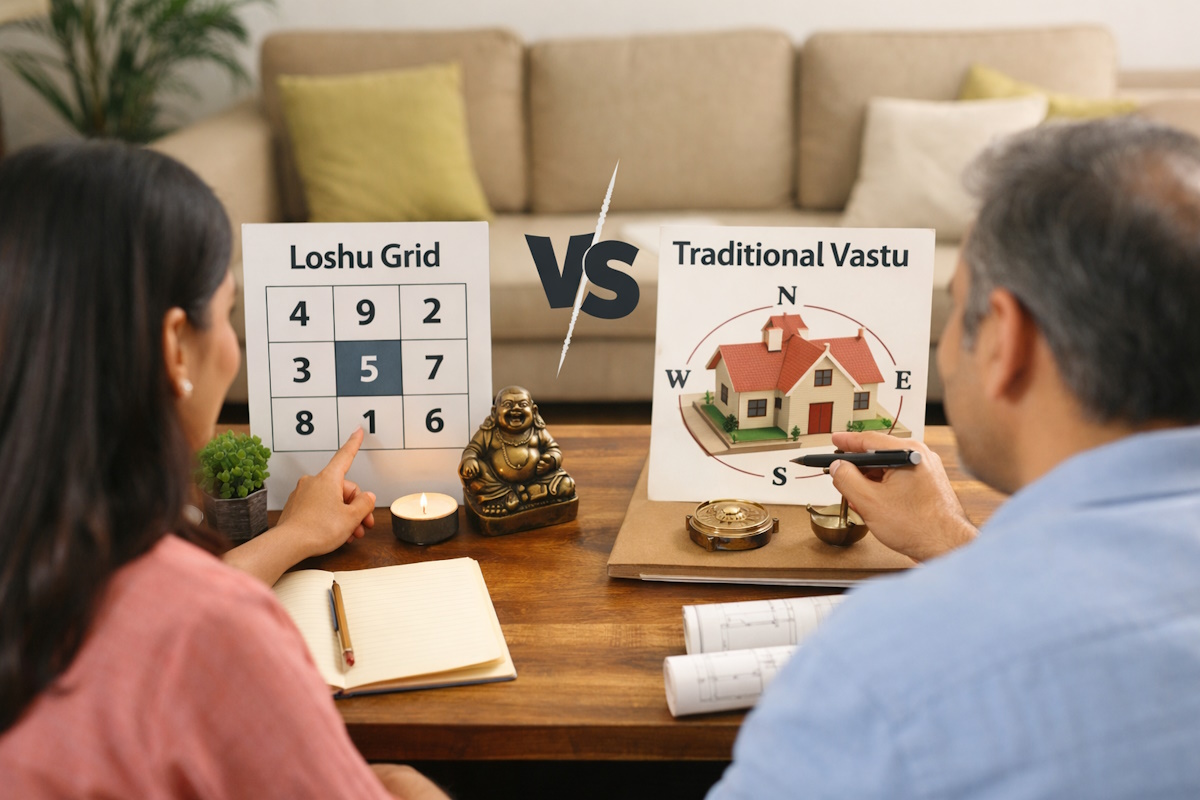
  • Combining Kundli, Lo Shu Grid, and Vastu Zones for the Most Accurate Home Design Blueprint

    Combining Kundli, Lo Shu Grid, and Vastu Zones for the Most Accurate Home Design Blueprint

    When you plan or buy a home, you are not just choosing walls and windows. You are locking in how energy moves around you every single day. Sleep, money flow, relationships, health, mental focus. All of it quietly responds to how your space is built and used.

    Most people look at Vastu alone and stop there. Some go deep into Kundli analysis but ignore the physical layout. A few designers play with the Lo Shu Grid as a numerology trick without grounding it in real floor plans.

    That fragmented approach leaves gaps.

    When Kundli, Lo Shu Grid, and Vastu zones are combined correctly, you get a home design blueprint that feels personal, grounded, and surprisingly practical. This method works for apartments, villas, duplexes, commercial offices, and even renovation projects where changes are limited.

    Let’s break it down in a way that actually helps you make decisions, not just admire theory.

    Why One System Alone Is Never Enough

    You have probably seen this situation.

    A flat is Vastu-compliant on paper, yet the owner struggles with finances or sleep. Another family lives in a technically “wrong” layout but thrives. Why does this happen?

    Because Vastu zones describe space, not people.

    Your Kundli describes you, not the building.

    The Lo Shu Grid connects both by translating numbers into spatial behavior.

    When these three are used together, the house stops being generic and starts responding to the people living inside it.

    Think of it like tailoring clothes. Standard sizes fit many, but custom stitching fits you.

    Check If Your Home Matches Your Kundli

    Understanding the Role of Kundli in Home Design

    Your Kundli is not just about marriage or career timing. It shows how you process energy.

    Some people are fire-dominant. Others lean heavy on water or earth. Some charts need stability. Some need movement.

    In home design, this matters more than most realize.

    A person with weak earth elements in the chart may struggle in homes with heavy southwest blockage. Someone with dominant fire energy may feel agitated if the kitchen energy spills into the bedroom zones.

    Kundli helps answer questions like:

    Why do you feel restless in one house and calm in another?

    Why does a northeast defect bother one family member more than others?

    Why does one sibling thrive in the same home while another struggles?

    By mapping planetary strengths and weaknesses, you get a personal energy requirement profile. This profile guides how strictly certain Vastu rules must be followed and where flexibility exists.

    Not every Vastu defect harms everyone equally.

    Lo Shu Grid as the Missing Translator

    The Lo Shu Grid is often misunderstood. People see it as numerology art and move on.

    That’s a mistake.

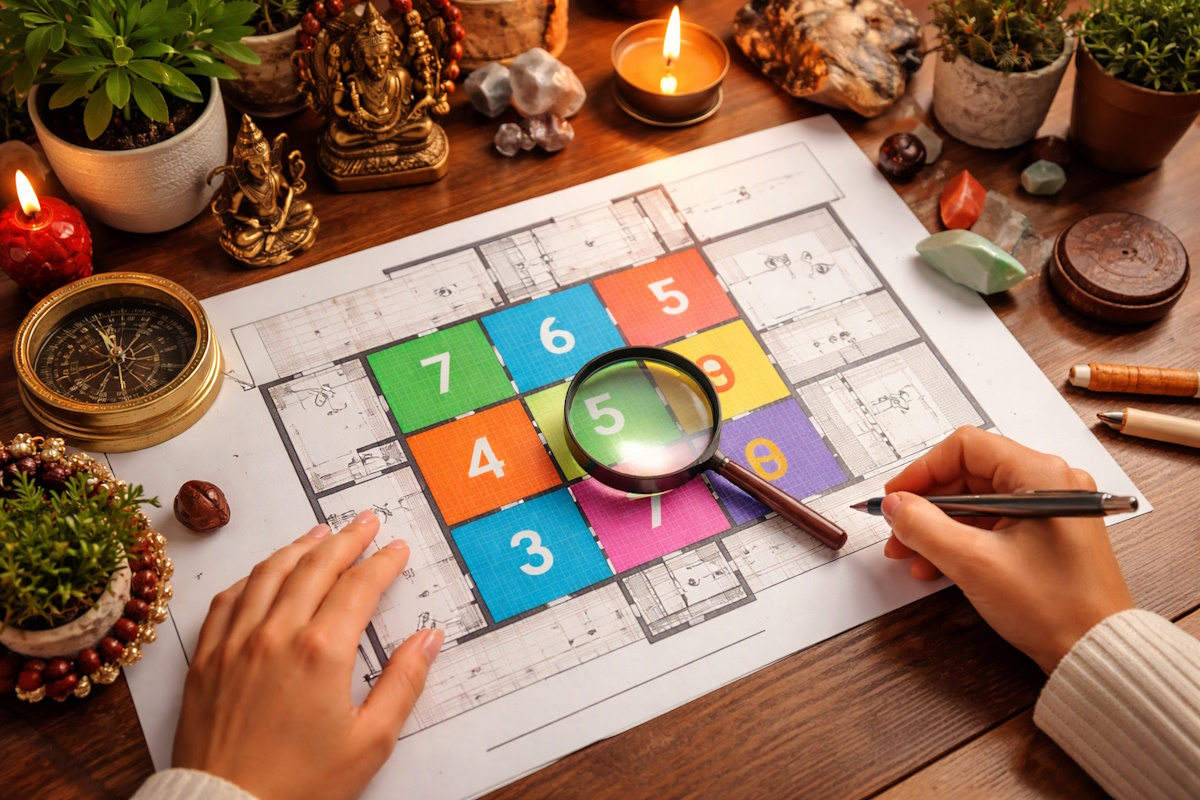
    The Lo Shu Grid converts numbers into behavioral zones. Each number governs a direction, an element, and a life theme. When placed over a floor plan, it shows how energy distributes itself inside your actual walls.

    This is where theory becomes visual.

    For example:

    Missing numbers in the grid often show repeated life struggles that no amount of effort fixes.

    Extra numbers reveal overstimulation. Too much activity, too many thoughts, too many expenses.

    Blocked numbers highlight stagnation. Efforts feel heavy. Progress comes slow.

    When the Lo Shu Grid is mapped after studying the Kundli, it becomes clear which zones need correction and which can be left alone.

    You stop over-fixing and start fixing what matters.

    Vastu Zones as the Structural Backbone

    Vastu zones are non-negotiable in certain areas. Structural energy sets the base.

    The northeast controls clarity, guidance, and decision-making.

    The southwest controls stability, authority, and long-term security.

    The southeast handles fire-related functions like cooking, power, and drive.

    The northwest governs movement, support, and networking.

    These zones exist whether you believe in them or not. Walls, corners, and extensions influence them daily.

    Vastu gives the map. Kundli tells who is traveling. Lo Shu shows traffic patterns.

    When all three align, the house works with you instead of testing you.

    Step-by-Step Blueprint Integration

    Step 1: Start With the Kundli of Primary Residents

    Focus on the people who spend the most time in the house. Usually the earning member and spouse.

    Look for:

    • Weak or overactive elements
    • Planetary stress related to money, health, or relationships
    • Repetitive life patterns that seem stuck

    This step defines priorities. Without it, you risk fixing irrelevant zones.

    Step 2: Overlay the Lo Shu Grid on the Floor Plan

    Take the exact floor plan. No guessing. Scale matters.

    Place the Lo Shu Grid accurately aligned with directions. This shows:

    • Which life themes dominate which rooms
    • Where energy feels noisy or silent
    • Which numbers are missing or overloaded

    For apartments, this step is gold because structural changes are limited.

    Step 3: Cross-Check With Vastu Zones

    Now verify how Lo Shu findings sit inside Vastu zones.

    A missing Lo Shu number in the southwest carries more weight than the same issue in the northwest.

    A cluttered number five zone behaves differently if it falls in the center versus a corner.

    This cross-check prevents overreaction.

    Step 4: Design Corrections That Respect All Three

    Corrections should never fight the structure or the resident’s nature.

    For example:

    A Kundli needing calm should not get aggressive fire remedies.

    A Lo Shu overload should be reduced, not amplified with colors or objects.

    A Vastu defect in a rented flat should be balanced subtly, not structurally altered.

    This is where experience matters more than rules.

    Get Your Personalized Home Blueprint

    Real-Life Application in Modern Apartments

    Apartments rarely give you perfect layouts. Kitchens spill into odd corners. Toilets sit where no textbook wants them.

    This integrated approach shines here.

    Let’s say the northeast has a toilet. Classic Vastu alarm.

    But the Kundli shows strong water dominance and spiritual stability. The Lo Shu grid shows number one well-balanced and not overstimulated.

    In this case, panic fixes can do more harm than good. A light balancing approach works better than aggressive remedies.

    On the flip side, a small bedroom in the southwest might look fine structurally. Yet if the Lo Shu shows missing number eight and the Kundli shows career instability, this room becomes a priority.

    You fix the person-space relationship, not just the room.

    Designing Bedrooms With This Combined Method

    Bedrooms are where this blueprint delivers fast results.

    Master bedroom placement should support the chart of the primary earner. Not just tradition.

    Children’s rooms benefit from Lo Shu number alignment more than strict directional rules.

    Guest rooms can absorb minor defects without much impact.

    Furniture placement matters too. Bed orientation, mirrors, and storage placement shift Lo Shu behavior inside a Vastu zone.

    Small tweaks here often improve sleep and focus within weeks.

    Kitchen Placement and Fire Balance

    The kitchen is not just about southeast or northwest.

    Fire energy must match the resident’s tolerance.

    Some charts handle high fire well. Others burn out fast.

    Lo Shu reveals whether fire numbers are excessive. Vastu tells where fire belongs. Kundli confirms how much is too much.

    Gas stove direction, appliance clustering, and color choice all play a role.

    This is not decoration. This is regulation.

    Toilets, Drainage, and Energy Leakage

    Toilets are unavoidable in modern design. The question is control.

    Lo Shu shows where energy drains feel personal.

    Kundli shows which life area cannot afford leakage.

    Vastu tells which zones tolerate waste better than others.

    By combining all three, you decide where strict remedies are needed and where neutralization is enough.

    This saves money and avoids unnecessary fear.

    Home Office and Work-from-Home Zones

    Work-from-home changed everything.

    Your desk is now a power zone.

    Lo Shu grid identifies focus and authority numbers.

    Kundli reveals communication and decision-making patterns.

    Vastu confirms directional support.

    Together, they decide:

    • Desk placement
    • Facing direction
    • Lighting intensity
    • Storage location

    This setup often improves productivity without increasing work hours.

    Commercial Spaces and Investment Properties

    Investors often ignore personal charts. Big mistake.

    Even rental income responds to owner energy.

    Shops, offices, and rental units perform better when the owner’s Kundli supports the layout.

    Lo Shu helps balance tenant turnover patterns.

    Vastu keeps the space attractive long-term.

    This approach is subtle but effective, especially for long-hold investors.

    Renovation Versus New Construction

    New construction gives flexibility. Renovation demands restraint.

    In renovations, Lo Shu adjustments through usage changes work better than breaking walls.

    Kundli-based prioritization prevents wasted effort.

    Vastu corrections focus on entrances, kitchens, and master bedrooms first.

    You do not need to fix everything at once.

    Common Mistakes to Avoid

    One-size-fits-all remedies
    Overloading a weak zone with objects
    Ignoring the resident’s chart
    Blindly copying someone else’s layout
    Fixing visible defects while missing subtle ones

    These mistakes create confusion and disappointment.

    When This Blueprint Works Best

    This combined method works best when:

    You feel stuck despite “correct” Vastu
    Different family members experience opposite results
    You want long-term stability, not quick hacks
    You live in a modern apartment with constraints
    You want clarity before buying or constructing

    If any of these sound familiar, this approach is worth serious thought.

    Talk to a Vastu Expert Before You Decide

    Final Thoughts for Homeowners and Designers

    Combining Kundli, Lo Shu Grid, and Vastu zones is not about adding layers of belief. It is about reducing guesswork.

    You stop asking, “Is this right or wrong?”

    You start asking, “Is this right for me?”

    That shift changes everything.

    If you are planning a home, buying property, or redesigning your space, do not settle for generic layouts. Your life is not generic.

    Use this blueprint. Ask better questions. Design spaces that work with you, not against you.

    Your home should feel like support, not resistance.

    And once it does, you will know.

  • Planet Mars and Vastu: Correcting Fire Zone Imbalances for Career & Confidence

    Planet Mars and Vastu: Correcting Fire Zone Imbalances for Career & Confidence

    When people talk about career blocks, low confidence, or constant clashes at work, Mars rarely gets mentioned in everyday conversations. In Vastu, Mars quietly plays a loud role. It governs action, courage, stamina, leadership, and your ability to push forward when pressure hits. If Mars energy goes off balance inside your home or workplace, you often feel it before you understand it.

    You might notice hesitation during decisions, short temper without reason, or a strange pattern of effort without results. That is usually not luck or mindset alone. It often ties back to the Fire Zone and how Mars energy flows through your space.

    This article looks at Planet Mars and Vastu in a way that matches real homes, modern apartments, offices, and mixed-use spaces. No theory dumps. Just practical guidance you can actually use.

    Understanding Mars Energy in Daily Life

    Mars represents drive. It is the force that makes you stand up for yourself, take initiative, and follow through. In professional life, Mars supports ambition, authority, risk-taking, and competitive spirit. When balanced, you feel confident without being aggressive. You work with clarity and assertiveness.

    When Mars weakens or becomes excessive, the effects show up fast. Career stagnation. Fear of confrontation. Sudden anger during meetings. Missed promotions. Physical fatigue. Even small injuries or inflammations can increase.

    Vastu treats Mars energy as fire-based. That fire needs direction and containment. Too little fire leads to indecision. Too much fire burns stability.

    The Fire Zone and Its Link to Mars

    In Vastu, the Fire Zone primarily relates to the Southeast direction. This area is ruled by Agni and strongly influenced by Mars. In many homes, this zone ends up misused without anyone realizing it.

    Think of modern layouts. Kitchens pushed into random corners. Electrical panels placed wherever convenient. Bedrooms occupying zones not meant for rest. These design choices quietly disturb Mars.

    The Fire Zone is not just about cooking. It handles momentum, metabolism, confidence, and financial action. When this zone gets blocked, Mars loses its clarity.

    Check Your Fire Zone for Mars Imbalance

    Common Fire Zone Mistakes in Modern Homes

    Most people do not live in custom-built houses anymore. Apartments come with fixed layouts. That does not mean Vastu stops applying. It means correction matters more.

    Here are frequent issues seen in real homes.

    Bedroom in the Fire Zone

    Sleeping in the Southeast for long periods can overheat Mars energy. People living here often report restlessness, anxiety, impatience, and strained work relationships. Career pressure feels heavier than it should.

    For couples, this placement also increases arguments. Mars does not like prolonged rest energy.

    Kitchen Outside the Fire Zone

    A kitchen placed in the North, Northeast, or Southwest weakens Mars. This often reflects as lack of drive, delayed career growth, or difficulty asserting yourself at work. You may work hard yet feel invisible.

    In high-rise apartments, kitchens often end up in the Northwest or North due to plumbing planning. This is one of the biggest Mars-related problems today.

    Heavy Storage in Southeast

    Storing junk, old files, or heavy cupboards in the Fire Zone suppresses Mars. Fire needs space. Blocking it with weight creates stagnation. This often mirrors slow promotions, fear of change, or feeling stuck in one role.

    Water Elements in Fire Zone

    Aquariums, water purifiers, sinks, or even blue-heavy decor in Southeast creates a clash. Water cools fire. Over time, this dampens confidence and courage.

    Mars Imbalance and Career Patterns

    People often ask how Vastu connects to career in real terms. Mars-related Vastu defects show specific patterns.

    You might see repeated conflicts with bosses. Authority issues. Difficulty managing teams. Projects starting strong and ending weak. Feeling drained after work even when workload seems normal.

    For entrepreneurs, weak Mars leads to hesitation in decision-making. You overthink risks. Deals slip away. Strong Mars without control leads to impulsive choices and financial losses.

    Recognizing the pattern helps you correct the root cause instead of blaming circumstances.

    Fire Zone Corrections That Actually Work

    Correction does not mean demolition. It means strategic changes.

    If the Kitchen Is Not in Southeast

    If relocation is not possible, activate the Fire Zone symbolically. Place red, terracotta, or copper elements in the Southeast area of your home. A small lamp used daily works well. Consistency matters more than size.

    Avoid using water-related items here. Even artwork with flowing water should be moved out.

    If You Sleep in the Fire Zone

    If shifting bedrooms is not possible, reduce fire intensity. Use earthy tones instead of red. Avoid mirrors facing the bed. Keep electronics minimal. Add grounding elements like clay decor or beige textiles.

    Also, sleep with your head towards the South or West to stabilize Mars energy.

    If Fire Zone Is Used as Storage

    Clear it. This sounds basic, yet it is one of the most powerful Mars corrections. Remove unused items. Keep the area open and clean. Fire thrives in clarity.

    Even removing one heavy cupboard can shift how you feel within weeks.

    Get a Personalized Mars Vastu Review

    Mars and Confidence Inside the Home

    Confidence is not loud behavior. It is inner stability. Mars supports this when balanced.

    A strong Fire Zone helps you speak clearly in meetings, negotiate salaries, and set boundaries. You feel present in your body. Your voice carries weight.

    People with disturbed Mars often say they feel ignored or overshadowed. Their ideas get picked by others. This is not imagination. Spatial energy affects how you project yourself.

    Simple acts like proper lighting in the Southeast, using warm colors, and avoiding clutter restore this projection.

    Office Vastu and Mars Energy

    Mars is even more critical in workspaces.

    Seating Direction

    Facing South while working strengthens Mars. It supports authority and command. Facing East supports clarity. Avoid facing North if you already struggle with confidence.

    If you manage teams, South-facing seating can improve how people respond to you.

    Fire Zone in Offices

    In offices, the Fire Zone should handle electrical equipment, servers, or pantry spaces. Placing toilets or water coolers here weakens Mars across the entire workplace.

    If your cabin falls in the Southeast, ensure it feels active and well-lit. Avoid dull colors or heavy furniture.

    Mars for Entrepreneurs and Freelancers

    If you work independently, your home becomes your power center. Mars imbalance hits harder here.

    Entrepreneurs need controlled aggression. The courage to pitch. The discipline to execute. Weak Mars shows up as procrastination. Strong but unstable Mars shows as burnout.

    Your work desk should never sit in the Fire Zone facing North. This creates internal conflict. Instead, sit in the West or Southwest facing East or North depending on your role.

    Also, avoid working from bedrooms placed in the Fire Zone. This mixes rest and action energy in unhealthy ways.

    Health Signals Tied to Mars Vastu

    Career and confidence often connect with physical signs.

    Mars imbalance may show as frequent headaches, acidity, blood pressure issues, muscle pain, or minor injuries. These are not random.

    If these symptoms increase after moving into a new home or office, review the Fire Zone first.

    Balancing Mars through Vastu often eases these patterns alongside medical care.

    Fire Zone Colors and Materials That Support Mars

    Color therapy in Vastu works when applied with restraint.

    For Fire Zone correction, shades like brick red, rust, coral, and muted orange help. Avoid glossy finishes. Natural textures work better.

    Copper, clay, and stone strengthen Mars without overstimulation. Plastic-heavy decor weakens grounding.

    Lighting should be warm. White tube lights kill fire energy. Yellow or warm LED tones suit better.

    What Not to Do With Mars Corrections

    Overdoing fire creates new problems. Avoid turning the Southeast into a red showroom. Mars likes balance.

    Do not place religious water-based symbols in Fire Zone. Do not keep broken electronics here. Do not ignore ventilation. Fire needs airflow.

    Small, steady changes outperform dramatic ones.

    Mars and Relationships at Work

    Mars also rules how you handle competition. Balanced Mars lets you compete without hostility. Disturbed Mars creates jealousy or passive behavior.

    If office politics drain you, look at your Fire Zone. Strengthening it often brings mental toughness. You stop taking things personally. You respond instead of react.

    This shift often surprises people. They feel stronger without changing external behavior much.

    Renting Homes and Mars Vastu

    Renters often think Vastu does not apply to them. That belief causes unnecessary struggle.

    You can correct Mars energy even in rented spaces. Lamps, colors, layout changes, and clutter removal do not require construction.

    If a rental has severe Fire Zone issues like toilets in Southeast, compensate by strengthening Mars in other areas like South and Southwest.

    Short stays still matter. Energy adjusts quickly.

    Planet Mars and Vastu in High-Rise Living

    High-rise buildings bring shared walls, limited directions, and fixed utilities. This makes Mars balancing more important, not less.

    Check where the Southeast of your flat lies. It might fall inside a bedroom, balcony, or living room corner. Treat that zone consciously.

    Balconies in Fire Zone should not host water plants. Use sun-loving plants or clay pots instead.

    Do not block sunlight here. Natural light feeds Mars.

    When Career Improves After Mars Correction

    People often notice subtle shifts first. Better focus. Reduced fear during conversations. Improved sleep. Then career movement follows.

    Mars corrections do not magically hand you promotions. They remove internal resistance. You act when needed. You speak at the right moment.

    That is usually enough.

    Fix Career Blocks Linked to Mars Energy

    Final Thoughts for You

    Planet Mars and Vastu work together whether you believe in them or not. Space influences behavior. Behavior shapes outcomes.

    If career and confidence feel off despite effort, stop blaming yourself. Look at your Fire Zone. Correct it patiently. Observe changes over weeks, not days.

    You do not need to become aggressive. You just need your fire back.

    If you live or work in a space that constantly drains you, something is wrong at the spatial level. Fixing Mars imbalance often becomes the turning point people were searching for outside.

    Take a walk around your home today. Find the Southeast. See what sits there. That small awareness might be the first real career move you make this year.

  • Moon-Based Vastu Corrections: Enhancing Emotional Harmony Through Spatial Design

    Moon-Based Vastu Corrections: Enhancing Emotional Harmony Through Spatial Design

    You do not wake up one morning and decide your home feels emotionally off. It creeps in. Restless sleep. Short tempers. A sense that the space drains you instead of holding you. Many people assume stress, workload, or relationships are the cause. Sometimes they are. Other times, the emotional imbalance starts with how the Moon energy flows inside your home.

    In Vastu, the Moon governs the mind, emotional stability, sleep quality, intuition, and how safe you feel within your own walls. When Moon-related zones are disturbed, people often feel anxious for no clear reason. They overthink. Children become moody. Couples stop communicating properly. These are not abstract ideas. Realtors see it when buyers walk into certain flats and say, “Something feels heavy here.” Architects notice it when occupants complain even though the layout looks perfect on paper.

    Moon-based Vastu corrections focus on calming the mind through spatial adjustments. You are not fixing walls. You are fixing how the space supports your emotional rhythm.

    Let’s break this down in practical terms that actually work in modern homes.

    Understanding the Moon’s Role in Vastu

    The Moon represents your internal world. It rules emotions, memory, sensitivity, sleep cycles, and mental peace. In Vastu, Moon energy connects strongly with the North-West direction and partially with the North.

    When Moon energy is balanced, the house feels nurturing. People communicate better. Sleep improves. Decision-making becomes calmer. When it is disturbed, the home feels restless even when everything looks fine.

    This shows up in real life as:

    • Sudden mood swings
    • Overthinking late at night
    • Frequent misunderstandings
    • Feeling unsettled at home
    • Emotional burnout without physical exhaustion

    Moon-based Vastu corrections aim to stabilize these patterns using placement, materials, colors, and spatial behavior.

    Check Your Home’s Moon Energy Balance

    North-West Zone and Emotional Movement

    The North-West governs movement, thoughts, emotional flow, and adaptability. This zone needs to breathe. When blocked or overloaded, emotional congestion sets in.

    Common North-West Mistakes

    In apartments and villas, the North-West often gets misused. You will see:

    • Heavy storage cupboards
    • Overloaded shelves
    • Unused furniture
    • Toilets with dark finishes
    • Kitchens placed here in compact flats

    These setups create emotional pressure. Residents feel mentally rushed or emotionally reactive.

    Practical Corrections

    You do not need demolition. Small changes work.

    Keep the North-West lighter than the rest of the house. Avoid floor-to-ceiling storage. If a cupboard already exists, reduce clutter inside it. This alone makes a difference.

    Use soft colors like off-white, light gray, or muted beige. Avoid deep blues or heavy browns here. Light textures calm emotional movement.

    If this zone has a toilet, keep it dry, well-lit, and odor-free. Use lighter tiles if possible. Place a bowl of sea salt and change it weekly. It absorbs emotional heaviness.

    This zone responds quickly to correction. People often report better sleep within weeks.

    Bedroom Placement and Moon Energy

    Your bedroom is where Moon energy affects you the most. This is where emotional healing or damage happens quietly.

    Best Bedroom Direction for Emotional Stability

    South-West is ideal for the master bedroom. It grounds the Moon energy. You feel secure and mentally settled.

    If South-West is unavailable, West works better than North or North-East for adults who struggle with anxiety or emotional overload.

    Bedrooms in North-East often create over-sensitivity. People become emotionally fragile, especially children or elderly residents.

    Bed Placement Matters

    The bed should not be directly under beams. Beams press on the Moon energy and disturb sleep cycles.

    Avoid mirrors facing the bed. Mirrors overstimulate the mind at night. If removal is not possible, cover them during sleep.

    Headboard should be solid and placed against a stable wall. Avoid beds floating in the center of the room. Emotional grounding requires physical support.

    Get Personalized Moon-Based Vastu Corrections

    Colors That Support Moon-Based Vastu Corrections

    Color is not decoration in Vastu. It is emotional programming.

    Moon energy responds to cool, gentle tones. Loud or aggressive colors disturb emotional balance.

    Recommended Colors

    Use soft whites, cream, pale silver, light pastel shades, and muted blues in Moon-influenced areas.

    Bedrooms benefit from neutral walls rather than bright accent colors. You want the mind to slow down when you enter the room.

    Living rooms in North-West can handle slightly warmer neutrals but avoid red, dark orange, or bold yellow.

    Curtains and upholstery matter too. Heavy prints or high-contrast patterns overstimulate emotions.

    If repainting is not an option, adjust through fabrics. Cushion covers, bed linen, rugs, and curtains can quietly correct Moon imbalance.

    Lighting and Emotional Calm

    Moon energy thrives in gentle lighting. Sharp or uneven light creates mental agitation.

    What to Avoid

    Avoid harsh white LED lights in bedrooms and North-West zones. Flickering lights are especially harmful for emotional stability.

    Avoid single overhead lights that create shadows.

    What Works Better

    Use layered lighting. Table lamps, wall lights, and soft warm bulbs help the nervous system relax.

    Natural moonlight entering through windows is beneficial. Do not block North or North-West windows with heavy curtains all day.

    At night, dim lighting signals the mind to rest. This simple shift often improves sleep without any medication.

    Water Elements and Moon Balance

    The Moon governs water. This connection is powerful and often misused.

    Correct Use of Water

    A small water feature in the North or North-West can support emotional calm. This works well in larger homes or villas.

    In apartments, even a glass bowl with clean water placed in North-West can help. Change the water daily.

    Aquariums work only if maintained well. Dirty or neglected aquariums create emotional chaos.

    What to Avoid

    Avoid water features in bedrooms. This increases emotional sensitivity and restlessness.

    Leaking taps or damp walls disturb Moon energy badly. Fix leaks immediately. Even small drips impact emotional peace over time.

    Bathrooms in North-West need extra care. Keep them dry and ventilated.

    Emotional Clutter and Storage Habits

    Moon-based Vastu corrections fail when emotional clutter stays hidden.

    Storage reflects unresolved emotions. Overfilled cupboards in bedrooms trap mental stress.

    What to Do

    Clear under-bed storage. This is critical. Under-bed clutter interferes with sleep and emotional processing.

    Avoid storing old letters, unused gifts, or broken items in sleeping areas. These carry emotional residue.

    Wardrobes should not spill out mentally. If opening a cupboard stresses you, it affects your Moon energy daily.

    This is not minimalism hype. It is emotional hygiene.

    Moon Energy in Living Rooms

    Living rooms set the emotional tone of the home.

    If guests feel uneasy or conversations turn tense, Moon imbalance is often present.

    Seating and Layout

    Avoid sharp-edged furniture pointing toward seating areas. Rounded edges feel emotionally safer.

    Seating should allow people to face each other comfortably. Scattered or disconnected seating creates emotional distance.

    Television placement matters. Avoid dominating the room with oversized screens. Excessive screen presence overstimulates the mind.

    Decorative Choices

    Family photos help Moon energy when placed thoughtfully. Avoid sad or aggressive imagery.

    Art with calm themes works better than abstract chaos. Your subconscious absorbs this daily.

    Children’s Rooms and Moon Corrections

    Children react faster to Moon imbalance. Behavioral changes often start at home.

    Common Signs

    Children may become irritable, fearful, or emotionally withdrawn.

    They may struggle with sleep or sudden mood swings.

    Practical Fixes

    Avoid placing children’s rooms in North-East if possible. West or North-West works better for emotional adaptability.

    Use soft colors. Avoid dark themes or intense cartoon walls.

    Night lights should be gentle. Complete darkness sometimes increases anxiety.

    Remove excessive toys from sleeping areas. Too much stimulation keeps the mind active.

    Parents often see emotional improvement without changing schools or routines.

    Work-From-Home and Emotional Drain

    Many people now work from bedrooms or living rooms. This blurs emotional boundaries.

    Moon-based Vastu corrections become crucial here.

    Workspace Placement

    Avoid working from the bed. This confuses rest and stress zones.

    If working from a bedroom is unavoidable, separate the work area visually using a screen or rug.

    Face East or North while working to keep mental clarity without emotional exhaustion.

    End work with a small closing ritual. Switch off the lamp, close the laptop, and clear the desk. This signals emotional closure.

    Moon-Based Vastu Corrections Without Structural Changes

    You do not need to rebuild your home.

    Simple actions create real shifts:

    • Clean North-West weekly
    • Reduce clutter in bedrooms
    • Adjust lighting
    • Use calming colors
    • Improve ventilation
    • Fix leaks
    • Respect sleep zones

    These steps work quietly but consistently.

    People often report feeling lighter, sleeping deeper, and reacting less emotionally within a month.

    Emotional Harmony Is Not Decorative

    Moon-based Vastu corrections are not about trends. They are about how your home supports your emotional baseline.

    If your space keeps you alert when you should be resting, or drained when you should feel safe, something needs correction.

    You do not need blind belief. You need observation.

    Notice how you feel in each room. Your emotions are giving feedback.

    When the Moon energy flows smoothly, the home stops demanding attention. It simply supports you.

    That is emotional harmony through spatial design.

    Talk to a Vastu Expert About Emotional Imbalance at Home

  • Lo Shu Grid for Property Selection: Choosing a Numerology-Friendly Home

    Lo Shu Grid for Property Selection: Choosing a Numerology-Friendly Home

    When you start looking for a home, you are not just choosing walls and windows. You are choosing how your daily life flows. Most people sense this instinctively. Some homes feel calm the moment you step in. Others feel off, even if everything looks perfect on paper. This is where the Lo Shu Grid for property selection becomes useful, especially if you care about numerology and practical Vastu logic.

    You do not need to be a numerology expert to use the Lo Shu Grid. You only need clarity, patience, and a willingness to observe how numbers interact with space. This approach works for apartments, villas, high-rise flats, resale properties, and even commercial investments. It is not mystical guesswork. It is pattern reading based on numbers that influence human behavior, comfort, and decision-making.

    Let us walk through it step by step, without fluff.

    What the Lo Shu Grid Really Is

    The Lo Shu Grid is a 3×3 numeric grid used in numerology. Each square holds a number from 1 to 9. The arrangement is fixed and never changes.

    The grid looks like this:

    4 | 9 | 2
    3 | 5 | 7
    8 | 1 | 6

    Every number represents a specific type of energy. Not symbolic poetry. Real-life themes. Money habits, communication, health, stability, authority, relationships, and mental peace.

    When applied to property selection, the Lo Shu Grid helps you understand how a home supports or blocks these areas of life.

    Think of it as a personality check for a house.

    Why Property Selection Using Lo Shu Grid Matters

    You can renovate a kitchen. You can repaint walls. You can change furniture. What you cannot easily change is the base number of the property and how it interacts with you.

    Many people move into good-looking homes and then struggle with constant expenses, unstable careers, or family friction. They blame luck or timing. Often, the issue sits quietly in the numbers tied to the property.

    Using the Lo Shu Grid for property selection helps you avoid that mismatch.

    It is especially useful if you are:

    • Buying your first home
    • Investing in rental property
    • Choosing between multiple units in the same building
    • Planning a long-term residence
    • Running a business from home

    This grid does not promise miracles. It helps you choose wisely.

    Step One: Finding Your Property Number

    Before you apply the Lo Shu Grid, you need the property number.

    Take the flat number, house number, or unit number. Add all digits until you get a single digit between 1 and 9.

    Example:

    Flat 1206
    1 + 2 + 0 + 6 = 9

    That property carries number 9 energy.

    If your house number reduces to 11 or 22, reduce it further. In property numerology, single digits work best for clarity.

    Step Two: Understanding Your Core Number

    Your personal numerology number matters. Most people use their Life Path number based on date of birth.

    Add your birth date digits until you reach a single digit.

    Example:
    Born on 14 June 1987
    1 + 4 + 0 + 6 + 1 + 9 + 8 + 7 = 36
    3 + 6 = 9

    Your core number is 9.

    Why does this matter? Because the Lo Shu Grid works best when the property number supports your personal number.

    A house does not need to match you exactly. It needs to cooperate.

    Check Your Property Number Compatibility

    Mapping the Property Number on the Lo Shu Grid

    Once you know the property number, place it mentally into the Lo Shu Grid.

    Each number activates certain zones of life.

    Here is what each number represents in practical terms.

    Number 1 Properties – Independence and Fresh Starts

    Number 1 sits in the bottom center of the grid.

    Homes with number 1 energy support independence, leadership, and personal drive. These homes suit people starting new chapters. Entrepreneurs, freelancers, or individuals living alone often feel comfortable here.

    Good for:

    • Career-focused people
    • Startups and home offices
    • People rebuilding life after a change

    Not ideal if you want slow, stable family routines.

    In apartments, number 1 flats often feel quiet but mentally stimulating.

    Number 2 Properties – Relationships and Emotional Balance

    Number 2 occupies the top right of the grid.

    These homes support emotional bonding, partnerships, and diplomacy. Couples, newlyweds, and families planning children usually resonate with this number.

    Good for:

    • Marriage and partnerships
    • Counseling or care-based professions
    • Homes where harmony matters

    If you are too emotionally sensitive, this number can feel heavy. Balance is key.

    Number 3 Properties – Communication and Activity

    Number 3 sits in the middle left.

    This number brings movement, conversations, and social life. Homes with this energy rarely feel dull.

    Good for:

    • Media professionals
    • Sales and marketing roles
    • Social families

    If you crave silence or struggle with overthinking, number 3 homes may feel noisy even when quiet.

    Number 4 Properties – Stability and Structure

    Number 4 is in the top left corner.

    This is a practical number. Hardworking. Disciplined. These homes suit people who like routines and systems.

    Good for:

    • Government employees
    • Engineers and planners
    • Long-term ownership

    Sometimes these homes feel restrictive if flexibility matters to you.

    Number 5 Properties – Balance and Adaptability

    Number 5 sits at the center of the grid.

    This is the most flexible number. It balances extremes and adapts easily. Homes with number 5 energy suit most people.

    Good for:

    • Families with mixed age groups
    • People handling multiple roles
    • Long stays

    This is often a safe choice when in doubt.

    Number 6 Properties – Comfort and Material Pleasure

    Number 6 occupies the bottom right.

    These homes emphasize comfort, beauty, and material enjoyment. They support family life and financial ease.

    Good for:

    • Families
    • Creative professionals
    • People who value aesthetics

    Overspending can become a pattern if discipline is weak.

    Number 7 Properties – Introspection and Learning

    Number 7 sits in the middle right.

    These homes suit thinkers, researchers, and spiritual seekers. They often feel quiet and private.

    Good for:

    • Academics
    • Writers
    • People who enjoy solitude

    Not ideal for very social households or noisy families.

    Number 8 Properties – Authority and Financial Growth

    Number 8 lies in the bottom left.

    This is a strong number for money, power, and ambition. These homes suit people in leadership roles.

    Good for:

    • Business owners
    • Investors
    • Career-driven individuals

    Stress levels can rise if work-life balance is ignored.

    Number 9 Properties – Completion and Influence

    Number 9 sits at the top center.

    These homes carry intense energy. They support recognition, influence, and closure of cycles.

    Good for:

    • Public figures
    • Healers and mentors
    • People ending a long phase of life

    Emotional intensity can be high.

    Matching You With the Right Property Number

    Here is where real decisions happen.

    You do not need a perfect match. You need compatibility.

    If your personal number is 1, properties with 1, 3, or 5 often work well.

    If your number is 2, look for 2, 6, or 9 properties.

    If your number is 4, 4, 8, and 5 usually support stability.

    If your number is 5, most properties feel manageable.

    If your number is 6, 2 and 6 properties feel nurturing.

    If your number is 7, 5 and 7 properties support clarity.

    If your number is 8, 4 and 8 properties feel grounded.

    If your number is 9, 1 and 9 properties feel purposeful.

    This is not rigid math. It is alignment.

    Get Expert Help Before Final Booking

    Applying Lo Shu Grid in Apartments and High-Rises

    Many people think numerology works only for independent houses. Not true.

    In apartments, the flat number carries primary influence. Floor number acts as secondary influence.

    If your flat number is strong but the floor number clashes slightly, it usually balances out.

    For example, Flat 504 on the 9th floor
    Flat number 5 supports balance
    Floor number 9 adds intensity

    This works well for people managing high-pressure roles.

    Using Lo Shu Grid for Investment Properties

    Investors often ignore numerology. That is a mistake.

    Rental properties perform better when the property number attracts stable tenants.

    Number 5 and 6 properties rent easily.

    Number 8 properties attract business tenants.

    Number 7 properties may stay vacant longer but attract long-term renters.

    Use the Lo Shu Grid for property selection to predict tenant behavior. It saves time and stress.

    Can You Fix a Mismatch Property?

    Yes, to an extent.

    Interior Vastu corrections, color choices, and room usage can soften imbalance. Still, do not expect complete reversal.

    If you are choosing between options, choose better alignment from the start.

    If you already live there, work with what you have.

    Common Mistakes People Make

    One mistake is choosing a property only because the number sounds lucky.

    Another mistake is ignoring personal numerology completely.

    Some people overcorrect and start fearing numbers. That is unnecessary.

    This system is a guide, not a rulebook.

    Avoid Costly Property Mismatches

    Final Thoughts for Practical Buyers

    If you are serious about long-term comfort, the Lo Shu Grid deserves attention. It gives structure to what people usually call gut feeling.

    Use it when comparing properties. Use it before final booking. Use it to understand why some homes feel supportive and others drain energy.

    A numerology-friendly home does not shout. It quietly supports your life.

    If you are standing between two similar properties right now, pause. Run the numbers. Let the grid speak.

  • Ethical Vastu Consulting: How to Avoid Fear-Based, Superstitious Advice

    Ethical Vastu Consulting: How to Avoid Fear-Based, Superstitious Advice

    Vastu has moved into modern homes, condos, and commercial spaces in a big way. People want clarity, not confusion. Yet many homeowners end up stressed because someone told them a mirror will ruin their life or a misplaced plant will destroy their money flow. You may have heard stories like that too. None of it helps you make grounded decisions about your space.

    Ethical Vastu consulting focuses on practical choices without pushing fear. The goal is simple. Help you create a steady, functional space that supports your routine. No dramatic warnings. No superstition. No pressure to remodel your entire house.

    This guide breaks down how ethical Vastu works, how to spot red flags, and how you can confidently make changes in your home or office without feeling scared or overwhelmed.

    What Makes Vastu Ethical Today

    Vastu comes from ancient architectural ideas, but modern homes are different. You live in high-rise apartments, condo units with HOA limits, small city lots, or open-plan layouts where directions overlap. Ethical consulting respects these real conditions.

    A responsible approach keeps three things in mind:

    1. Your home must stay functional.
    2. Recommendations need to fit your space and your budget.
    3. No advice should make you feel guilty or frightened.

    An ethical consultant guides you with reasoning. If they say the northeast corner needs to stay open, they should explain how light, circulation, and water activity support that part of the home. If they recommend shifting the bed, they need to explain how it affects sleep quality, not destiny.

    You deserve explanations that make sense in daily life.

    The Problem With Fear-Based Vastu

    Fear-based advice often pushes homeowners into panic. You hear words like “blocked energy”, “ruined luck”, or “dangerous placement”. Suddenly one mirror or a misplaced shoe rack becomes a threat.

    Fear creates pressure, and pressure leads to rushed decisions. That is where unethical consultants tend to profit by selling cures or remedies that do nothing for the space.

    Some typical fear-based patterns include:

    • Claiming your home is “bad” without studying your layout
    • Warning you that disaster is coming
    • Saying you must break walls or shift the main door
    • Selling items as instant fixes
    • Using guilt to force agreement

    Once you know these patterns, you can steer clear of them.

    How Ethical Consultants Give Advice

    Good consultants compare Vastu guidelines with real-world behavior. They look at how you use rooms, how sunlight enters the home, and what parts of the layout are easy or hard for you to maintain. They give you options and let you choose what feels practical.

    Here is what ethical guidance usually looks like:

    • They ask about your lifestyle and routine before talking about directions.
    • They check furniture placement and light flow before making claims about luck.
    • They offer simple adjustments such as moving a desk or shifting colors.
    • They avoid forcing structural changes unless absolutely required.
    • They treat Vastu as supportive, not predictive.

    You should feel informed, not intimidated.

    Avoiding Superstitious Interpretations

    Superstition often replaces reasoning. Someone might tell you a cracked tile will bring setbacks or a south-facing entrance will destroy finances. These statements ignore context. A south-facing home can work fine when the internal layout is balanced. A cracked tile is just a maintenance issue.

    Ethical Vastu avoids superstition by focusing on:

    • Light
    • Movement
    • Function
    • Ventilation
    • Safety
    • Comfort
    • Proportion

    Nothing mystical is hiding behind your drywall. When someone attaches drama to a normal household feature, that is superstition speaking, not good consulting.

    Understanding Directional Guidance Without Fear

    Every direction in Vastu has certain associations, but none of them should scare you. For example:

    Northeast

    People often stress over this corner because they hear it must stay completely open. In reality, it helps to keep this area bright and tidy. A small bathroom here is not the end of the world. You simply maintain cleanliness, avoid heavy storage, and keep ventilation strong.

    East

    This direction relates to morning light. If your apartment faces another building and gets little sunlight, it doesn’t mean problems. You just focus on better lighting inside, maybe lighter colors, and open blinds when you can.

    South

    Plenty of people panic over south-facing entries. Many south-facing houses in the US and Canada work perfectly. What matters is door placement, circulation around the foyer, and avoiding clutter that blocks movement. Ethical Vastu looks at the full picture, not old beliefs taken out of context.

    West

    Homes with a west entry sometimes worry families. The truth is simple. You manage heat, maintain airflow, and keep the space organized. No fear needed.

    When you understand the reasoning behind each direction, superstition fades.

    Start Your Free Vastu Analysis

    Why Modern Homes Need a Practical Lens

    If you live in a rental unit or condo, you cannot shift the kitchen, bathroom, or entry door. A responsible consultant understands these limitations. They help you apply Vastu within your restrictions instead of telling you the home is unusable.

    Some of the most common modern realities include:

    • Open kitchens that blend into living rooms
    • Bedrooms without exact north-south walls
    • Apartments where the main door faces a hallway
    • Multi-storey homes with shared ventilation
    • Corner lots with angled roads
    • Basement offices
    • Small studio apartments
    • Builder-grade layouts with fixed plumbing

    Real Vastu today respects these conditions. It guides you without asking you to tear your home apart.

    What Ethical Vastu Avoids

    There are some approaches you should never see in a professional consultation. These include:

    • Predicting tragedies
    • Claiming your home is cursed
    • Telling you to buy expensive items
    • Insisting on large-scale renovations
    • Giving advice without examining your layout
    • Using fear to justify services
    • Blaming your home for every personal issue

    Your house is not plotting against you. Any system that uses architecture to scare you is not ethical.

    How You Can Spot Unethical Advice Quickly

    Many homeowners ask how to tell if a consultant is pushing fear or superstition. There are a few simple checks.

    1. They avoid clear reasoning

    If someone repeats directional guidelines without connecting them to function or sunlight, you may want to step back.

    2. They speak in absolute rules

    Real spaces need flexibility. Anyone who treats every deviation as a crisis is relying on fear.

    3. They push instant cures

    Hanging one object cannot repair a badly planned room. A consultant should focus on layout, not magical items.

    4. They try to shame you

    No expert should make you feel responsible for old construction choices.

    5. They want you to feel dependent

    You should feel confident making decisions after a consultation, not lost without the consultant.

    If any of these show up, the advice is not grounded.

    Bringing Common Sense Into Vastu Remedies

    A lot of homeowners get overwhelmed by “remedies”. Ethical guidance keeps things simple. Remedies should be:

    • Easy to maintain
    • Inexpensive
    • Practical
    • Based on layout and use, not superstition

    For example, if you cannot shift your bed away from the window, you use a headboard. If the kitchen is in an off-direction, you maintain order, ventilation, and safe cooking practices. If the office desk faces a distracting wall, you improve lighting and adjust chair placement.

    You do not need costly items or metal pyramids. Common sense changes work better.

    How to Ask Better Questions During a Consultation

    Many people freeze during consultations because they don’t know what to ask. Here are questions that help you protect your space and your budget:

    • Can you explain why this direction matters in my layout?
    • Is this a preference or a strict requirement?
    • What is the simplest way to improve this area?
    • If I cannot change the structure, what are my options?
    • How does this recommendation support daily use?
    • Will this change affect safety or comfort?

    When you ask these questions, the consultant has to stay grounded. You steer the conversation toward clarity instead of superstition.

    Practical Vastu Without Panic: Room by Room

    Let’s look at how ethical Vastu works in different areas of the home. No fear. Just practical guidance.

    Living Room

    A living room should feel open and comfortable. The exact direction matters less than airflow and seating arrangement. Keep pathways clear. Avoid bulky furniture near the entry. If the shape of the room creates awkward pockets, use smart lighting or plants for balance.

    Kitchen

    People stress over kitchen direction more than needed. In apartments, you cannot move it anyway. Focus on safe cooking, functional storage, and good ventilation. Keep heat sources organized. Maintain order. These small steps often bring better results than shifting anything.

    Bedrooms

    If your bed faces the window or a mirror, adjust as needed for sleep quality. Choose sturdy headboards. Keep the room calm and clutter free. Directional rules help, but comfort matters more.

    Bathrooms

    Bathrooms often fall in directions that old texts consider sensitive. Modern plumbing doesn’t allow much change. Keep them dry, clean, and ventilated. That alone balances most concerns.

    Home Office

    Direction helps focus, but ergonomics matter more. Choose a desk that supports long hours. Keep your back to a solid wall when possible. Use bright lighting. Remove distractions. These improvements support productivity in a more reliable way than any symbolic cure.

    Commercial Spaces and Ethical Vastu

    Office spaces, restaurants, clinics, and retail stores often need quick decisions. Ethical consulting focuses on workflow and customer movement. It does not press for expensive redesigns unless absolutely necessary.

    For example:

    • A clinic needs calm waiting areas
    • A restaurant needs clear entry circulation
    • A store needs logical product flow
    • An office needs stable workstations

    These choices have more impact than minor directional concerns. Vastu supports the business layout instead of threatening it.

    Balancing Cultural Belief With Practical Design

    Many families follow Vastu because of tradition. Ethical consulting respects belief without exploiting it. There is room for spiritual comfort and modern function in the same space. The best approach blends practical layout adjustments with preferences that make you feel grounded.

    You might keep a prayer corner, choose calming colors, or maintain specific habits. These choices stay personal. They never replace logic.

    What To Do When Your Layout Looks Difficult

    Some homes feel tricky. Maybe your kitchen sits in a corner you read about online. Maybe your bedroom lacks a perfect placement for the bed. Ethical Vastu keeps your stress low.

    A responsible consultant will do the following:

    • Study circulation
    • Check sunlight
    • Look at room proportions
    • Prioritize safety
    • Suggest simple changes first
    • Work within your budget
    • Offer alternatives when one fix is not possible

    There is always a practical path.

    When You Should Walk Away From a Consultant

    You may need to step away if someone:

    • insists your home is a mistake
    • pushes fear at every step
    • refuses to explain their reasoning
    • gives identical advice to every client
    • wants to sell products
    • discourages questions
    • tries to rush your decisions

    Your space is yours. No consultant should hold power over your peace of mind.

    Building Confidence in Your Own Space

    The goal of ethical Vastu is not perfection. It is comfort, flow, and clarity. When you understand why a guideline exists, you free yourself from superstition. You make choices that support your daily life, not choices based on fear of what might go wrong.

    You should walk through your home and feel steady. You should look at every room and understand the reasoning behind its layout. That confidence stays with you long after the consultation ends.

    Get Instant Vastu Report

    Final Thoughts

    Your home deserves grounded guidance. The more you understand ethical Vastu, the easier it becomes to spot advice that relies on fear or superstition. Stick to reasoning. Focus on function. Ask questions. Keep your space practical and supportive.

    You can apply Vastu without stress. You can improve your home without dramatic warnings. And you can create harmony without falling into superstitious traps.

    If you want, I can help you review your floor plan or room layout and guide you in a practical way.