Living in a modern apartment offers unmatched convenience and vibrant urban experiences, but it often comes with a significant challenge: limited control over your home’s spatial layout. Unlike detached houses, apartments are bound by fixed walls, predetermined entryways, and rigid architectural blueprints. The living room, serving as the social heart and energetic hub of your apartment, is where these physical constraints directly impact your daily well-being, stress levels, and overall vitality.
Integrating the principles of energy alignment is a practical way to reclaim your space. By understanding the basics of feng shui for apartment living, you can transform a chaotic or cramped living room into a sanctuary of calm. When combined with traditional spatial wisdom, this approach helps bridge the gap between aesthetic design and energetic harmony, allowing you to cultivate an environment that supports your health, career, and relationships.
The Energy Dynamics of Apartment Living Rooms
To create a balanced home, we must first understand how energy moves through an apartment. Unlike single-family homes with ground connections, apartments exist in multi-level structures where energies from neighbors and shared corridors constantly intersect.
Chi and Prana in Compact Spaces
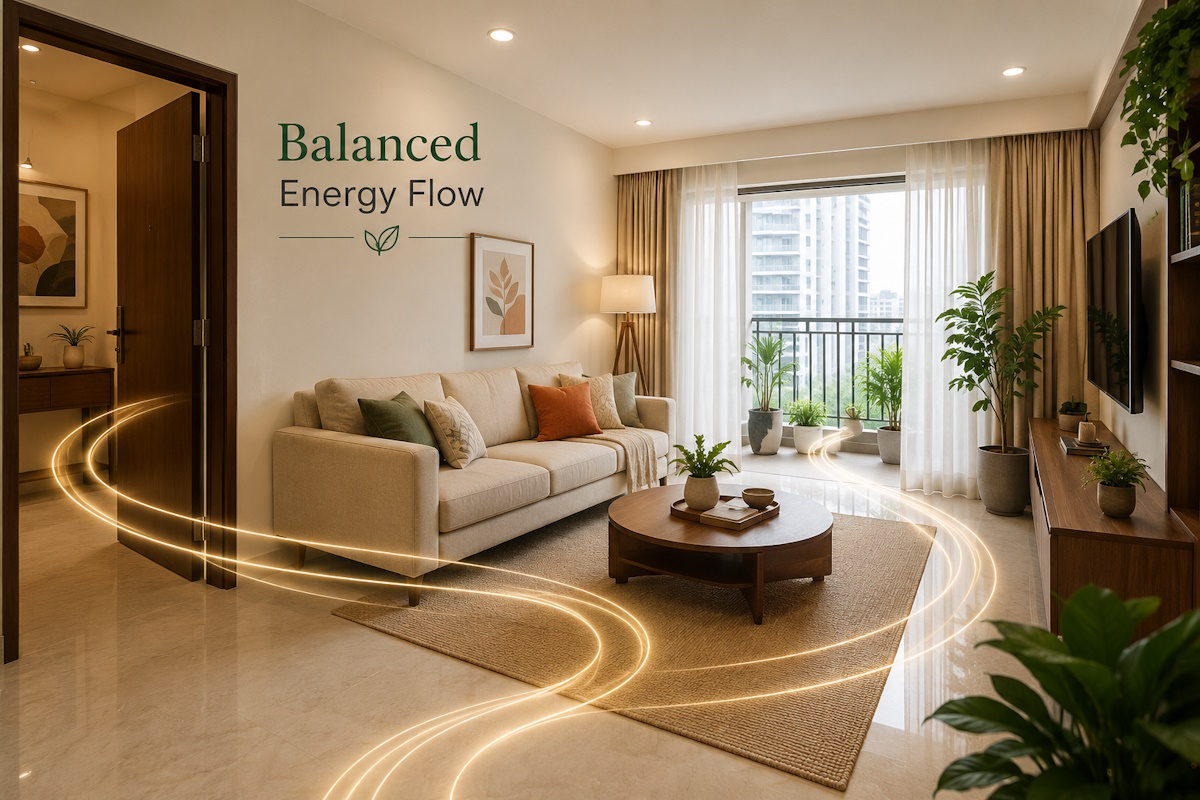
In both Feng Shui and traditional Indian spatial systems, life-force energy, referred to as Chi or Prana, must flow smoothly without hitting obstacles. In compact apartments, energy often becomes stagnant in narrow hallways or rushes too quickly from the front door straight through the balcony. When energy stagnates, residents may experience feelings of lethargy, mental fog, or unexplained fatigue. By focusing on a clear flow, we allow these subtle currents to circulate gently, nourishing every corner of the home.
The Intersection of Feng Shui and Apartment Vastu
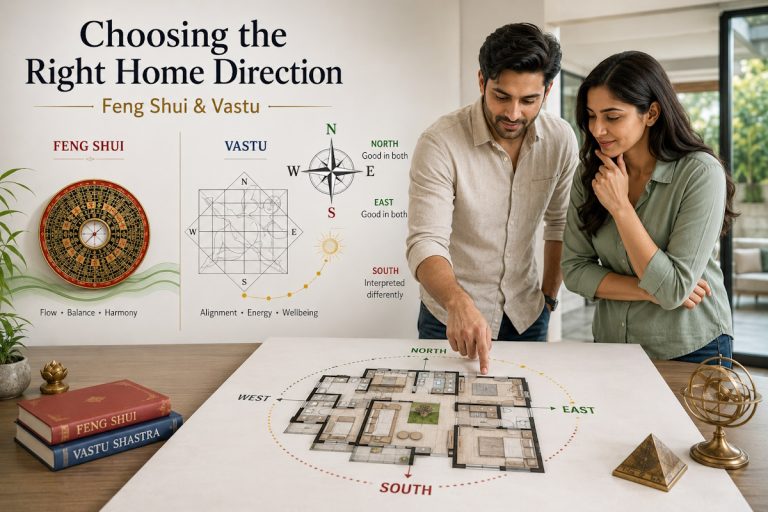
While Feng Shui focuses on the flow of Chi and elemental placements, apartment vastu emphasizes directional alignments and cosmic forces. Both sciences agree that the living room is a crucial transition zone. Merging these methodologies allows you to optimize your layout for both environmental psychology and directional strength. For instance, keeping the center of the living room open aligns with the Vastu concept of the Brahmasthan, while simultaneously satisfying the Feng Shui need for unobstructed Chi flow.
How Structural Constraints Block Energy Flow
Many modern apartments feature structural beams, heavy pillars, or irregular walls. From an energy perspective, exposed ceiling beams over a sofa act as energetic cutters, putting pressure on those sitting beneath them. Similarly, sharp corners, often called poison arrows, direct harsh energy toward your seating areas, creating subtle but constant stress.
Smart Furniture Placement for Optimal Energy Flow
Furniture arrangement is more than just an aesthetic choice, it is a tool for directing energy currents. In an apartment living room, where space is at a premium, placing your key furniture pieces mindfully can instantly shift the feel of the entire home.
Positioning the Sofa for Security and Command
The sofa is the primary anchor of any living room. In a feng shui living room apartment layout, the main sofa should ideally be placed in the commanding position. This means it faces the main entry point without being directly in line with it, allowing you to see who enters the room. Placing the back of the sofa against a solid wall provides a subconscious feeling of support and security. If your apartment layout forces you to float the sofa in the middle of the room, place a solid console table or a row of low planters behind it to create a protective barrier.
Managing Electronics and Media Centers
Television screens, sound systems, and Wi-Fi routers introduce high-frequency electromagnetic energy into the living room. While these devices are essential for modern entertainment, their active nature can disrupt the peaceful atmosphere. To balance this, avoid making the television the absolute focal point of the room. Position it away from the direct center of your main seating circle, and use natural elements, such as potted plants or wooden decor, nearby to ground the electrical energy.
Selecting the Right Shapes and Colors
In small apartments, heavy, blocky furniture can make the space feel restrictive and oppressive. Opting for furniture with rounded edges, circular coffee tables, and elevated legs allows energy to flow both around and under the pieces. Soft, grounding colors like warm beiges, soft terracottas, and gentle greens help stabilize the atmosphere, making a compact room feel spacious and inviting.
Applying Practical Vastu Remedies in a Feng Shui Layout
Integrating the wisdom of different spatial traditions does not require complex renovations. By applying non-invasive adjustments, you can resolve directional conflicts and improve the overall vibration of your home.
Balancing the Five Elements in the Living Room
Every living space is governed by the five elemental forces: earth, water, fire, air, and space. In a standard apartment, these elements are often out of balance due to architectural constraints. If your living room lacks natural sunlight, you can introduce the fire element through warm-toned lighting or orange accent decor. If the space feels overly dry or sterile, introducing healthy green plants represents the wood element, which encourages growth, vitality, and active healing.
Non-Invasive Corrections for Common Layout Issues
When major structural changes are impossible, practical vastu remedies offer elegant solutions. Placing natural quartz crystals in sluggish corners can amplify positive energy, while strategically hung brass wind chimes can break up stagnant energy near narrow entryways. Mirrors can also be used to visually expand a tight room, but they must be placed carefully so they do not reflect negative features like bathrooms or cluttered utility areas.
Resolving Door-Window Alignments
A very common issue in modern apartment design is having a window or balcony door directly opposite the main entrance. This layout causes incoming energy to escape immediately before it can circulate. A simple remedy is to place a physical divider, such as a beautiful folding screen, a tall plant, or sheer curtains over the window, to gently slow down and redirect the escaping energy throughout the living room.
Enhancing Specific Life Areas through the Living Room Zones
The physical corners of your living room correspond to specific areas of your life, from financial prosperity to personal relationships. By activating these zones, you align your home with your personal aspirations.
The Wealth Corner and Financial Flow
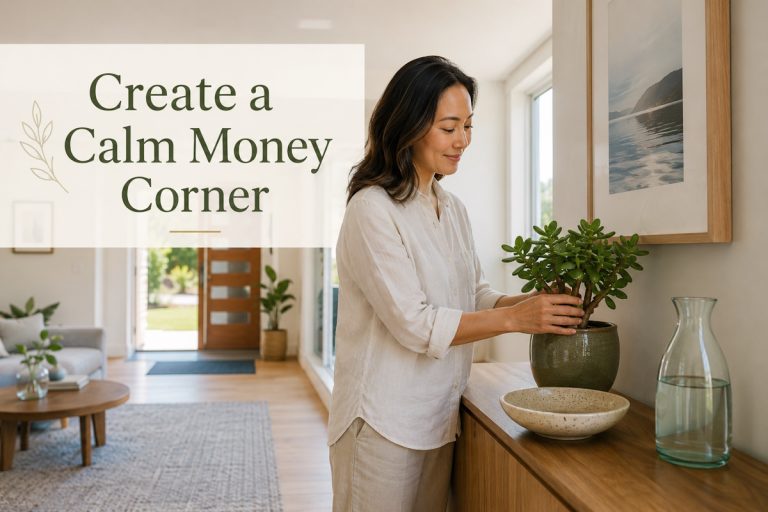
In Feng Shui, the far left corner from the main entrance of your room represents the wealth area, while in Vastu, the Southeast is the zone of liquid cash and prosperity. To activate these zones for abundance, ensure they are kept completely free of clutter. You can place healthy, broad-leaved plants like a money plant or a jade plant here. Avoid placing heavy metallic trash cans or broken items in these areas, as they symbolize drain and stagnation.
Fostering Harmonious Family Relationships
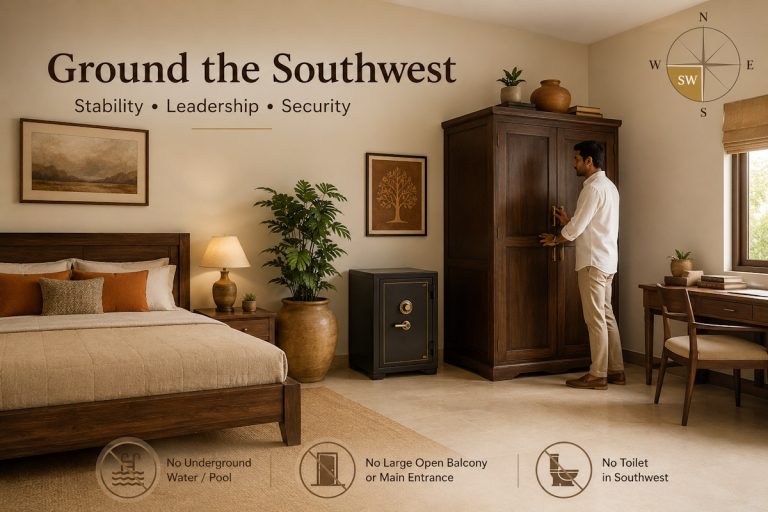
The center of your living room and the Southwest zone play a crucial role in maintaining family harmony and stability. Creating a cozy, inviting seating arrangement where family members can sit facing each other fosters open communication. Displaying joyful family photographs in wooden frames in the Southwest corner strengthens mutual bonds and brings a sense of grounded security to the household.
Harmonizing Modern Urban Spaces for Lasting Peace
Cultivating a peaceful home in a busy city is an ongoing practice of mindful adjustments. Rather than worrying about perfect compliance, focus on creating a space that feels supportive and regenerative for you and your family.
Cleanliness and Clutter Control
The most foundational step in any energy clearing practice is removing physical clutter. Clutter acts as a magnet for stagnant energy, creating a heavy atmosphere that can affect your mental clarity. Regularly sorting through items, organizing cables, and keeping surfaces clear allows fresh energy to move effortlessly through your living room.
Tuning Into Your Home’s Unique Energy
Every apartment has its own unique energetic signature, shaped by its history, location, and inhabitants. Spend time sitting quietly in your living room to notice how different spots feel. By trusting your intuition and combining it with professional insights, you can create a beautiful, balanced, and prosperous living space that truly feels like home.
Frequently Asked Questions
1. Can I combine Feng Shui and Vastu in the same living room?
Yes, you can easily combine both systems. While they use different terms, both philosophies aim to align human life with the natural world. Focus on universal principles like maintaining clean pathways, balancing the five elements, and keeping the center of your living room open.
2. How do I handle a television in a small apartment living room?
Try not to make the television the absolute focal point of your room. You can place it on a side wall rather than directly in front of the main seating area, or conceal it inside a stylish cabinet when not in use. Adding a small green plant nearby helps absorb and ground the electromagnetic energy.
3. What is the best color scheme for an apartment living room?
Neutral, earth-toned colors like beige, sand, warm gray, and soft cream are excellent for grounding a small space. You can add subtle accents of green for growth, blue for tranquility, or soft terracotta for warmth, depending on which area of your life you want to energize.
4. What should I do if my living room balcony faces a busy, noisy street?
To shield your living room from chaotic outside energy, use sheer curtains to soften the view and block harsh light. Placing a line of healthy, leafy potted plants along the balcony railing acts as a natural energetic buffer, filtering the incoming noise and movement before it enters your home.