Ayadi Sadvarga sounds complicated at first, but once you break it down, it becomes a very straightforward way to judge the energetic proportion of a home. People use it to see if the size of a house, apartment, plot, or commercial space sits in a supportive number range. You can apply it to new construction, remodeling, or when you want to check whether a property you’re thinking of buying matches your personal goals.
Ayadi Sadvarga calculations come from traditional Vastu mathematics. They work on the idea that every built form carries a number pattern. When the dimensions fall in a supportive category, the space feels more stable. When they fall in a weaker category, you might notice friction or slow growth. This method helps you look at a property in a measurable way instead of relying only on gut feeling.
This guide walks you through the full process so you can measure your home and check compliance without confusion. Keep it practical. Keep it honest. And if you’re buying, you can use the same steps before signing anything.
What Ayadi Sadvarga Really Measures
Ayadi Sadvarga focuses on six numeric factors connected to the length and width of a building. These are:
- Aaya
- Vyaya
- Yoni
- Riksha
- Vashya
- Marma
Each one has a purpose. You take the main dimension, divide it by a specific number, and use the remainder to determine the category. Your final results help you understand whether the proportion encourages wealth growth, health stability, mental clarity, authority, peace of mind, or relationship balance.
This is not guesswork. It’s math. When someone asks if a home is proportionally sound, these numbers answer that question clearly.
Measurements You Need Before You Start
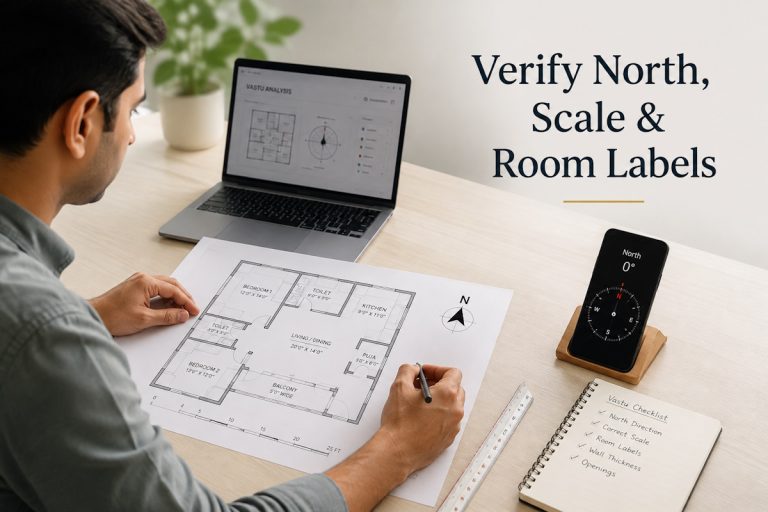
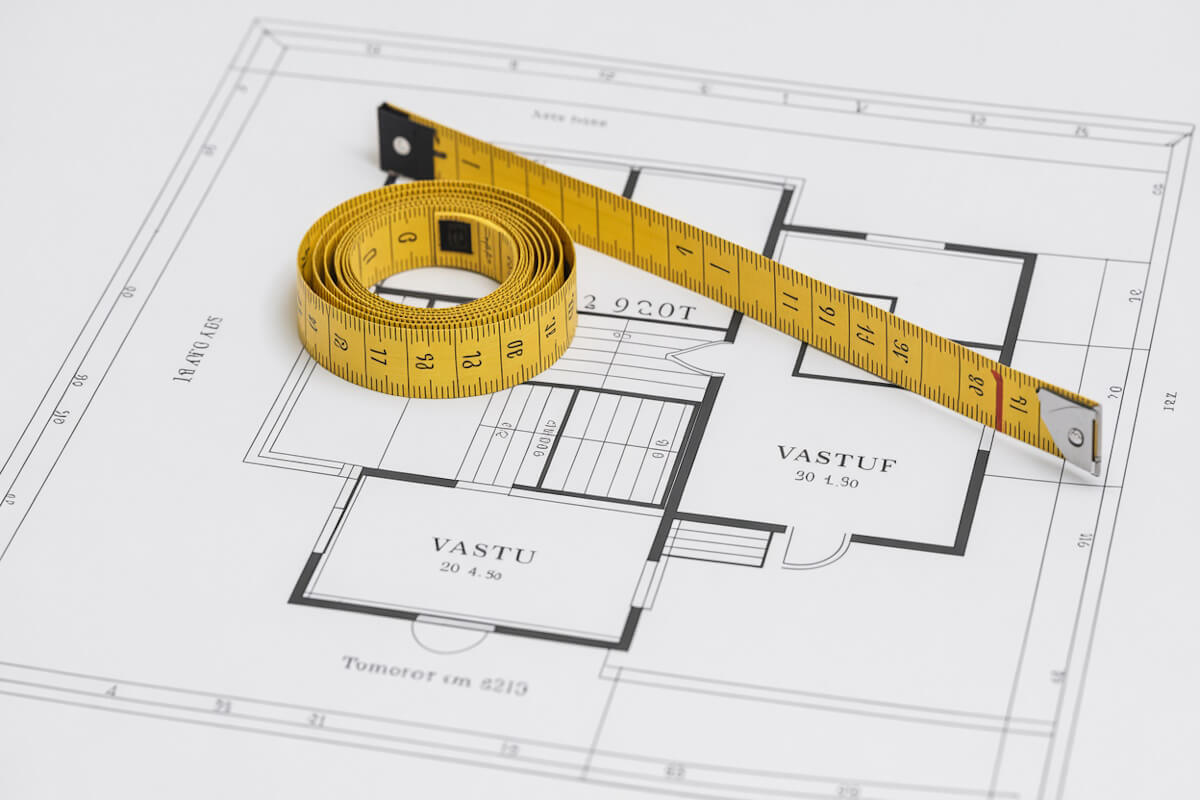
Get a tape measure and measure the inside built-up length and width of the home. Do not include balconies that are not enclosed. Do not count projections or decorative cutouts. Stick to the usable floor dimension.
For apartments, measure the usable internal length and width of the main rectangle or the dominant shape of the flat. If the layout is irregular, take the maximum continuous length and width that define the core footprint.
For independent homes or plots, take the outer wall-to-wall length and width.
Always record the numbers in inches. That makes the calculations cleaner.
If the home is two-story or more, you only perform the calculation for the ground footprint.
Once you have the length and width in inches, you can start calculating.
Step-by-Step Ayadi Sadvarga Calculations
1. Aaya (Gain Factor)
Aaya tells you whether the overall size pattern brings financial growth or draining tendencies.
Formula:
- Convert length to inches.
- Divide by 8.
- Take the remainder.
If the remainder is:
1 Dhan
2 Dhana
3 Laabha
4 Soukhya
5 Yasha
6 Dhairya
7 Paapi
0 Drohi
The first six are supportive in different ways. The last two show resistance. You will want either remainder 1 to 6.
Aaya carries weight when you decide between two similar homes. You might find both look good, but the one with a supportive Aaya tends to feel more aligned with progress.
2. Vyaya (Loss Factor)
Vyaya reflects what you may spend or lose through the property. It’s not necessarily bad. Homes cost money. The goal is to check whether the loss pattern matches the gain pattern.
Formula:
- Divide the same length (in inches) by 9.
- Take the remainder.
Ideal remainders are 1 to 4. Remainders above that show more draining patterns.
When Aaya and Vyaya both look balanced, the home feels financially fair. If Aaya is strong but Vyaya is heavy, homeowners often describe constant repairs, rising bills, or slow appreciation.
3. Yoni (Directional Flow Pattern)
Yoni shows the directional energy flow of the home. Each remainder connects to an entry direction type. It helps ensure the structure supports the natural flow instead of fighting it.
Formula:
- Divide the width (in inches) by 3.
- Take the remainder.
If remainder is:
1 East-facing flow
2 South-facing flow
0 West-facing flow
Some practitioners cross-check ranking systems, but the simple version works fine for most people. Yoni issues often show up as discomfort near entrances or as awkward circulation in the house.
4. Riksha (Star Quality)
Riksha links the property to a Nakshatra group. People usually look for harmony between the owner’s birth star and the building star, but if you don’t have that data, you can still use Riksha to see whether the building sits in a supportive group.
Formula:
- Divide the length (in inches) by 27.
- Take the remainder.
If the remainder is 1 to 9, it falls into Group 1.
10 to 18 falls into Group 2.
19 to 27 falls into Group 3.
Practitioners prefer Group 1 or 2 for residential spaces. Group 3 tends to feel heavy or slow.
5. Vashya (Control Factor)
Vashya indicates the dominant behavioral quality of the space. It’s used more often for commercial buildings, shops, offices, clinics, and rental properties where the owner wants stability and predictable flow.
Formula:
- Divide the width (in inches) by 8.
- Take the remainder.
Supportive results are 1, 2, 3, and 4.
Higher numbers show weaker stability.
This is useful when moving into a business space. Many people wonder why some shops get foot traffic but don’t convert. Vashya sometimes reveals the reason.
6. Marma (Sensitive Spot Pattern)
Marma checks whether the proportion of the home avoids sensitive number groups that create inner pressure or emotional tension.
Formula:
- Divide the length (in inches) by 7.
- Take the remainder.
If the remainder is 1, 3, or 5, the ratio usually supports clarity.
Remainders 2, 4, 6, and 0 bring mixed results.
Homes with poor Marma often feel unsettled. People complain about sleep problems or family disagreements. Marma doesn’t fix everything, but it highlights a numeric imbalance.
What Good Ayadi Sadvarga Results Look Like
You don’t need all six to be perfect. Real homes rarely come out that clean.
When reviewing your numbers, look at the following pattern:
- Aaya should fall in a gain category
- Vyaya should stay in a low-loss category
- Yoni should support the main entrance direction
- Riksha should fall in Group 1 or 2
- Vashya should stay between 1 and 4
- Marma should avoid the heavy remainders
If two or three factors go off, you can usually fix some issues through layout tweaks. If four or more fall into negative categories, the property might require bigger changes or may not be worth choosing.
How to Apply Ayadi Sadvarga to Apartments
Apartments need a slightly more flexible view because you rarely get to choose the exact dimension. The internal shape might be rectangular or a stretched L. Focus on the main rectangle that defines the living room plus the bedroom block. Do not include balconies or recesses.
If you feel unsure whether to include a dining extension or corridor, run the numbers twice and compare. People usually spot a pattern. The core rectangle still tells the truth.
In tall buildings, the external site Ayadi matters less than the internal flat Ayadi. You live inside the unit, so the internal math carries more influence.
Apartments with supportive Aaya and balanced Vyaya often feel easier to maintain. People living in supportive Yoni categories also describe smoother circulation and a more comfortable entrance flow.
How to Use Ayadi Sadvarga for New Construction
If you’re planning a custom home, you can use Ayadi Sadvarga before finalizing the architectural dimensions. Architects often work in feet, but you can convert to inches and adjust length or width slightly to reach supportive remainders.
For example, shifting a length by two or three inches can move a remainder from a weak category into a strong one. Builders rarely mind such small adjustments.
If you’re planning a remodel, you cannot change every wall, but you can sometimes alter the dominant length or width by adding or removing a small section during interior redesign. People do this when they want the final number to fall in a better group.
Having supportive Ayadi Sadvarga before construction begins usually creates a cleaner planning process.
Commercial Spaces and Ayadi Sadvarga
For shops, offices, clinics, spas, and rental buildings, Vashya plays a stronger role because it reflects control and stability. Properties with weak Vashya often show unpredictable customer flow or staff turnover.
Aaya and Vyaya also matter in business. A good gain-to-loss ratio brings steadier growth, especially for service-based businesses. For retail, Yoni becomes important because the directional flow affects how customers walk inside.
If you lease a space, you can still measure the internal width and length. The math applies the same way.
How to Fix Weak Ayadi Sadvarga Scores
Not every negative remainder ruins a home. Some issues are fixable. Here are practical adjustments that owners use:
1. Improve the energy flow
A weak Yoni can improve when you alter circulation. This can be done by adjusting furniture layout or the direction you approach certain rooms. Entrances can also be corrected with lighting, clearer walkways, or shifting door emphasis.
2. Strengthen supportive zones
If Aaya shows a weak remainder, reinforce the North, Northeast, and East zones. Remove clutter, open drapes, and keep these areas active. For many homeowners, these small shifts noticeably change how the house feels.
3. Balance weight distribution
Poor Vyaya often shows imbalance in weight. Too much storage in the South or West might increase draining tendencies. Redistributing heavy items helps correct that.
4. Add grounding
Weak Marma can sometimes be soothed by creating quiet pockets in the house. People often add seating corners, soft flooring, or warm lighting in Northwest or Southwest rooms.
These adjustments don’t replace construction math, but they help stabilize odd proportions.
Mistakes People Make When Doing Ayadi Calculations
You’ll want to avoid the common slip-ups that skew results.
Measuring carpet area only
Always use built-up internal wall-to-wall measurements. Carpet area ignores actual volume.
Using outer balcony space
Balconies throw off the width. Exclude them unless enclosed and part of the main conditioned space.
Measuring only the big room
Ayadi applies to the entire footprint, not the biggest room.
Mixing feet and inches
Do everything in inches. Mixing units leads to incorrect remainders.
Forgetting to measure both width and length
You need both. Some factors use length, some use width, and some use both.
Accuracy matters here. Small measurement errors can change the category completely.
Real Life Signs a Home Might Need Ayadi Review
People usually look into Ayadi after experiencing certain patterns. For example:
- The house feels nice but progress stays slow
- Money comes in but goes out just as fast
- Family arguments flare up without a clear reason
- Opportunities show up late or fall through
- The home feels heavy even when clean
- Commercial spaces have foot traffic but not results
These aren’t guaranteed conclusions, but they prompt people to check numeric harmony. Ayadi Sadvarga gives an objective lens when everything else feels subjective.
Should You Reject a Home Based on Ayadi Alone?
No. It’s one tool among many. Look at layout, direction, natural light, ventilation, entrance placement, room positions, and your personal comfort before you decide.
Ayadi helps when you’re stuck choosing between two similar homes. Or when you’re deciding whether to remodel or move. Think of it as another layer of clarity.
People also use Ayadi to predict long-term comfort. A home with a supportive Aaya and balanced Vyaya normally feels easier to maintain over the years.
Ayadi Sadvarga and Plot Shapes
If you’re buying a plot, the shape adds another influence. Square and rectangular plots produce predictable Ayadi results. Irregular plots complicate the math. In that case, measure the buildable rectangle inside the plot instead of the plot boundary.
People planning new construction often pick a proportion that gives a supportive length-to-width ratio. Even a small shift can change the remainder category and improve the final outcome.
Using Ayadi for Multi-Family Homes
For duplexes and multi-family homes, use the ground floor footprint for the total structure. Then, if each unit inside has a separate entrance or unique floor plan, you can calculate Ayadi separately for each unit as well.
In such homes, owners usually check three things:
- The ground floor Ayadi
- Their individual unit Ayadi
- Their main entrance Yoni
These combined give a clear picture of how the building behaves.
Why Ayadi Works Well With Modern Homes
Modern houses often have open layouts, irregular shapes, and multiple doorways. Many people feel unsure how traditional Vastu applies to such complexity. Ayadi cuts through that confusion because it looks only at the core proportion. You can use it on condos, townhomes, row houses, cottages, or commercial units.
People who move frequently use Ayadi to check rental homes. It takes only a few minutes once you understand the method.
And yes, you can use Ayadi even if your home has angled walls. Measure the longest continuous length and width. That rectangle defines the building’s numeric signature.
A Simple Way to Review Your Final Results
After completing each calculation, set your remainders side by side. Look for the general direction of the numbers. Supportive homes usually show a pattern that feels steady across most factors.
If your results show:
- 4 or more supportive remainders
- 1 or 2 neutral
- Maybe 1 weak remainder
The house is normally fine. You can adjust interior flow as needed.
If the results show:
- 3 or more heavy remainders
- Weak Aaya or heavy Vyaya
- Weak Yoni direction
You may feel friction in daily life. Some issues are fixable, but some properties fight back no matter how much you modify interiors.
Trust the math, but also trust your lived experience.
Final Thoughts
Ayadi Sadvarga helps you judge the numeric fit of a home before you commit to it. When you combine these measurements with layout and direction, you get a complete understanding of how a property behaves.
You don’t need perfect numbers. You need supportive patterns. When you take time to calculate each factor, you get a practical checklist that helps you make better decisions, whether buying, building, remodeling, or just trying to understand your current home.
If you want, you can share your length and width measurements, and I can calculate your complete Ayadi Sadvarga chart for you.