If you live in an apartment, own a plot, design homes, or advise buyers, you’ve probably heard people talk about 16 Zone Vastu as if it’s a modern shortcut. It’s not. This system didn’t pop up randomly or come from guesswork. It grew out of layered Vedic sciences that were already deeply technical, spatial, and observation-based.
You don’t need blind belief to understand it. You just need to see how the logic builds, step by step.
This article breaks down where the 16 Zone Vastu system comes from, how ancient sciences shaped it, and why it still works for modern layouts where perfect square plots barely exist anymore.
The Foundation Starts with Direction, Not Decoration
Vedic sciences never treated land as neutral. Direction mattered before walls, rooms, or even rituals.
The earliest base comes from directional awareness. Ancient observers noticed that the sun, wind, heat, and moisture behaved differently across directions. These patterns weren’t philosophical. They were physical.
East brought light and freshness.
South carried heat.
West held moisture and heaviness.
North stayed cooler and more stable.
This simple observation laid the groundwork for dividing space based on how nature behaves, not how humans wish it behaved.
From there, the science deepened.
Vastu Purusha Mandala Is the Core Grid
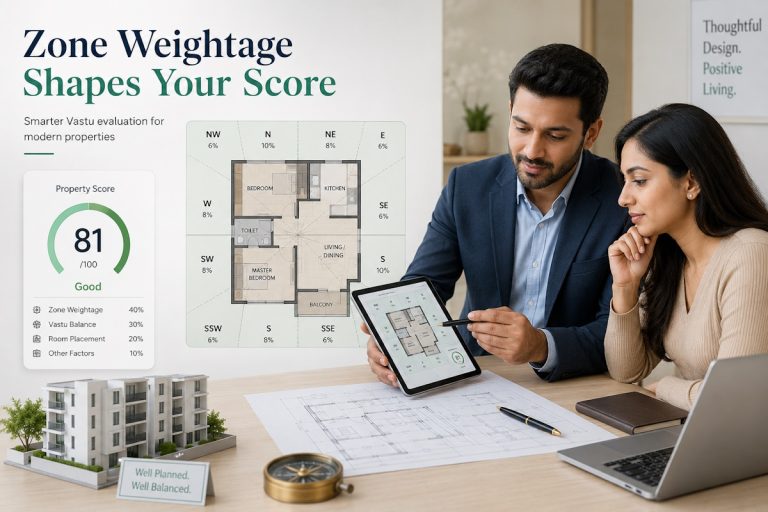
The Vastu Purusha Mandala is the real backbone behind 16 Zone Vastu.
Originally, this mandala was a square energy map used to analyze land. The most common version divides space into 9, 16, 32, or 64 parts depending on complexity.
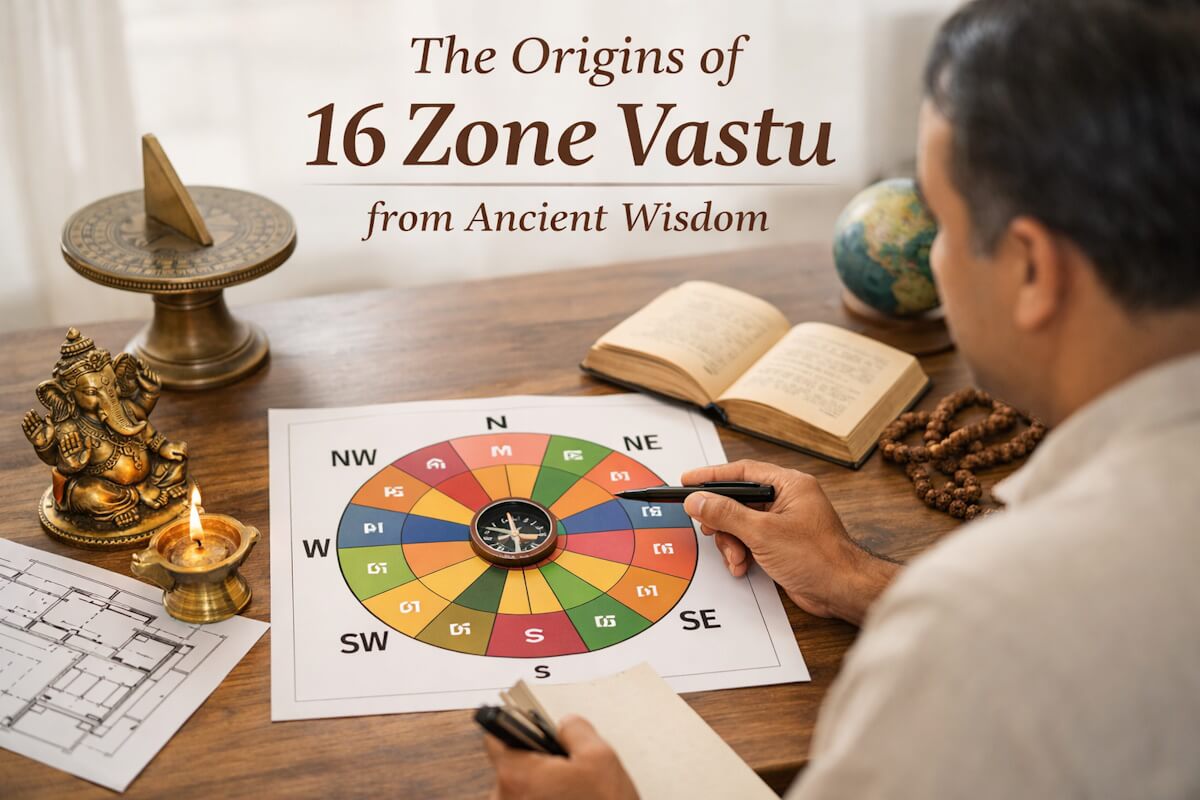
The 16 Zone system comes from the 16-part division, where the site is split evenly into directional segments starting from North and moving clockwise.
Each zone occupies 22.5 degrees on the compass.
This division wasn’t done to create labels. It was done to track subtle shifts in energy as you move from one direction to another.
North is not the same as North-Northeast.
South is not the same as South-Southwest.
Once you stand on real land, this difference becomes obvious.
Why 8 Directions Were Not Enough
Most people learn Vastu using only 8 directions.
North, South, East, West, and the four corners.
That works for basic guidance. It fails when layouts get complex.
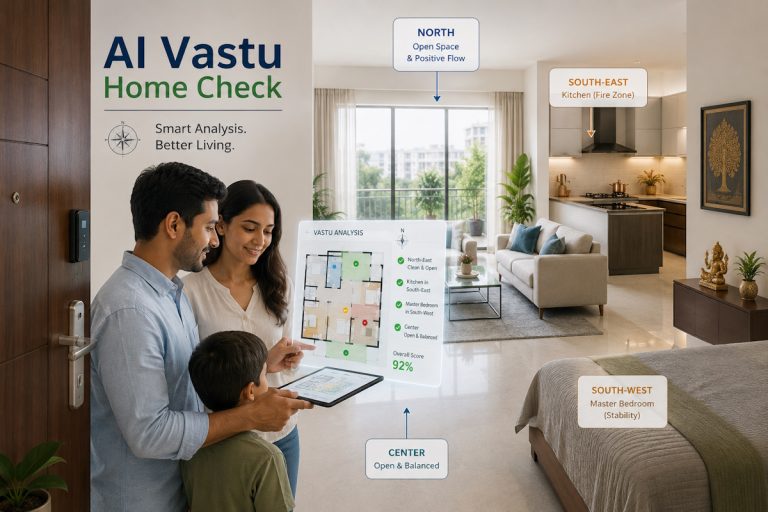
Apartments don’t sit perfectly aligned.
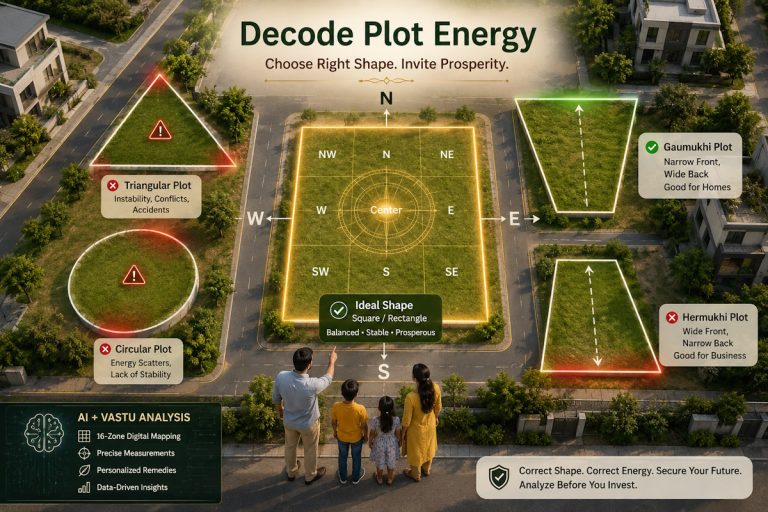
Plots are cut, angled, or merged.
Rooms overlap directional boundaries.
Ancient planners already knew this problem. That’s why they divided directions further.
Each corner is not a single energy. It’s a transition.
The moment you accept that, the 16 Zone system becomes logical rather than mystical.
The Role of Panchabhuta in Zone Division
Vedic science recognizes five elements, earth, water, fire, air, and space.
These elements don’t sit evenly across land. They shift gradually as direction changes.
Fire dominates more strongly in Southeast than in South.
Water influence increases as you move from North to Northeast.
Air peaks between West and Northwest.
The 16 Zone model captures these gradual shifts.
Instead of forcing a room into a rigid category, it asks a more practical question.
Which element dominates here right now?
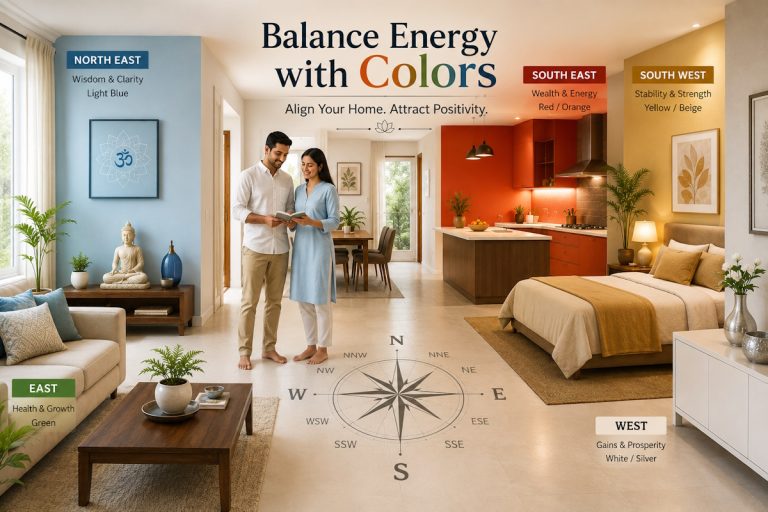
That’s why kitchens feel different when placed in Southeast versus South-Southeast.
That’s why toilets behave differently in West versus West-Northwest.
Same room. Different zone. Different outcome.
Astronomy and Solar Movement Shaped the Zones
The sun was the main measuring tool in Vedic sciences.
Solar angles, sunrise points, and seasonal shifts were tracked carefully.
The East zone wasn’t just East. It was broken into:
East-Northeast for early light and clarity
East for balanced illumination
East-Southeast for rising heat
These solar distinctions shaped how zones were defined.
That’s also why prayer, study, and entry points behave differently across these sub-directions.
Light at 6 am is not the same as light at 9 am. The zones reflect that reality.
Deities Are Symbolic, Not Religious Labels
Each zone in the 16 Zone system is associated with a deity.
This confuses modern readers.
These deities are symbolic markers, not religious instructions.
Agni represents transformation and heat.
Varuna represents flow and containment.
Vayu represents movement.
Kubera represents accumulation and stability.
Ancient sciences used stories and names to store data. The deity names are memory tools, not worship rules.
When you hear that a zone belongs to Agni, it means fire-like qualities dominate there.
This symbolic coding made it easier to pass technical knowledge across generations without textbooks.
Ayurveda Influenced Spatial Health Logic
Ayurveda and Vastu were never separate sciences.
The same elemental balance that affects the body also affects space.
Sleep quality worsens in zones with excess fire.
Digestion improves when kitchens sit in zones with rising heat.
Mental clarity improves where light and air combine smoothly.
The 16 Zone system allows this tuning.
Instead of saying “don’t place bedroom in South,” it refines the advice.
South-Southwest is heavy and grounding.
South-Southeast is active and restless.
One helps sleep. The other disrupts it.
This precision came directly from Ayurvedic observation.
Why Modern Homes Need 16 Zones More Than Ever
Old homes were symmetrical.
Modern homes are compromised.
Corners are cut.
Balconies protrude.
Toilets land where plumbing allows, not where Vastu prefers.
Using only 8 directions in such homes creates confusion and fear.
The 16 Zone system reduces that fear by offering flexibility.
A toilet in West is not the same as a toilet in West-Northwest.
A kitchen in Southeast behaves differently than one in East-Southeast.
Instead of declaring a home bad, the system explains what’s happening and what can be adjusted.
That’s why serious consultants rely on it.
The Compass Became a Scientific Tool
Once magnetic compasses became common, the directional science became more exact.
Zones were measured precisely in degrees.
Each 22.5-degree segment showed consistent results across climates, regions, and building styles.
This repeatability is what makes 16 Zone Vastu practical, not symbolic.
If it didn’t work, it wouldn’t have survived.
Why Some Zones Feel Neutral
Not every zone feels strong.
Some are transitional. They buffer energies between extremes.
For example:
North-Northwest acts as a release zone.
South-Southwest acts as a storage zone.
These areas aren’t ideal for primary rooms, but they are perfect for staircases, stores, or toilets.
This explains why certain layouts feel okay even when they break textbook rules.
The zone absorbed the pressure.
How the System Handles Multiple Floors
Vedic sciences were not limited to single-story homes.
Vertical energy movement was acknowledged.
Lower floors hold heavier energies.
Upper floors activate lighter ones.
When you apply the 16 Zone system floor by floor, patterns emerge.
Bedrooms in Southwest work better on lower floors.
Puja rooms in Northeast perform better higher up.
This wasn’t coincidence. It was observation.
Why Remedies Came Later, Not First
Early Vastu focused on placement, not correction.
Remedies became popular only when people stopped building freely.
The 16 Zone approach reduces the need for remedies because it respects micro-directional behavior.
Instead of fixing a problem after construction, it avoids the problem during planning.
That’s a big shift.
What Happens When Zones Are Ignored
Ignoring zones doesn’t cause instant disaster. That’s another myth.
What happens is slow imbalance.
Sleep patterns shift.
Expenses rise.
Conflicts increase.
Health feels off without diagnosis.
People sense it but can’t name it.
The 16 Zone system gives language to those sensations.
It connects lived experience to spatial cause.
Why This System Survived for Thousands of Years
Vedic sciences weren’t preserved because of belief.
They survived because they worked.
Farmers, builders, traders, and rulers used these principles daily. If they failed, they would’ve vanished.
The 16 Zone division stayed because it adapted.
It scaled from huts to palaces.
From courtyards to apartments.
From stone to concrete.
That adaptability is rare.
Using 16 Zone Vastu Without Overthinking
You don’t need to memorize deity charts.
Start simple.
Know your North.
Divide your space into 16 equal slices.
Observe where key rooms fall.
Ask practical questions.
Is this zone active or calm?
Is it heavy or light?
Is it meant for movement or rest?
The answers guide placement more than any rulebook.
Final Thoughts You Can Actually Use
16 Zone Vastu isn’t a trend. It’s a refined lens.
It came from astronomy, Ayurveda, elemental science, and observation of daily life.
It doesn’t demand perfection.
It explains imperfection.
That’s why it matters today.
If your home feels slightly off but not disastrous, the answer is probably hiding in a sub-direction, not a major one.