If you have ever spoken to two Vastu consultants and walked away more confused than before, you are not alone. One talks only about east, west, north, south. The other pulls out a 16-zone grid and starts naming areas you have never heard of. You stand in your living room wondering which advice to trust and which changes actually matter for your home.
This article clears that fog. You will understand how direction-based Vastu works, how 16 zone Vastu analysis works, and where each approach fits into real homes, apartments, plots, and commercial spaces. No theory for theory’s sake. Just practical clarity you can use.
What Direction-Based Vastu Really Focuses On
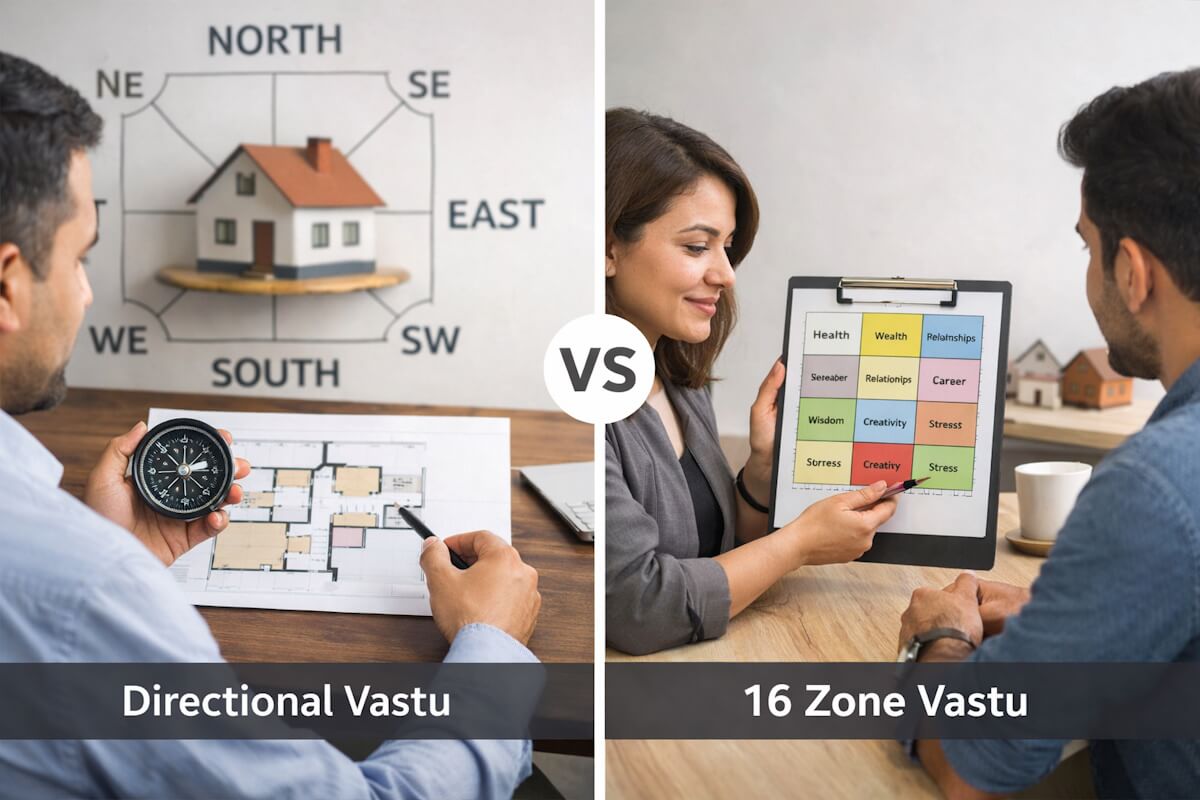
Direction-based Vastu is the system most homeowners recognize first. It divides a plot or home into eight primary directions based on the cardinal and intercardinal points. These are north, south, east, west, northeast, northwest, southeast, and southwest.
This approach looks at how major spaces sit within those directions and how natural elements interact with them. The logic is simple enough to apply without architectural drawings or software.
How Direction-Based Vastu Is Applied in Real Homes
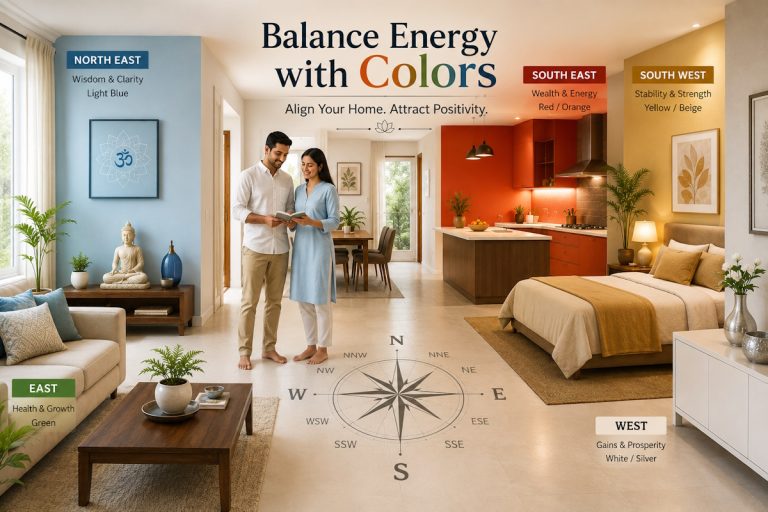
In direction-based Vastu, each direction has a general role. East is linked with morning energy and openings. North relates to movement and money flow. South and southwest deal with stability and weight. Southeast is associated with fire and heat. Northwest connects with movement and change.
When someone checks your house using this method, they usually focus on big-ticket items.
Where is the main entrance
Where is the kitchen
Where is the master bedroom
Where are toilets placed
Where is the staircase or overhead tank
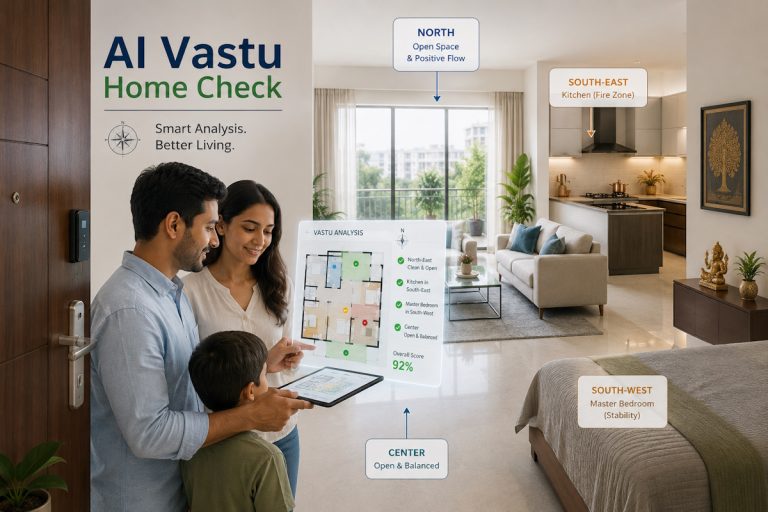
The advice tends to sound like this. Keep the kitchen in the southeast. Place the master bedroom in the southwest. Avoid toilets in the northeast. Let more light enter from the east and north.
For independent houses and plots, this works quite well. You can often make structural decisions at an early stage. Builders also like this method because it is straightforward and easy to explain to buyers.
Strengths of Direction-Based Vastu
The biggest strength of direction-based Vastu is clarity. You do not need complex calculations. A compass and a floor plan are often enough.
It also fits modern decision-making. You want to know whether buying a south-facing plot is fine. You want to know if a west-facing flat is a deal breaker. Direction-based Vastu answers those questions quickly.
Another plus is flexibility. Many homes cannot be rebuilt from scratch. This system lets you work with what you already have and make adjustments through furniture placement, usage changes, and small corrections.
Where Direction-Based Vastu Falls Short
Problems begin when people expect direction-based Vastu to explain everything. It cannot always explain why two homes with the same facing produce very different experiences for the people living inside them.
In apartments, this method starts losing sharpness. You may have a northeast corner that technically exists but is cut off or shared with another unit. Toilets might sit in directions you cannot change. Direction-based Vastu then turns into a checklist rather than a diagnostic tool.
This is where the second system enters the conversation.
What 16 Zone Vastu Analysis Actually Examines
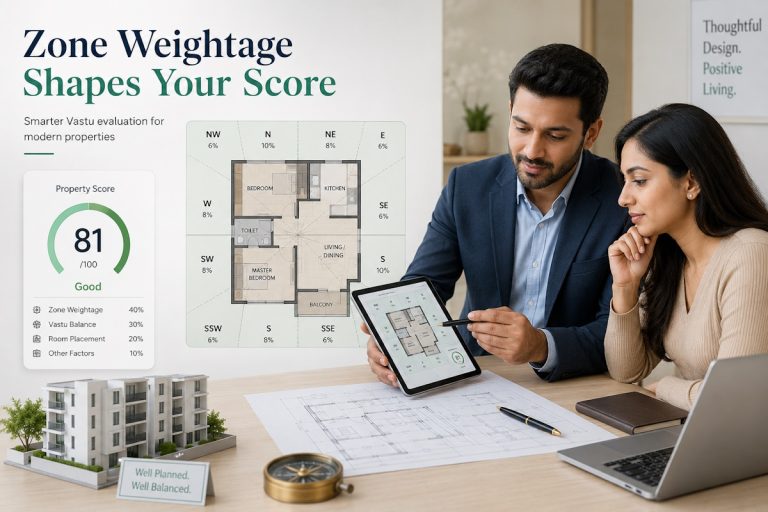
16 zone Vastu analysis divides a property into sixteen equal parts rather than eight directions. Each zone represents a specific life theme. These themes go beyond elements like fire or water. They focus on daily human concerns such as authority, relationships, income, learning, rest, and support.
This system does not stop at where a room is located. It looks at what is happening inside each zone.
How the 16 Zones Are Mapped
The 16-zone grid overlays the entire plot or apartment, regardless of shape. Even irregular layouts are divided evenly. Each slice has a role.
For example, one zone connects with income stability. Another deals with decision-making. One relates to health recovery. Another focuses on relationships and harmony. These zones exist whether you acknowledge them or not.
Once mapped, the consultant checks what occupies each zone.
Is there a toilet in a money-related zone
Is heavy storage blocking a growth zone
Is a kitchen flame placed in a rest zone
Is a bedroom sitting in an action-oriented area
This system does not judge only by direction. It judges by purpose.
How 16 Zone Vastu Is Used in Modern Spaces
16 zone Vastu shines in apartments, high-rise buildings, office floors, and commercial layouts. These spaces often break traditional directional rules. Kitchens may be forced into odd corners. Entrances may not fall where textbooks say they should.
Instead of declaring a space bad or unusable, 16 zone analysis asks a different question. What is this zone meant to support, and is the current usage helping or blocking that support?
For example, you might live in a north-facing flat that follows direction-based Vastu nicely. Still, your income feels unstable. A 16 zone check may reveal that the income-related zone holds a cluttered store room or a leaking bathroom. That insight does not come from direction alone.
Strengths of the 16 Zone Approach
The biggest strength is precision. It explains patterns people experience but cannot link to directions.
Why sleep feels restless even in a southwest bedroom
Why business decisions stall despite a good office entrance
Why relationships feel strained in a technically Vastu-compliant home
The 16 zone system connects physical usage with lived experience. It also gives non-structural solutions. You might not need demolition. You may need reassignment of spaces, weight adjustments, or usage corrections.
Another advantage is consistency across property types. A small studio apartment and a large villa can both be analyzed using the same grid logic.
Where 16 Zone Vastu Can Feel Overwhelming
For first-time buyers or homeowners, 16 zone Vastu can feel heavy. There is more to absorb. The terminology is unfamiliar. The analysis takes longer.
If used without restraint, it can also lead to overthinking. Not every minor imbalance needs correction. A skilled practitioner prioritizes impact. An unskilled one may push unnecessary changes.
Core Difference Between Direction-Based Vastu and 16 Zone Vastu Analysis
The real difference is not complexity. It is perspective.
Direction-based Vastu looks at orientation.
16 zone Vastu analysis looks at function.
One asks where a space is.
The other asks what a space is doing to your life.
Direction-based Vastu is like checking the frame of a house. 16 zone analysis is like checking how each room supports daily living.
How Both Systems Treat the Same House Differently
Let’s take a common situation.
You live in an east-facing apartment. The kitchen sits in the southeast. The master bedroom is in the southwest. By direction-based rules, this looks fine.
Yet you feel drained. Sleep is light. Work pressure spills into personal time.
A direction-based review may end with reassurance. Everything is placed correctly.
A 16 zone review might notice that your bedroom falls in a zone meant for activity and leadership rather than rest. The direction is fine, but the zone purpose clashes with usage.
That single insight changes the solution. You might alter furniture weight, colors, or daily usage patterns instead of relocating rooms.
Which System Is Better for Buying Property
If you are shortlisting plots or independent houses under construction, direction-based Vastu is often enough. It helps you filter quickly. You can eliminate layouts that clash strongly with basic principles.
For ready apartments, resale flats, and commercial offices, 16 zone Vastu analysis gives deeper value. You are not choosing structure anymore. You are choosing compatibility.
Many investors now use both. Direction-based Vastu for initial screening. 16 zone analysis for final decision-making.
Which System Works Better for Renovations
Minor renovations benefit more from 16 zone analysis. You can rarely change directions. You can change usage, weight, lighting, and purpose.
For example, turning a storage-heavy room into a light study may activate a growth-related zone without breaking walls.
Direction-based Vastu helps during major renovations or rebuilds when walls can move and room locations can change.
Common Misunderstandings That Create Confusion
A big myth is that 16 zone Vastu replaces direction-based Vastu. It does not. It builds on it.
Another misunderstanding is that direction-based Vastu is outdated. It still forms the base. Ignoring directions entirely creates its own issues.
Some people assume 16 zone Vastu demands expensive remedies. In practice, many corrections involve decluttering, reassignment, or lifestyle shifts.
How Architects and Builders Use These Systems Differently
Architects lean toward direction-based Vastu during planning because it integrates smoothly with structural design.
Interior designers and Vastu consultants often prefer 16 zone analysis once the shell is fixed. It gives room to work creatively without altering the building.
Realtors usually speak in directional terms because buyers understand them faster. Investors ask for 16 zone insights because they care about outcomes.
Choosing the Right Approach for Your Situation
Ask yourself a few grounded questions.
Are you buying land or a finished apartment
Can you change walls or only usage
Are you facing specific issues or just checking compliance
Do you want quick clarity or deep diagnosis
If you want fast answers, direction-based Vastu works. If you want explanations for lived experiences, 16 zone Vastu analysis offers more.
In many cases, the smartest choice is not either-or. It is layered use.
Why Many Homes Feel Stuck Despite Being Vastu Compliant
This is where frustration often comes from. A home ticks all directional boxes. Still, something feels off.
Direction-based Vastu confirms structure. 16 zone analysis confirms alignment with daily life. When structure and usage do not speak the same language, discomfort shows up.
People often feel relief when this gap is identified. It shifts the conversation from fear to problem-solving.
Final Thoughts You Can Actually Use
The difference between direction-based Vastu and 16 zone Vastu analysis is not about which is superior. It is about what question you are asking.
If you ask, is this house acceptable, direction-based Vastu answers.
If you ask, why does this house affect me this way, 16 zone analysis responds.
You do not need to become an expert. You just need to know which lens to use at which moment. That awareness alone saves time, money, and unnecessary stress.
If you are evaluating a property, renovating a space, or trying to understand persistent patterns in your home or office, choosing the right Vastu framework changes everything.