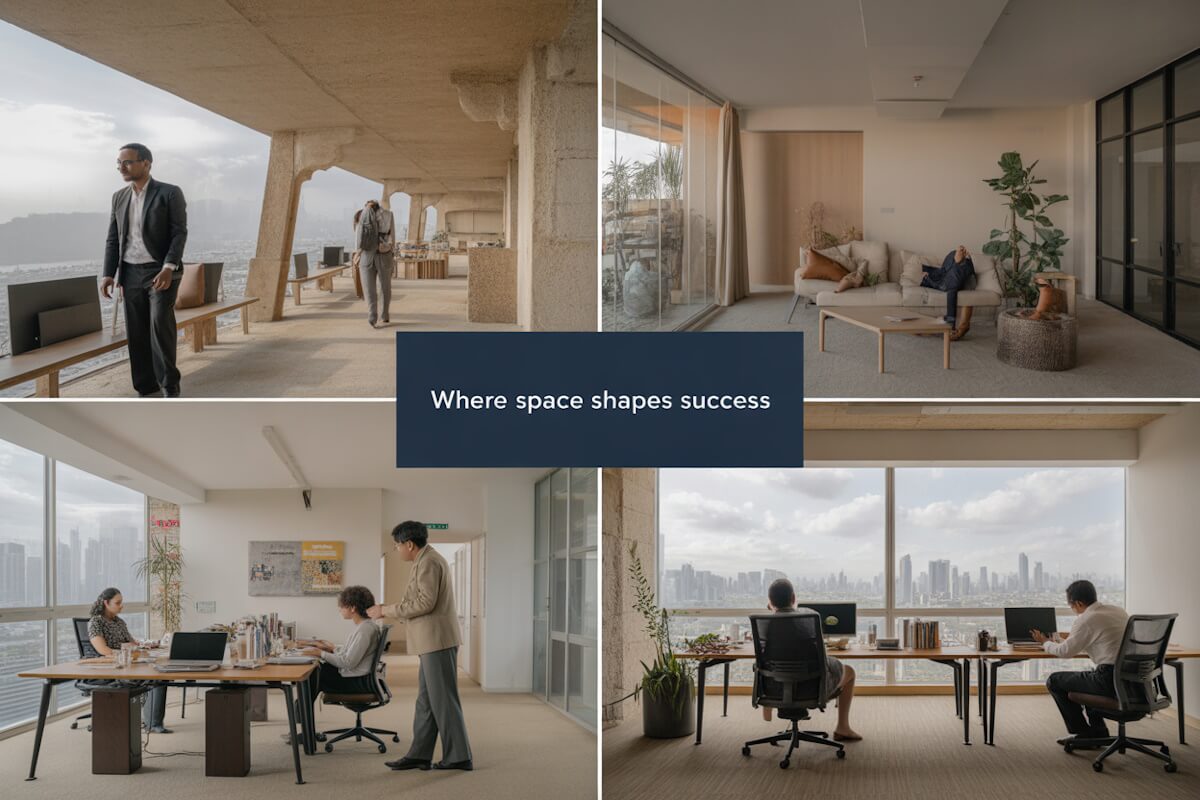
Companies across different countries keep searching for ways to strengthen focus, reduce staff friction, and create workplaces where people actually enjoy showing up. Plenty of businesses started exploring Vastu because they heard it helped others fix recurring issues inside their offices. Some treated it as a space planning tool. Others wanted something to ground their design choices. Either way, many found that it made a difference in how people worked and communicated.
This article takes you through real corporate settings from around the world where Vastu ideas were applied to daily operations. These are not dramatic miracle moments. They are practical shifts businesses used to create more productive spaces. You can use the same principles whether you handle a small team or manage large floors in a high rise.
Why companies even bother looking at Vastu
Before jumping into examples, you should understand why decision makers bother with Vastu at all. It gives them a framework to organize space that supports stable thinking, smooth communication, and balanced leadership. When managers feel scattered or teams keep missing targets, the root problem is often inside the workspace itself.
You might have seen offices where people complain about lack of clarity, constant pressure, confusing instructions, or unexplainable staff exits. Sometimes the layout encourages interruptions. Sometimes the placement of departments leads to weak coordination. Vastu helps you look at these issues through a practical lens.
Companies that applied it reported small but meaningful improvements. Not overnight miracles. More like removing obstacles that were sitting in the way of normal performance.
A multinational tech office dealing with staff burnout
One global software company in the US noticed high stress levels in its engineering wing. Productivity dropped and employees requested more sick days. The office layout had cubicles pressed directly under beams and long corridors ending in dead corners. Many desks faced blank walls without any visibility of natural light.
A space consultant reviewed the setup and pointed out two issues you might see in your own workplace:
- The main work zone sat in a heavy energy pocket near the south west corner. This area carries the weight of responsibility. When junior and mid level workers sit here, pressure hits them harder.
- The core team members sat with their backs exposed to open hallways. People walking by created constant micro distractions.
The company rearranged the seating. Senior leads were moved to the south west, where the sense of control actually helped them. Developers shifted to the east and north east sections, where clarity and focus rise. Desks were adjusted so no one had an open corridor directly behind them.
Within three months, managers saw less agitation during reviews. Engineers finished tasks with fewer errors. The team still had tight deadlines, but people handled them with more stability. When the physical layout calms the mind, work becomes less draining.
You can apply the same logic anywhere. Put your most strategic minds in the south west. Keep technical and analytical departments toward the east or north east. Let support teams use the north. The shifts do not have to be huge. Even swapping areas or rotating desk direction can help.
A European financial firm struggling with communication gaps
A well known finance firm in Germany ran into trouble because departments stopped coordinating smoothly. Emails kept getting delayed. Teams misread instructions. Meetings turned chaotic. Senior executives first blamed workload, but a deeper look showed that the office layout encouraged disconnect.
The reception sat in a north west area, which tends to create a restless flow of movement. Visitors, vendors, and deliveries kept distracting staff seated nearby. The conference rooms were placed in the south east, which often adds pressure during discussions. The accounts department sat in the wrong direction and kept dealing with repeated errors.
The company used Vastu guidance to reorganize the entry, move discussions toward the north or east, and shift financial data handling to the south or south east. They also rearranged the main cluster of cubicles so people could see natural light from the north side.
Within weeks, internal communication improved. Staff reported fewer misunderstandings. Meetings became clearer and shorter. When the environment encourages calm decision making, even routine conversations start feeling easier.
You might not relocate entire rooms, but you can adjust internal pathways, fix seating direction, and move critical functions into more balanced zones.
An Asian manufacturing firm aiming for smoother operations
A large manufacturing company in India faced recurring technical delays. Machines worked fine, yet paperwork kept getting stuck. Supervisors reported tension on the shop floor. Workers felt confused by rapid instructions. The management team sat on the east side, facing the west, which often dulls authority. The production planning office sat in an unstable north west zone and kept rotating staff because no one stayed long.
The company reviewed its layout through Vastu and made small but powerful changes. The senior decision makers moved to the south west and started facing east or north. Planning shifted toward the south east where action and coordination are stronger. The HR wing moved closer to the north to create a welcoming environment for staff.
Operational delays reduced within two months. Supervisors said people responded faster. The flow between documentation and actual production became smoother. A workplace shapes how people behave, even if they do not realize it.
A Canadian startup facing constant chaos and scattered focus
A fast growing startup in Canada leased a trendy open office. It looked cool but did not support concentration. People walked across the main work area all day. The founders sat in the north, facing south, which weakened decision making. Creative teams sat in the south west which carries heavy responsibility they did not need.
They used Vastu guidance to define zones inside the open layout. The leadership cluster moved to the south west and faced east. Creative teams shifted toward the north east where ideas spark more easily. Movement-heavy departments used the north west so their constant activity did not interrupt others. The team also softened glare, added partitions, and changed desk directions.
Within a few weeks, the office felt steadier. Team leads said brainstorming sessions improved. The founders reported better strategic discussions. Productivity increased because the workspace no longer pulled everyone’s attention in different directions.
If you are in a startup or coworking environment, you can still create zones. Use plants, screens, or low partitions to mark areas. Direct seating thoughtfully even if you cannot rebuild the space.
A retail corporation balancing multiple departments under one roof
A retail chain in Singapore operated a corporate space that handled marketing, logistics, finance, product development, and online operations. The floor plan felt cluttered. Staff kept running around. Departments overlapped. The company struggled with coordination because everyone felt intruded upon.
The marketing area sat in the south west which made creative teams feel boxed in. Logistics used the east zone which works better for decision makers. Finance sat in the north west and kept battling fluctuating performance.
The company rearranged departmental zones based on Vastu so each group got a section that matched the nature of its work. Marketing moved toward the east or north east, logistics shifted to the south east, and finance moved to the south or west. The office flow settled down to a calmer rhythm.
Cross departmental work got faster. Teams had fewer last minute surprises. People got more done in less time because their areas no longer worked against them.
A global consulting firm dealing with leadership instability
A consulting firm with branches in multiple countries found that its regional heads kept changing. Each time the company built momentum, another leader moved on. The main cabin used by heads sat either in the north west or north east. These zones encourage movement or growth rather than stability.
Vastu suggests that senior authority belongs in the south west. When a leader sits here and faces east or north, decisions feel grounded. The company shifted the leadership cabin into the south west space. They also kept storage behind the leader’s chair to create a sense of support and removed unnecessary glass partitions that caused energy to scatter.
Team members noticed a shift. Leadership stayed longer. Decisions became consistent. Staff felt less lost. A stable corner leads to stable thinking.
You can apply this anywhere. If you head a team, sit in the south west portion of your available area. Face east or north. Keep clear boundaries behind your seat.
A medical supply company trying to improve sales performance
A US based medical supply company dealt with inconsistent monthly numbers. Salespeople complained that meetings felt rushed. The cabin used for sales was in the north west, which triggered constant movement and rapid fluctuations. The storage racks sat in the north east, blocking clarity.
Vastu advice prompted the company to shift sales discussions to the south or south east. These zones support strong negotiations and confidence. The north east was cleared and kept simple with minimal storage. Staff seating changed so more people faced north or east.
Their sales calls improved. Negotiations felt smoother. Clients responded better. When the space supports confident communication, teams feel stronger.
You can start with something small like clearing clutter in the north east or moving your meeting table so people face the right direction.
A Middle Eastern corporate tower stabilizing employee retention
A corporate tower in Dubai housed multiple firms but noticed one particular office had a very high turnover rate. The HR team was tired of constantly hiring. Desks were pushed into south west corners, making junior staff feel overwhelmed. The pantry and break zone sat in the north east where peaceful energy is needed.
After shifting the pantry to the west or north west and moving staff away from the south west corners, people felt more at ease. The leadership kept their area in the south west, which supported stability. The north east was kept open with light and minimal furniture.
Turnover slowed. People stayed longer. Sometimes retention problems are heavily tied to spatial pressure rather than the job itself.
A global media company needing creativity and fast editing
A major media firm with teams in the US, UK, and Asia wanted smoother creative flow. Writers complained about blocks. Editors struggled with deadlines. The creative team sat in the western section facing south which drained energy. The editing team sat in the south west which created unnecessary stress.
Once they reworked seat placement, the creative wing shifted to the north east and east zones. Editors moved to the south east. The leadership kept the south west. The workflow stabilized. Brainstorm sessions became more fluid. Editors met deadlines without feeling overloaded.
If you handle content or creative work, the east and north east can give your mind the clarity it needs.
Common patterns you can apply to your own workplace
As you read these examples, a theme appears. Each company changed simple things, not full renovations. The shifts focused on placing the right work in the right zone and seating the right people in the right direction.
Here are practical takeaways you can start using right now:
- Place leadership in the south west.
- Use the east or north east for planning and creative work.
- Keep the south east for action driven teams like sales, production, or operations.
- Use the north west for departments that move around a lot.
- Leave the north east clean and open.
- Face north or east whenever possible during focused tasks.
- Avoid sitting with your back to the main door.
None of this requires a huge budget. You only need thoughtfulness.
Why these adjustments help productivity
Vastu works because it brings structure to space. Offices run into problems when areas carry the wrong kind of activity. When the workspace matches the mental demands of each task, people settle into their roles naturally. Rooms feel calmer. Movement flows better. Staff think with more clarity.
Most workplaces have silent friction points. Minor irritations that drain energy over time. A slightly wrong desk direction. A meeting room that triggers tension. A department placed in a zone that fights its workload. Fixing these small things clears space for better performance.
Final thoughts
Every company mentioned above used Vastu as a practical guide instead of a rigid formula. That is the mindset you should bring into your own office. Treat it like a way to arrange your environment so it stops working against you. Start with the essentials. Shift zones. Adjust seating. Clear the north east. Let leadership anchor the south west.
If you want your team to think better, work smoother, and feel grounded, the layout of your workplace is one of the first places you should look.