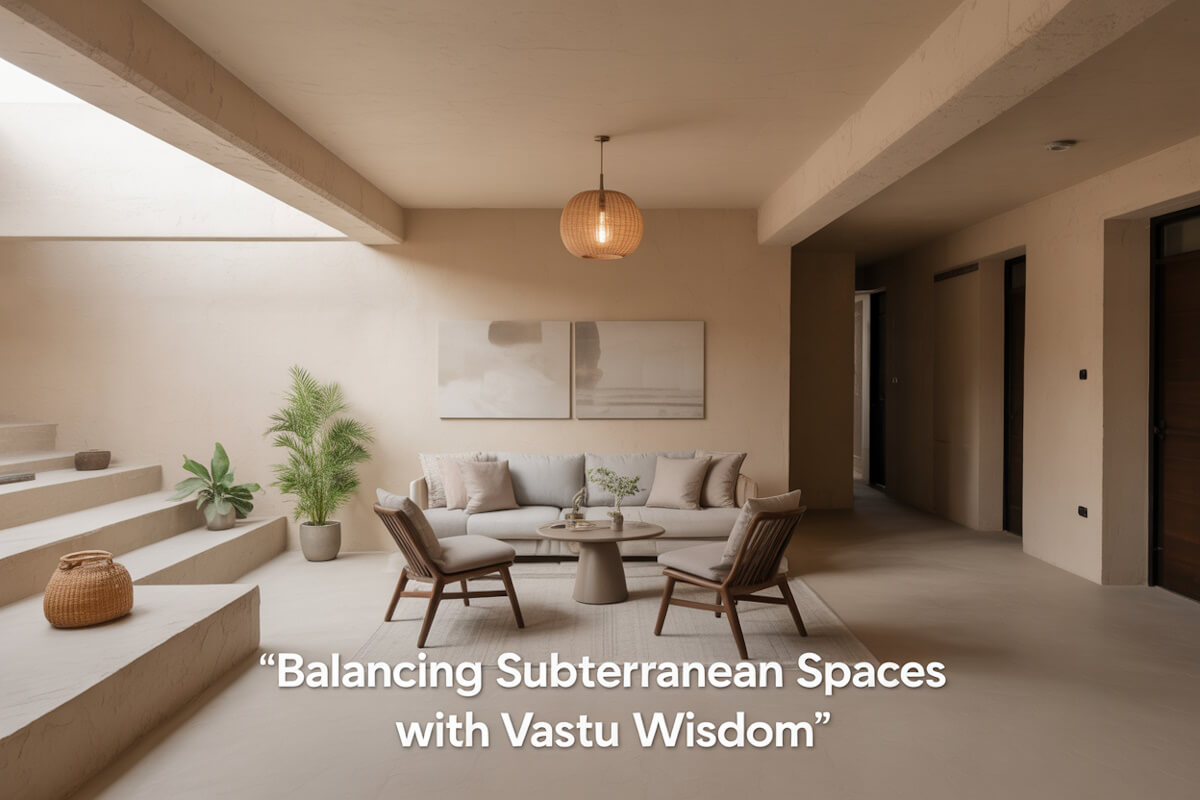
Basement homes in the USA bring a mix of convenience and complications. You get extra square footage, privacy, and cooler temperatures during summer, but you also deal with sunlight shortage, damp corners, odd shapes, and a natural pull of energy downward. When you try to apply Vastu to these settings, the usual rules meant for above ground floors don’t always translate cleanly. Still, you can create a balanced setup when you understand how subterranean movement works and what adjustments make sense for this type of space.
This guide gives you clear direction if you live in a basement apartment, rent out a basement suite, use your basement as your primary bedroom, or set up work space below ground. Keep practicality at the center of every decision. You should feel comfortable and grounded, not stuck in guesswork.
Why Basement Vastu Needs a Different Lens
A basement sits below the natural grade of the Earth. Energy tends to sink here. Air stays heavier. Light is limited. Sound behaves strangely. That alone can shift sleep patterns, create low mood, or trigger restlessness in some people. These reactions aren’t mystical. They show how the body responds to spaces with less upward flow.
Because of this, Vastu for basement homes in the USA focuses on corrective steps instead of strict compliance. You rarely get a perfect setup, and that is fine. The goal is to lift stagnant flow, reduce heaviness, and help the space feel more alive.
Basement Position in the Home and Its Effect
The basement’s place under the main structure already gives it a specific character. Most US homes place mechanical systems, laundry, storage, and sometimes guest rooms there. Turning a basement into a full apartment or your main living area needs careful planning.
If your basement lies fully underground, you will deal with deeper stillness. If parts of it are exposed due to a sloped yard or walkout design, you already have an advantage. A walkout basement has more active energy because of natural light access and a direct path to the outside.
Partial underground basements sit somewhere in the middle. They often perform better in Vastu terms because they get at least one direction of natural light.
Ideal and Less Ideal Basement Uses
Vastu suggests lighter activities below ground. Heavy or long hours of living tend to weigh people down, especially if the basement lacks windows or fresh air.
Better uses include:
- Storage
- Home gym
- Guest room
- Media room
- Playroom
- Utility space
Less ideal uses include:
- Main bedroom
- Main kitchen
- Home office where you spend 8 to 10 hours daily
- Apartment for someone who prefers sunlight or has emotional sensitivity
- Prayer area
You can still make these work if needed. You just need stronger correction strategies.
Directional Vastu for Basement Homes
Even though the basement sits below ground, direction remains important. You should still map the space using a compass or a reliable phone app.
North and East Areas
These are lighter zones. If your basement apartment has windows on the north or east, you already benefit from natural lift. These areas work well for:
- Small living room
- Study corner with artificial daylight bulbs
- Entryway for a walkout basement
Avoid heavy storage here. Keep clutter away so these directions stay open.
South and West Areas
These directions tend to hold denser energy. Placing storage, gym equipment, or a laundry zone here makes sense. You can also use these areas for mechanical systems. If your bedroom ends up in the south or west of the basement, balance the space with brighter lighting and clear organization. No dark and forgotten corners.
Center of the Basement
The center should stay open as much as possible. Many US basements are chopped into small rooms or have structural posts in the middle. Work around this by keeping the center clear of heavy furniture. Open space near the core allows better movement of subtle flow.
Light and Air: Correcting the Biggest Basement Issue
Light is the lifeline of any basement Vastu correction. Without it, the space feels closed, even if everything else checks out.
What You Can Do
Install daylight LED bulbs that mimic natural light. Place them in the north or east half of the room when possible. Keep window coverings minimal. Clean window wells a few times a year. If allowed, add reflective paint colors around window wells to bounce more light inside.
Ventilation matters too. Use air purifiers if you feel the air sits heavy. A small exhaust fan can help in laundry or bathroom areas. Stuffy air blocks good flow.
Avoid Dark Pockets
Basements are notorious for dim corners. Light every corner, even if a simple plug-in lamp is enough. You want the entire floor to feel awake, not half asleep.
Flooring and Ceiling Concerns
Basement ceilings tend to be lower. When the ceiling feels too low above your main seating or bed, your mind carries subtle pressure. The solution is to avoid bulky overhead fixtures. Use flush lights and taller furniture placed along walls, not the center. It gives the room a bit more breathing room.
Floors should stay dry. Any dampness drags energy down fast. Fix leaks early. A dehumidifier helps keep the air crisp.
Bedroom Placement in a Basement
This is one of the most common questions for basement Vastu in the USA. Many people end up sleeping downstairs because the upstairs is full or the basement apartment is the rental unit they could afford.
Best Zones
Place the bed in the south or west parts of the basement, but make sure the headboard is against a firm wall. Keep the bed slightly raised. Never use a mattress on the floor.
Windows
Even a small window improves mood and sleep. Keep the area around it clean. Avoid heavy drapes. Let the window breathe.
What to Avoid
Don’t push the bed under exposed beams. Don’t sleep next to mechanical rooms. Avoid rooms with constant humming from equipment. The noise seems small but it works on your nerves over time.
Lighting Trick
Use layered lighting. A soft warm lamp near the headboard builds calm. A daylight bulb on the opposite side adds clarity. This mix helps your body adjust to the depth of the basement.
Basement Kitchen Vastu
A full kitchen in the basement calls for careful choice of placement. Cooking generates heat, moisture, and movement. The space must feel alive or it becomes heavy fast.
Placement
If possible, place the cooking zone in the southeast or northwest area. The southeast is the fire direction. The northwest supports airflow and rotation, which helps in spaces where smoke or steam collects easily.
Venting Is Key
The basement kitchen must have strong exhaust. Weak ventilation traps odor and heat, creating stuck energy. Pipe the exhaust outdoors, not into the ceiling cavity.
Counters and Seating
Keep counters tidy. Open shelving tends to look cluttered in a basement. Closed cabinets work better. Seating should be toward the north or east if possible. It keeps the dining area lighter.
Basement Home Office Vastu
Remote work in the US has pushed many people to convert basements into offices. If you work from there daily, you need strong corrections or you may feel drained by afternoon.
Best Desk Placement
Place your desk in the north or east zone. Sit facing north or east. This orientation naturally boosts clarity. Keep your back to a wall, not a staircase or open area.
Lighting Strategy
Use bright, white lighting above the work desk. Install a task light that points downward, not sideways. The goal is to create a mental bubble of clarity even if the rest of the basement feels heavy.
Keep the Office Separate
If the basement is your full apartment, try to keep your workspace a few feet away from your bed or sofa. Mixed-use corners drain focus. Use rugs or a small screen if needed.
Basement Bathroom Vastu
Most US basements include a bathroom. The placement matters less than its upkeep. The real problem is humidity.
Place the bathroom in the west or northwest if you have the choice. These directions handle moisture better. Always run the exhaust fan longer than usual. Keep the door closed when not in use to prevent energy spread into the main living areas.
Dealing With Typical Basement Problems Through Vastu
Basements come with a set of predictable challenges. Vastu doesn’t tell you to remove the basement. It helps you manage these issues so the space feels balanced.
Damp Corners
Fix leaks first. Use a dehumidifier. Add a warm light source in that corner for a few hours a day to lift the heaviness.
Clutter Buildup
Basements often become storage dumps. Keep storage to the south or west. Use clear boxes. Label everything. Clutter in the north or east blocks natural uplift.
Mechanical Areas
Keep these enclosed if possible. Don’t place beds or workstations near them. Add soft lighting near the door of the mechanical room to reduce the stark, cold feel.
Low Energy Zones
If your basement feels too still, play soft background music during the day. Use indoor plants near windows. Plants should not sit in dark areas. Stick with easy plants like pothos or snake plants.
Stairs Leading to the Basement
Staircases act like funnels. They direct energy downward or upward. If your stairs feel dark, the basement gets heavier.
Keep staircases well lit. Neutral paint works better than dark shades. If the stairs directly face the basement living room, add a small console or artwork to slow the downward rush.
If the staircase ends directly at a bedroom door, keep that door closed often. It helps maintain personal space.
Correcting Subterranean Energy Flow
Now we get to the main anchor of the topic: correcting subterranean flow. You don’t change the fact that the basement sits below ground, but you can shape how the energy behaves within that depth.
Add Vertical Uplift
One simple trick is adding tall items. Floor lamps, tall plants near windows, tall shelves along walls. These create a subtle upward pull.
Use Lighter Colors Where You Spend the Most Time
Lighter shades reflect more light. Use them on walls around your bed, work desk, or main sitting area. You don’t need to paint the entire basement white. Selective use works fine.
Warm Light in the South and West
The deeper areas of the basement often sit in the south and west. Warm light tones help these corners feel active but comfortable.
Keep the North and East Clean and Open
If part of your basement opens to the outside through a walkout or window, keep that zone very clean. Don’t crowd it. That area is your natural source of uplift.
Routine Matters
Open windows when weather allows. Run fans for a few hours. Move furniture once a year. These little actions brighten the flow.
If the Basement Is a Rental Apartment
Many renters worry if basement apartments are bad luck in Vastu. They are not automatically bad. You just need awareness.
Choose a basement unit with at least one large window. Avoid units with very low ceilings. Make sure the bedroom has solid walls. Keep the living area near the brightest part of the apartment. Use daylight bulbs and air purifiers. These small steps make a big difference.
If You Are Designing a Basement From Scratch
If you are finishing a raw basement or designing a home with a basement, think of Vastu during planning.
Place at least one major window in the north or east. Add multiple circuits of lighting. Leave the center open. Keep mechanical rooms together. Provide a clear path from the staircase to the main living area so the space feels inviting.
Final Thoughts
Vastu for basement homes in the USA is not about fear or strict rules. It is about understanding how below ground spaces behave and then applying practical corrections. When you lift stagnant zones, improve light, place rooms wisely, and maintain airflow, the basement becomes a comfortable extension of your home.
If you follow these suggestions, your basement won’t feel like an afterthought. It becomes a steady, grounded space with better balance and a cleaner energy flow.