When people talk about Vastu today, they usually mean directions, entrances, kitchens, bedrooms, and the usual do’s and don’ts. That works up to a point. Real homes are messier than rulebooks. You may have a flat where the entrance cannot be shifted, the kitchen sits in the wrong zone, and structural changes are off the table. This is where numerology steps in, quietly but firmly.
The Loshu Grid is not a replacement for Vastu. It is a layer that adds clarity. When you combine it with Astro-Vastu analysis, patterns start to show up that were not obvious before. You stop guessing and start connecting dots between the house, the birth chart, and daily experiences.
This article breaks down how numerology and Vastu work together in real homes, not in ideal diagrams. If you own a house, rent an apartment, or advise clients, this will help you read spaces with more confidence.
What the Loshu Grid Really Is
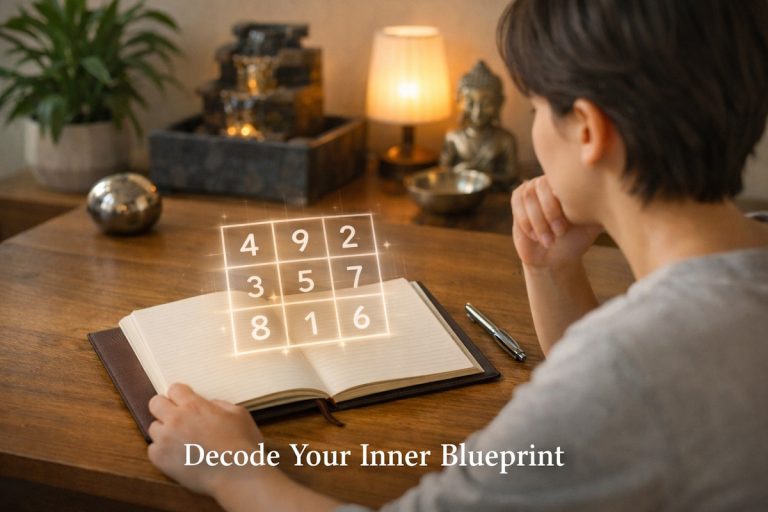
The Loshu Grid comes from ancient Chinese numerology. It is a 3×3 square with numbers from 1 to 9 arranged in a fixed pattern. Each number represents a specific type of energy. Not abstract energy, but very practical areas of life.
The grid looks simple, yet it is loaded with meaning. Each number connects to mental traits, physical areas, behavior patterns, and even how people interact with a space.
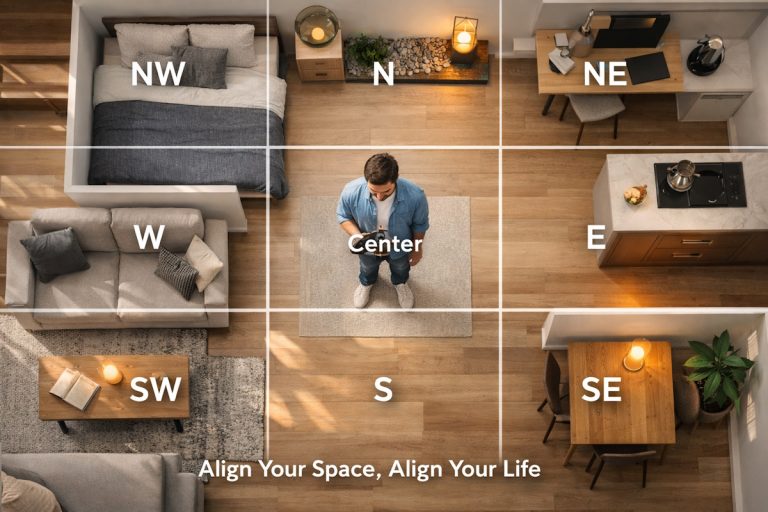
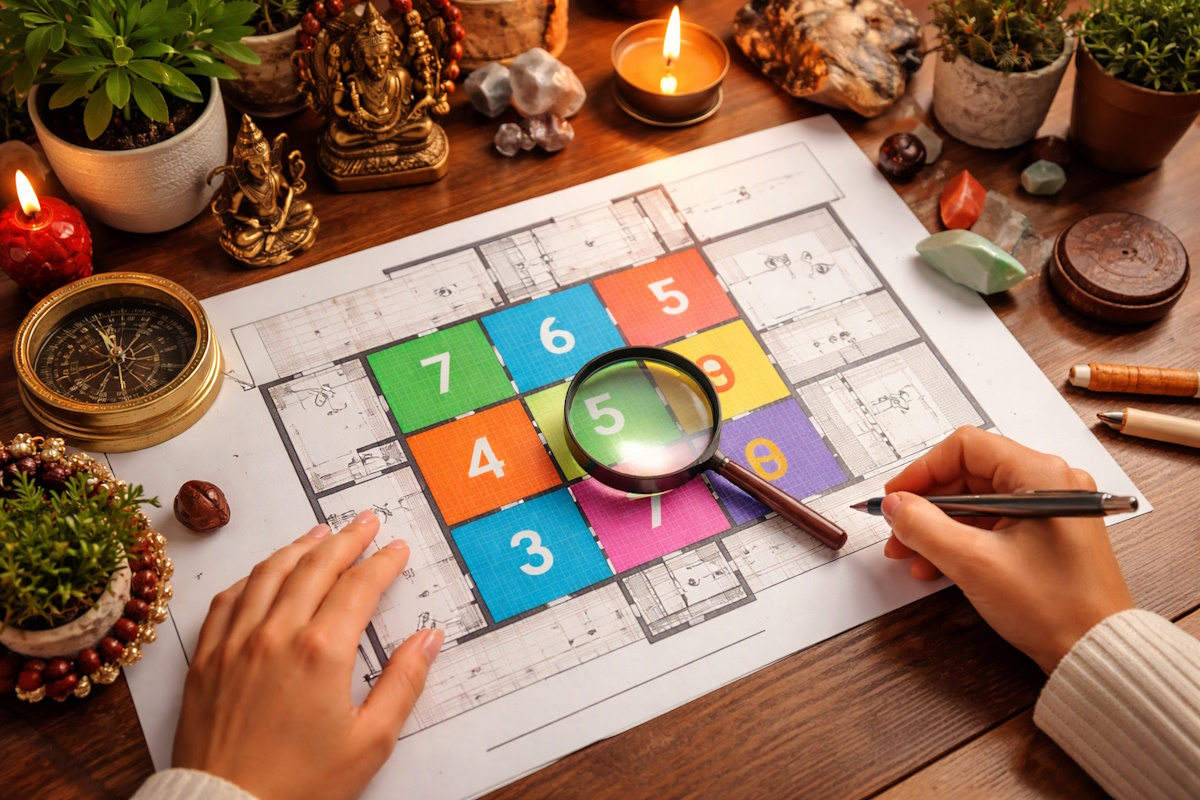
When applied to a home, the grid is mapped onto the floor plan using compass directions. North, south, east, west, and the corner zones all correspond to numbers in the grid. Once mapped, you check which numbers are present, missing, or repeated based on the house layout and the resident’s date of birth.
This is where things get personal.
Why Astro-Vastu Alone Sometimes Feels Incomplete
Astro-Vastu links planetary positions from your birth chart with Vastu directions. It explains why one person thrives in a house while another struggles in the same layout. A Mars-heavy chart reacts strongly to fire zones. A weak Moon often shows issues in the northeast or with water elements.
Yet many homeowners hit a wall.
You follow Astro-Vastu advice, place remedies, and still feel stuck. The reason is simple. Astro-Vastu explains planetary tendencies. It does not always show how those tendencies are being triggered daily by missing or overloaded energies in the house.
The Loshu Grid fills that gap.
It shows which numbers are absent in the home and which ones dominate. Those numbers link back to planets, elements, and behavioral patterns. Once you see that, Astro-Vastu readings become sharper and more grounded.
How Numerology and Vastu Speak the Same Language
People often assume numerology is abstract and Vastu is physical. In practice, both describe how space interacts with human life.
Each Loshu number corresponds to a direction, an element, and a planetary influence. That means when a number is missing in a zone, you are not just missing a number. You are missing a quality of life.
For example, the number 4 relates to planning, discipline, and steady growth. In many homes, the southeast or east may be cut or overloaded. Residents often complain about lack of focus, unfinished projects, or career stagnation. Astro-Vastu might show weak Mercury or Rahu influence. The Loshu Grid confirms it by showing a missing 4.
Suddenly, the story makes sense.
Mapping the Loshu Grid onto a Floor Plan
This step scares people for no reason. You do not need complex tools.
You take a proper compass reading of the home. Once directions are clear, the Loshu Grid is placed over the plan. North aligns with the number 1. South aligns with 9. The grid remains fixed.
Now observe.
Which areas are fully present?
Which corners are missing or extended?
Which zones carry heavy usage like kitchens, toilets, or staircases?
This visual check reveals more than a long checklist of rules.
Missing Numbers and Their Real-Life Impact
A missing number does not mean disaster. It means a life area needs support.
Let’s look at a few common patterns seen in apartments and villas.
Missing 1 Energy
Number 1 connects to leadership, career direction, and confidence. It sits in the north.
Homes with a missing or blocked north often house people who feel unsure about decisions. Career shifts feel confusing. Authority issues show up at work.
Astro-Vastu might show a weak Sun or Saturn conflict. The Loshu Grid confirms why remedies are not sticking.
Simple actions like activating the north with light, movement, or water elements start making sense once you know what is missing.
Missing 2 Energy
Number 2 relates to relationships, emotions, and receptivity. It aligns with the southwest.
When this number is weak, couples argue over small things. Emotional distance grows. In joint families, misunderstandings linger.
Astro-Vastu may point to Moon afflictions. The Loshu Grid explains why the house keeps triggering those emotions.
This is common in flats where the southwest is occupied by toilets or heavy storage.
Missing 5 Energy
Five is the center. Balance, adaptability, health, and stability live here.
In many modern layouts, the center is cluttered with staircases, elevators, or load-bearing columns. People living here often feel restless or physically drained.
Astro-Vastu readings may show mixed planetary results. The Loshu Grid makes it clear. The core energy of the house is disturbed.
Repeated Numbers and Overactive Zones
Just as missing numbers create gaps, repeated numbers create excess.
A house with too much 8 energy, often in the west or northwest, tends to attract delays, legal matters, or heavy responsibilities. People feel stuck in long cycles.
Too much 9 energy, linked to fire and aggression, brings arguments and impulsive decisions. This is common when kitchens dominate the south.
Astro-Vastu flags planetary overloads. The Loshu Grid shows where daily life keeps fueling them.
This helps you correct without panic. You reduce excess instead of adding random remedies.
How the Birth Date Changes the Reading
Here is where numerology and Astro-Vastu truly merge.
Your date of birth creates a personal Loshu Grid. Some numbers are strong. Some are absent. When these personal numbers clash with the house grid, friction begins.
For instance, if your personal grid lacks number 6, linked to comfort and harmony, and your house also lacks it, domestic peace becomes hard to maintain. No amount of cosmetic fixes works because the base frequency is missing.
Astro-Vastu would show Venus issues. The Loshu Grid tells you where and how to correct them spatially.
This is why two people in the same home experience it differently.
Practical Corrections Without Structural Changes
Most people cannot rebuild homes. The good news is you rarely need to.
Loshu Grid corrections focus on activation, not demolition.
You work with color, materials, movement, light, and usage patterns. A weak number can be supported by introducing its element. An overactive number can be calmed by reducing stimulation.
For example, to support missing 3 energy, linked to communication and creativity, you activate the east with plants or wooden textures. To calm excess 7 energy, associated with isolation, you reduce metallic clutter in the west.
Astro-Vastu guidance decides timing and planetary compatibility. The Loshu Grid decides placement.
Apartments, High-Rises, and Real Constraints
High-rise living brings shared walls, fixed shafts, and limited flexibility. Traditional Vastu texts rarely address this reality.
The Loshu Grid adapts better.
Even if the entire southwest is missing due to building shape, you can still activate 2 energy internally. Bedroom placement, sleeping direction, and object positioning help compensate.
For investors, this matters. A unit with a balanced grid rents faster and sees fewer tenant issues. Realtors notice smoother deals when house numerology matches buyer charts.
This is not coincidence. It is pattern recognition.
Commercial Spaces and Workplaces
Homes are only half the story.
Offices with weak 1 and 4 struggle with leadership and planning. Retail spaces missing 6 see footfall but poor conversion. Clinics with disturbed 5 face staff burnout.
Astro-Vastu explains business cycles. The Loshu Grid shows daily friction points.
Simple changes in seating, counters, or storage areas improve flow without costly redesigns.
If you advise clients, this combination strengthens your credibility. You are no longer giving generic advice. You are solving visible problems.
Common Misunderstandings About Loshu Grid Use
Some people think the Loshu Grid works only with numerology charts. Others treat it like a magic square.
Both miss the point.
The grid is a diagnostic tool. It shows imbalance. It does not replace common sense.
Another mistake is overcorrecting. Adding too many remedies creates confusion. Balance comes from subtle shifts, not overload.
Astro-Vastu helps you prioritize. The Loshu Grid helps you localize.
When You Should Look at Loshu Grid First
If a house feels fine on paper but residents keep facing the same issues, check the grid.
If remedies keep changing without results, check the grid.
If a client says, “I don’t know why this place drains me,” check the grid.
It often reveals the missing piece.
How This Combination Builds Trust in Your Decisions
When numerology and Vastu point to the same issue, confidence grows. You stop second-guessing.
Homeowners feel heard because explanations match lived experiences. Buyers feel safer making decisions. Architects get clarity on subtle design choices.
You are not chasing perfection. You are restoring balance where it matters.
Living With Awareness, Not Fear
One last thing. The purpose of combining Numerology and Vastu is not to scare people about flaws. Every house has them.
The goal is awareness.
When you understand how the Loshu Grid complements Astro-Vastu analysis, you stop reacting and start adjusting. Life feels lighter. Spaces feel supportive.
If your home could talk, this is the language it would use.