Author: blog-vastu-consult

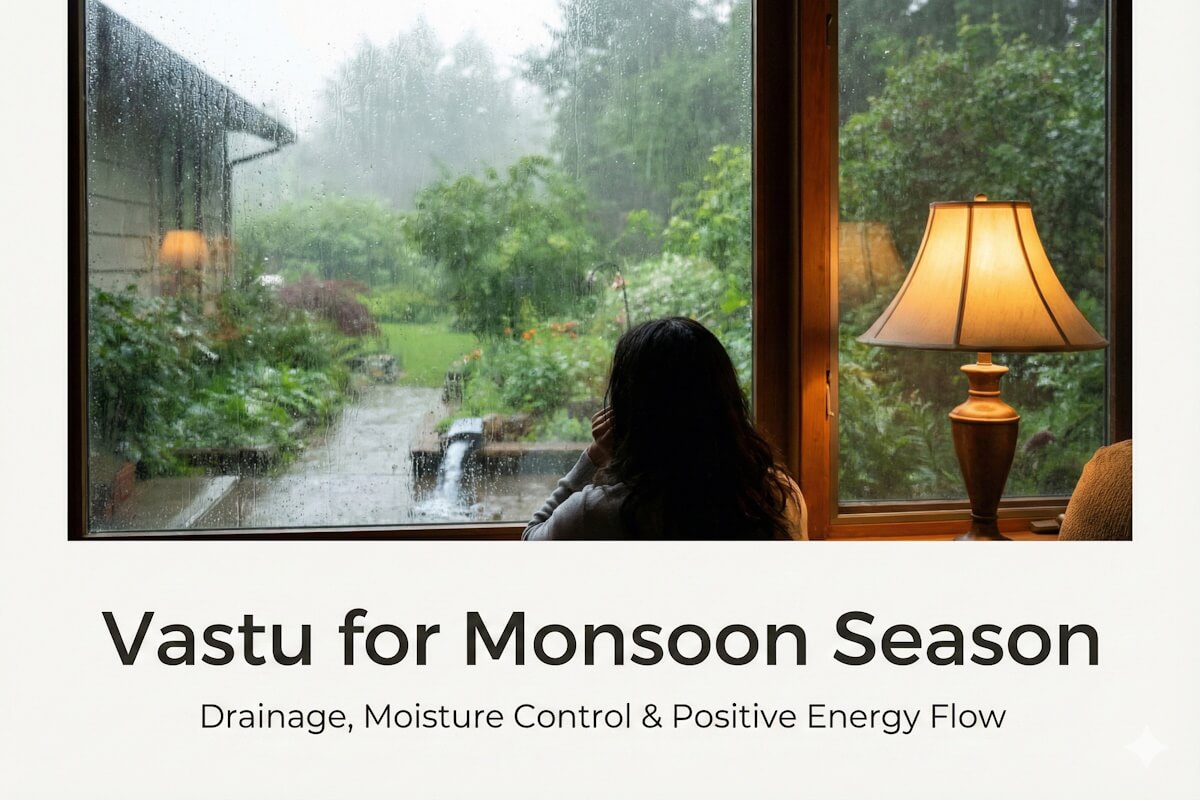
  • Vastu for Monsoon Season: Drainage, Moisture Control & Positive Energy Flow

    Vastu for Monsoon Season: Drainage, Moisture Control & Positive Energy Flow

    Homes behave differently when monsoon hits. Walls start absorbing moisture, corners feel stuffy, outdoor areas stay damp for days, and rooms that felt normal in summer suddenly carry a heavy mood. You may notice arguments picking up for no reason or a strange sense of sluggishness spreading across the house. That’s the season playing tricks on your space.

    Vastu can help you get the house back into balance. Not with rituals or complicated rearrangements, but with simple corrections that clean the pathway for air, light, and water movement. Because monsoon energy is slow and sticky, and the goal is to stop that heaviness from settling indoors.

    This guide walks you through drainage, moisture control, airflow and energy flow in ways that make sense for regular apartments, suburban homes, condos, and multi story buildings.

    Let’s start from the outside and move inward.

    How Monsoon Affects Vastu Energy in a Home

    When rain keeps hitting the structure day after day, three things shift inside your space:

    1. Water stagnation around the plot disrupts natural circulation that usually enters from the north and east.
    2. Humidity rises, especially near south and west walls that heat up and hold moisture.
    3. Pockets of dampness start blocking the subtle pick up you normally feel in dry weather.

    You feel it in your sleep. You feel it in your morning routine. And you can fix most of it with small steps.

    External Drainage – The First Vastu Priority During Monsoon

    Most issues during monsoon begin outside the house. If water collects near any external wall, the internal energy slows down. You will sense dullness, a mild odor, and sometimes negative thoughts creeping in for no reason.

    Ideal Water Flow According to Vastu

    Water should exit the property from the north or east side. These sides carry lighter energy and allow rainwater to move out naturally.
    If you live in an apartment, the common building drainage still affects your unit. If that drains toward the south or west, your home may feel heavier during monsoon, so internal fixes matter even more.

    Common Problems During Monsoon

    Most homeowners see one of these:

    • Water pooling near the southwest corner
    • Outdoor deck or patio draining toward the building
    • Clogged gutters pushing water against exterior walls
    • Rainwater entering the garage or basement
    • Downspouts throwing water too close to the foundation

    Each one, even if small, interferes with energy flow.

    Practical Fixes You Can Do Right Away

    • Set the ground slope so water moves toward the north or east.
    • Extend downspouts by a few extra feet.
    • Clean drains before heavy rainfall starts.
    • Add a simple French drain if your yard gets swampy.
    • If you live in an apartment, keep balcony drains free of leaves.
    • For condos, request the HOA to check roof gutters facing your block.

    You might not control everything, but a few tweaks can shift the house vibe noticeably.

    Moisture Control – The Heart of Monsoon Vastu

    When moisture stays trapped inside walls, floors, or furniture, it starts influencing your mood and productivity. People feel lazy without knowing why. Kids get cranky. The space feels heavier even when everything looks clean.

    Here’s how to handle that.

    South and West Walls Need Extra Care

    These walls absorb the strongest heat during the year and then react badly to moisture. They stay damp longer, cause peeling paint, and create minor Vastu disturbances.

    Try these steps:

    • Keep these walls clear of heavy storage during monsoon.
    • Avoid adding new shelves or wardrobes on these sides.
    • If moisture is visible, run a dehumidifier for a few hours daily.
    • Let these walls breathe. Move furniture a couple of inches away.

    Rooms That Trap Humidity Fast

    • Bedrooms with attached bathrooms
    • Lower level rooms
    • Kitchens with poor ventilation
    • Basement units
    • Apartments surrounded by taller buildings

    If you fall into any of these categories, your monsoon routine needs a bit more attention. Use exhaust fans longer, open windows during non rainy hours, and avoid drying clothes in living rooms or bedrooms.

    Natural Moisture Remedies That Support Vastu

    These small things do help:

    • Rock salt bowls in corners
    • Charcoal bags near wardrobes
    • Keeping windows open for 20 minutes during dry spells
    • A small table fan pointing at a damp corner to speed up drying

    The cleaner the air, the smoother the energy cycle.

    Indoor Drainage and Bathroom Placement in Monsoon

    Bathrooms get extra tricky during monsoon because constant dampness slows energy movement in the south and southwest parts of the home.

    Ideal Bathroom Zones

    According to Vastu, these areas manage moisture best:

    • West
    • Northwest
    • South

    Bathrooms in the northeast corner create the most imbalance, especially during monsoon. If your home has that layout, increase ventilation and keep that zone extra dry.

    Make Sure Water Doesn’t Flow the Wrong Way

    Inside the bathroom, the slope should move toward the north or east side of the drain. Even in a modern apartment, you can control this a bit by redirecting mats, cleaning squeegees daily, and ensuring no stagnant water remains.

    Ventilation is More Important Than Decor During Monsoon

    Fancy tiles won’t help if air cannot escape. Use:

    • Longer exhaust fan runtime
    • A gap under the bathroom door
    • Less clutter around shower areas
    • A quick wipe after every bath

    This is the season when bathrooms silently affect your sleep and focus, so keep them fresh.

    Handling Basements and Lower Levels During Monsoon

    If you have a basement, you already know it’s the first place to misbehave when rains get intense.

    Issues You Might See

    • Slight musty odor
    • Walls feeling cool and sticky
    • Increased insect activity
    • Tiredness when you sit there too long

    Basements come under the southwest energy zone of the overall property, so anything damp here spreads to the whole home.

    What Helps During Monsoon

    • A good-quality dehumidifier
    • Salt lamps or rock salt plates
    • Keeping the basement well lit
    • Avoiding storage in cardboard boxes
    • Checking sump pumps before heavy rainfall

    If water enters the basement often, redirecting the outside slope is the real fix.

    Start Your Free Vastu Analysis

    Controlling Energy Blockages Caused by Damp Corners

    Not every damp spot shows up clearly. Sometimes it’s a faint patch behind furniture or a slightly darker tile in the bathroom. These spots block energy quietly.

    Signs of Damp-Related Energy Disturbance

    • You feel dull in the morning
    • Family arguments increase
    • Work focus drops
    • Kids feel uneasy
    • Sleep rhythm goes off

    You don’t need complicated rituals. Just fix the dampness and lighten the corner with airflow, light and dryness.

    Vastu Fixes That Match Modern Homes

    • Keep heavier furniture away from northeast corner during monsoon
    • Keep the center of the home open and uncluttered
    • Deep clean the south and west corners more often in rainy months
    • Let sunlight enter whenever the sky clears
    • Burn natural camphor for a short period in damp-prone rooms

    Small habits help your home shake off the extra weight that monsoon brings.

    Kitchens and Monsoon Vastu

    Kitchens absorb moisture fast because of daily cooking. When humidity rises, the fire element reduces and the space can feel sluggish.

    Vastu-Preferred Kitchen Zones

    • Southeast
    • Northwest

    During monsoon, even a well placed kitchen needs adjustments.

    What You Should Do

    • Keep spices and grains in airtight containers
    • Use the chimney a bit longer than usual
    • Don’t leave wet utensils overnight
    • Keep the stove area dry
    • Avoid dripping rags or wet napkins hanging around

    The goal is simple – keep the fire element active.

    Entrances and Doorways During Monsoon

    Your entrance tells the house how to behave. When monsoon hits, you want this pathway clear, bright and dry.

    Keep the Main Door Dry

    If your main door gets hit directly by rain, place a canopy or shade. Moisture on the entrance slows down the natural push of positive energy. Keep doormats dry and replace them when they start feeling soggy.

    Lighting Matters More Than Usual

    A small warm light near the entrance brings quick relief to the energy cycle. Even a motion sensor lamp works fine.

    Your entrance should feel welcoming even on the darkest monsoon evenings.

    Vastu for Apartments During Monsoon

    Many people living in apartments feel confused about Vastu this season because they cannot change drainage or external walls. You still have many ways to improve things.

    Simple Adjustments That Work Indoors

    • Keep balconies clutter free
    • Use a slim fan to circulate air in corners
    • Place rock salt on the floor overnight and discard in the morning
    • Keep curtains open during dry hours
    • Avoid piling boxes or bags in the southwest corner

    Focus on internal flow since you can’t touch the building’s external drainage.

    Roofs, Terraces and Water Tanks

    If you live in a house, rooftop care is a non negotiable part of monsoon Vastu.

    What to Check

    • Any crack or slope that traps water
    • Overhead tanks placed in the northeast
    • Water seepage marks
    • Blocked terrace drains

    According to Vastu, overhead tanks should be placed in the west or southwest to maintain stability. If yours sits in the northeast, keep it clean and check for leaks more often.

    Managing Monsoon Smells and Stuffy Air

    Monsoon air carries a particular heaviness. You feel it the moment you enter a closed room. A few changes help the space bounce back.

    Light, Air, and Scent Matter

    • Keep at least one window open for ventilation when rain stops
    • Use mild natural scents like clove or eucalyptus
    • Don’t let any cloth stay damp indoors
    • Air out wardrobes once a week
    • Wipe down shoe racks frequently

    This keeps the home feeling alive even when the outside world looks dull.

    Bedroom Vastu During Monsoon

    Many people say their sleep dips during monsoon. Humidity and damp walls play a big part.

    Small Bedroom Fixes

    • Change pillow covers more often
    • Keep the southwest corner dry
    • Place a cup of rock salt near the headboard
    • Run a fan or dehumidifier before bedtime
    • Keep windows open for a few minutes before turning in

    Try these for a week and you’ll see the difference.

    Electrical and Lighting Setup

    Electrical points in damp areas cause subtle distortions in the home’s energy flow. This is not about superstition. When wiring or switches near damp walls get affected, the environment genuinely feels unstable.

    What To Do

    • Keep switches dry
    • Raise extension cords off the floor
    • Ensure all outdoor lights have proper covers
    • Use warm lighting indoors to balance the monsoon gloom

    Warm light makes any space feel steadier.

    Keeping the Northeast Corner Clear During Monsoon

    The northeast area is the lightest, most sensitive part of the house. During monsoon, it can get cluttered fast with shoes, umbrellas, laundry racks, or storage bags.

    Try keeping this area neat and bright. Place a plant only if the spot is airy. Avoid water stagnation at all costs. If this corner stays fresh, the entire house feels supported.

    Creating Positive Energy Flow During the Wettest Days

    Even if everything outside is wet and heavy, your indoor space can stay uplifting.

    Try these habits:

    • Keep the home center open
    • Play soft sound or chants in the background for a while
    • Keep doorways unblocked
    • Use warm colors for decor until the season ends
    • Allow natural light whenever possible

    Good monsoon Vastu is less about rules and more about movement. Air moving. Light entering. Water draining.

    When these three stay balanced, the season feels calmer and the home stays grounded.

    Get Instant Vastu Report

    Final Thoughts

    Monsoon doesn’t damage Vastu energy by default. The real issues come from water stagnation, humidity pockets and blocked air. If you handle drainage well, keep moisture under control, and let positive movement continue inside the house, you create a stable environment for yourself and everyone living with you.

    A home during monsoon can still feel bright and active. Take a few steps from this guide and watch your space respond.

  • The Vastu Purusha Mandala: Understanding the Cosmic Blueprint

    The Vastu Purusha Mandala: Understanding the Cosmic Blueprint

    The Vastu Purusha Mandala sits at the heart of Vastu Shastra. You might have heard people refer to it as the energy map, the core layout, or the original template for planning any space. Whatever the phrase, the idea is the same. It gives structure to how energy moves in a home, office, shop, apartment, or any built form.

    This article breaks down the Mandala in a way that helps you apply it to real spaces you use every day. No mystical fog. No heavy theory. Just clear guidance rooted in what people deal with while buying, renting, building, or upgrading property.

    What the Vastu Purusha Mandala Really Represents

    At its simplest level, the Mandala is a square grid. The square stands for balance and stability. Inside that square sits the Vastu Purusha – the symbolic body whose orientation guides how different zones behave. Every part of this grid connects to directions, deities, and natural forces.

    The most common version used for home design is the 9 by 9 grid called the Paramasayika Mandala. It has 81 squares, each representing a specific energy zone. There are other variations, but for modern buildings, this one gives enough clarity to plan rooms and functions without confusion.

    When you place the Mandala on a property, the orientation stays fixed. North stays north. East stays east. You do not rotate it just to match convenience. That fixed template becomes your reference to decide which area should hold what.

    The value of this approach shows up the moment you try to set up rooms in a small apartment or arrange work areas in a commercial unit. Even when you cannot follow Vastu perfectly, this grid helps you pick the most supportive zones instead of guessing.

    The Core Idea Behind the Grid

    The Mandala divides the plot into directional sectors. Each sector has its own nature. You can call it temperament. Some are active. Some are calm. Some are good for storage while others boost social interaction or mental clarity.

    The center of the grid, called Brahmasthan, stays open or light. Even in compact apartments where you cannot keep the middle empty, the idea is to reduce clutter and allow movement. That space carries neutral, steady energy. Heavy objects here tend to create a dragged feeling in day to day life.

    From the center, zones radiate outwards. For example:

    • The northeast corner holds the lightest energy.
    • The southwest holds the heaviest.
    • The southeast runs hot.
    • The northwest moves like wind.

    You may already see how this lines up with daily activities. Some tasks need focus. Some need stability. Some need motion. Some need heat.

    Once you start seeing the grid as a map of behaviors, the Mandala becomes practical instead of abstract.

    How the Vastu Purusha Fits Into the Grid

    If you look at the traditional diagram, the Vastu Purusha lies on his stomach with his head in the northeast and his feet in the southwest. His arms spread across the northwest and southeast. This orientation is symbolic, but it reflects how energy flows.

    Head zone is delicate and sensitive. That is why prayer areas, meditation corners, libraries, and clean open areas work well in the northeast.

    Feet zone is strong and grounded. That is why storage, master bedrooms, safes, important documents, and long term items work better in the southwest.

    Hands reflect activity and force. The southeast hand relates to fire, which ties naturally to kitchens. The northwest hand relates to movement, which suits guest rooms, marketing rooms, logistics areas, and things that involve rotation or turnover.

    This body map becomes a guide for room placement. It may feel old, but it lines up surprisingly well with modern life. Energy behavior has not changed just because buildings have become taller.

    Applying the Mandala to Homes

    Every home, no matter the size, has a version of the Mandala hidden within it. Even if your townhouse, condo, or apartment is irregular, you can still place the 9 by 9 grid over it. You simply align north and let the grid cut through whatever shape the property has.

    Then you watch where each room falls.

    Northeast in Modern Homes

    This corner runs best when kept clean and light. You do not need a full prayer room. Even a simple open corner, a small bookshelf, or a window seating spot works fine.

    Avoid heavy storage here. Large TV units tend to feel off in this area. If your main entrance falls here, that is generally positive because it brings in uplifting energy. Many homes in North America have northeast-facing foyers, which usually feels good.

    East and North

    Both these directions act friendly with natural light. East is tied to clarity and daily rhythm. North is tied to growth and movement. Workspaces, study tables, or family gathering areas fit comfortably here because these zones support mental activity and social flow.

    If your kitchen accidentally ends up in the north, you may feel rushed mornings and scattered routines. You can correct the feeling using lighter colors, healthy daylight, and a clean layout.

    Southeast

    This is the fire corner. Ideal for kitchens. If your kitchen falls elsewhere, you still need to handle the southeast well. Keep it active but clean. Avoid placing heavy water elements here. In apartments where you cannot shift the kitchen, you adjust by balancing light, heat, and storage.

    South and Southwest

    These zones carry more weight. They support stability, authority, and grounded tasks. Master bedrooms and long term planning rooms usually perform better here. If you place children’s rooms in the southwest, you may find them becoming stubborn or unresponsive.

    Storage works well here. Safes, legal papers, long term valuables, and heavy furniture feel naturally settled.

    West and Northwest

    The northwest section supports movement. Guest rooms, family members who travel often, marketing teams, or logistics work fit naturally here. In homes, laundry rooms and guest bathrooms often land in the northwest, which is fine.

    The west zone supports comfort and passive activities. Dining areas, living rooms, and entertainment setups can sit here without trouble.

    Center or Brahmasthan

    Open spaces help the home breathe. Many modern homes place staircases here, which tends to create a cramped feeling. If you cannot avoid it, keep the area tidy and light. Avoid placing heavy closets in the central zones of smaller apartments.

    Try Your Free Vastu Check

    Applying the Mandala to Apartments and Condos

    Most people today live in multi-floor apartments where Vastu becomes trickier. You cannot choose the exact plot shape. You cannot shift the building’s staircase or elevator. The best approach is to focus on the internal layout.

    The Mandala helps you do that without stress.

    Start by overlaying the grid on your unit floor plan. If the northeast corner falls in your neighbor’s apartment, that is completely normal. You focus only on the inside of your walls.

    If your entrance door lands in a weaker direction, you use the inner layout to balance. For example, a southeast entrance is common in condos. You can still support your home by keeping the northeast inside the unit open and clean.

    If the balcony falls in the northwest or west, airflow will be stronger and you may notice more frequent visitors or social movement. If the balcony is in the south, use plants and shade to soften the strong sun.

    High rise homes usually break many classical rules, but the Mandala still works because orientation stays the same. Light, heat, pressure, airflow, and movement follow these natural zones regardless of height.

    Applying the Mandala to Offices and Commercial Units

    Commercial properties benefit a lot from the Mandala, often more than residential spaces. Companies rely heavily on behavior, stability, and flow. A small shift in layout creates noticeable changes in work quality.

    Reception areas usually work best in the east or north. They feel welcoming, bright, and approachable.

    Core operations or leadership rooms hold steady in the southwest. Accounts departments also sit well here because the zone supports responsibility and long term thinking.

    The northwest is perfect for sales, marketing, dispatch, or anything that needs rotation. If you place long term staff here, you may see quicker job changes or reduced attention spans.

    The southeast works well for server rooms, cafeterias, and high activity zones. It carries fire energy, so overheating or electrical clutter tends to show up faster. Controlled design helps keep things smooth.

    The central zone works best when kept open. Glass partitions are fine because they preserve light movement.

    What Happens When Layouts Don’t Match the Mandala

    Most modern buildings cannot follow perfect placement. You might wonder if the Mandala becomes useless then. Surprisingly, no. It acts more like a compass. Even if you cannot follow every direction, you still know where the support comes from.

    For example:

    If your bedroom sits in the northeast, you may feel slow mornings or occasional restlessness. You can balance the space with softer colors, minimal electronics, and natural light.

    If your kitchen sits in the north, you reduce clutter and tighten your daily routine.

    If your master bedroom falls in the northwest, you may see instability. You can correct this by adding grounding elements like heavier furniture and warm tones.

    The Mandala helps you identify the natural temperament of the space so your corrections become smarter instead of random.

    Common Misunderstandings About the Mandala

    Some people think the Mandala forces you to build only square homes. Not true. The Mandala is a reference grid, not a construction order. Even irregular plots can use it.

    Some believe that if one zone is wrong, the whole property fails. Again, not accurate. Homes are flexible. People adjust. The Mandala simply shows where stress may rise so you can manage it.

    Another misconception is that you must follow traditional Indian architecture. Modern condos, US homes, Canadian townhouses, and mixed-use commercial areas can all apply the Mandala without cultural limitations.

    The Mandala is about natural forces. Those forces exist everywhere.

    Run a Quick Vastu Report

    Bringing It All Together

    The Vastu Purusha Mandala works because it gives structure to the invisible patterns you already experience. You may notice that some corners of your home feel light and refreshing while others feel slower. Some rooms encourage talking. Some rooms encourage sleep. Some parts feel cluttered even when they are clean.

    That is the Mandala at play.

    Once you know how the grid falls on your property, you can plan furniture, colors, activities, and movement with more purpose. You do not need perfect alignment. You only need awareness.

    Homes and offices feel better when each zone carries a task that suits its natural energy. That simple match creates ease. And ease is what good design aims for.

    If you want, I can help map the Mandala onto your floor plan. Just share a rough layout and where north is.

  • Vastu & Environmental Psychology: How Spatial Design Affects Mood & Health

    Vastu & Environmental Psychology: How Spatial Design Affects Mood & Health

    Vastu has been discussed for generations, but a lot of people still wonder why certain layouts feel good and others drain their energy. Environmental psychology helps answer that question. When you look at both together, you begin to see how the way a home or workplace is planned shapes mood, sleep, stress levels, productivity, and even how people interact with each other. This isn’t about mystical claims. It’s about real patterns you can observe in apartments, suburban homes, condos, and commercial buildings.

    You probably know the feeling of walking into a room and sensing that something is off. Maybe the furniture feels cramped or you never use a certain corner because it seems dead. That’s where Vastu and environmental psychology overlap. Both try to understand how physical spaces affect people. When you combine them, you get practical guidance you can actually use.

    Why Spatial Design Impacts Daily Life

    People spend most of their time indoors. The layout of a bedroom, the location of the kitchen, the height of a ceiling, or how sunlight falls in a room shapes your behavior even when you don’t realize it. Environmental psychology studies this through research on human response to space. Vastu gives a structured set of spatial rules that were shaped by centuries of observation.

    Both point toward a simple truth: space influences how you think and how your body reacts.

    If a room feels heavy or cluttered, your stress level climbs. If you sit with your back to a door for hours at work, your mind stays slightly on guard. If your bedroom faces nonstop traffic noise, your sleep suffers. These are all real, measurable effects.

    The goal isn’t perfection. It’s creating small wins in the layout you already have.

    The Role of Direction and Orientation

    Vastu places a lot of weight on directions. Environmental psychology doesn’t follow compass rules, but it does support the idea that orientation matters. Sunlight exposure, airflow, and the direction of movement inside a room shape energy levels.

    North and East – natural light and mental clarity

    Rooms open to the north or east usually get softer morning light. This helps regulate circadian rhythm, supports calmer mornings, and keeps spaces fresh. Many people use these directions for workspaces or living rooms because the light helps them stay alert without strain.

    If you’ve ever tried working in a dark room, you know how quickly fatigue creeps in. Natural light cuts that down.

    South and West – heat, intensity, and higher activity

    South and west facing rooms get stronger afternoon light. This may warm up the space more than you want, especially in smaller apartments or condos with large windows. Still, these directions work well for rooms where movement and activity happen. Gyms, family rooms, and kids rooms often feel fine here.

    The key is managing heat and glare. Shades, lighter wall paint, and airflow can balance the stronger energy.

    Why orientation affects mood

    Your body reacts to temperature shifts, brightness levels, and the direction from which light enters. This changes hormone levels, productivity, and emotional stability. Vastu points toward similar effects, just described in older terminology. When you follow these ideas with a practical mindset, the results are noticeable within a few weeks.

    Entryways, Flow, and Movement Patterns

    Every home has movement patterns. You walk through certain areas every day without thinking. If those paths are cramped, blocked, or dark, your stress rises slightly each time you pass through. Environmental psychology studies this as circulation and spatial comfort. Vastu talks about smooth flow.

    Why open entry spaces matter

    Your entry sets the tone for your entire home. People feel more grounded when the entrance:

    • has enough light
    • lets you move without bumping into furniture
    • isn’t cluttered with shoes or random items

    When the entry feels tight or messy, people carry that feeling into the rest of the home. You may not think about it, but your brain does.

    Long corridors and sharp turns

    Many apartments have long hallways that feel lifeless. Environmental psychology shows that narrow, elongated spaces can raise discomfort because they restrict peripheral vision. Vastu also flags long corridors as spaces that need balancing.

    A few adjustments help:

    • indirect lighting
    • art or textures
    • plants in wider sections

    The goal is to break monotony and add warmth so the corridor stops feeling like a tunnel.

    Light, Color, and Sensory Comfort

    Light and color hit the brain quickly. Environmental psychology has plenty of research about how different wavelengths affect mood. Vastu doesn’t talk about color scientifically, but it does emphasize calming and supportive tones for specific rooms.

    Natural light reduces stress

    Sunlight triggers serotonin production. It also keeps your sleep cycle on track. Rooms with zero sunlight tend to feel dull, no matter how well furnished. If you live in a basement unit or a north-facing home with limited windows, mirrors and reflective surfaces can bounce available light around.

    Artificial lighting shapes behavior

    Bright white lighting works for kitchens and workspaces because it boosts alertness. Warm light works better for bedrooms and lounges because it signals the body to slow down. Good lighting design often solves mood dips faster than big renovations.

    Colors and emotional load

    You don’t need strict color rules. Just pick tones that match the purpose of the space. Bedrooms do better with softer colors. Kitchens can handle energetic tones. Offices often need balanced color so they don’t overstimulate you.

    Color affects your breathing pattern, heart rate, and mental focus. Even small adjustments, like changing curtains or bedding, shift the atmosphere of a room.

    Clutter, Visual Noise, and Cognitive Load

    Clutter affects your mind whether you admit it or not. Environmental psychology calls it cognitive load. Vastu talks about stuck energy. Both describe the same phenomenon.

    When a room is overcrowded with furniture, unnecessary décor, or stacks of items, your mind struggles to relax. You process every object even if you don’t focus on it. People who live in smaller apartments feel this more because there’s limited space to store things.

    A clean room isn’t about perfection. It’s about giving your mind fewer things to process.

    Clutter in bedrooms

    This impacts sleep directly. A messy bedroom keeps your mind semi-alert. Even piles of clothes or overcrowded nightstands contribute to unintentional stress.

    Clutter in kitchens

    This affects appetite and decision-making. A chaotic kitchen often leads to skipping home-cooked meals or avoiding the space entirely.

    Reducing clutter gives immediate relief. Sometimes moving one cabinet or removing unused décor changes the whole feel.

    The Psychology of Corners, Edges, and Spatial Pressure

    People rarely talk about corners, but they affect mood. Sharp corners pointed toward seating areas create subtle tension. Tight corners in bedrooms or home offices can create pressure that you feel physically.

    Vastu suggests avoiding sleeping or working directly in front of pointed edges. Environmental psychology supports this with studies on threat perception and visual stress.

    If you can’t change the furniture arrangement, softening the area with plants, round tables, or fabric pieces helps.

    Bedrooms and Mental Health

    Bedrooms matter more than any other room. Both Vastu and environmental psychology place heavy focus here because your brain needs a stable sleep environment.

    Bed placement

    Placing the bed with a solid wall behind your head gives a sense of safety. Lying with your head under a window or directly in line with the door often leads to lighter sleep. Your brain stays slightly aware of movement behind or beside you.

    Electronics and overstimulation

    Screens keep your mind active. Too much blue light at night disrupts melatonin production. Small changes like dimmer lamps, warm bulbs, or putting your phone across the room can steady your sleep cycle.

    Ventilation

    Stale air affects oxygen levels and sleep depth. Even in winter, a few minutes of fresh air makes a big difference.

    Start Your Free Vastu Analysis

    Kitchens and Emotional Stability

    Kitchens influence family mood and eating habits. Vastu considers the kitchen a fire zone. Environmental psychology views it as a sensory-heavy space where heat, smell, and movement interact.

    Cooking direction and comfort

    Facing a solid wall while cooking usually feels stable. Facing open doorways or crowded areas can feel distracting. Good ventilation removes smoke and heat that otherwise cause irritability.

    Storage and clarity

    Open shelves look nice in photos but often create visual overload. Closed cabinets keep the space calmer. When items are easy to find, cooking becomes a smoother activity instead of a chore.

    Workspaces and Productivity

    With the rise of home offices, people are paying more attention to where they sit during long hours. Vastu suggests facing east or north for work. Environmental psychology focuses on daylight, seated posture, and visibility of the entrance.

    What actually matters for focus

    • You should see the door without sitting directly in its path
    • You need a stable wall behind the chair
    • The desk should sit in an area with steady light
    • Avoid working in bedrooms if you can

    People feel more confident and less anxious when they can see who enters a room. When your back faces a doorway, your nervous system keeps scanning for movement behind you.

    Noise levels and mental fatigue

    Constant background noise wears you down. A rug, curtains, or acoustic panels help soften echo in small rooms, especially condos with harder surfaces.

    Living Rooms and Social Behavior

    Living rooms are where families spend time together. The way furniture is arranged affects interaction. Environmental psychology studies seating patterns and how they shape conversation. Vastu supports layouts that encourage comfortable eye contact and movement.

    Rounded layouts feel more inviting

    If all seats face one direction, the room feels like a waiting area. When seating is arranged in a loose circle or semi circle, people talk more naturally. This doesn’t mean you need expensive chairs. Even repositioning a couch slightly can change the dynamic.

    TV placement and overstimulation

    A TV directly opposite the main sofa keeps attention locked on the screen instead of people. Mounting it a bit off center or using a smaller screen often helps reduce overstimulation.

    Bathrooms and Energy Drain

    Bathrooms are usually small zones. Environmental psychology doesn’t talk about them much, but Vastu views them as areas that can create emotional heaviness if poorly designed.

    Lighting and ventilation

    Dim or damp bathrooms drain energy fast. A small change like adding a brighter light or improving airflow reduces that feeling. If you live in a windowless apartment bathroom, an exhaust fan and regular fresh air circulation make a noticeable difference.

    Door and fixture position

    Even if you can’t move plumbing, keeping the bathroom door closed helps contain humidity and smell. This also helps bedrooms next to bathrooms feel calmer.

    Children’s Rooms and Behavioral Impact

    Kids react to space even more strongly than adults. Their rooms need clarity, not perfection.

    A few things help:

    • Keep the bed in a stable corner
    • Add enough open floor space for movement
    • Use colors that feel playful without overstimulating
    • Keep study desks away from the bed if possible

    Kids concentrate better when their study area faces a clean wall. Too many decorations around the desk can distract them.

    Environmental Stressors Most People Ignore

    You might think your space is fine, but small stressors build up. Environmental psychology studies micro stressors that your brain registers even when you don’t notice them.

    Noise leakage

    Thin walls, upstairs footsteps, hallway echoes, street noise – these chip away at mental calm. Sound absorbing materials help more than people expect.

    Temperature inconsistencies

    Rooms that swing between cold and warm create physical stress. A consistent temperature keeps your body in a steadier state.

    Scent and air quality

    Found in both Vastu and psychology research, smell influences mood quickly. Musty corners, old carpets, and cooking odors that stick around affect comfort. Air purifiers, regular cleaning, and light ventilation fix this.

    Simple Adjustments That Improve Mood Fast

    You don’t need renovations to feel better in your home. Start with small steps.

    • Improve lighting
    • Reduce clutter
    • Shift the bed to a stable wall
    • Bring in fresh air daily
    • Add plants for visual softness
    • Reposition seating for natural interaction
    • Use lighter curtains if the room feels stuffy

    Each step calms the mind a bit more. The combined effect is strong.

    Get Instant Vastu Report

    How Vastu and Environmental Psychology Work Together

    Vastu gives directional guidance and spatial rules. Environmental psychology explains why those rules matter on a biological level. When you use both, you end up with a home or office that supports your daily rhythms instead of working against them.

    You don’t need to follow every Vastu rule strictly. You simply adjust the space so it feels stable, well lit, comfortable to move through, and easy to breathe in. These changes boost mood, sleep, health, and productivity over time.

    Spaces have a silent influence on how you feel. When you design with awareness, that influence becomes a positive force.

    If you want, I can also create a room by room Vastu and environmental psychology guide tailored to your home layout.

  • How AI Vastu Analysis Works: A Deep Dive into Automated Floor Plan Assessment

    How AI Vastu Analysis Works: A Deep Dive into Automated Floor Plan Assessment

    People keep hearing that digital Vastu tools can scan a floor plan and point out where things feel off. You upload a drawing and within seconds you get suggestions about room placement, energy flow, and spatial balance. It sounds simple, but what is actually going on behind the scenes? If you have been curious about how these systems read a plan, how they understand direction, or whether their suggestions match real Vastu practice, this article breaks it down for you in a clear and practical way.

    This guide is written for homeowners, real estate investors, architects, and anyone who works with apartments or high rise condos where layouts are fixed and you need clear advice without the jargon.

    Let’s go step by step.

    The Basics: What Automated Vastu Tools Actually Do

    Automated Vastu systems read your floor plan the same way an architect studies a drawing. They look at shapes, room labels, walls, entry points, plumbing zones, windows, and directional markings. If the plan has no directions, some tools ask you to mark north manually. Others try to guess based on compass readings from a photo.

    Think of it as a helper that sorts the entire home into zones based on the eight cardinal directions. Once the zones are set, the system checks whether each room sits in the right sector according to common Vastu logic.

    You may wonder whether this is reliable. The answer depends on how well the tool interprets your plan. Good ones read the layout cleanly and do not confuse a closet for a bedroom or a balcony for a patio. Weak ones misread text labels or treat space as one large undefined area. That’s why the quality of your uploaded plan matters more than people assume.

    Understanding Directional Mapping

    Everything starts with direction. The moment the system knows where north is, it builds an invisible grid over your plan. This grid has eight slices north, northeast, east, southeast, south, southwest, west, and northwest.

    Each slice has traditional Vastu preferences. For example:

    • Kitchens feel better in the southeast or south
    • Bedrooms work well in southwest
    • Balconies often suit the east or north
    • Toilets need careful placement so they do not cut into northeast or center

    Once directions are locked in, the automated analysis checks where each room falls in this grid. Even small shifts matter. A bedroom slightly drifting from southwest to south can change the overall reading.

    Some tools also look at the central area of the home, often called the Brahmasthan. If this part has heavy built up space or toilets, the system flags it.

    How Floor Plan Recognition Works

    Most users upload either a digital drawing or a photo of a printed plan. The system scans for:

    • Room labels like “Bedroom 1” or “Kitchen”
    • Wall lines and partitions
    • Doors and windows
    • Plumbing fixtures
    • Staircases
    • Balconies and terraces

    When a plan is clear, the system picks these up quickly. When the text is small or blurry, it guesses based on shapes. A square space with a bed icon is obvious, but some modern plans only show empty rectangles. In those cases, the system relies on text alone. If the labels are missing, results may feel off.

    Here is where you play a role. If you upload a clean PDF instead of a photo taken at an angle, you get far more reliable results. Even simple steps like rotating the image so north faces the right direction help the system read the plan correctly.

    The Anchoring Principle: Why Certain Zones Matter More

    Automated tools weigh some areas more heavily than others. For example:

    • Northeast is sensitive because it affects movement, clarity, and the way light enters
    • Southwest influences stability and long term decisions
    • Southeast relates to fire and heat
    • Center affects openness and ease of movement

    If a toilet sits in northeast, the system highlights it strongly. If the master bedroom is in southwest, the tool marks it as positive. When kitchen lands in northwest, results vary based on how strict the tool’s rules are, since modern homes often place kitchens there in cities like Toronto or Houston.

    These tools measure not just room type but also room usage. A guest bedroom in northeast may feel fine but a toilet in the same area gets flagged. The software follows a rule based logic that mirrors what Vastu experts look for in person.

    Room by Room: How Automated Checking Happens

    Kitchen

    The system checks:

    • Position relative to southeast or south
    • Cooking direction
    • Sink and hob placement
    • Whether the kitchen shares a wall with toilets

    Sometimes the tool also reviews ventilation and placement of heavy appliances. It does not see actual appliances but assumes their locations based on common layout patterns.

    Bedrooms

    It checks:

    • Which direction the room sits in
    • Where the bed likely sits based on the wall space
    • Window placement and airflow
    • Whether attached toilets cut into sensitive zones

    A southwest master bedroom usually scores well. A northeast master bedroom usually doesn’t.

    Toilets

    This is one of the most sensitive areas in automated analysis. The system looks closely at:

    • Whether the toilet is in northeast, center, or near main entry
    • How many toilets share the same zone
    • How plumbing lines run in relation to corners

    Entrance

    The tool scans for the main door label. If there are multiple entries, it picks the one facing the exterior. Placement in north, east, or northeast tends to score well. Doors in southwest are usually flagged.

    Living and Dining Areas

    These spaces are checked for openness and directional balance. A living room in north or east often receives a positive reading. In apartments, when the living room lands in west or south due to fixed developer plans, the tool focuses more on light availability and proportion.

    Balconies

    These are important in condos. An east or north balcony increases the positive rating. A balcony in southwest sometimes lowers it because it opens a stability zone.

    Get Instant Vastu Report

    How Automated Suggestions Are Generated

    Once the tool identifies room locations, it checks each item against a large rule bank. The suggestions you receive usually fall into three styles:

    1. Directional guidance: Example: “This bedroom sits in east. Keep the bed toward west or south walls.”
    2. Element balancing: Example: “Place heavier furniture in southwest corner of the room.”
    3. Minor layout tweaks: Many homes cannot change room placement, especially in high rise apartments. So the tool offers practical steps like shifting the stove, adjusting mirror placement, changing bed direction, or using a divider to reduce energy flow between a kitchen and entrance.

    Good tools avoid suggesting unrealistic changes like moving a bathroom or rebuilding structural walls. They focus on adjustments you can realistically handle.

    The Role of Proportion and Space Use

    Automated Vastu analysis does not just check direction. It also looks at how much space each zone occupies. If the southwest area is tiny while northeast is huge, the tool may say the home feels unbalanced.

    In condos, this often happens because developers stretch the living room into the north or east while leaving the southwest corner for small bedrooms. Automated readings capture this pattern and comment on it.

    Some systems check whether the home is too rectangular or has odd missing corners. Missing northeast or southwest corners often trigger alerts. Extra projections in southeast or northwest may also get noted.

    Where Automated Tools Do Well

    Automated Vastu analysis shines in these areas:

    • Identifying obvious directional concerns
    • Spotting toilets in sensitive zones
    • Checking main entrance placement
    • Reviewing kitchen location and cooking direction
    • Highlighting missing corners or heavy built up center areas
    • Giving practical room level suggestions based on known layout patterns

    For apartment dwellers, this is often enough. Most people are looking for help with bed direction, placement of furniture, and whether their kitchen sits in a good zone. Automated tools handle these well.

    Where Automated Tools Struggle

    Some things still need human judgment:

    • Mixed use areas that serve two functions like study plus bedroom
    • Open concept spaces that do not have clear walls
    • Homes where the plan has no directional marking and compass readings are off
    • Split level floors
    • Homes on irregular plots where the structure is not aligned with the cardinal grid

    Automated systems also cannot sense how a space feels when you stand inside it. Light quality, ceiling height, and noise levels matter a lot in Vastu. A person can observe these directly. A tool guesses.

    Apartment and High Rise Considerations

    People living in towers face unique issues:

    • Entrances often face long corridors without natural light
    • Bedrooms might sit far from sunlight
    • Balconies on lower floors may not get airflow
    • Developer plans repeat the same layout across hundreds of units

    Automated Vastu tools take the layout as given but do not know your floor height or the angle of sunlight hitting your balcony. If you are on the 17th floor, for example, certain suggestions about ventilation need context. You may ignore advice meant for ground floor homes.

    That said, direction based planning still helps. Your entrance direction stays the same regardless of floor level. So does the placement of toilets and kitchen. Even in high rise buildings, these patterns influence how comfortable the home feels.

    How Accurate Are Results?

    Accuracy depends on three main things:

    • How well your plan is read
    • Whether directions are correct
    • Whether your plan matches the actual built space

    If your drawing is outdated or you changed the interior walls, the tool gives results that no longer fit your home. Always upload the updated layout if possible.

    People often treat automated Vastu output as a yes or no verdict. It is better to think of it as guidance that helps you make practical improvements. The system is strongest when identifying clear trouble spots like a northeast toilet or a southwest balcony. It is softer on nuanced points like bed placement or window alignment.

    Improving Results With Better Input

    You can help the tool by preparing your file well.

    Try these steps:

    • Use a clean, high resolution plan
    • Mark north before uploading if the plan does not show directions
    • Add room labels if they are missing
    • Avoid photos taken at an angle or in dim lighting
    • Rotate the image so it sits level

    When the system reads your plan without confusion, your results feel far more helpful.

    Real Vastu Practice vs Automated Output

    Automated Vastu analysis follows general rules. Real world Vastu practice uses the same rules but also accounts for light quality, street direction, window height, room usage, and the way people move through the home.

    For example:

    • Two kitchens in southeast might behave differently depending on ventilation
    • A northeast living room can feel heavy if it has low ceilings
    • A southwest bedroom can still feel unstable if it shares a wall with noisy elevators
    • A north entrance might not help much if the corridor outside is dark

    Automated systems do not catch these factors. They offer a grounded starting point. You add your own lived experience to refine the advice.

    Why These Tools Are Gaining Popularity

    People like fast answers. Home buyers often want to check 10 or 20 layouts in a weekend. Real estate agents want quick feedback before showing a property. Renovators want to know if moving a door helps or hurts.

    Automated Vastu tools provide:

    • Quick screenings
    • Direction based checks
    • Room layout insights
    • Practical placement advice

    They cut down on guesswork. They also help you avoid long PDF reports that feel too repetitive. You get straight to the point.

    Making Sense of the Final Report

    Most tools end with a summary. You probably see:

    • A directional chart
    • Ratings for each room
    • Room specific suggestions
    • Notes on major concerns

    Read the report in layers. First, look at the directional chart. Then check toilets and kitchen. After that, read the bed direction and furniture suggestions. Save decorative notes for last.

    It is easy to get overwhelmed with too many suggestions. Focus on two or three changes that make the biggest difference. Small steps go a long way.

    Start Your Free Vastu Analysis

    Final Thoughts

    Automated Vastu analysis has become a useful tool for people who want clear answers without waiting. When used correctly, it helps you understand your home with fresh eyes. It gives quick direction based clarity and highlights the spots that need attention. It is not perfect, but it is practical.

    You bring the final judgment based on how you live, what feels comfortable, and what you can realistically change. When both sides work together the digital reading and your lived experience you get a home that feels balanced and grounded without guesswork.

  • How Digital Vastu Reports Improve Real Estate Decisions for Buyers and Realtors

    How Digital Vastu Reports Improve Real Estate Decisions for Buyers and Realtors

    Digital Vastu reports have changed the way people look at homes, especially in cities where every square foot matters. You might be searching for a condo in a crowded market, trying to sell a suburban property, or helping a client make sense of a builder’s layout. In all those moments, a quick, clear Vastu view saves you from a lot of guesswork. These reports bring traditional principles into a format that feels practical for the kind of homes people live in now. Buyers want clarity. Realtors want smoother transactions. Digital Vastu information gives both sides a stronger handle on what a layout means for daily life.

    Why Vastu Still Matters to Modern Buyers

    People care about comfort. They care about direction for simple reasons like where the sun hits, how the airflow feels, and how the interior supports rest and focus. When a layout goes against those natural patterns, a home feels off. You might not be able to explain why, but you sense it. Digital Vastu reports translate these concerns into something easy to read. You don’t need to be an expert. You just want to know if the master bedroom works in the southwest, if the kitchen is placed right, or if that northeast cut is a small issue or a major concern.

    Vastu never meant to restrict people. It simply pays attention to how space and direction affect the atmosphere of a home. When you study neighborhoods full of standard builder plans, you notice the same problems repeat. Bedrooms squeezed in odd corners, kitchens facing strange directions, missing corners, and toilets in places that feel awkward. A digital report points these out in a matter-of-fact way so you can respond to them instead of guessing.

    How Buyers Use Digital Vastu Reports

    Buyers don’t always know what to look for when checking Vastu. Many assume they can only rely on a consultant, but with digital assessments they can start sorting properties even before scheduling a site visit. This saves time and energy because you filter out the layouts that obviously don’t fit your comfort level.

    1. Comparing multiple listings fast

    In competitive markets, you might view ten listings in two days. After a while, they blend together. A digital Vastu analysis breaks them apart again. You see which homes have stronger directional placement and which ones come with practical corrections. This helps you rank properties instead of trying to remember details.

    2. Understanding problem areas immediately

    Maybe the northeast corner is missing. Maybe the main entrance sits in a zone people consider weak. Maybe the kitchen falls in the north which feels off for you. The report brings these points out clearly. You see the severity level and possible fixes. Many buyers feel relieved when they learn that some issues are minor and workable.

    3. Feeling more confident when negotiating

    When you know exactly what is off, you stand in a better position to negotiate pricing or request certain adjustments. If a layout requires changes, you can show the seller or builder a simple list taken from the digital report. This gives you a grounded starting point during discussions.

    4. Making decisions faster

    The choices become clear. You don’t get stuck wondering whether a flaw is deal breaking. Digital Vastu reports offer a straightforward interpretation that helps you move toward a yes or no without dragging the process.

    How Realtors Benefit From Digital Vastu Reports

    Realtors handle different types of buyers. Some insist on strong Vastu. Others are flexible. Some don’t know anything about directions but still want their home to feel balanced. Digital reports help realtors serve all groups without needing long explanations.

    1. Reducing confusion during property tours

    Realtors often answer the same questions over and over about directions and zone placements. Instead of giving vague answers, they can share a digital assessment along with the floor plan. This builds trust because they show they have nothing to hide.

    2. Helping clients filter options realistically

    Some buyers say they want perfect Vastu even when their budget or preferred neighborhoods rarely offer it. A digital report lets the realtor walk them through practical compromises. For example, you can explain that the entrance is fine even if it’s not in the ideal segment, or the toilet near the southwest area has a harmless adjustment. It gives clients a grounded way to approach tight choices.

    3. Supporting smoother transactions

    When both seller and buyer understand the Vastu picture upfront, negotiations go easier. Realtors often deal with last minute hesitation from buyers who suddenly worry the layout might not be suitable. Digital reports calm those fears early so deals don’t fall apart.

    4. Adding clarity to builder floor plans

    Builders love compact layouts that maximize saleable space but they rarely think about direction zoning. Realtors showing such properties sometimes struggle to explain how the layout behaves from a Vastu point of view. A digital report fills those gaps. You can point to exact spots where the design works well and where minor fixes can help.

    Digital Reports Fit Modern Home Types

    City homes don’t always offer textbook Vastu. High rise apartments use stacked plans. Townhomes stretch vertically. US and Canada houses may have deep lots with asymmetric shapes. Digital reports factor these elements into practical recommendations.

    High rise apartments

    Stacked units make it hard to change placement of rooms. Entrances face hallways instead of open space. Balconies may not follow ideal directions. A digital report measures the workable zones based on the tower’s orientation. It shows the real strengths that come from airflow or natural light, even when the textbook classic layout isn’t possible.

    Condos with open kitchens

    Open kitchens often blend into living rooms. Many buyers worry how this affects energy in the home. A digital report clearly marks the kitchen zone and gives you a sense of whether the placement supports activity. Sometimes a small divider or simple placement of appliances brings balance back.

    US and Canada suburban homes

    These homes bring large garages, deep basements, and wide living spaces. Garages often fall in the northwest or west which can be acceptable if the entrance to the main house sits in a stable zone. Basements may need extra attention as they lie lower than ground level. Digital Vastu reports give clear direction on how to use those spaces so they don’t disrupt the overall feel.

    Homes with irregular plots

    People often worry that irregular shapes bring problems. Digital reports measure the shape zone by zone so you stop guessing. Maybe the missing piece falls in a neutral direction and needs no major fix. Or maybe the extended part creates an advantage you didn’t even notice.

    How Digital Vastu Reports Are Created

    The process is technical in the background but simple for the user. You upload a floor plan or share room measurements. The digital tool maps directions, divides the space into zones, and checks where each room sits. Then it lists the strengths, weaknesses, and possible remedies.

    This approach removes human bias. It doesn’t care if the home looks beautiful or if the layout seems popular. It only reads direction and placement. At the end, you get a report that feels like a clean scan of the property.

    The format usually includes:

    • Entrance zone
    • Kitchen direction
    • Master bedroom location
    • Position of toilets
    • Balcony placement
    • Important corners
    • Shapes or cuts in the plot
    • Key strengths and workable corrections

    When you read these details, you get a picture of how the home will feel in day to day life.

    Run a Quick Vastu Report

    Benefits That Stand Out for Both Buyers and Realtors

    1. Faster filtering and better shortlisting

    Instead of debating for hours, you can eliminate properties that don’t meet your simple needs. Many buyers save days of searching with this approach. Realtors appreciate this because they avoid showing properties that will immediately be rejected for directional issues.

    2. Clearer understanding of strengths

    Every property has one or two strong points. Maybe the northeast is open. Maybe the southwest room is perfect for the main bedroom. A digital report highlights these points so buyers do not overlook them.

    3. Realistic view of weak zones

    Weak areas don’t always cause big trouble. Many are minor. But without clear information, people panic. Digital Vastu reports show whether the issue is mild or serious. This helps you stay level headed during decision making.

    4. Practical corrections

    People usually think corrections are complicated or expensive. In today’s homes, corrections often come down to placing furniture right, using the correct zone for heavier activity, or shifting certain items. When homeowners see simple fixes listed clearly, they feel relieved.

    5. More trust during buying and selling

    Trust drives real estate deals. When a realtor shows a transparent, organized Vastu assessment, buyers appreciate the honesty. When buyers show up prepared with their own digital report, sellers see that they are serious and grounded. This smooth approach cuts down confusion on both ends.

    Digital Vastu Reports in Pre Purchase Stages

    Buyers often check locations, resale values, and schools long before they check Vastu. But Vastu affects daily comfort. When you add a digital report in the early stages, you reduce surprises later.

    For example, you might like a home because of price and neighborhood, but the southwest zone may be too light. Instead of discovering this after making a verbal commitment, you catch it early. Then you can decide whether it’s something you can fix or if you should move on.

    Realtors gain from this too. If they include digital reports in the listing package, they attract Vastu conscious buyers who may not have considered the property otherwise. It increases transparency and encourages quicker decisions.

    Digital Reports for Existing Homeowners

    Even if you’re not buying, a digital Vastu assessment helps you understand how your home behaves. Many people live for years without knowing why certain rooms feel heavy or restless. When you get a digital scan, you understand the pattern. This helps with future renovations or room reassignments.

    Existing homeowners sometimes use these reports before renting out their property. They want the home to feel comfortable for tenants and reduce complaints related to layout. A simple digital assessment gives direction for small tweaks that keep the home balanced.

    How Digital Vastu Reports Support Renovation Planning

    Renovations look simple on paper but every change affects the energy pattern of a home. Moving the kitchen to an odd direction or shifting a bedroom wall can change how a space feels. A digital report gives clear zoning early so you don’t commit to changes that make the layout worse.

    For example:

    • If you plan to shift the entrance, you can check which segment lands in a stable zone
    • If you want to convert a den into a bedroom, you can see whether the direction supports rest
    • If you want an island kitchen, you can check how the cooker placement interacts with the main zones

    This style of planning saves you from costly corrections later.

    Digital Vastu in Rental Markets

    Tenants usually prefer move in ready homes. They rarely have time for major changes. Digital reports help landlords offer clarity upfront. If a layout has minor issues, the report may offer simple adjustments like placing the bed in a certain direction or adding a specific light source. Tenants feel that the attention to detail makes the home more comfortable.

    Realtors also gain from this when renting units in high demand areas. Sharing a quick Vastu view helps tenants commit faster because it answers concerns that usually slow them down.

    Bringing Clarity to Commercial Spaces

    Digital Vastu reports aren’t just for homes. Offices, retail spaces, and clinics benefit too. Commercial buyers and tenants often look for stable zones for workstations, cabins, or counters. A digital report maps these zones without long interpretations.

    This helps business owners plan seating, storage, and activity flow. For example, putting heavy storage in a weak direction may feel off. Placing staff in a zone that supports focus can improve the workplace feel. Digital clarity saves time during interior planning and avoids decisions that later cause discomfort.

    Try Your Free Vastu Check

    The Real Strength of Digital Vastu Reports

    The biggest advantage is clarity. When you know exactly where each room stands from a directional point of view, you make decisions with confidence. No confusion. No conflicting opinions. No vague interpretations. You get a layout scan that is simple to understand and easy to apply, whether you are buying, selling, renting, or renovating.

    Digital Vastu reports give you a snapshot of the property’s natural behavior. They help you respond to problems without overthinking. They also highlight strengths that often go unnoticed. By using them early, you move through real estate decisions with a clear head.

    If you’re serious about making smart choices in your next real estate move, bringing a digital Vastu assessment into the process makes your job easier. It saves time and avoids second guessing. And in a world where properties change hands fast, having this clarity puts you a step ahead.

  • 5 Questions to Ask Before Hiring a Vastu Consultant

    5 Questions to Ask Before Hiring a Vastu Consultant

    Hiring a Vastu consultant can feel tricky, especially when every expert seems to promise the same thing. You want someone who knows real houses, real site problems, condo layouts, basement quirks, and the way North American construction works. Experience matters because homes are not textbook diagrams. You deal with load bearing walls, HOA rules, tight budgets, and floor plans that don’t match old Vastu references.

    A consultant with real field knowledge will guide you in a way that fits your daily life. Someone guessing from a chart or repeating generic lines can leave you confused or spending money on things that don’t solve anything.

    This is why asking the right questions before hiring a consultant is a smart move. These five questions help you understand their depth, their practical thinking, and how well they can connect classical Vastu ideas with modern spaces.

    Let’s break each one down in a way you can use right away.

    1. What type of spaces have you worked on and how often?

    Every consultant says they have experience. You need details. Ask about the actual types of spaces they worked on. A consultant who handled only independent homes in India may not understand the structural limits of a tenth floor condo in Chicago or a townhouse in Toronto. They might not know how HVAC placement affects energy flow or how a fixed kitchen layout limits your choices.

    Real experience shows up when a consultant mentions things like:

    • Apartments with reversed floor plans
    • Homes with a central staircase
    • Sites with odd angles
    • Properties with long corridors
    • Pooja rooms squeezed into closets
    • Commercial units inside shopping strips
    • Basements converted into offices
    • Homes with large glass fronts
    • Plots shaped like L or T

    Someone who handled a mix of these knows how to work around restrictions. They also understand the difference between ideal rules and workable rules. You want the second type.

    If the consultant worked only on textbook houses, they might offer solutions that clash with your structure or lifestyle. Ask how often they handle projects like yours. If their answer sounds vague, that is your hint. Press for specifics. You’re hiring someone who must read your space correctly, not someone who sticks to theory.

    2. How do you evaluate a property before giving suggestions?

    This question shows you how they think. An experienced consultant will look at more than the main door direction. They should talk about flow, load distribution, natural light, placement of utilities, land shape, interior circulation, and the function of each room. Their evaluation should feel layered and steady.

    Here’s what a strong evaluation style usually includes:

    Site orientation

    They check the exact orientation, not just compass directions from a phone app. Many pros use detailed tools to measure degree levels because a few degrees can shift the interpretation. If someone says north is north and leaves it there, that’s shallow.

    Structural elements

    They look at beams, columns, ducting, and fixed plumbing points. They understand you can’t move these. They won’t tell you to shift a washroom to the north when your condo pipes are locked in place.

    Practical routines

    They ask how you use the space. If you cook late at night, work from home, or keep heavy storage in one area, they consider all that. Vastu is not just directional logic. It involves understanding how your routines affect balance.

    Climatic factors

    An experienced consultant checks sunlight patterns. A north facing home in Toronto behaves differently from one in Houston. Natural light plays a big role, and a pro understands this.

    Realistic solutions

    They focus on what you can change. They avoid grand fixes that need demolition unless you say you are planning renovation. A solid consultant respects your budget and structure.

    If the person skips detailed evaluation and jumps straight to suggesting crystals or plants, they are not reading your space. You want depth, not gimmicks.

    3. Do you offer structural guidance, interior adjustments, or both?

    Different consultants have different skill sets. Some handle only interior recommendations. Others understand structural planning too. You need clarity because the type of changes they propose will depend on their skill.

    When you ask this question, look for answers that show confidence with:

    • Floor plan layout corrections
    • Room placement logic
    • Bathroom positioning and alternatives
    • Kitchen adjustments without major demolition
    • Bed alignment and headboard placement
    • Electrical point corrections
    • Staircase orientation guidance
    • Remedies when facing immovable defects
    • Pooja room placement in tight homes

    A consultant with structural experience can guide you during home buying, construction, or renovation. They can warn you if a builder’s plan clashes heavily with Vastu or if the error is minor enough that you can manage it with smart interior placement.

    Interior-only consultants can still be good, but they should be honest about what they can cover. If someone without structural knowledge tries to dictate architectural decisions, it becomes risky. You want someone who respects boundaries.

    Ask them how they handle situations where a defect cannot be fully corrected. Their answer will show if they rely only on symbolic items or if they can use layout adjustments and weight balancing. The latter shows stronger training.

    4. How do you handle situations where major fixes are not possible?

    Most people are not building from scratch. You already have walls, plumbing, electrical wiring, a kitchen, and furniture. You might even be renting. A consultant who insists on major renovations is not practical. Real experience shows in the ability to work around limitations.

    A good consultant can fix or reduce issues through:

    • Functional zoning adjustments
    • Weight distribution corrections
    • Smart placement of storage
    • Selective shifting of furniture
    • Adjusting the use of certain rooms
    • Introducing grounding elements like metal or wood
    • Changing entry movement within the home
    • Balancing areas based on actual activity

    Someone who understands these methods will never pressure you into breaking walls unless you’re already planning a remodel.

    Ask them to describe a time they handled a tight situation with no structural options. If their answer includes workable solutions instead of vague symbolic items, that’s a good sign.

    Many real homes in the US and Canada have kitchens in the middle, bedrooms in the southwest corners, washrooms in heavy traffic zones, and staircases near the center. These issues often can’t be changed. Experience helps a consultant tweak the energy flow in small, smart ways that don’t require construction.

    If they cannot explain how they work around fixed layouts, that means they rely on textbook theory, not real projects.

    Try Your Free Vastu Check

    5. What is your process and what deliverables do you provide?

    Every homeowner wants clarity. You don’t want someone who visits, says a few things, and leaves you confused. The best consultants follow a clear process and give you something you can refer back to.

    Ask them what their process looks like. A well organized expert usually offers:

    A detailed walkthrough

    They check each room, every utility point, and the transitions between spaces.

    Measurements

    They take orientation readings, mark degree levels, and look at the angles of the site or unit.

    A layered explanation

    They explain the good points first, then the issues, then the possible solutions.

    A written plan

    Many provide a written report. It includes room by room guidance, furniture placement, corrections, and long term recommendations. Some offer follow up calls.

    Clear timelines

    They tell you when you’ll receive the report or the list of corrections.

    No pressure remedies

    Experienced consultants don’t push you to buy items from them. They give neutral suggestions and let you source things yourself.

    If the consultant cannot explain their process clearly, you risk ending up with half information. Ask them to show a sample style of their written guidance. You don’t need personal details, just the structure. This helps you see whether they think in a clean, organized way.

    Why experience changes everything

    You can apply Vastu only through understanding the space in front of you. Every home has a story. A professional who spent years working on different layouts builds instincts you can’t learn from a weekend course.

    Experience also brings maturity. A seasoned consultant won’t make you scared about minor defects. They will tell you what matters most and what you can ignore. They know how to adjust solutions based on lifestyle, climate, structural constraints, and your long term goals.

    They won’t claim to fix every problem. They won’t give you dramatic statements. They will give you direction that feels grounded.

    This steadiness is exactly what you need when you’re making decisions about your home or commercial place.

    Red flags to watch for when hiring a consultant

    While asking the five questions, you may catch some warning signs. These usually point toward a consultant with limited training or someone too focused on symbolic remedies.

    These include:

    • Vague answers about experience
    • No mention of structural factors
    • No interest in understanding your routine
    • Jumping straight to placing objects
    • Refusing to work with modern layouts
    • Overemphasis on fear based interpretations
    • No acceptance of practical limitations

    If you spot these behaviors early, keep looking. There are many consultants who work with balance and logic.

    How to prepare yourself before the consultation

    You get better results when you prepare a bit. This doesn’t mean studying Vastu deeply. It means knowing your home well.

    Take these steps before meeting a consultant:

    • Gather your floor plan
    • Check the exact degree orientation
    • Make a list of your daily routines
    • Note specific concerns like sleep problems, blocked rooms, or unused corners
    • Think about future renovation plans
    • Identify areas you cannot change

    This preparation helps the consultant read your space faster. It also gives you clearer discussions.

    If you’re buying property, bring multiple floor plans for comparison. A consultant with real experience can quickly tell you which one supports better flow.

    Picking the right consultant for your budget and expectations

    Not every home needs a high profile consultant. What you need is the right fit. If your home is small or you want only basic adjustments, find someone who specializes in minor corrections. If you’re building a custom home, look for someone with architectural know-how.

    Your comfort level matters. Go with someone who listens more than they speak. Watch how they respond to your questions. You should feel that they are guiding, not preaching.

    Ask them how they charge. Some charge by square footage. Others charge by consultation type. Pick a structure that feels clear and fair.

    Experience should show up in their confidence, consistency, and calm approach.

    Run a Quick Vastu Report

    Final thoughts

    Vastu is not magic. It’s practical energy flow that respects how you live, where things sit, and how spaces interact. Hiring the right consultant can bring clarity that stays with you for years.

    When you ask these five questions, you get a clear picture of the person you’re hiring. You understand their depth, their patience, and their ability to translate Vastu into real world terms. That’s exactly what you need when dealing with something as personal as your home.

    If you take your time, ask the right questions, and trust your instincts, you’ll find someone who supports your goals without turning your life upside down.

    Experience matters. The right consultant proves it in every answer.