The kitchen is far more than a place where meals are prepared. In Vastu Shastra, it is considered the primary powerhouse of the home, responsible for transforming raw ingredients into vital energy, or Prana, which sustains the entire household. The layout, orientation, and balance of elements within this culinary space directly influence the physiological and psychological health of your family. By understanding how environmental energies interact with your home’s design, you can make informed decisions that cultivate vitality, peace, and abundance.
Selecting or optimizing your kitchen requires a clear framework of directional energy. When we look at kitchen vastu layout directions, we analyze how the five core elements, known as the Panchamahabhutas, interact within a given boundary. Misalignments can lead to subtle yet persistent disruptions in digestive health, daily productivity, and domestic harmony. Navigating these spatial principles helps homeowners and property buyers establish a supportive domestic ecosystem. To evaluate your property’s overall energy flow, seeking a professional Vastu Consultation can provide highly personalized insights.
The Energetic Foundation of the Kitchen in Vastu Shastra
The foundational logic of Vastu is rooted in how human physiology aligns with solar paths and magnetic fields. The kitchen represents the fire element, Agni, which governs digestion, metabolism, and thermal balance in the human body. When this element is respected, the entire household thrives.
Understanding the Fire Element (Agni)
Fire is the force of transformation. In a domestic layout, the proper placement of the cooking hearth ensures that this transformative energy remains constructive rather than destructive. When the fire element is placed in harmony with natural laws, it infuses the food prepared there with nurturing, positive energy, which directly supports the immune systems of your family members.
How Directional Alignment Impacts Physical Health
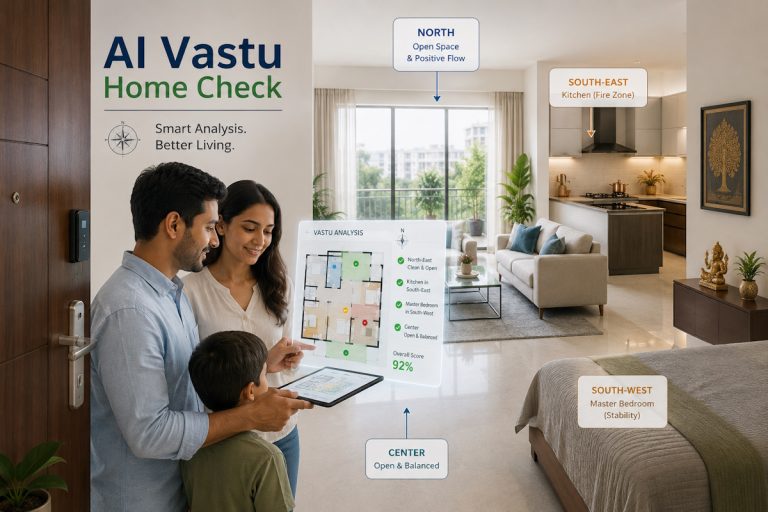
An improperly positioned kitchen can lead to chronic fatigue, digestive issues, and emotional irritability among family members. This occurs because the human body is sensitive to environmental stressors. For instance, a kitchen placed in a water-dominated zone can create a subconscious elemental conflict, affecting the mental clarity of those who cook and eat there. If you are experiencing persistent health or financial stagnation, looking closely at your layout is a logical starting point. Consider utilizing an AI Vastu Analysis to quickly identify underlying structural conflicts.
Ideal Kitchen Vastu Layout Directions Analyzed
Every home is divided into 16 distinct energy zones, but when placing the kitchen, we primarily evaluate the cardinal and ordinal directions to determine the most supportive location.
The Southeast Zone: The Seat of Agni
The absolute ideal location for a kitchen is the southeast sector of the home. This zone is governed by Agni, making it naturally receptive to the fire element. Preparing food in this sector enhances the nutritional value of the meals and ensures that the financial stability of the household remains secure. The morning sunlight, rich in beneficial ultraviolet rays, floods this sector, naturally sanitizing the space and promoting overall hygiene. For those building a new home, prioritizing this quadrant is highly beneficial.
The Northwest Zone: The Alternative Air Element Space
If structural constraints make a southeast kitchen impossible, the northwest zone serves as the next best alternative. Governed by the wind element, Vayu, this quadrant supports movement and change. A kitchen here allows fire to burn steadily under the influence of air, provided the internal placement of appliances remains precise. However, maintaining exact configurations is vital to prevent restless energies from affecting family dynamics. A thorough residential Vastu analysis can help you make the most of this layout.
Zones to Avoid for Kitchen Placement
Under no circumstances should a kitchen be located in the northeast, southwest, or center of the home. The northeast is the water zone and the seat of spiritual energy, meaning a fire source here creates a severe elemental clash. The southwest is the zone of earth and stability, and placing fire here can erode relationship harmony and financial security. The center, or Brahmasthan, must remain open and free of heavy fixtures to allow energy to circulate freely.
Balancing the Dual Forces: Stove and Sink Placement Vastu
Within the kitchen, the relationship between fire and water dictates the daily flow of peace and vitality. The stove represents fire, while the sink represents water.
Fire and Water: Managing the Natural Adversaries
In nature, fire and water are opposing forces. When placed too close to one another, they create a chaotic environment that can manifest as frequent arguments, misunderstandings, and digestive issues in the household. Proper stove and sink placement vastu is essential to keep these two vital elements working in cooperative harmony rather than destructive opposition.
Practical Steps for Stove and Sink Alignment
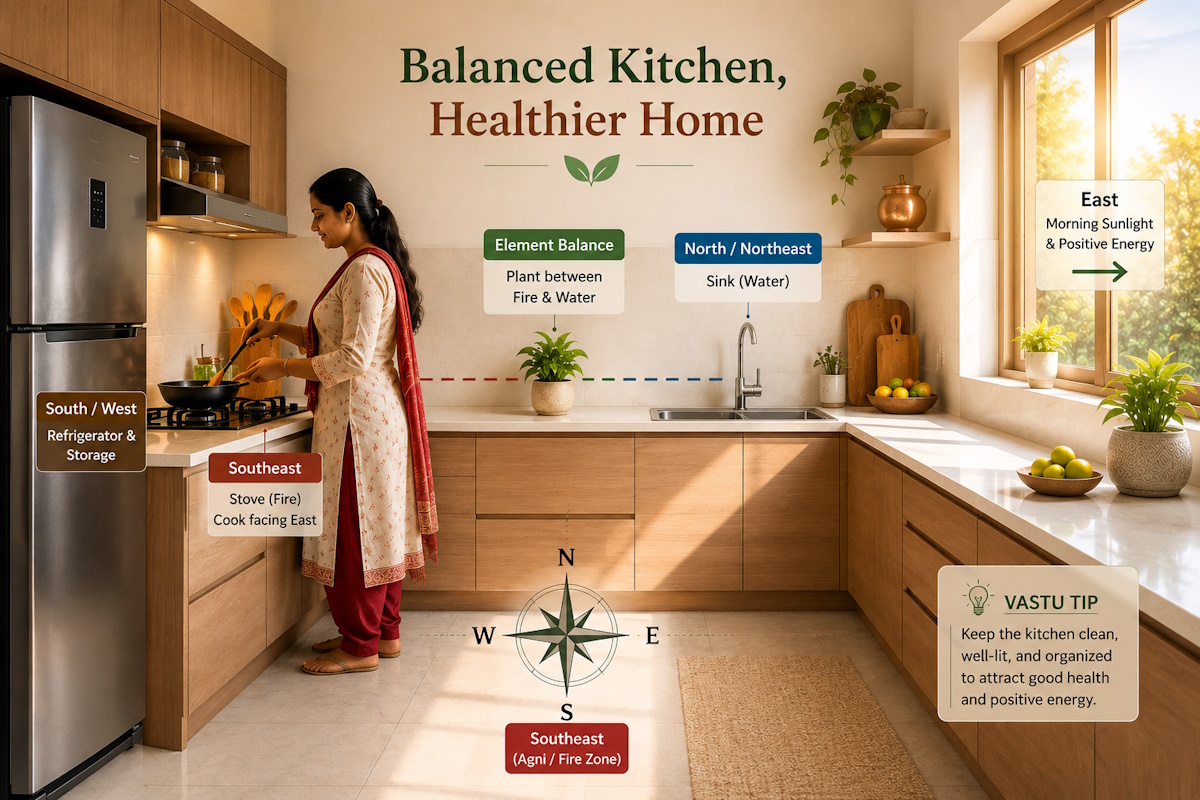
To maintain balance, the cooking stove should ideally be positioned in the southeast corner of the kitchen, and the cook should face east while preparing meals. The sink, representing water, should be placed in the northeast or north zone of the kitchen counter. This separation ensures that the cold, cleansing nature of water does not extinguish the nurturing warmth of fire.
Ideal Distance and Orientation Rules
Never place the stove and the sink directly adjacent to each other on the same counter, and avoid placing them directly opposite each other where they face off. A minimum distance of at least three feet should separate them. If your kitchen layout forces them closer, you can place a wooden barrier or a healthy green plant between them to absorb and neutralize the conflicting elemental vibrations.
Organizing Kitchen Appliances and Storage for Harmonious Flow
A functional kitchen relies heavily on how electrical appliances and food storage are organized. Each of these components has its own elemental signature that must align with the overall space.
Placement of Heavy Appliances: Refrigerator and Microwave
The refrigerator represents cold storage but also consumes electrical energy. It is best placed in the west, south, or southwest corners of the kitchen. Avoid placing it in the northeast, as it can block the flow of positive energy. Microwave ovens, toaster ovens, and other heat-generating appliances should be positioned in the southeast or south, close to the primary cooking zone, to honor the fire element.
Storage of Grains and Utensils
Storage cabinets for heavy grains, flour, and daily provisions should be constructed along the southern and western walls of the kitchen. This adds weight to the zones that benefit from stability. Conversely, the north and east walls should be kept light and free of heavy cabinetry to allow fresh morning light and air to circulate.
Modern Design Challenges and Southeast Kitchen Remedies
Modern apartments and urban homes often feature fixed plumbing lines, pre-installed countertops, and rigid floor plans that make structural changes difficult or impossible.
Remedying a Kitchen in the Wrong Direction
If your kitchen is located in an unfavorable direction, such as the north or southwest, you do not need to resort to expensive demolition. Vastu science offers non-invasive correction methods that work by balancing elemental frequencies. These remedies help neutralize the negative impact of a misplaced water or fire element.
Non-Invasive Southeast Kitchen Remedies for Spatial Imbalance
When a kitchen cannot occupy the physical southeast of the home, we can apply specific southeast kitchen remedies to simulate or strengthen Agni’s presence. Placing a small copper object, a red jasper crystal, or a symbolic red light in the physical southeast corner of the home can stimulate the fire energy. Additionally, ensuring that your cooking stove is kept clean and functional is a powerful way to honor the fire element.
Color Psychology and Elemental Adjustments
Colors carry specific elemental wavelengths. For a kitchen placed in an incorrect zone, paint choices can act as excellent remedies. Avoid using dark blue or black in a southeast kitchen, as these colors represent the water element and can weaken the fire. Instead, use soft warm tones, such as cream, light orange, or pastel yellow, to foster a nurturing environment.
Evaluating Your Kitchen’s Vastu Before Buying or Renovating
Whether you are purchasing a new home or planning a kitchen remodel, taking a proactive approach saves time, money, and stress.
Key Checkpoints for Apartment Buyers
When touring potential properties, always carry a compass to verify the kitchen vastu layout directions. Check the position of the kitchen relative to the front entrance and the toilets. A kitchen should never share a wall with a bathroom, nor should it be directly under or over a toilet on another floor, as this introduces conflicting energies that can damage the purity of your food.
Setting Up Your Renovation Strategy
If you are planning a renovation, prioritize moving the cooking hob to the southeast and ensuring the drainage lines exit from the north or northeast. Ensure that storage for heavy grains and groceries is built along the southern or western walls of the kitchen, keeping the north and east light and open. These minor adjustments can dramatically improve the vital energy of your home.
Aligning Your Home’s Energy for Long-Term Vitality
Optimizing your kitchen’s directional layout is an investment in your family’s daily health, longevity, and mental peace. By understanding the scientific interplay of light, wind, and elemental balance, you can transform your cooking space into a source of pure, life-giving Prana. Rather than worrying about structural imperfections, focus on practical, non-destructive adjustments that restore natural order. Our team of specialists is ready to guide you through every step of this spatial journey, combining traditional principles with modern living requirements.
Frequently Asked Questions
1. What should I do if my kitchen is in the northeast zone?
A northeast kitchen is a serious elemental conflict. To manage this without structural demolition, avoid using red colors in this space. Use light green or yellow tones instead. Place a brass bowl filled with natural sea salt in the corner to absorb damp, heavy energy, and consult an expert for specific elemental balancing remedies.
2. Can the sink and the stove be on the same kitchen counter?
Yes, they can exist on the same counter, but they must not be placed directly next to each other. Ensure there is a gap of at least three feet between them. You can place a small wooden partition, a ceramic pot, or a healthy green plant between the stove and sink to act as an elemental buffer.
3. Which direction should I face while cooking?
The ideal direction to face while cooking is east. This orientation allows the cook to benefit from the morning solar energy, which boosts focus, vitality, and overall health. Facing north is a secondary option, while facing south should be avoided.
4. How can I apply southeast kitchen remedies if my stove is in the west?
If your stove is placed in the west, you can balance this zone by placing a yellow marble slab underneath the stove. You should also place a small brass item or copper sun on the southeast wall of the kitchen to symbolically anchor the missing fire energy.