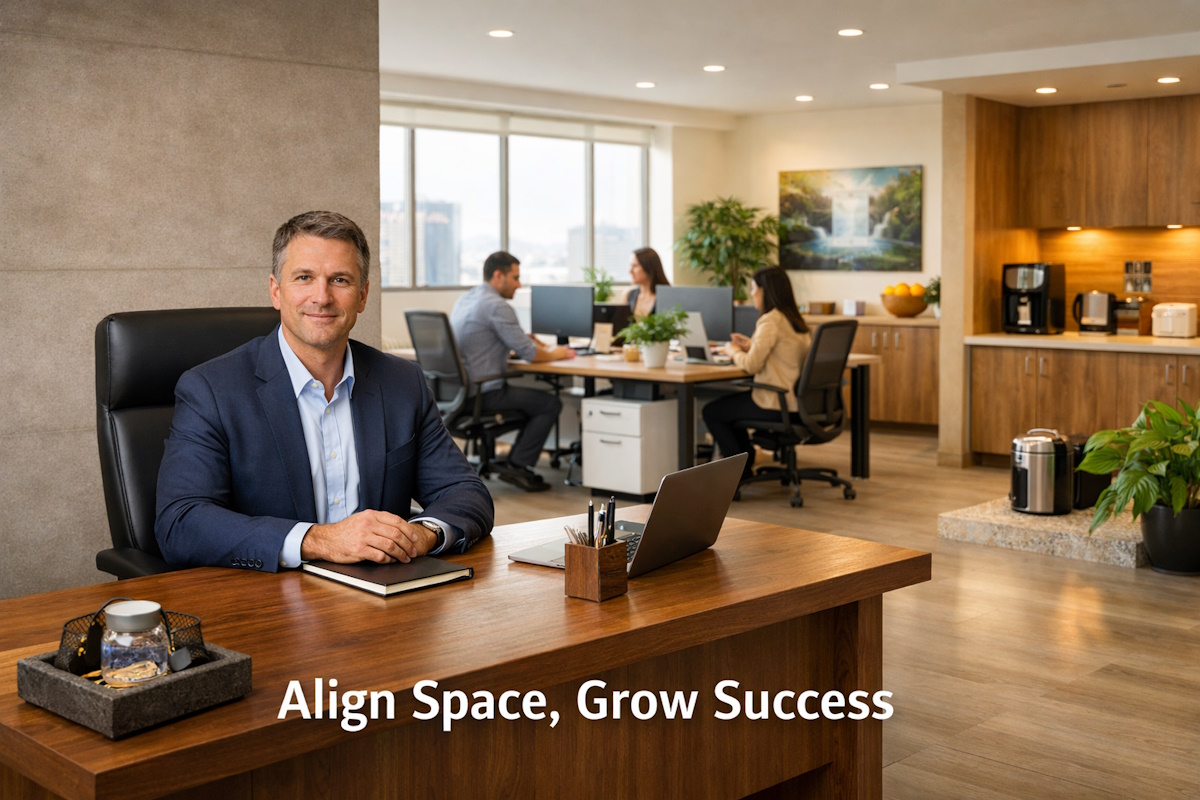
Modern corporate environments often focus heavily on aesthetics and ergonomics, yet many businesses find that despite a beautiful office, team morale remains low or financial growth feels stagnant. This disconnect often stems from an imbalance in the spatial energy of the workplace. In the pursuit of productivity, leaders frequently overlook how the physical layout and directional alignment of their office impact the subconscious mind and the overall flow of professional opportunities. Vastu for office interior offers a logical, time-tested framework to align a workspace with natural forces, ensuring that the environment supports rather than hinders business objectives.
Implementing Vastu principles in a modern office is not about reverting to ancient architectural styles, but rather about understanding the flow of energy within a contemporary setting. Whether you are operating out of a high-rise glass building or a compact co-working space, the way your team is positioned and how the elements are distributed can dictate the health of your balance sheet. By making specific, non-invasive tweaks to your office interior, you can create a high-vibration zone that fosters innovation, reduces interpersonal friction, and invites sustainable wealth flow into your organization.
Establishing a Command Center through Strategic Seating
The foundation of a successful office layout lies in the hierarchy of its occupants and the directions they face. In Vastu science, the South-West corner is associated with the Earth element, which represents stability, authority, and grounding. This makes it the most critical zone for the business owner, CEO, or managing director. When the leadership sits in the South-West, they command respect and possess the clarity needed to make long-term strategic decisions. Conversely, placing the leadership in the North-West or East can lead to instability or a lack of control over the organization’s direction.
Optimizing Office Seating Vastu for Leadership
For the primary decision-makers, the desk should be positioned so they face North or East while working. Facing North connects the individual to the energies of Kuber, the deity of wealth, which is ideal for financial planning and business expansion. Facing East promotes growth, innovation, and a forward-thinking mindset. It is equally important that there is a solid wall behind the leader’s chair rather than a window or a glass partition. A solid wall provides symbolic and energetic support, ensuring the leader feels secure in their position. If your current office has a large window behind the desk, using heavy blinds or a solid wooden screen can act as a practical Vastu remedy.
Correcting Desk Shapes and Materials
The shape of the desk plays a significant role in workplace energy. In a professional setting, rectangular or square desks are highly recommended as they represent stability and a balanced flow of ideas. Irregularly shaped desks, such as L-shaped or circular ones, can create uneven energy distribution, leading to confusion or delayed results. Furthermore, while glass desks are popular in modern design, they are often considered “transparent” in terms of energy, which may lead to a lack of secrecy or a feeling of vulnerability in financial matters. Opting for solid wood or high-quality laminate finishes is often preferred for a more grounded professional experience.
Enhancing Workplace Energy for Team Collaboration
The energy of the general staff area determines the daily operational efficiency of the company. If the team is placed in a zone of high stress or stagnant energy, productivity will naturally dip regardless of how many incentives are offered. The North and East zones are ideal for general staff workstations because these directions are governed by the Water and Air elements, respectively. These areas are conducive to communication, movement, and the intake of new information, making them perfect for departments like marketing, sales, and customer service.
Improving Employee Focus and Morale
When considering office seating vastu for the broader team, ensure that employees do not sit directly under a structural beam. In Vastu, beams are known to carry “downward pressure,” which can lead to headaches, mental fatigue, and increased stress among workers. If the office design makes it impossible to move desks away from beams, covering the beam with a false ceiling or using light-colored paint can mitigate the negative impact. Additionally, employees should ideally face North or East to stay energized throughout the day. Facing a wall can be demoralizing, so if a desk must face a wall, adding a pleasant landscape painting or a vision board can help open up the energetic field.
Managing the Open-Plan Office Paradox
Modern open-plan offices are great for collaboration but can sometimes lead to a chaotic workplace energy where no one feels grounded. To balance this, use low-height partitions or indoor plants to create subtle boundaries. Plants like the Snake Plant or Areca Palm not only purify the air but also act as energetic buffers that absorb “noise” and promote a sense of calm. Avoiding sharp-edged furniture in common areas can also reduce “Sha Chi” or cutting energy, which often manifests as office politics or frequent disagreements among team members.
Activating the Wealth Flow through Elemental Placement
Wealth in a business is not just about the money in the bank; it is about the “flow” of opportunities and the ability to convert leads into revenue. In Vastu for office interior, the North zone is the primary gateway for financial opportunities. Keeping this area clean, clutter-free, and well-lit is essential. If the North zone is blocked by heavy storage or toilets, the business may struggle to attract new clients or experience delays in payments. Conversely, the South-East zone governs the Fire element, which represents the “cash liquidity” and the drive to succeed.
Balancing Fire and Water Elements
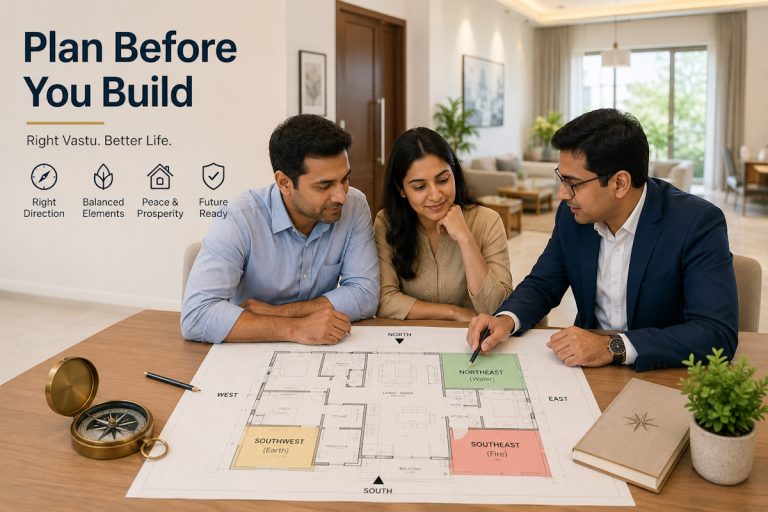
The South-East is the ideal location for the pantry, server room, or electrical equipment. When the fire element is balanced in this corner, it provides the “fuel” needed for the business to operate smoothly. However, if there is a water source like a sink or a water cooler in the South-East, it can create a clash between fire and water, leading to unexpected expenses or financial losses. If your office layout places these two elements together, using specific color remedies like green or brown hues can act as a mediator to neutralize the conflict.
Colors and Decor for Financial Growth
Color psychology is a powerful tool in Vastu for office interior. For the North zone, shades of blue or light green are excellent for stimulating growth and opportunity. In the South-East, warm tones like cream, light orange, or soft red can boost the fire element without becoming overwhelming. Avoid using dark colors like black or deep navy in the South-East, as these represent the water element and can dampen the energy of the zone. Similarly, keep the South-West decorated with earthy tones like yellow or beige to reinforce stability and trust with clients.
Using Water Features for Prosperity
A small water fountain in the North or North-East can be a potent activator for wealth, provided the water is kept clean and flowing. Stagnant water has the opposite effect, symbolizing stuck finances. If a physical water feature is not practical, a high-quality painting of a calm river or a vast ocean in the North can serve as a symbolic substitute to encourage the flow of prosperity.
The Central Space and Modern Clutter Management
The center of the office, known as the Brahmasthan, should ideally be left open and free of heavy structures. In modern office design, this is often the most congested area with pillars, partitions, or heavy filing cabinets. When the center is cluttered, the workplace energy becomes suffocated, leading to a lack of innovation and a feeling of being “stuck” for the entire organization. If a structural pillar exists in the center, it cannot be moved, but its impact can be neutralized by mirrors or specific light fixtures that uplift the energy.
Decluttering for Mental Clarity
Clutter is one of the biggest enemies of Vastu for office interior. Old files, broken electronics, and unused stationery in the North-East or South-West can create mental blocks for the leadership and the team. The North-East, in particular, should be the most “sacred” and clean part of the office, as it is the zone of mental clarity and wisdom. Regular audits of storage areas and ensuring that the reception area is always inviting and clear of obstacles will significantly improve the first impression your business makes on visitors and the daily experience of your employees.
Lighting as an Energy Enhancer
Natural light is the best source of positive workplace energy. An office that is dark and relies solely on artificial fluorescent lighting can lead to a dull atmosphere and low employee engagement. Where natural light is limited, use full-spectrum LED lights that mimic daylight. Ensure that the North and East sides of the office have the largest windows to let in the beneficial morning sun, while the South and West windows should be fitted with thicker curtains to prevent the harsh afternoon heat from draining the energy of the space.
Practical Vastu Remedies for Modern Constraints
In many urban office settings, you do not have the luxury of choosing the building’s architecture or moving walls. This is where Vastu for office interior becomes a science of “corrections” rather than just “placements.” If your office entrance is in a challenging direction like the South-West, you can use specific metals, colors, or symbols at the door to “filter” the energy coming in. Similarly, if the washrooms are located in the North or North-East, specific salt remedies or color strips can be used to contain the negative drainage of energy.
Using Technology and Data in Vastu Analysis
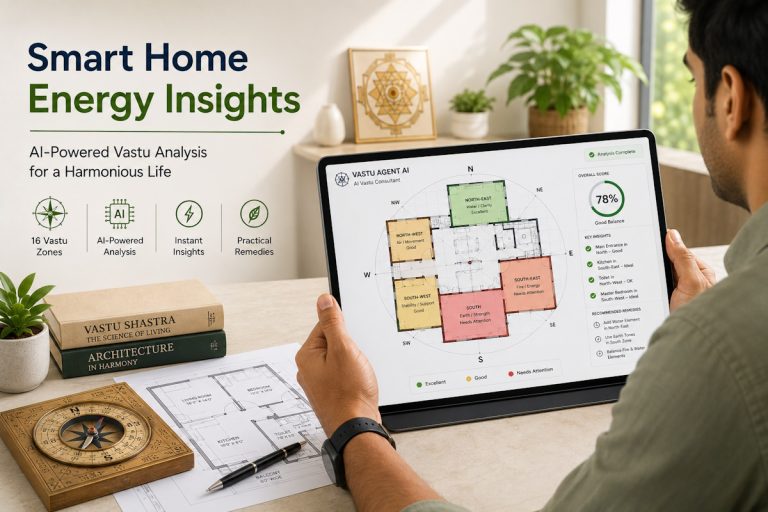
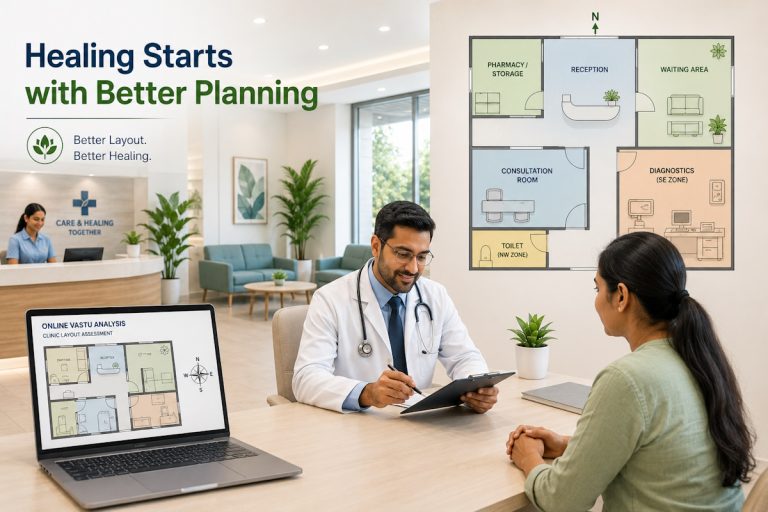
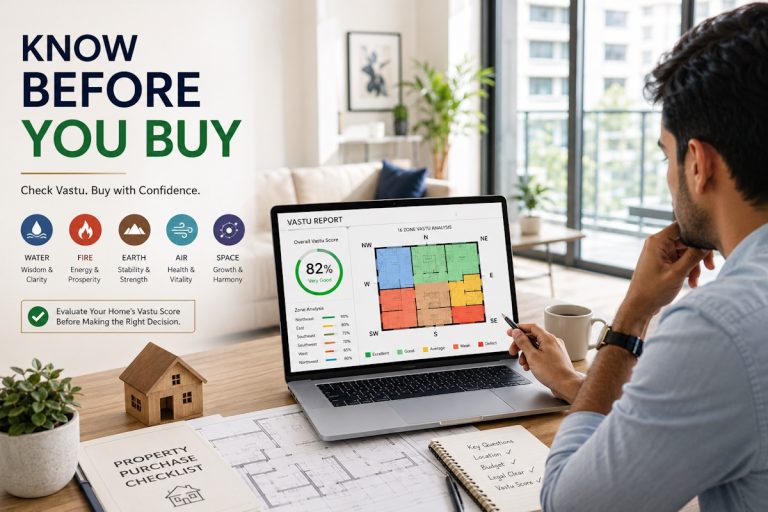
Today, we can use 16-zone digital mapping to identify exactly where the energy is leaking. This data-driven approach allows business owners to make precise changes, such as moving a single desk or changing the color of one wall, rather than opting for expensive renovations. Advanced Vastu focuses on the “micro-vibrations” of a space, ensuring that even a small cubicle can be optimized for the individual sitting there. By aligning the person’s date of birth with their seating direction, we can create a personalized productivity zone that significantly reduces burnout.
FAQs
1. Can Vastu for office interior really improve my sales?
Yes, by optimizing the North and South-East zones, Vastu helps attract more opportunities and ensures better cash flow. When the environment is aligned, the team feels more motivated and clear-headed, which naturally leads to better performance in sales and client interactions.
2. What is the best direction for an office reception?
The reception should ideally be in the North-East or East part of the office. The receptionist should face North or East while greeting guests. This ensures a positive and welcoming energy for anyone entering the premises, which is crucial for building long-term business relationships.
3. How do I handle Vastu if I work from a small home office?
The same principles apply. Focus on your seating direction, ensure your desk is in the South-West or West of the room, and keep your North-East corner clean. Even in a small space, avoiding sitting under a beam and facing the right direction can make a massive difference in your productivity.
4. What colors should I avoid in a professional workspace?
Avoid using overly dark or dull colors like deep black, grey, or dark brown on all walls. These can create a heavy, depressing atmosphere. Also, avoid using bright red excessively in the North or North-East, as it can lead to impulsive decisions and conflicts due to the clash between fire and water energies.
5. Do I need to break walls to make my office Vastu-compliant?
Most modern Vastu corrections are non-invasive. We use elements, colors, metals, and strategic furniture placement to balance the energy. Structural changes are usually a last resort and are rarely needed if the other 16-zone balances are correctly applied by an expert.