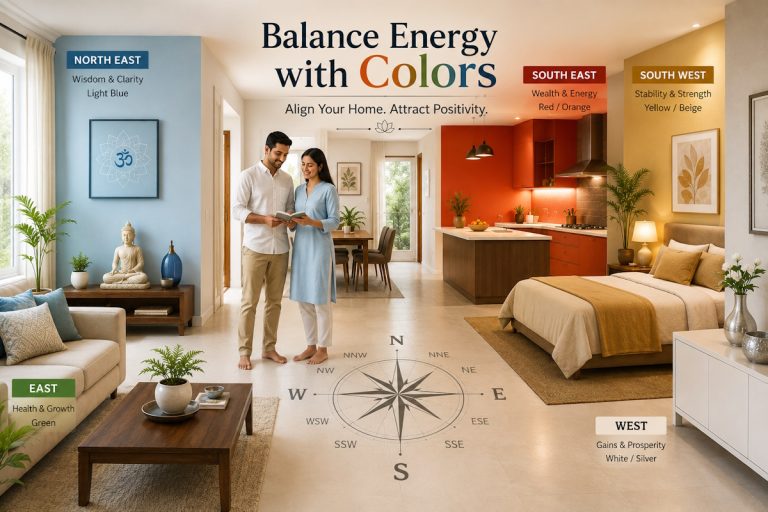
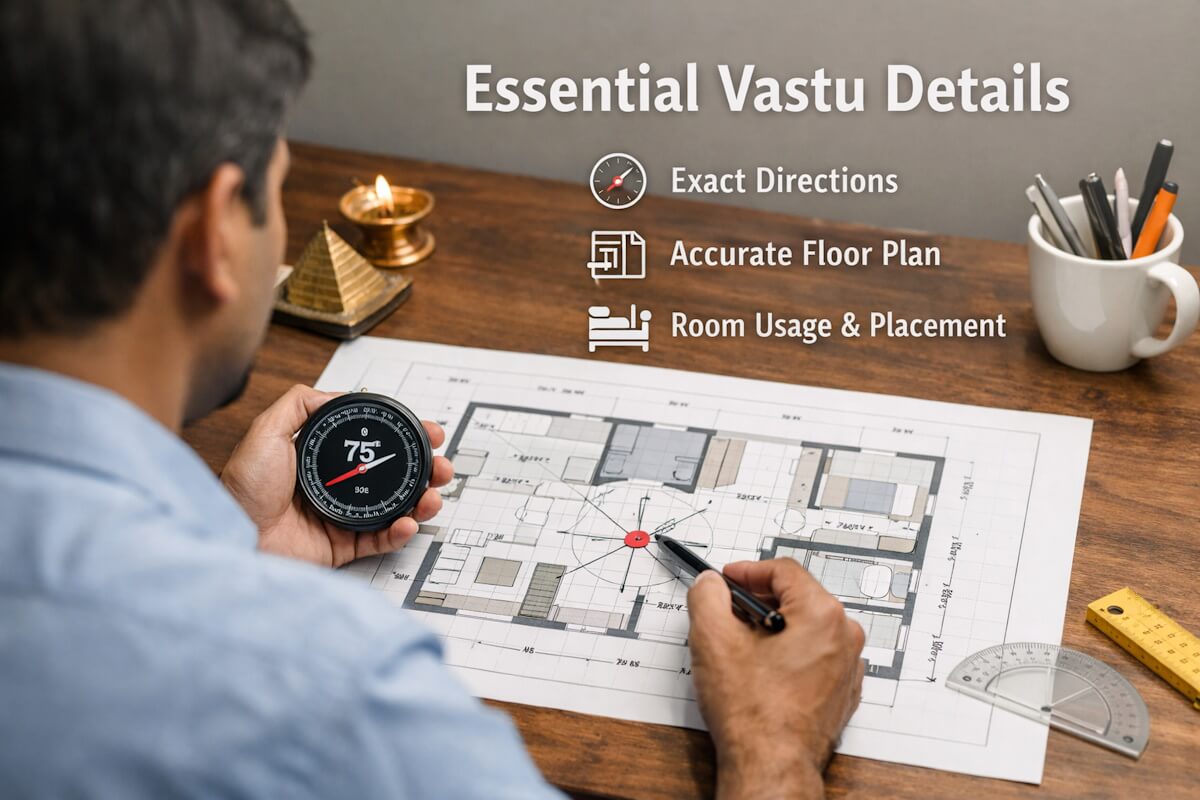
To do a proper 16 zone Vastu analysis, guesswork does not work. Direction names alone are not enough. Many people think knowing “this is east” or “that is southwest” solves it. It does not. A 16 zone approach goes deeper, and if even one input is off, the reading becomes misleading.
If you are a homeowner planning changes, a buyer checking a flat, or an architect trying to fix layout issues, this article walks you through the exact information required. No fluff. No mysticism. Just what actually matters on site.
Understanding What 16 Zone Vastu Really Means
Before getting into the inputs, let’s clear one thing.
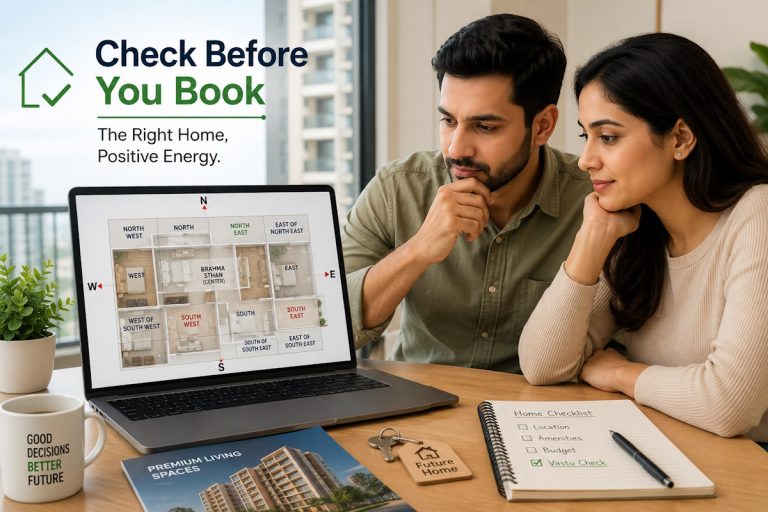
16 zone Vastu is not the same as basic 8 direction Vastu. Each main direction is split into sub-zones. That gives you 16 distinct energy areas, each affecting a specific aspect of life like finances, health, stability, or mental clarity.
This means a kitchen placed in “east” is not enough information. Is it in east-northeast or east-southeast? That difference decides whether the kitchen supports you or slowly drains things.
So accuracy is non-negotiable.
Exact Orientation of the Property – Not Approximate
This is the backbone of 16 zone analysis.
You need the exact degree-based orientation of the building. Not “roughly east-facing” or “slightly tilted north.” Those phrases ruin accuracy.
What works is:
- A compass reading taken on-site
- Or a properly calibrated digital compass app
- Or a professional site survey
Degrees matter. A door at 88 degrees behaves differently from one at 102 degrees. Both are “east” in casual talk, but they fall into different sub-zones energetically.
If you are checking a flat in a high-rise, stand near the main entrance with minimal metal around. Lifts, grills, and railings distort readings. Step slightly inside the flat if needed.
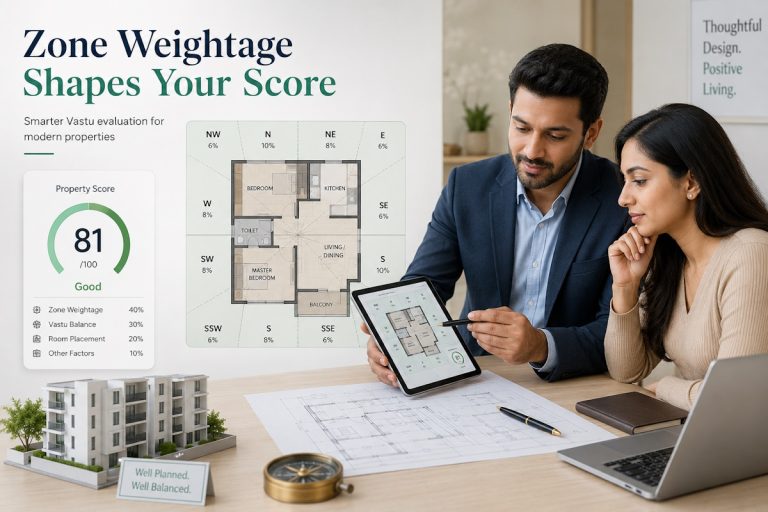
Correct Floor Plan With Clear Measurements
A hand-drawn sketch is not enough.
For accurate analysis, you need a scaled floor plan that shows:
- Wall-to-wall internal dimensions
- Door and window positions
- Balconies, ducts, and cut-outs
- Toilet and kitchen boundaries
If the plan is stretched or copied without scale, the zone division goes wrong. That leads to wrong remedies and wasted effort.
Apartments often look rectangular on paper but have irregular internal cuts. Those missing corners matter a lot in 16 zone Vastu.
Identification of the Center Point (Brahmasthan)
Many people skip this step. Big mistake.
The center of the house decides how the 16 zones are divided. If the center is miscalculated, every zone shifts.
To identify it properly:
- Use the outermost built-up boundary, not just living room walls
- Include balconies if they are covered and usable
- Exclude open terraces unless enclosed
Once the true center is marked, the house is divided like a compass wheel. Every room’s influence is then judged from its percentage coverage in a zone, not just presence.
This is why two identical-looking flats can behave differently.
Precise Placement of Main Entrance
In 16 zone Vastu, the main door zone has outsized importance.
You need to know:
- Exact door width
- Door position measured from one corner
- Directional degree of the door opening
A door touching two zones behaves differently than one fully inside a single zone. Many apartment doors fall right on zone borders.
Even door swing direction matters. Inward or outward swing changes energy flow, especially in northeast and north-northwest zones.
If you are buying a flat, this single detail often decides whether the house supports growth or constant struggle.
Current Usage of Every Room
Vastu reacts to how you use a space, not what the builder named it.
You must list:
- Actual bedroom usage
- Home office locations
- Storage-heavy areas
- Prayer or meditation corners
- Areas with unused clutter
A “guest room” that is now a work-from-home setup changes the zone impact. A store room used for gym equipment behaves differently from one stacked with junk.
Be honest here. Vastu does not reward labels.
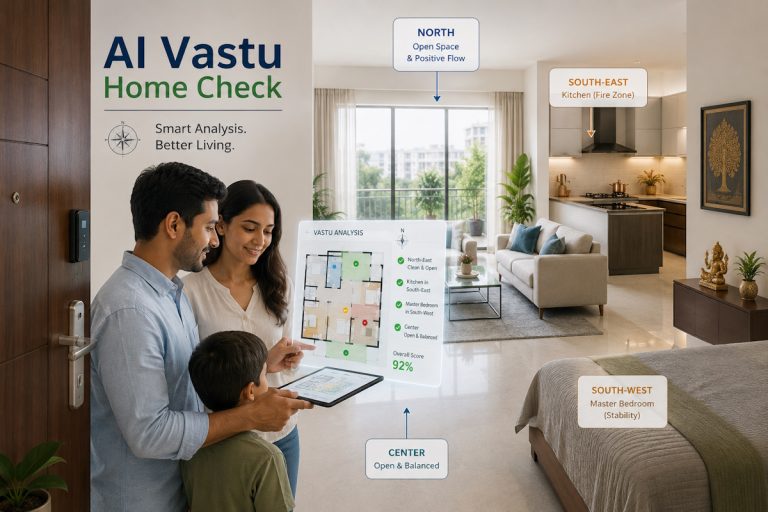
Kitchen Details Beyond Just Location
Saying “kitchen is in southeast” is not enough for 16 zone work.
You need:
- Cooking stove position
- Sink placement
- Fridge location
- Microwave or oven placement
- Entry door of the kitchen
Fire and water placement inside the kitchen can either neutralize problems or amplify them. Many modern kitchens look good but quietly mess with health and finances because internal placements are ignored.
This is where most online Vastu advice falls flat.
Toilet and Bathroom Mapping
Bathrooms are sensitive in 16 zone analysis.
Required details include:
- Toilet seat direction
- Shower area location
- Drain position
- Attached or common bathroom status
A toilet slightly shifted from west-northwest to northwest can change outcomes related to expenses and legal stress.
If the bathroom overlaps two zones, the dominant zone coverage percentage must be calculated. Eyeballing does not work here.
Staircase Direction and Movement Flow
For independent homes and duplexes, staircases matter a lot.
You need:
- Starting point of the stairs
- Direction of movement
- Whether stairs are clockwise or anti-clockwise
- Under-stair usage
Stairs cutting through certain sub-zones disturb mental stability and long-term planning. In apartments, common staircase placement still impacts flats near it.
Ignoring this is common and costly.
Heavy and Light Load Distribution
16 zone Vastu reacts strongly to weight distribution.
Information required:
- Locations of wardrobes, safes, and storage units
- Overhead water tanks
- Underground tanks
- Large furniture clusters
Heavy load in wrong sub-zones creates stagnation. Light zones blocked by weight reduce opportunities.
This applies even to modern minimalist homes. A single heavy bookshelf in the wrong corner can quietly cause issues.
External Surroundings and Openings
Your flat or house does not exist in isolation.
You need details about:
- Roads and open plots around the property
- Nearby electrical transformers
- Big trees close to walls
- Water bodies or drains
Balconies and windows matter too. Their direction and size influence how energy enters and exits.
In high-rise buildings, even the view direction from the balcony impacts results.
Floor Level and Vertical Placement
This part is often overlooked.
In apartments:
- Floor number matters
- Vertical stacking of toilets and kitchens matters
- Roof-level tanks above specific zones matter
A northeast toilet three floors above you can still create subtle issues. Vertical energy flow is real, especially in towers.
If you live in a duplex, upper floor usage must be mapped separately but analyzed together.
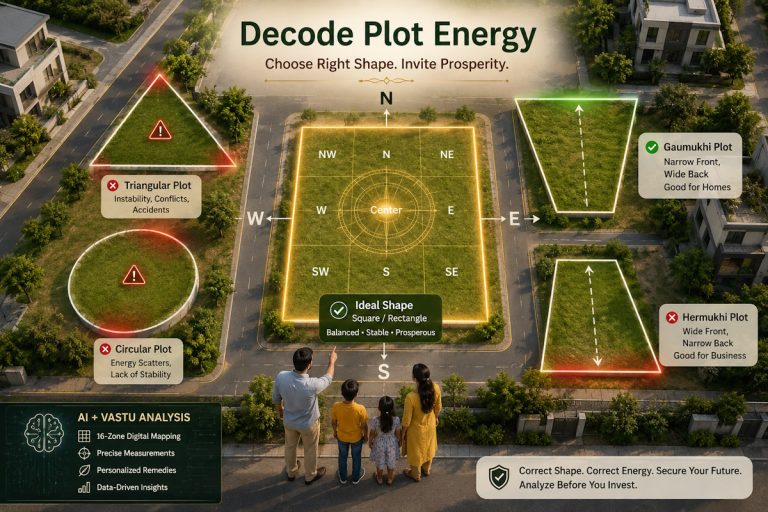
Structural Cuts, Extensions, and Irregular Shapes
Perfect rectangles are rare in real homes.
You must identify:
- Missing corners
- Extended balconies
- Odd-shaped projections
- Slanted walls
In 16 zone Vastu, a missing north-northeast corner affects money planning differently than a missing northeast.
Temporary fixes work only when the exact structural issue is known.
Electrical and Fire Elements Placement
Modern homes have more fire than ever.
You need to map:
- Electrical panels
- Inverter placement
- Generator proximity
- Heavy wiring clusters
Fire in water-dominant zones creates mental unrest and sleep issues. This is common in flats with random inverter placement.
Small shifts often fix big problems when done knowingly.
Occupant Details – But Only Relevant Ones
Not everything personal is required, but some things matter.
Useful information includes:
- Number of occupants
- Age group distribution
- Work-from-home presence
- Long-term health concerns
This helps prioritize zones. A house for retirees needs different balance than one for young professionals.
Birth details are not mandatory for 16 zone analysis, despite what some claim.
Current Problems Being Faced
This is not superstition. This is diagnostic.
You should list:
- Repeating financial issues
- Health patterns
- Relationship tension
- Career stagnation
- Sleep problems
These symptoms guide zone focus. Without them, analysis becomes generic.
A good 16 zone reading connects space patterns to lived experiences. If it does not, something is missing.
Why Incomplete Information Gives Wrong Advice
When inputs are half-baked, recommendations turn risky.
People move beds, repaint walls, or install objects based on vague advice. Nothing changes. Then they blame Vastu.
In reality, the analysis was never accurate to begin with.
16 zone Vastu works only when treated like site engineering, not horoscope reading.
What You Can Do Right Now
If you are planning an analysis:
- Get a proper floor plan
- Take clear compass readings
- Note real usage of spaces
- Observe weight and movement patterns
If you are buying a property, do this before finalizing. Fixes are easier on paper than after possession.
And if you already live there, small accurate changes beat big random ones every time.
Final Thought for You
Vastu is not about fear or blind belief. It is about spatial logic and how your daily habits interact with built space.
When the information is accurate, the guidance becomes practical. When it is vague, nothing sticks.
If you want your home to support you instead of quietly working against you, start with the right data. Everything else comes later.
If you want help checking whether your current information is enough for a proper 16 zone analysis, that’s a good place to begin.