
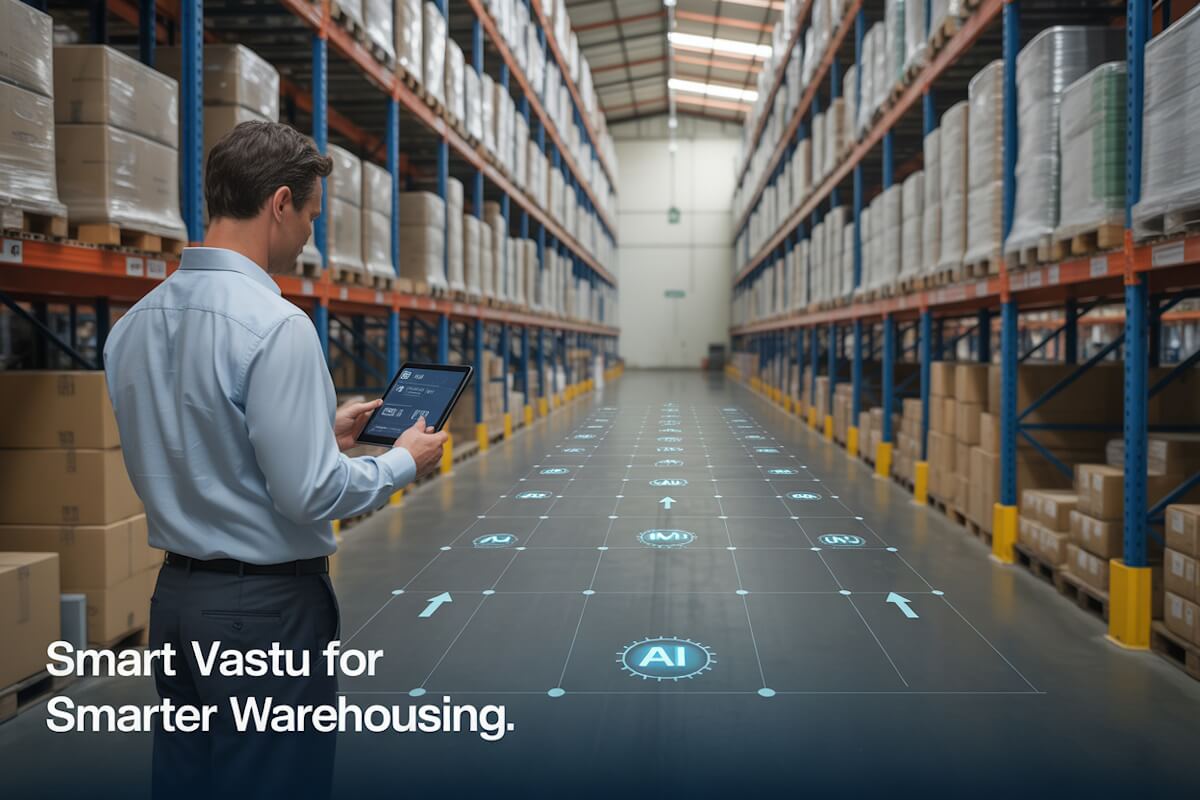
Running a warehouse comes with daily pressure. You want faster movement, fewer mistakes, and a space that supports your team instead of slowing them down. When you look at modern warehouses in the US, Canada, or growing industrial zones in India, the layout is often built around machinery and storage racks. Yet small tweaks in direction, flow, and placement can bring better clarity and steadier output. That is where Warehouse & Logistics Vastu steps in.
This guide is for owners, supervisors, logistics managers, commercial realtors, and anyone planning or upgrading a warehouse. You will find practical steps that fit real-world operations, not ancient theory tossed around without context.
Let’s break down each zone carefully so you can shape a warehouse that feels organized and runs smoother day to day.
Why Vastu even matters in warehouses
A warehouse is not a quiet space. It is full of forklifts, loading docks, dispatch stress, paperwork, coordination calls, and long rows of goods. Small interruptions can pile up and slow the entire chain.
Vastu for warehouses focuses on:
- steady movement of goods
- better location for crucial functions
- lowering confusion for staff
- improving flow between receiving, stocking, and dispatch
- reducing paperwork mix-ups
- encouraging cleaner operations
Think of it as directional planning that supports the work instead of fighting it.
Understanding the core directions for warehouse planning
Before you divide zones, you need the directional strengths. Keep it simple:
- North supports movement of goods and money coming in.
- East supports planning, communication, supervision.
- South and West support stability, heavy loads, long-term storage.
These four ideas guide the full layout.
Ideal site and entry for a warehouse
A warehouse on a rectangular plot works best because it gives cleaner stacking and wider aisles. Try to avoid odd shapes that force awkward corners. If you already have such a plot, adjustments inside can still help.
Main entry
Place the primary gate or driveway toward the North or East. Trucks enter smoother from these directions, and the flow inside feels more controlled. For very large industrial sites, a North-East entry works well for administrative access and a separate North or East entry for truck movement.
When an entry sits in the South-West, people often report erratic movement, tougher staffing issues, and heavier strain on managers. If that is your situation, improving internal zoning becomes more important.
Placement of loading and unloading zones
This is the heart of most warehouses. It needs to feel open and responsive.
Best directions
- North-West is strong for dispatch because it supports outgoing movement.
- North or North-East is better for receiving.
Try not to mix inbound and outbound in one short stretch. It invites confusion and traffic jams.
If your dock door numbers cannot be changed, you can shift the internal flow. For example, direct inbound pallets toward the East side for checking and send outbound pallets toward the West side.
Ramp direction
Ramps rising toward the North or East bring smoother flow and less mechanical burnout.
Ramps rising toward South create unnecessary stress on forklifts and may trigger more maintenance calls.
Storage zones for different materials
Storage is where Vastu planning makes the biggest difference because it decides how stable the goods remain.
Heavy storage
Keep heavy and long-term goods toward the South or West. These zones hold weight well. This includes:
- machinery parts
- metal goods
- construction items
- bulk cartons that do not move daily
If your warehouse uses pallet racking, the taller racks should lean toward the South or West zones. Lower racks or lightweight inventory can sit in the North or East.
Light or fast-moving storage
North and East areas are better for quick-pick goods. Items that move daily feel easier to handle here. Also, teams usually respond quicker in these zones because the environment feels more active.
Perishable or temperature-sensitive storage
Place these toward the North or North-East, where the energy supports steadiness and less fluctuation. Cold storage units or controlled rooms operate better when their main door faces East or North.
Aisle planning and movement flow
Many warehouses suffer because aisles are set based on racking layout rather than people movement.
Try this approach:
- Keep main cross aisles running East to West.
- Keep sub aisles North to South.
This creates a natural checkerboard movement where staff intuitively moves goods to the right zones. It reduces backtracking and saves time on walk cycles.
If you already have a fixed racking setup, you can adjust signage and flow direction so that movement still follows this pattern.
Office cabins inside a warehouse
Most warehouses have a small office for supervisors, supply chain managers, and paperwork. Placement of this area affects communication and clarity.
Ideal zone
East or North-East is best for office cabins. Staff feels more alert here, and communication improves. Supervisors can catch mistakes early.
Cabin direction
The manager should sit facing North or East. It supports quicker decisions and smoother coordination with staff and trucking teams.
If the cabin already sits in the West or South, try placing the main desk toward the North while keeping storage cabinets behind the desk.
Accounts, billing desk, and computer systems
Anything linked to money or tracking needs stability and accuracy.
Place your accounts desk or billing room in the North or East section. Staff should sit facing North. This reduces mix-ups and keeps numbers steady.
Avoid putting this desk in South-West corners because those zones often feel slow, and paperwork errors grow over time.
Electronic systems and machinery zone
Warehouses today depend heavily on:
- scanners
- conveyor belts
- sorters
- labelers
- CCTV systems
- servers
The South-East zone suits electrical equipment. It handles current better and keeps machines functioning steady.
If you place too much electrical load in the North-East, breakdowns may increase.
Security cabin and monitoring area
Security staff manages vehicle logs, entry passes, and night surveillance. Their placement should give them a clear view and a sense of alertness.
Put the security cabin near the North-East or East section of the gate. This location helps them remain attentive and handle visitors without delays.
If your warehouse sits inside a big industrial compound, the security cabin for the inner building can sit in the North-East of the warehouse plot.
Parking for trucks and forklifts
Truck parking in the North-West works well because it supports easy outbound movement.
Forklift parking can sit in the East or North-East when not in use. It keeps the machines ready and reduces idle sluggishness.
Avoid keeping parked forklifts in the South-West corner for long durations because machines tend to require more repairs when sitting there.
Water tanks and fire safety systems
Every warehouse needs accessible firefighting gear, sprinklers, and hydrants.
- Overhead tanks fit best in the West.
- Underground water storage works best in the North-East.
- Fire pumps or firefighting panels should sit in the South-East.
This combination keeps water flow and fire safety balanced without constant issues.
Waste area, scrap zone, or repair bench
Scrap items, damaged cartons, broken pallets, and repair benches often take up space in working warehouses. These areas must not interfere with movement.
Keep scrap and repair corners toward the South or South-West. These zones support the idea of clearing out unnecessary load without affecting day-to-day flow.
Avoid storing scrap near the North or East because it slows receiving operations and creates visual clutter.
Staff pantry and rest area
Workers need a space to take breaks, especially in large facilities.
Place the pantry toward the North-West or West. It keeps the break time balanced and prevents the area from becoming too busy or distracting.
The South-East should not be used for cooking inside warehouses because it holds electrical energy strongly, which clashes with gas or hot equipment.
Washrooms and utility spaces
Washrooms fit well in the West or South sides. Try not to place them in the North-East, as that area needs to be clean and open.
If your warehouse already has a restroom in the North-East, keep the door always closed and maintain the area extra clean.
Mezzanine floors and overhead storage
Lots of warehouses have mezzanine floors made of metal frames. This is usually where:
- extra cartons
- seasonal stock
- returns
- office files
are kept.
Place mezzanine structures toward the South or West, not the North-East. Heavy overhead load in the North-East can make operations feel blocked and slow.
If your mezzanine already sits in the wrong area, shift heavy items southward on the platform and keep the North-East portion lighter.
Managing North-East in a warehouse
The North-East corner is often the most misused area in a busy warehouse. Staff tends to dump extra pallets, damaged goods, or returns here because it looks open.
Try to keep this corner clean, well lit, and used for:
- light materials
- quality check desk
- receiving table
- small equipment storage
This area sets the tone for the full building.
Managing South-West in a warehouse
South-West can handle heavy, slow-moving items. If you have imported containers, old records, or goods that rarely move, place them here.
You can also store bulky tools or spare machinery here.
A warehouse feels grounded when this corner is stable and organized.
Dock office or dispatch counter
The dock office helps coordinate trucks, paperwork, and outbound packages.
Place this counter toward the North-West. This direction supports outgoing goods and faster clearance.
Staff can sit facing East for smoother work. Try not to place them facing South because it tires them out faster.
Quality check area
The QC desk needs clarity. Put it in the North or East section near receiving so issues are caught early.
A QC zone in the West or South tends to slow down inspection and makes mistakes more likely.
Inbound and outbound conveyor positions
If your warehouse uses conveyors, place inbound belts toward the North or East. Outbound belts can go toward the West or North-West.
Whenever possible, avoid placing the start of the conveyor system in the South-West because that area prefers weight, not movement.
Open yard storage
Some warehouses use an open yard for pipes, tiles, lumber, containers, or temporary holding.
Store heavy outdoor items in the South or West yards. Keep lighter or fast-moving outdoor items in the North-West.
Never fill the North-East yard with clutter. Leave it clear or use it only for small items.
When you cannot change the layout
Many warehouse managers operate in leased buildings with fixed docks, offices, pillars, and trenches. Even then, you can:
- shift heavy stock toward South or West
- place receiving activity toward North-East
- move dispatch tasks toward North-West
- adjust desk directions
- reorganize aisles to suit flow
- keep the North-East clean
- shift electrical equipment toward the South-East
Small internal changes often create noticeable improvement.
Final thoughts
A warehouse runs on structure, movement, and timing. When these three are in sync, operations feel smoother and more predictable.
The goal of Warehouse & Logistics Vastu is not to redesign your entire building. It gives you a practical way to place zones, keep heavy areas stable, move goods faster, and support your staff without overhauling the whole system.
Start with one section of your warehouse and see how it feels after the change. Then expand across the building. You will notice the difference in flow, clarity, and daily tasks.
If you want, I can map a detailed Vastu layout for your exact warehouse size, directions, loading docks, and racking plan.