Commercial spaces carry a different kind of pressure. You might own a retail shop, a restaurant, a warehouse, a clinic, an office floor, or a mixed use property in a busy US or Canadian market. When the space works well, you feel it. When something is off, you notice it in the form of slow foot traffic, staff turnover, unpredictable sales, mounting repair costs, or deals that just do not close. Many owners later discover that certain Vastu doshas quietly push down the performance of the property. And once the market senses trouble, the perceived value dips.
If you want to focus on Avoiding Financial Loss: 7 Vastu Doshas That Devalue Commercial Property, the key is to understand what usually goes wrong and how to correct it without tearing the place apart.
Let’s walk through the doshas that create the biggest dents in revenue and long term property worth.
1. A Weak North East Corner
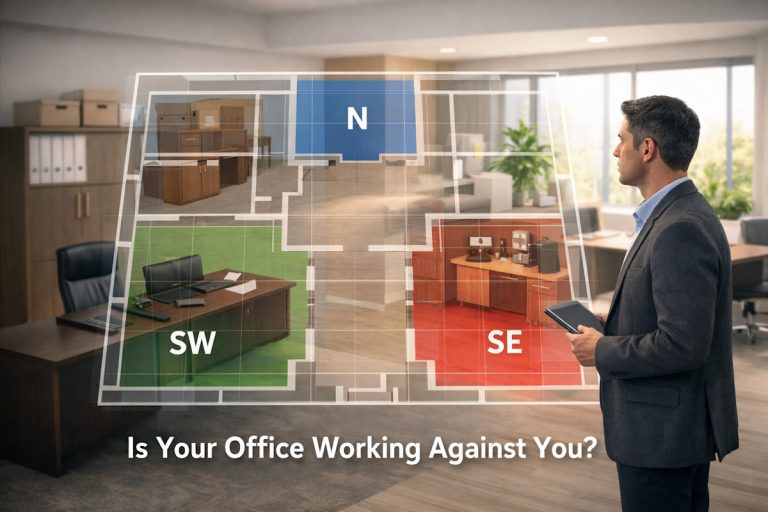
The North East corner in any commercial property needs to stay open, lighter, and calmer than the rest of the space. In many US cities, owners convert this corner into storage, server rooms, oversized bathrooms, or mechanical rooms because it feels like leftover space. The problem is that heavy use in this corner slows momentum. You feel it in the way money trickles in but never grows.
A North East corner with clutter or heavy construction often shows up as:
- Delayed payments
- Short term clients who never return
- Deals that stall
- A general sense of stuck energy
If you notice water leakage, mold, or plumbing repairs piling up in this zone, that is another sign the corner is taking on too much weight. Try to free this area. Move heavy items out. Keep it cleaner and brighter. Even in a compact shop or office suite, shifting a few blocks of shelving away can create a visible shift in how the place feels.
2. South West Entrance or Overactive South West Zone
An entrance in the South West direction tends to drain stability. In commercial properties, this direction should anchor the space. It should carry steady weight such as the owner’s cabin, the main safe, or long term documents. When you place the entry here, the property feels ungrounded. Staff comes and goes. You might notice that tenants do not stick around. People with experience in property flipping often avoid South West entries because values dip over time.
Some modern layouts, especially in malls and plazas, force a South West entry. If that is your situation, the goal is to create stability through placement. Keep the heaviest zone in the South West interior, not at the door. Place filing cabinets, financial records, or the owner’s chair here. Even a structural column can help as long as you do not load this corner with trash or temporary items.
Avoid active movement in this zone. Loud machinery or fast service counters here can pull the energy downward and that affects revenue flow.
3. North Blocked by Heavy Storage or Dirt
The North side supports cash flow. When this wall or zone gets blocked by tall racks, old inventory, unused printers, cardboard piles, or dusty tools, the property feels like it is running with a clogged pipe.
Owners often ignore the North side because it looks like a good place to stack things. In warehouses or garages, the entire North wall gets buried under supplies. If you run a retail shop, the stockroom area sometimes ends up right in this direction.
Signs of a blocked North include:
- Money arrives but leaves just as fast
- You land projects but profit margins shrink
- Repairs keep showing up one after another
- You feel pressure with no real growth
Try clearing a few feet of space. Even a partial correction helps. Keep the North cleaner than the rest. Use lower height storage. Add a light fixture that stays on during business hours. The goal is to give this direction room to breathe.
4. A Damaged or Heavy South East Zone
The South East direction handles all fire energy. In commercial real estate, this usually means kitchens, electrical connections, HVAC units, cash counters, industrial appliances, or large lighting systems. When this zone is damaged, dark, or overloaded, it messes with financial stability.
What hurts this area the most:
- Leaking pipes
- Burnt wiring
- Broken appliances
- Heavy water features like tanks or large fountains
- Staff restrooms placed incorrectly
- Fire alarms or panels malfunctioning
In restaurants, cafés, and salons, the South East zone gets chaotic. That chaos often shows up as high overheads. Electricity bills jump. Appliances break more than they should. Staff feels edgy. Customers complain about minor things. These small patterns point toward heat imbalances.
Repair issues in this direction quickly. Keep fire equipment organized. Do not place cold storage units here if you can shift them even a few feet away. The space should feel energetic but not overloaded.
5. A Toilet in the North East, South West, or Center
Toilets carry draining energy. Commercial buildings in the West often have fixed plumbing that gives you little control. If a restroom falls in the North East, South West, or the Brahmasthan (center), it affects both perception and value.
A toilet in the North East weakens clarity and invites frequent confusion in business decisions. In the South West, it breaks stability. In the center, it throws off the entire geometry of the property. Even if everything else is right, a central toilet knocks down property appeal.
If relocating the toilet is impossible, keep this zone clean, well lit, and odor free. Install a strong exhaust fan. Close the door when not in use. These practical adjustments do not erase the dosha fully, but they reduce its impact to a level where business can function without constant disruption.
6. Irregular Plot Shape or Odd Angled Walls
Many commercial units in the US and Canada sit inside strip malls, flexible warehouse bays, prefabricated buildings, or converted residential structures. Because of that, you often get odd shaped corners or diagonal walls. When the property tilts heavily toward any one direction or cuts off a major corner, revenue patterns fluctuate.
A missing North East corner weakens growth. A missing South West corner weakens long term stability. A cut East affects visibility and reputation. A cut North throws off cash flow.
Long corridors that run diagonally also create unnecessary speed in the energy. That can show up as customers rushing in and out or staff that cannot focus. If your unit has too many angles, try bringing in rectangular furniture pieces that visually square off the space. Even a simple cabinet placed in the right spot can correct the shape.
7. A Weak or Overcrowded Entrance
Your entrance carries the entire financial story of the property. If the door sits in a corner that receives no light, or if it is too small for the size of the unit, you will feel a slump. Commercial entrances should invite movement without being chaotic.
What hurts the entrance:
- Defective signage
- Dirt or clutter near the door
- A cracked threshold
- A door that scrapes the floor
- Trash bins placed close by
- A staircase directly hitting the entry
Entrances in the North, East, or even North East tend to support growth as long as they are clean and active. Entrances in the South or West can work too, but they need visual balance such as a solid door frame and better lighting.
If your entrance feels dull, improve visibility. Adjust lighting. Shift plants or signs so they feel organized and intentional. People notice the entrance in the first five seconds. If it feels off, the market value drops quietly.
How These Doshas Affect Property Value
You might wonder how something as invisible as energy direction can affect real estate numbers. The answer shows up in day to day behavior. When a commercial space experiences continuous confusion, high employee turnover, legal issues, mounting expenses, or inconsistent customers, the property develops a reputation. Even if buyers do not talk about Vastu, they sense instability. That sense drops the price.
A well balanced commercial property feels predictable. You see stable income. You see staff staying longer. You see customers returning. Those patterns strengthen the property’s financial position. And a stable property always sells higher.
Vastu is not magic. It is a practical approach to keeping movement, weight, light, and usage balanced across different directions.
Practical Corrections You Can Apply Without Renovation
Most commercial owners fear that Vastu corrections demand major construction. In practice, small adjustments often solve the bigger part of the issue. A few examples:
- Move heavy files to the South West instead of keeping them in the North or East.
- Add warm lighting in the South East but avoid placing water items there.
- Reduce clutter in the North. Even removing three large boxes can help.
- Keep the entrance completely clear for at least three feet inside and out.
- If a major dosha sits in the North East, make it the cleanest and calmest zone of the property.
These changes feel simple. They work because they support the natural flow of activity inside the space.
What You Should Look For Before Buying Commercial Property
If you are shopping for a new commercial unit, pay attention to the basics before you sign anything.
Walk the property and check:
- Is the North East corner open or blocked?
- Does the South West hold stable weight?
- Is the entrance well placed for the type of business you plan to run?
- Do toilets sit in high impact zones?
- Are there strange cuts, missing corners, or diagonal walls?
- Does the property feel grounded when you take a full lap inside?
Many agents focus on parking, square footage, HOA rules, or zoning codes. While those matter, Vastu patterns often create long term gains or losses that show up only after you move in.
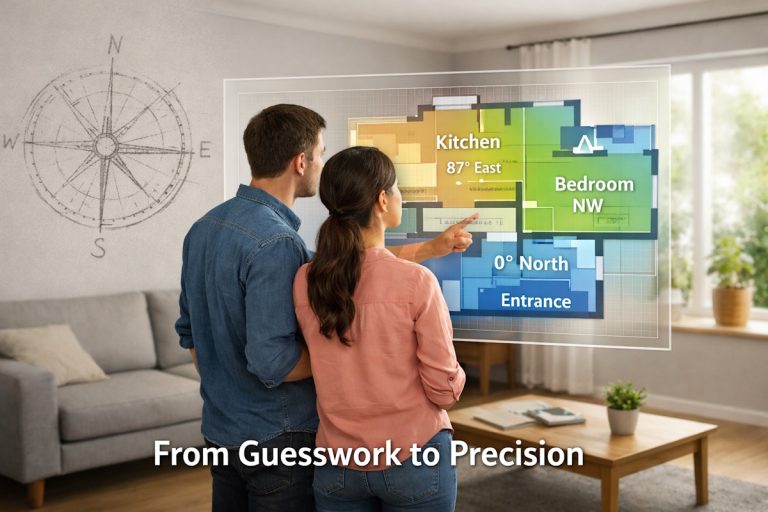
Spend ten minutes studying the directions with a normal compass app. You might catch something that saves you a lot of trouble later.
When You Cannot Change the Layout
Plenty of commercial units in the West have fixed layouts. Landlords may not allow altering walls, plumbing, or electrical points. In that case, correct the flow by using furniture, color, weight, and lighting.
For example:
- A weak North East can be softened by reducing heavy furniture and keeping the zone fresh.
- A South West toilet can be balanced by keeping the area tidy and placing long term storage in the corner outside the toilet wall.
- A South East problem can be balanced by keeping water away and repairing fire elements right away.
- A cut corner can be visually completed using a square cabinet or heavy planter.
Small shifts change how people interact with a space. And that often changes revenue patterns too.
Why These Doshas Matter More in Commercial Real Estate
Residential Vastu deals with comfort, relationships, and personal balance. Commercial Vastu deals directly with money. A mistake in direction hits returns immediately. These errors also affect resale value since buyers feel cautious when they sense instability.
Commercial property carries a public face. Customers walk in and out all day. Staff members influence the mood of the place. Even tiny Vastu errors become noticeable because so many people interact with the same space.
If your commercial property feels unpredictable or heavier than it should, check the directions. You might find that one of the seven doshas listed above is quietly draining value.
You do not need to overhaul the property. You just need to fix the direction-energy mismatch.
And once you do, the property tends to respond. Revenue becomes steadier. The space feels easier to run. Buyers feel more confident. Over time the market value strengthens.