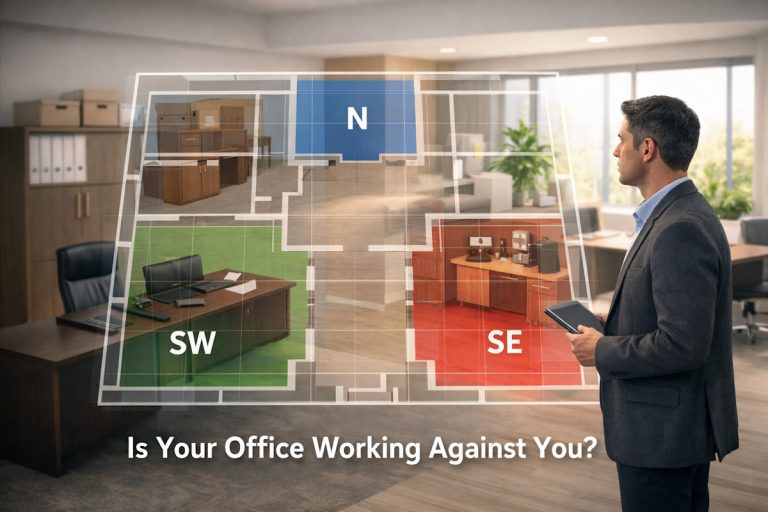
Walk into any apartment today and you’ll notice something right away. Space is tight. Layouts are fixed. And most people are trying to “adjust” Vastu instead of actually following it.
That’s where things usually go wrong.
For years, Vastu analysis meant manual compass readings, rough sketches, and a lot of assumptions. One consultant says your kitchen is fine. Another says it’s a problem. You’re left guessing.
Now that guesswork is fading out.
AI-driven Vastu analysis is changing how people evaluate homes. Not in a flashy way. Not in a confusing tech-heavy way. Just more precise, faster, and grounded in actual layout data.
Let’s break this down in a way that actually helps you make decisions.
Why Traditional Vastu Analysis Often Falls Short
Most people don’t realize how many variables are involved in proper Vastu evaluation.
It’s not just about directions.
It’s about:
- Exact orientation in degrees, not just “north-facing”
- Placement of rooms relative to the center of the house
- Energy zones that shift based on layout shape
- Entry point alignment
- Internal cuts, extensions, and missing corners
Now think about how this is usually done.
A consultant visits your home, uses a compass, draws a quick plan, and gives recommendations. Sounds fine, right?
But here’s the problem.
Even a small error in direction reading can shift the entire analysis. A 5–10 degree difference can change zone placements completely. That means your kitchen might fall in a different zone than assumed.
And in apartments? It gets trickier.
Stacked floors, shared walls, irregular layouts – all of this makes manual assessment less reliable.
So people end up making changes based on partial accuracy.
Where AI Steps In – And Why It Actually Matters
AI doesn’t replace Vastu principles. It removes human error from the calculation part.
That’s the key difference.
Instead of relying on rough sketches or verbal descriptions, AI tools work with:
- Exact floor plans
- Digital compass alignment
- Geo-location data
- Structural mapping of the property
You upload your layout. The system processes it. Within seconds, you get a zone-by-zone breakdown.
No approximation.
No assumption.
And no “this looks like northeast” type guesswork.
Precision in Direction – The Biggest Shift
Let’s talk about direction accuracy, because this is where most mistakes happen.
When someone says, “my house is east-facing,” what does that even mean?
Is it:
- Exactly 90 degrees east?
- 80 degrees?
- 100 degrees?
That difference matters.
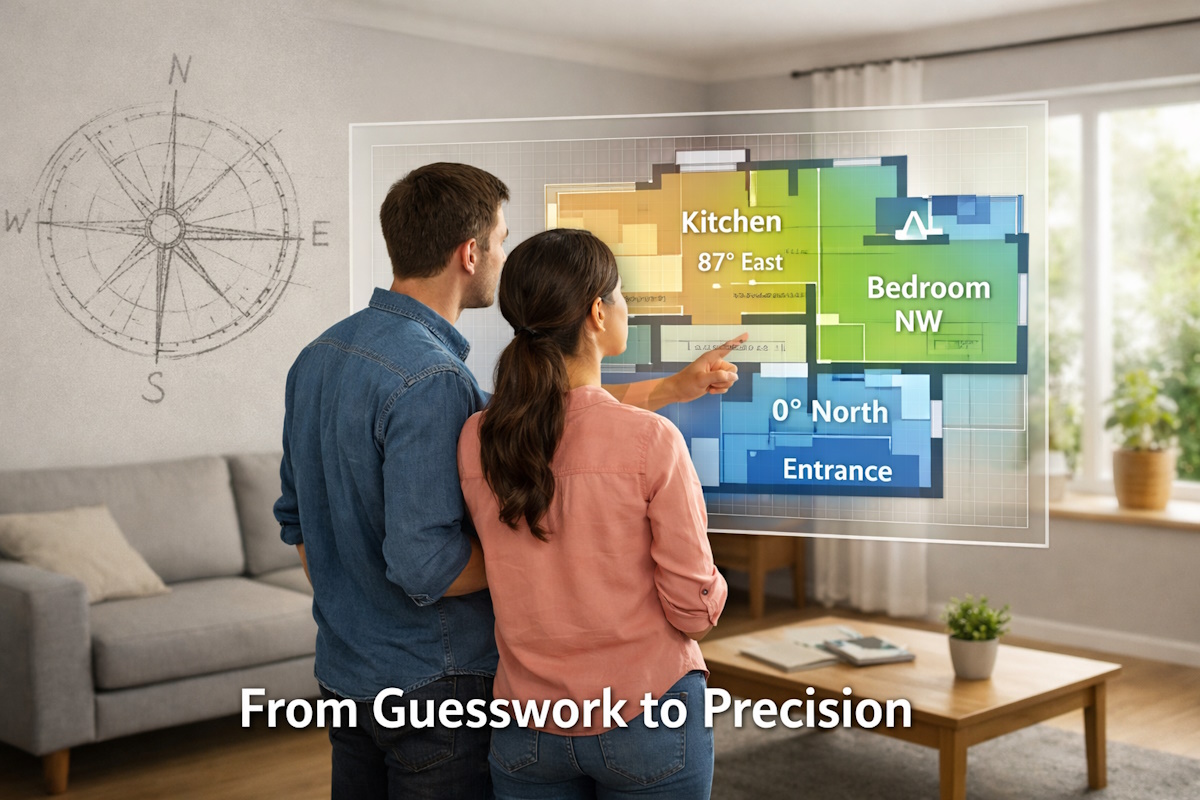
AI tools calculate exact orientation using geo-coordinates and digital mapping. So instead of saying “east,” you get something like 87 degrees.
That level of precision changes everything.
Because Vastu zones are not broad blocks. They’re specific sectors.
So when AI maps your home, it assigns each room to the correct zone with accuracy that manual methods struggle to match.
Floor Plan Intelligence – Not Just Directions
Here’s something people overlook.
Even if direction is correct, layout interpretation can still go wrong.
Example.
You have a rectangular apartment, but one corner is slightly cut due to building design. A human might ignore that or not measure it properly.
AI doesn’t.
It detects:
- Missing corners
- Extensions
- Irregular shapes
- Center (Brahmasthan) displacement
This matters more than you think.
A missing southwest corner affects stability. A cut northeast can impact mental clarity and opportunities.
When these are identified precisely, the recommendations become more relevant.
Real-Time Corrections Instead of Generic Advice
Traditional Vastu advice often sounds like this:
“Place a mirror here.”
“Keep a plant there.”
“Use this color.”
But does it actually match your layout?
Not always.
AI-based analysis gives contextual suggestions.
That means:
- It considers your exact room placement
- It factors in what can realistically be changed
- It avoids impractical advice
For example, if your kitchen is in a challenging zone and you can’t relocate it, AI tools suggest adjustments based on usage patterns, not unrealistic structural changes.
That’s a big shift.
Because most people don’t want to rebuild their homes. They want workable solutions.
Apartments and High-Rises – Finally Getting Proper Attention
Let’s be honest.
Most Vastu rules were written with independent houses in mind.
Today, a large number of people live in apartments.
So what happens?
Confusion.
People ask:
- Does floor level matter?
- Does the building’s main entrance affect my flat?
- What about shared walls?
AI helps here by isolating your unit.
It evaluates:
- Your apartment’s internal layout
- Entry direction of your flat
- Placement of rooms within your specific unit
Not the whole building.
This is practical.
Because your daily life is influenced more by your unit than the main gate of the complex.
Speed Changes Decision-Making
Earlier, getting a proper Vastu analysis could take days.
Site visit. Manual drawing. Interpretation.
Now?
You upload your plan and get results almost instantly.
This speed matters more than it seems.
Imagine you’re:
- Buying a new flat
- Shortlisting multiple options
- Comparing layouts
With AI, you can analyze multiple properties quickly.
You’re no longer dependent on one-time consultation. You can test different options before making a decision.
That’s powerful.
Reducing Emotional Bias in Property Choices
Let’s say you love a house.
Good lighting. Nice interiors. Feels right.
Then someone tells you it has Vastu issues.
Now what?
Most people either:
- Ignore the issue because they like the house
- Panic and reject it completely
AI brings clarity in the middle.
It shows:
- What exactly is wrong
- How serious it is
- Whether it can be corrected
So instead of emotional decisions, you make informed ones.
Not every flaw is a deal-breaker. And not every “perfect” layout is actually ideal.
Better Guidance for Renovations and Interiors
If you’re planning interiors, Vastu often comes in later.
By then, layouts are fixed.
AI can be used early in the process.
Before you finalize:
- Kitchen placement
- Bedroom usage
- Work desk direction
- Entry modifications
This helps avoid rework.
Even small adjustments like shifting a bed, changing stove orientation, or repositioning storage can make a difference when guided correctly.
For Real Estate Professionals – A Quiet Advantage
Buyers today are asking more questions.
And Vastu is one of them.
If you’re a realtor or developer, AI-based Vastu reports can help you:
- Explain layouts clearly
- Build trust with buyers
- Reduce back-and-forth doubts
Instead of vague assurances, you can show structured analysis.
It’s not about selling “Vastu-compliant homes.” It’s about transparency.
Limitations You Should Still Be Aware Of
Let’s keep this real.
AI is not magic.
It doesn’t:
- Understand your personal beliefs
- Replace human judgment entirely
- Fix structural problems automatically
It’s a tool.
A very good one. But still a tool.
You still need interpretation, especially for:
- Complex layouts
- Conflicting zone issues
- Personal lifestyle adjustments
Think of AI as giving you a clear map. You still decide how to use it.
Common Situations Where AI Vastu Helps the Most
You’ll see the biggest benefit in situations like:
Buying a New Property
Quick comparison between multiple options without relying on guesswork.
Renting a Flat
You can’t make structural changes, so you need practical adjustments.
Renovation Planning
Avoid mistakes before construction starts.
NRI Property Decisions
When you’re not physically present, digital analysis becomes even more useful.
Builder Floor and Compact Homes
Where every inch matters and errors are harder to fix later.
What You Should Actually Do Next
If you’re serious about applying Vastu in a modern home, don’t rely on assumptions.
Start with your floor plan.
Check:
- Exact direction in degrees
- Zone mapping of each room
- Any missing or extended corners
Then look at corrections that fit your lifestyle.
Not everything needs fixing. Focus on what actually impacts daily use.
And yes, use AI tools where possible.
Because guessing might feel easier. But it usually leads to confusion later.
The Shift Is Already Happening
More homeowners are moving toward data-backed Vastu analysis.
Not because it’s trendy.
Because it’s clearer.
You don’t need to blindly follow rules. You understand them in the context of your own space.
That’s the real change.
Less fear. More clarity.
And decisions that actually make sense for how you live today.
FAQs
1. What is AI Vastu analysis?
AI Vastu analysis uses digital tools to check your home’s layout, direction, and zones with high accuracy—without guesswork.
2. Is AI Vastu more accurate than traditional methods?
Yes, it uses exact data and calculations, reducing human errors common in manual analysis.
3. Can AI Vastu work for apartments?
Yes, it analyzes your specific flat layout, making it ideal for modern apartments and high-rises.
4. Do I need to change my home structure?
No, most suggestions are practical adjustments like furniture placement or room usage.
5. How does AI help in buying property?
It lets you quickly compare layouts and identify Vastu issues before making a decision.