
Modern residential design often focuses on aesthetics and functionality, yet many homeowners sense an underlying restlessness or stagnation within their living spaces. This invisible friction often stems from an imbalance in spatial energy, a concept that ancient architectural sciences have addressed for millennia. One of the most powerful and mathematically precise tools for identifying these imbalances is the Lo Shu Grid. Often referred to as the Magic Square, this 3×3 matrix offers a diagnostic blueprint that allows you to see your home not just as a collection of rooms, but as a living energy field.
When you learn how to apply the lo shu grid home floor plan, you gain the ability to pinpoint which areas of your life might be reflected in your physical environment. Whether you are struggling with career growth, health issues, or relationship tensions, the grid reveals where the flow of energy is blocked, missing, or overwhelmed. This article provides a comprehensive, expert level guide on using this ancient analytical framework to transform your house into a balanced sanctuary, bridging the gap between traditional wisdom and modern architectural constraints.
The Mathematical Logic of the Lo Shu Grid in Architecture
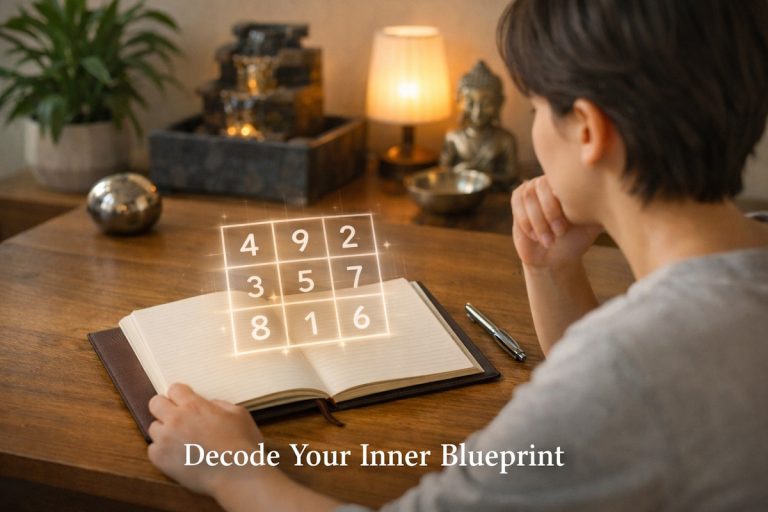
The Lo Shu Grid is a foundational element in both Feng Shui and certain advanced Vastu applications. It consists of nine squares, where each row, column, and diagonal adds up to the number fifteen. In the context of a home, this numerical harmony represents a perfect balance of cosmic and telluric energies. When we apply lo shu grid to house layout, we are essentially looking for where the physical structure deviates from this ideal mathematical balance. For anyone looking to Analyze Your Home, understanding this grid is the first step toward a data driven approach to spatial well-being.
The 3×3 Matrix as a Diagnostic Tool
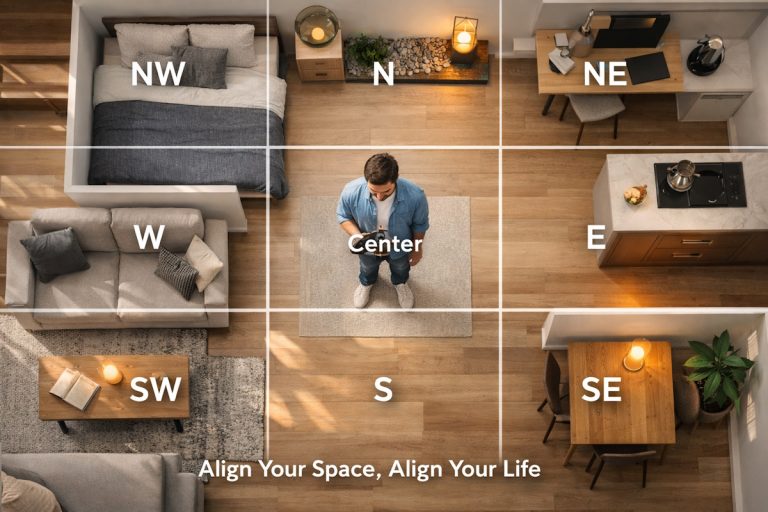
In a standard lo shu grid home floor plan, each of the nine squares corresponds to a specific direction, an element, and a life aspiration. The center square represents the heart of the home, while the surrounding eight squares represent the cardinal and ordinal directions. By overlaying this grid on your floor plan, you can immediately see if a specific sector, such as the wealth corner in the Southeast or the career sector in the North, is physically present or cut off by the building’s exterior shape.
Why Modern Apartments Require Grid Analysis
Unlike traditional rectangular homes, modern apartments often feature L-shapes, U-shapes, or irregular cutouts. These architectural choices often result in missing sectors in the lo shu grid vastu floor plan. A missing sector means that the energy associated with that specific life area is not being supported by the physical structure. This is why professional consultants often start with a grid analysis to identify which aspects of the occupant’s life may need energetic reinforcement. To ensure your space is supportive, you might consider the option to Get an AI-Based Vastu Analysis for a deeper look into these patterns.
How to Apply Lo Shu Grid to Your Home Floor Plan
The process of how to overlay lo shu grid on house requires precision and a clear understanding of your property’s orientation. You cannot simply draw a grid on a piece of paper and hope for the best. It requires a scaled floor plan and an accurate compass reading taken from the center of the property. This ensures that the grid sectors align perfectly with the actual magnetic directions of the earth. When you Analyze Your Home, the accuracy of your initial measurements determines the quality of the insights you receive.
Step 1: Preparing Your Scaled Floor Plan
Begin with a clear architectural drawing of your home. If you do not have one, you will need to measure each room and create a proportional sketch. Include all balconies, utility areas, and entrance foyers, as these contribute to the overall shape of the energy field. It is crucial to use a scaled map because a distorted drawing will lead to an incorrect grid overlay, potentially causing you to apply remedies to the wrong areas of your home.
Step 2: Finding the Center Point
The center of your home, or the Brahmasthan in Vastu terms, is the point from which all directions emanate. To find this, draw diagonal lines from the extreme corners of your floor plan. Where they intersect is the geometric center. In irregular houses, finding the center can be complex and might require specialized software or expert calculation. If the center falls in a heavy wall or a toilet, it indicates a fundamental energy disturbance that needs immediate attention.
Step 3: Overlaying the 3×3 Grid
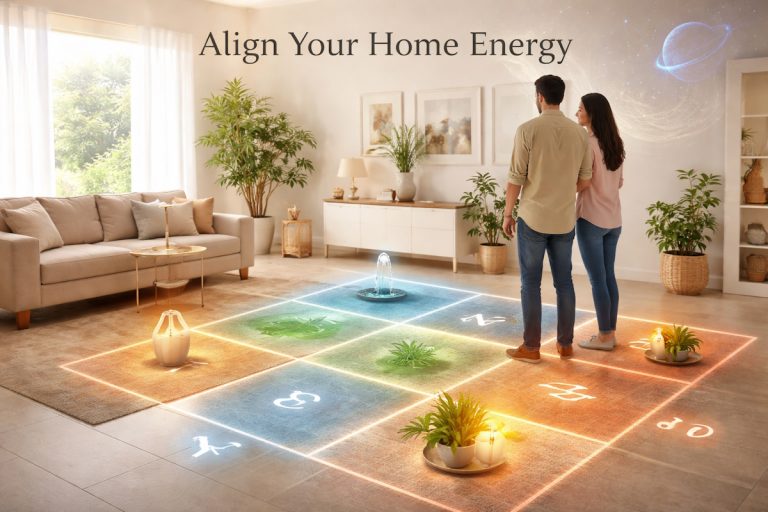
Once you have the center and the magnetic North identified, divide your floor plan into nine equal rectangles or squares. This is the core of the lo shu grid home floor plan application. Align the North sector of the grid with the magnetic North of your home. Each of the nine sectors will now cover a specific portion of your layout. You can now see which rooms fall into which sectors and, more importantly, if any sectors fall outside the physical walls of the house. For a comprehensive review of these alignments, you can Request a Detailed Vastu Report.
Analyzing the Nine Sectors and Their Impact
Each sector of the lo shu grid carries a specific vibrational frequency linked to the five elements: Wood, Fire, Earth, Metal, and Water. When you perform a feng shui lo shu grid house analysis, you are looking for elemental harmony. For instance, if your kitchen, representing Fire, is located in the North, representing Water, there is a natural elemental conflict that could manifest as career instability or frequent arguments. This is the practical side of how to apply the lo shu grid to your living environment.
The North: Career and Opportunities
The North sector is governed by the Water element. It influences your professional path and the flow of new opportunities. If this sector is missing in your lo shu grid home floor plan, you might find it difficult to get promoted or find a new job. Conversely, if a bathroom is located here, the career energy might be getting flushed away. Practitioners often suggest clear glass or blue accents here to strengthen the water element. To see how your career sector stacks up, you may want to Analyze Your Home using professional tools.
The Southeast: Wealth and Prosperity
Governed by the Wood element and often associated with the Fire of the kitchen in Vastu, the Southeast is the primary wealth sector. In a lo shu grid vastu floor plan, a missing Southeast corner is often linked to chronic financial struggles or unexpected expenses. It is vital to ensure this area is vibrant and free of clutter. Adding healthy green plants or wooden furniture here can help activate the latent prosperity energy of the space.
The Southwest: Relationships and Stability
The Southwest is the zone of the Earth element, representing the strength of the foundation and the harmony of relationships. In many modern layouts, a bedroom in the Southwest is ideal. However, if this area contains a cut or a balcony that makes the sector feel empty, the residents may suffer from a lack of support in their personal lives or instability in their marriage. Correcting this usually involves grounding techniques and the use of heavy furniture or yellow tones to boost the Earth element.
Common Challenges with Irregular House Layouts
One of the most frequent questions we receive is how to handle houses that are not perfectly square or rectangular. Most modern apartments are designed for maximum density, not energy flow. When you apply lo shu grid to house layout in these scenarios, you will inevitably find extensions or missing corners. These are not necessarily reasons for panic, but they do require strategic management to ensure the home remains a positive environment. Using a tool to Analyze Your Home can help visualize these extensions clearly.
Identifying Missing Corners
A corner is considered missing if it takes up more than one third of the length of that side of the house. In the lo shu grid home floor plan, a missing corner means the specific energy of that direction is absent from the occupants’ lives. For example, a missing Northwest corner might lead to a lack of helpful people or mentors in your life, while a missing East corner could impact the health of the residents. Identifying these gaps is the first step toward applying non invasive remedies.
Handling Sector Extensions
An extension occurs when a specific part of the house protrudes beyond the rectangular boundary. While some extensions are beneficial, such as a North or East extension, others can create an imbalance by making one element too dominant. A massive South extension might lead to overactive Fire energy, potentially causing stress or reputational issues. Balancing these extensions requires a nuanced understanding of elemental cycles.
Remedies for Structural Imbalances
Since most people cannot demolish walls in an apartment, Vastu and Feng Shui offer practical remedies. These include the strategic placement of mirrors to create the illusion of a missing space, the use of specific colors to represent missing elements, or the installation of virtual boundaries using metal strips or crystals. These methods work by shifting the energetic perception of the space without requiring structural changes. To find the right balance for your space, you should Analyze Your Home with a focus on elemental corrections.
Integrating Vastu and Lo Shu for a Holistic View
While the Lo Shu Grid is often associated with Chinese metaphysics, it shares deep structural similarities with the Vastu Purusha Mandala used in Indian Vastu Shastra. Both systems emphasize the importance of the center and the eight directions. When you apply the lo shu grid vastu floor plan approach, you are essentially combining the best of both worlds. Vastu provides the logic for room placement based on the sun’s path, while Lo Shu provides a mathematical way to track life aspirations and elemental shifts.
The Role of the Center Square
In the lo shu grid home floor plan, the center square belongs to the Earth element and represents overall health and balance. It must be kept open, clean, and well lit. In modern homes, this is often where hallways meet. If there is a heavy wall or a pillar in the exact center, it can block the flow of energy to all other eight sectors. This is a critical point to evaluate when you Analyze Your Home for long term residency.
Balancing the Elements Across the Grid
The goal of applying the grid is to ensure that no single element is overwhelmed. A home with too much Water energy in the Fire sectors will feel cold and unmotivated, while too much Fire in the Metal sectors can lead to anxiety. By understanding the lo shu grid house analysis, you can introduce small changes, like a metal clock in the West or a water fountain in the North, to restore the natural cycle of creation. If you are unsure where to start, you can Check Your Property’s Vastu Compliance through a professional audit.
Practical Tips for Home Buyers
If you are in the process of buying a new home, take a copy of the floor plan and perform a quick lo shu grid overlay. Look for a plan that is as close to a square or rectangle as possible. Avoid layouts where the entrance is directly facing a bathroom or where the center of the house is occupied by a staircase. These simple checks can save you from significant energetic hurdles later on.
Final Guidance for a Harmonious Home
Applying the Lo Shu Grid to your home is an exercise in mindfulness and spatial awareness. It encourages you to look at your surroundings with a critical yet constructive eye. Remember that no home is 100 percent perfect. The beauty of these ancient systems lies in their flexibility and the availability of remedies that fit modern lifestyles. By identifying the gaps in your lo shu grid home floor plan, you are taking the first step toward a more intentional and supportive living environment. If you feel overwhelmed by the technicalities, it is always best to Analyze Your Home with the help of experienced professionals who can guide you through the nuance of energy correction.
Get an AI-Based Vastu Analysis
FAQs
1. How do I handle a floor plan that is not a perfect square?
For irregular shapes, you must first draw a bounding box that touches the outermost walls of the house. Divide this box into a 3×3 grid. Any area within the box but outside the house walls is a missing sector, while any part of the house outside the main box is an extension.
2. Can I apply the Lo Shu Grid to an individual room?
Yes, the principle of the small Tai Chi allows you to apply the same 3×3 grid to a single room, such as a bedroom or office. This is very helpful if you live in a shared apartment and can only control the energy within your private space.
3. Is the Lo Shu Grid the same as the Bagua map?
They are related but used differently. The Lo Shu Grid is a fixed directional tool used in traditional Compass School Feng Shui, whereas the Bagua map is often used in Westernized Feng Shui by aligning it with the front door regardless of compass directions.
4. What is the most critical sector in the Lo Shu Grid?
While all sectors are important, the center square is vital as it connects all others. After that, the North (Career), Southeast (Wealth), and Southwest (Relationships) are usually the primary areas of focus for most homeowners.
5. How often should I re-evaluate my home’s grid?
The physical structure doesn’t change, but the flying stars or annual energies do. It is wise to review your lo shu grid home floor plan once a year or whenever you are planning significant renovations or experiencing major life changes.