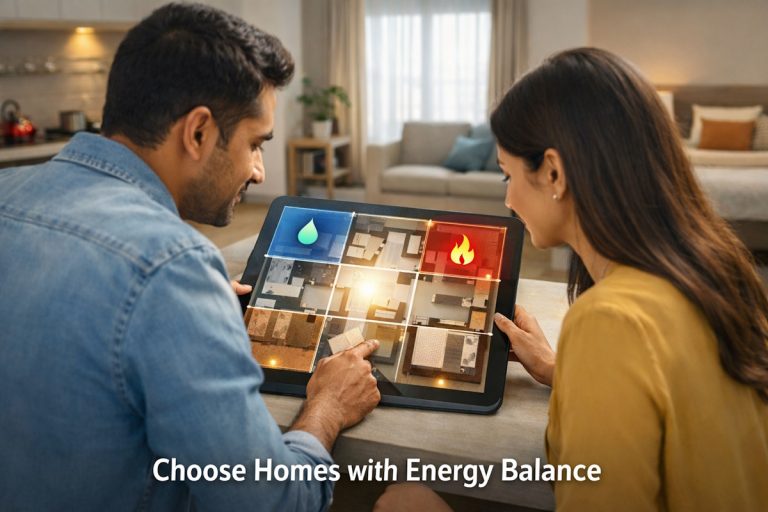

Walk into any home and you can feel it. Some spaces feel settled. Others feel slightly off, even when everything looks fine on paper. For years, Vastu consultants have relied on observation, experience, and the Lo Shu Grid to explain why certain homes struggle with money flow, health stability, or peace of mind. What is new is how technology now steps into this space without replacing human judgment.
AI Vastu is not about turning ancient knowledge into a software gimmick. It is about using machine learning to read patterns at a scale humans cannot. When combined with the Lo Shu Grid, it offers a practical way to detect numerology-based spatial imbalances in modern buildings where layouts rarely follow textbook rules.
If you live in an apartment, manage multiple properties, or design spaces for others, this blend matters more than you may think.
Understanding the Lo Shu Grid Without the Mysticism
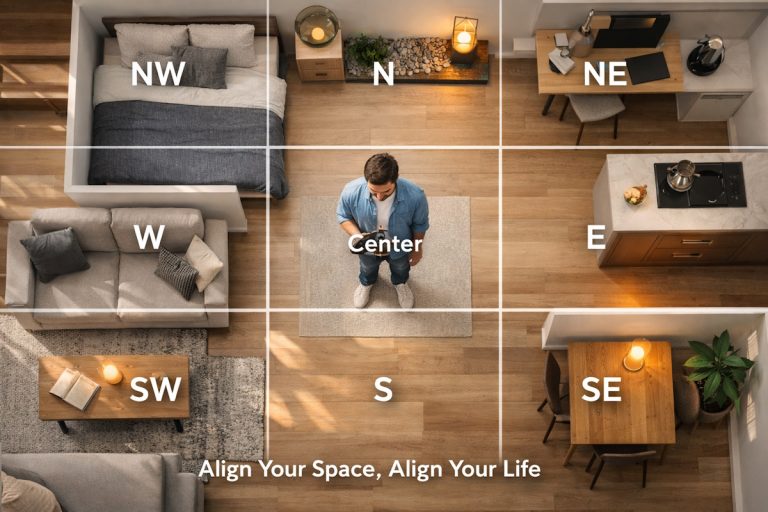
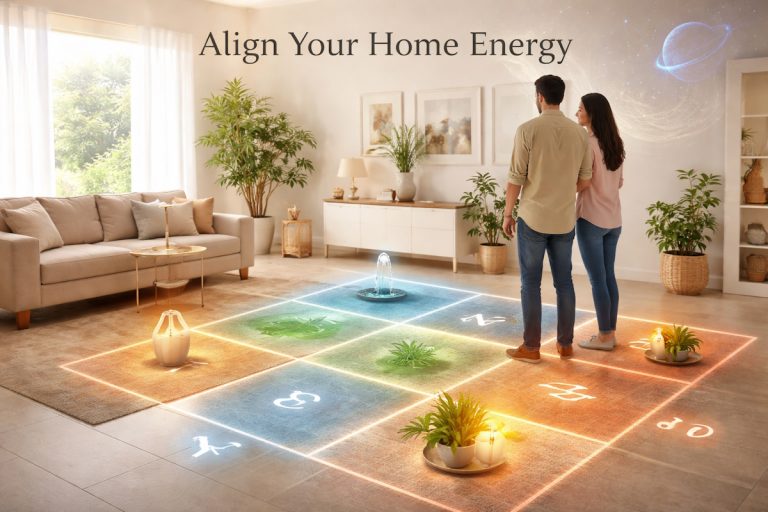
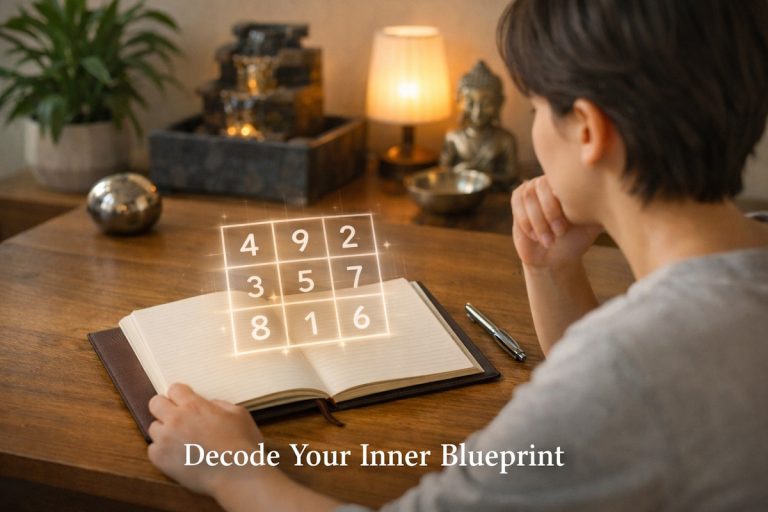
The Lo Shu Grid is a 3×3 numerical matrix tied to directions, elements, and life areas. Each square carries a number from 1 to 9. These numbers are not decorative. They reflect movement, stability, fire, growth, and rest. In Vastu practice, the grid is placed over a floor plan to check which energies are present, missing, or overloaded.
In independent homes with clean rectangular plots, this process is fairly direct. In high-rise apartments, duplexes, and mixed-use buildings, it gets messy. Cut corners, extended balconies, oddly shaped living rooms, and stacked services distort the grid.
This is where many people get confused. You may hear that your home is missing number 4 or has excess 7 energy. What does that even mean in a practical sense?
It means certain directional qualities are either underused or overstimulated. Over time, that imbalance shows up in routines, decisions, and outcomes. Not in dramatic ways. Subtle ways. The kind that are easy to ignore until patterns repeat.
Why Manual Lo Shu Analysis Hits a Limit
Traditional Lo Shu analysis depends heavily on the consultant’s interpretation. Two experts can look at the same plan and reach slightly different conclusions. Both might be right based on their experience, yet neither can process thousands of spatial variables at once.
Modern buildings add layers of complexity.
Multiple floors
Shared walls
Common ducts
Underground parking
Irregular structural columns
The grid still applies, yet reading it becomes time-consuming and prone to human shortcuts.
This does not mean traditional Vastu is flawed. It means the built environment has changed faster than manual analysis methods.
Where AI Vastu Steps In Quietly
Machine learning works by identifying patterns across massive datasets. In AI Vastu, these datasets include floor plans, direction mappings, usage patterns, occupancy behavior, and numerological weightings linked to the Lo Shu Grid.
The system does not guess. It compares.
It checks how often certain grid distortions show up in properties with similar issues. It looks at repeated correlations like blocked north zones in income-stressed homes or overloaded southeast areas in spaces with high conflict density.
Over time, the system learns what combinations create friction.
This is not prediction in a dramatic sense. It is pattern recognition done at scale.
Numerology-Based Spatial Imbalances Explained Simply
Numerology in Vastu is not about lucky numbers on doors. It is about numerical harmony within space.
Each Lo Shu number connects to behavior and function.
1 relates to flow and career momentum
2 relates to rest and emotional grounding
3 supports initiative and growth
4 governs structure and planning
5 sits at the center and holds balance
6 connects to comfort and responsibility
7 reflects introspection and isolation
8 supports stability and discipline
9 relates to action and intensity
When AI overlays the Lo Shu Grid on a digital floor plan, it calculates which numbers dominate and which barely exist. It also factors in how those zones are actually used.
A missing number does not mean disaster. It means that quality is underrepresented.
An overloaded number means constant pressure in that life area.
How Machine Learning Reads a Floor Plan Differently
Humans see walls and rooms. Machine learning sees vectors, proportions, and directional weight.
Here is how it typically works.
The floor plan is digitized and scaled
True north is aligned using geographic data
The Lo Shu Grid is mathematically overlaid
Each grid cell is measured for usable area
Room function is mapped to grid numbers
From there, the system evaluates imbalance scores.
For example, a kitchen placed in a stretched southeast corner might push fire energy beyond healthy thresholds. A consultant might note this in a general way. AI measures how far it deviates compared to thousands of similar kitchens.
This removes guesswork.
Real-Life Apartment Problems AI Vastu Flags Early
In apartments, residents often complain about issues without obvious causes.
Frequent arguments
Sleep disturbances
Career stagnation
Unplanned expenses
Lack of focus
AI Vastu often traces these back to numerology-based spatial stress.
One common pattern is heavy furniture or storage placed in areas meant for movement. Another is toilets eating into key grid numbers due to compact layouts. Humans notice these things. AI connects them to outcome frequency.
That connection helps prioritize remedies.
What Makes AI Vastu Useful for Realtors and Investors
If you sell or invest in property, this matters.
Two apartments in the same building can perform very differently in resale or rental stability. Traditional metrics do not explain why.
AI Vastu can flag hidden spatial imbalances before listing. Not to reject a property. To position it correctly.
Sometimes a small interior correction raises long-term appeal. Sometimes a pricing decision makes more sense when you know the spatial stress points.
It turns vague discomfort into measurable insight.
Architects Benefit Without Losing Creative Freedom
Architects often resist Vastu because it feels restrictive. AI Vastu actually works in the opposite direction.
Instead of rigid do’s and don’ts, it offers feedback loops.
Design a layout
Run it through the grid model
See where numerology clusters
Adjust without redesigning everything
This works well in modern homes where perfect symmetry is impossible. It respects design intent while reducing spatial friction.
Does AI Replace the Vastu Consultant?
No. And it should not.
Machine learning does not understand human context. It does not feel family dynamics, emotional history, or cultural habits. It only sees patterns.
The best outcomes come when consultants use AI as a diagnostic layer. Like a medical scan. The scan shows anomalies. The doctor decides the treatment.
The Lo Shu Grid still needs interpretation. AI just sharpens the lens.
Addressing Skepticism Head-On
Some people dismiss this approach as overcomplication. Fair reaction.
Ask yourself this though. Your phone predicts traffic better than your instincts. Not because it is smarter. Because it sees more data.
AI Vastu works the same way. It does not believe in numerology. It detects correlation density.
You do not have to believe either. You just have to observe results.
Practical Limits You Should Know
AI cannot fix structural faults. It cannot change plot orientation. It cannot read personal birth charts unless fed that data intentionally.
It also depends on accurate inputs. A wrong north alignment skews everything. Garbage data gives garbage results.
Used responsibly, it is a support system. Not a shortcut.
How Homeowners Can Use This Without Getting Overwhelmed
You do not need to understand algorithms.
If you are building or buying, use AI Vastu as a pre-check. Look for major missing grid numbers or extreme overloads.
If you already live in a space, use it to identify priority zones. You do not need to fix everything. Start with one imbalance that shows up repeatedly.
Small changes matter more when they are targeted.
The Future of Lo Shu Grid Analysis in Urban Housing
Cities are getting denser. Homes are getting smaller. Layouts are getting stranger.
The Lo Shu Grid is not outdated. The way we read it needed an upgrade.
AI Vastu offers that upgrade without stripping away tradition. It respects the logic while adapting to reality.
You still live in the space. You still make the choices. The technology just shows you what you might be missing.
And sometimes, seeing clearly is all it takes to shift a space from uncomfortable to supportive.
If you are serious about understanding why your home behaves the way it does, this blend of ancient structure and modern analysis is worth your attention.