If you run a factory or plan to build one, you already know how small layout mistakes turn into recurring trouble. Machines slow down, workers struggle to move, and the whole place starts feeling heavy. This is where Industrial Vastu Consultation becomes practical. It gives you a way to shape the site, workflow, and machinery placement so production stays steady and breakdowns stay low.
This guide breaks it down in simple language. No vague talk. Just clear steps you can apply in manufacturing units, warehouses, workshops, and plants inside or outside city limits.
Why Factory Layout Needs More Than Technical Planning
You can buy the best machines and still not get the output you expect. Many plants run into the same issues:
- Movement between raw material storage and production takes too long
- Workers feel drained in some parts of the shop floor
- Heat builds up in odd pockets
- Machines stop more often in a certain section
- Finished goods clog pathways
These patterns do not happen for random reasons. Most factories sit on irregular plots, or the work zones fall in directions that create friction. When you follow practical Vastu logic, you give the space a direction that supports production instead of slowing it down.
Industrial Vastu Consultation helps you understand which side of the property should carry the load, which area should stay lighter, and where machines run smoother.
Plot Shape and Orientation Matter More Than People Realize
Before you even think about machines, the plot decides half the story. A site that carries natural flow keeps production steady.
Avoid awkward plot shapes
Odd shapes pull energy in different directions. If the plot has sharp corners or a long taper, try to regularize it with proper boundary extensions or inner construction adjustments. Even small skewed edges can disturb heavy machine sections.
North and East give lighter movement
Keep lighter activity zones here. This helps the entry of natural light and cuts down fatigue inside the factory.
South and West carry weight better
These sides can hold:
- heavy machinery
- boilers
- transformers
- diesel generators
- scrap yards
- storage of heavy stock
This balance prevents stress on the structure and on workers.
Zoning the Industrial Layout From Day One
One mistake people make is trying to adjust zones after machines arrive. That never works well. Plan zones early and let machinery follow the zoning map instead of the other way around.
Raw material storage
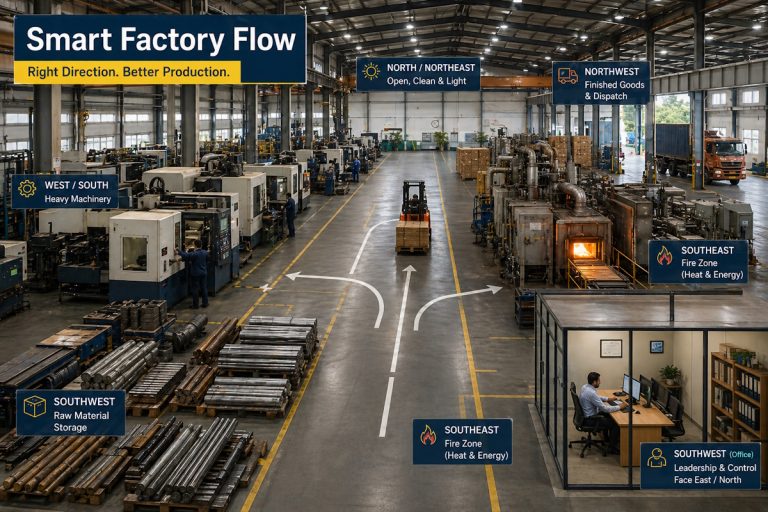
Keep it in the South West or West. These directions hold weight safely. Raw materials sit here well, stay stable, and do not block movement across the shop floor.
Production floor
Most production lines run smoothly when they start from the West or South West and move toward the East or North. This creates a steady forward flow without feeling blocked.
Finished goods
Keep this zone on the North West side. It helps quick movement out of the facility. If you place finished items in the wrong corner, dispatch slows down and inventory piles up.
Packaging and quality check
These lighter activities fit well in the North or East. Workers stay alert here, and the area supports careful inspection.
Machinery Placement Rules That Actually Help Output
You want machines to run without frequent stops. Layout affects vibrations, heat buildup, and worker concentration. Let’s look at real placement rules used in many factories.
Put the heaviest machines in the South or South West
Whether it is a hydraulic press, injection molding machine, milling setup, or furnace, weight belongs here. These machines behave better, face fewer surprises, and create smoother workflow around them.
Leave enough breathing room
Factories often push machines too close just to save floor area. But machines need space to release heat and reduce load on motors. Try to create small pockets of space so heat does not accumulate.
Line movement toward the East or North
Production lines that end on the East or North usually run with fewer interruptions. Even in a cramped shed, shifting the exit direction changes how workers move around the machine.
Avoid major machinery in the North East
This direction works best when kept clean and open. Heavy installations here drain the energy of the whole space and lead to uneven production rates.
Office Area Inside the Factory
Many factories ignore office placement. But administrative flow affects the entire unit.
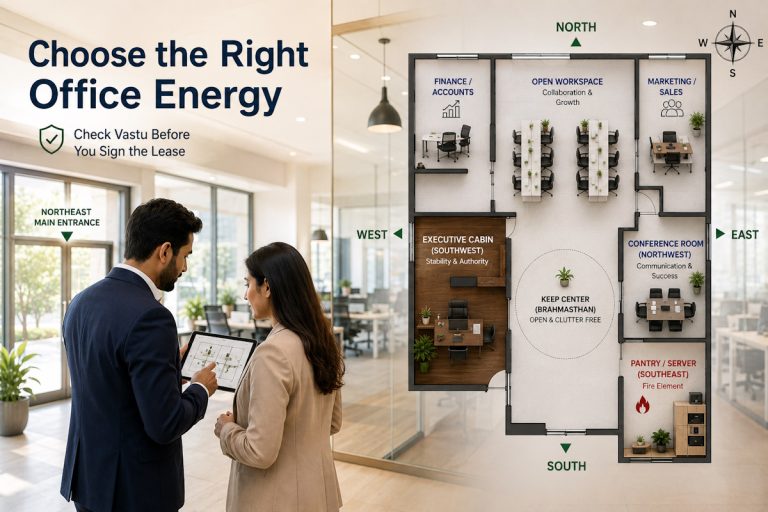
- Place the main office or manager cabin in the North or East
- Keep accounts or finance in the North
- HR can sit in the East or South East
- The factory owner or decision-maker should ideally sit in the South West area of the office block
These spots create smoother decisions and fewer miscommunications.
Workers Zone and Staff Movement
People spend long hours inside a factory. Their movement should feel natural, not forced.
Restrooms and drinking water
Place drinking water in the North East or North. Workers feel refreshed.
Restrooms can go toward the West or South of the facility. Avoid the North East at all costs.
Break room
Keep staff break rooms in the North West. It allows people to enter and leave without disrupting production.
Security cabin
This can sit well in the South or South East near the gate.
Entry and Gate Planning for Industrial Spaces
A gate is more than a gate. It shapes the psychological flow of the whole factory.
- A North East or East side gate supports growth
- A North gate keeps movement simple
- Avoid South West gates since they often bring frequent disruption
Keep the road slope in front of the gate slightly lower toward the North or East side.
Height and Level Differences Inside the Unit
Factories often have split-level floors, loft areas, or stepped platforms. Some companies ignore leveling, but the direction of the height difference matters.
Best height directions
Make South and West sides higher.
Keep North and East lighter and lower.
This keeps the natural flow balanced inside the factory. If levels are reversed, the factory might face delays, machine stress, or worker dissatisfaction.
Lighting and Airflow Guidelines for Production Stability
Good air movement and lighting create smooth working conditions.
Natural light
Let sunlight come from the East or North. These directions provide balanced light without causing unnecessary heat. Workers do not feel drowsy.
Exhaust and heat handling
Boilers, furnaces, and machines that release hot air should face East or North for venting. This keeps heat from getting trapped.
Airflow
Cross ventilation from North to South works well. Try not to block openings in the North East with storage.
Electrical Room, Panel Boards, and Transformers
Factories depend heavily on stable power. Vastu supports this through directional logic.
- Electrical room should be in the South East
- Transformers, generators, and compressor units should be in the South or South East
- Keep wiring layouts neat and avoid crossing heavy cables through the North East
When electrical installations stay in the correct zones, machines respond better.
Water Features and Industrial Usage
Water tanks, borewells, and treatment plants must follow direction logic.
Underground water
Place underground tanks or borewells in the North East. Water bodies here keep the space active and support production.
Overhead tanks
These belong in the South West or West. Avoid keeping heavy overhead tanks in North East.
Effluent treatment plant
Set this toward the West or South West side of the plot.
Storage of Chemicals, Lubricants, and Hazardous Stock
Many factories handle chemicals and inflammable items. Put these in directions that handle fire and heavy load.
- South East for chemicals
- South West or West for heavy barrels
- Keep safety gear accessible on the East side
These placements reduce risk and keep the space balanced.
Parking and Vehicle Movement
Vehicle flow can affect internal production flow more than people think.
Truck entry
Trucks should ideally enter from North or East and move toward the North West for dispatch.
Staff parking
Place two wheeler and car parking in the North West or South East.
Avoid clutter around the North East.
Loading and unloading
Do this on the West or North West side of the property.
Roads Around the Factory
Factories often sit at corners or between two roads. The direction of these roads affects industrial performance.
Best road directions
Roads hitting the East or North of the property bring lighter, supportive energy. A road hitting the South or West can put stress on the factory, but layout adjustments can balance this.
Expansions, New Sheds, and Internal Modifications
Factories change over the years. Adding a new shed or expanding a section must follow direction rules.
Where to expand
Best expansions occur toward the North or East.
Expanding toward the South or West may create slowdowns if not corrected.
Avoid blocking the North East
Keep this corner open. Many factories accidentally block it with a new storage room or mezzanine. This leads to recurring production dips.
When the Plot Is Already Built and Mistakes Are Tough to Fix
Many factories can’t rebuild everything. That’s fine. Small adjustments still help.
- Shift machine orientation
- Reduce weight in the North East
- Add mirrors or open pathways
- Move certain storage units to better corners
- Adjust entry for forklifts and workers
- Improve ventilation in blocked areas
Industrial Vastu Consultation focuses on real adjustments that fit your budget, not total reconstruction.
What Happens When Machinery Follows Direction Rules
You start noticing small but steady improvements.
- Machines run with fewer breakdowns
- Workers move without crossing paths
- Raw material cycles stay smooth
- Heat pockets reduce
- Inventory clears quicker
- Decision-making inside the office feels straightforward
These changes come from balancing directions and reducing friction between zones.
Using Industrial Vastu Consultation for New Factories vs Existing Ones
For new factories
You get the full benefit of zoning, planning, and directional setup. Machine layout falls into place naturally. The site stays balanced from day one.
For existing factories
You adjust what you can. Rearranging sections and reorganizing heavy zones often shows improvement within months.
Common Mistakes Factory Owners Make
- Placing the main gate anywhere it fits
- Making raw material storage too close to the North
- Setting heavy machines in the East
- Blocking the North East with cabins or tools
- Putting the electrical room in a random corner
- Keeping the finished goods zone in the South
Each of these issues affects production flow in different ways.
Final Thoughts
Industrial spaces behave differently than homes. Machines create vibration, heat, noise, and movement. Workers need smooth pathways. Supplies need predictable movement. When you use Industrial Vastu Consultation, you shape your factory so everything moves in the right direction.
You end up with a space that supports production, reduces stress on machines, and makes day to day operations feel lighter.
If you want, I can also create a complete Vastu layout plan for your specific factory size, shape, and machine list.