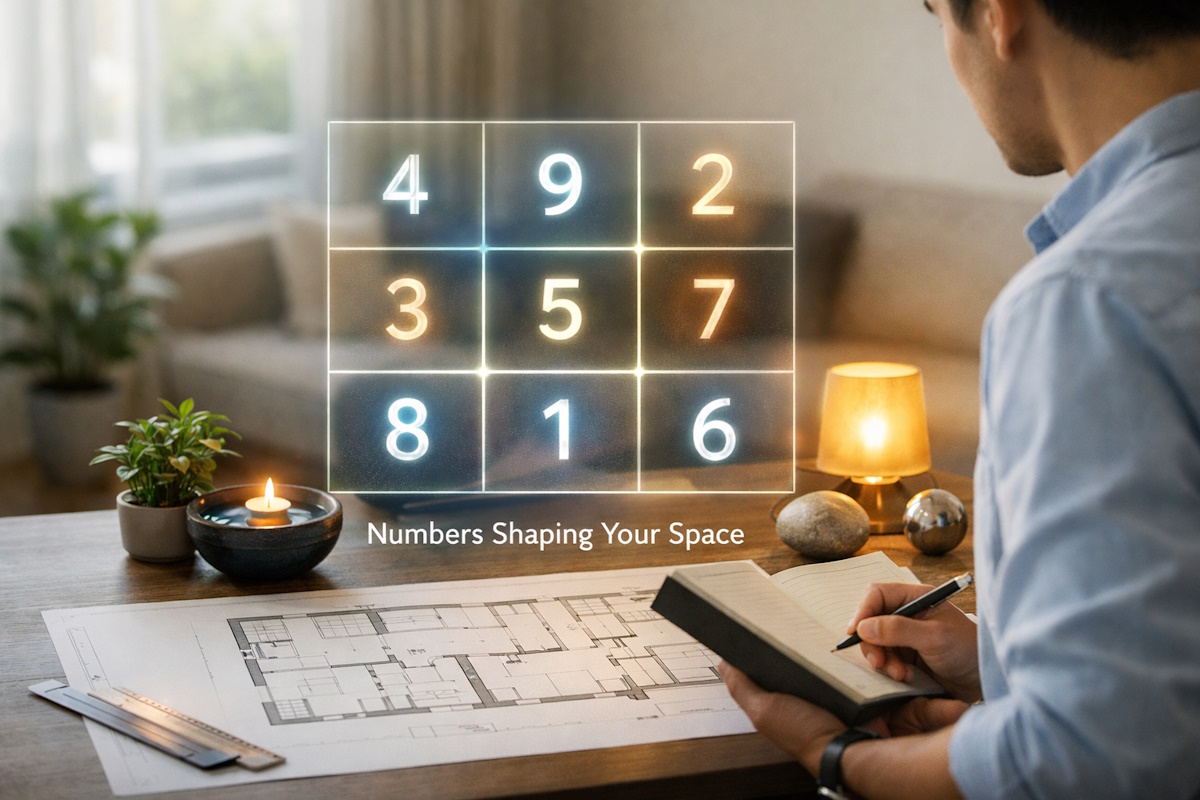
The Ancient Foundation of the Lo Shu Grid Feng Shui Numerology
The Lo Shu Grid Feng Shui numerology connection represents one of the most profound intersections of ancient wisdom and mathematical logic. Originating from Chinese metaphysics more than 4,000 years ago, this 3×3 magic square serves as a bridge between the unseen vibrations of numbers and the tangible energy of our physical environments. By understanding how these numbers interact, homeowners and business owners can gain clarity on the energetic blueprint of their properties and their personal lives. It is not merely about placement, it is about the mathematical harmony that governs the universe.
In modern practice, the Lo Shu Grid is used as a diagnostic tool to evaluate how a person’s birth date aligns with the energy of their living or working space. This system allows experts to identify strengths and weaknesses in a person’s life path and correlate them with specific sectors of their home. When you Explore Lo Shu, you begin to see that your environment is a mirror of your internal state. This article provides a comprehensive guide to navigating this relationship, helping you make informed decisions about your property and personal well-being.
The Legend and Logic of the Magic Square
The origins of the grid are often traced back to a turtle emerging from the Lo River, bearing a unique pattern of dots on its shell. This pattern formed a perfect square where every row, column, and diagonal added up to the number fifteen. In metaphysical terms, fifteen represents the number of days in a lunar cycle, linking the grid to the rhythms of nature. This lo shu magic square meaning transcends simple arithmetic, it symbolizes the balance between heaven, earth, and humanity.
Each number within the grid is associated with a specific element, direction, and life aspect. For instance, the number five sits at the center, representing the earth element and overall stability. When this balance is disrupted, whether in a birth chart or a floor plan, it can manifest as instability in physical health or financial matters. Understanding these connections is the first step toward creating a space that supports your highest potential.
Integrating Numbers with Spatial Awareness
The connection between feng shui and numerology is rooted in the belief that numbers are not just quantities but qualities of energy. In a feng shui numerology chart, the placement of numbers dictates the flow of Chi, or life force energy. When a practitioner analyzes a home, they often overlay the Lo Shu Grid onto the floor plan to see which areas are vibrant and which are depleted. This spatial energy analysis helps in identifying why certain rooms feel stagnant while others feel productive.
Deciphering the Lo Shu Grid Numbers Meaning
To effectively use this system, one must understand the lo shu grid numbers meaning in both a personal and spatial context. Each of the nine squares in the grid represents a different aspect of human experience, from career and knowledge to family and wealth. These numbers act as a code that, when decrypted, reveals the hidden influences affecting your daily life. A balanced grid suggests a balanced life, while missing or repetitive numbers indicate areas that require remedial attention.
For example, the number one is associated with the North and one’s career path. If this number is missing from your feng shui numerology chart, you may find it difficult to gain momentum in your professional life. Conversely, a strong presence of the number nine in the South can indicate high visibility and a strong reputation. Learning to Explore Lo Shu allows you to see these patterns clearly, providing a roadmap for spatial adjustments that align with your personal energy signature.
The Horizontal Planes of Existence
The grid is divided into three horizontal rows, each representing a different plane of existence. The top row (numbers 4, 9, and 2) represents the Mental Plane, focusing on intelligence, memory, and analytical thinking. The middle row (numbers 3, 5, and 7) constitutes the Emotional Plane, which governs intuition, feelings, and spirituality. Finally, the bottom row (numbers 8, 1, and 6) represents the Practical Plane, relating to physical work, finances, and material success. A deficiency in any of these rows can lead to a lopsided life experience.
Analyzing the Mental Plane
When the mental plane is well-supported in a home’s layout, the occupants often feel clear-headed and decisive. If the sectors corresponding to 4, 9, or 2 are cluttered or architecturally compromised, it can lead to mental fatigue or poor decision-making. Professional Vastu and Feng Shui consultations often prioritize the clearing of these sectors to enhance cognitive function and strategic planning for business owners.
The Vertical Columns and Success Factors
The three vertical columns of the grid also hold significant meaning. The left column (4, 3, 8) is the Thought Column, the middle (9, 5, 1) is the Will Column, and the right (2, 7, 6) is the Action Column. For a project or life goal to reach fruition, one needs the thought to plan it, the will to pursue it, and the ability to take action. If your lo shu grid numbers meaning shows a weakness in the Action Column, you may find yourself constantly planning but never executing.
How to Read Your Feng Shui Numerology Chart
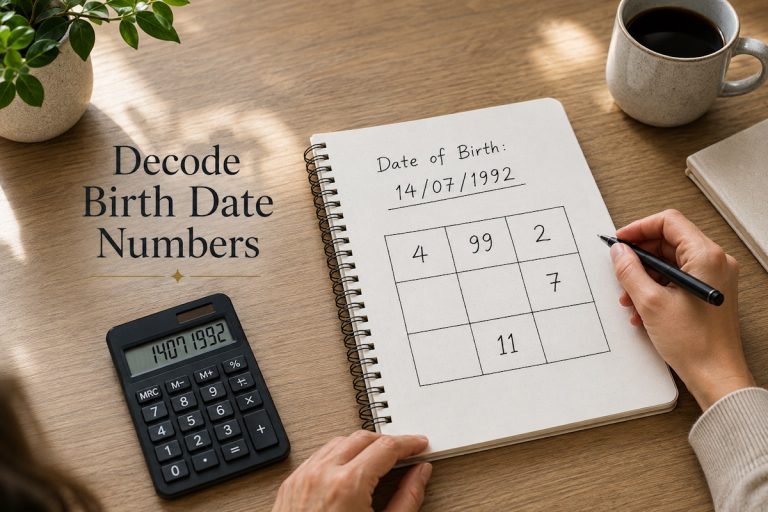
Creating a feng shui numerology chart begins with your date of birth. By placing the digits of your birth date into the corresponding positions of the Lo Shu Grid, you can visualize your inherent energetic strengths. This chart serves as a diagnostic tool for understanding your personality, your potential challenges, and your compatibility with your current environment. It is a personalized map that goes beyond generic advice, offering specific insights into your unique life path.
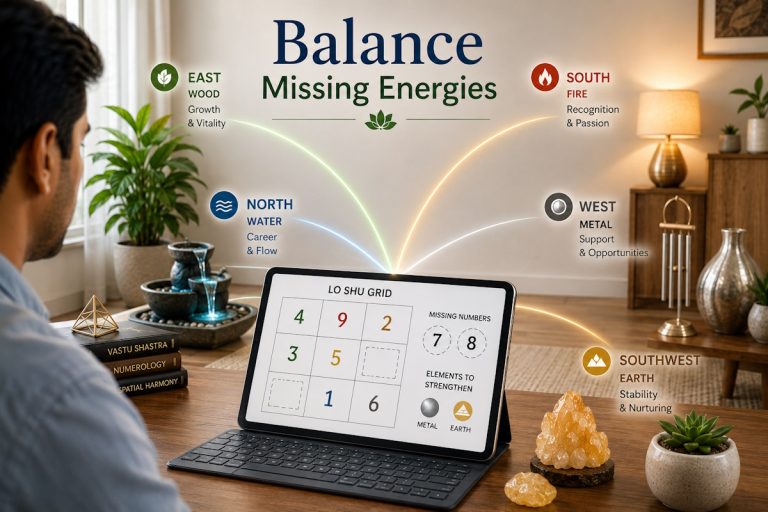
When you Explore Lo Shu through your birth chart, you may notice certain numbers are missing. In numerology, these are known as “Missing Numbers,” and they represent lessons or energies that you need to consciously cultivate. In the context of a home, these missing energies can often be supplemented by specific colors, shapes, or materials in the corresponding sectors of the house. This non-invasive remedy approach is a hallmark of sophisticated Vastu and Feng Shui practice.
Identifying Strengths through Full Arrows
In the study of the grid, when three numbers in a row, column, or diagonal are present, they form what is called an “Arrow of Strength.” For example, the diagonal arrow of 4, 5, and 6 is known as the Arrow of Prosperity. Individuals with this configuration in their chart often have a natural knack for financial management and attracting wealth. Recognizing these strengths allows you to lean into your natural talents while using your environment to support areas where you may be less naturally inclined.
Understanding Weaknesses through Empty Arrows
Conversely, if a full row or column is empty, it is known as an “Arrow of Weakness.” For instance, an empty 2, 5, 8 diagonal may indicate a lack of determination or a tendency to give up easily when faced with obstacles. It is important to remember that these are not permanent labels but rather indicators of where you can apply intentional energy. By adjusting the Feng Shui of your home to bolster these missing numerical vibrations, you can effectively “fill in” the gaps in your personal chart.
Practical Applications of Lo Shu Grid Numbers Meaning
Applying the lo shu grid numbers meaning to your property involves more than just placing symbols in corners. It requires a holistic understanding of how the five elements (Water, Wood, Fire, Earth, and Metal) interact within the square. Each number is tied to an element. For example, 1 is Water, 3 and 4 are Wood, 9 is Fire, 2, 5, and 8 are Earth, and 6 and 7 are Metal. A conflict between elements in a specific sector can lead to tension in the corresponding area of life.
If you have a kitchen (Fire) in the North sector (Water/Number 1), there is a natural elemental clash. This can lead to career instability or high stress. Modern Vastu science offers practical, non-destructive remedies to balance these clashes. By introducing a “bridge” element, such as Wood, you can neutralize the conflict and restore harmony. To Explore Lo Shu is to learn the art of energetic negotiation within your own four walls.
Balancing the Earth Element in the Center
The center of the Lo Shu Grid, occupied by the number 5, is the most critical area for overall stability. In Feng Shui and Vastu, the center of the home should ideally be open and free of heavy structures or clutter. This allows the energy from all other sectors to circulate freely. If the center of your home is blocked, it can negate the benefits of even the most perfectly aligned outer sectors. Ensuring a “clear center” is a primary recommendation for anyone looking to improve their home’s energy.
Optimizing the Career and Wealth Sectors
The North (1) and Southeast (4) are the primary drivers of career growth and accumulated wealth. By analyzing the connection between feng shui and numerology in these areas, you can identify why your income might be stagnant or why your hard work isn’t translating into promotions. Simple changes, like the placement of a water feature in the North or healthy plants in the Southeast, can activate the numerical potential of these sectors and align them with your personal feng shui numerology chart.
Addressing Modern Vastu and Feng Shui Challenges
Modern architecture often poses challenges to traditional Lo Shu principles. Apartments with irregular shapes, missing corners, or bathrooms in sensitive sectors can disrupt the perfect 3×3 balance of the grid. However, these issues do not necessitate major structural changes. Through the use of mirrors, specific lighting, and elemental placements, a skilled consultant can virtually “complete” a missing sector, ensuring that the Lo Shu Grid Feng Shui numerology remains intact and functional for the occupants.
One common challenge is the presence of an “extension” in a floor plan. While an extension in the wealth sector (4) might seem positive, if not balanced correctly, it can lead to excess or lack of control. By using the lo shu magic square meaning as a guide, you can determine if an architectural feature is an asset or a liability. When you Explore Lo Shu with a professional eye, you move beyond guesswork and into the realm of data-driven spatial correction.
The Role of Technology in Lo Shu Analysis
In the digital age, we can now use AI-powered tools to overlay the Lo Shu Grid onto digital floor plans with high precision. This removes human error and allows for a more detailed analysis of how 16-zone Vastu principles interact with the 9-square Lo Shu system. This hybrid approach provides the most accurate assessment available today, helping homeowners identify exactly where energy leaks are occurring and how to fix them effectively.
Making Informed Decisions for Your Space
The ultimate goal of studying the Lo Shu Grid Feng Shui numerology connection is to create a life that feels supported rather than resisted. When your personal numerology aligns with your physical environment, you experience a sense of flow that touches every aspect of your life. Whether you are buying a new plot of land, renovating an old apartment, or simply looking to improve your current living situation, the Lo Shu Grid provides a timeless and logical framework for success.
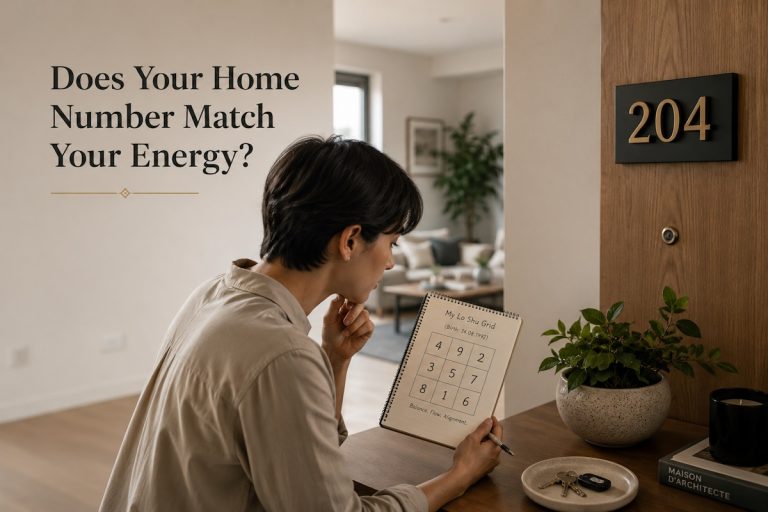
Avoid the trap of superficial remedies. Instead, look for the deeper lo shu grid numbers meaning and how they apply to your specific circumstances. Every property has its own unique energy signature, and every person has a different set of needs based on their feng shui numerology chart. By taking a scientific and balanced approach, you can transform your space into a powerful engine for personal and professional growth. To truly Explore Lo Shu is to take control of the hidden forces that shape your destiny.
Frequently Asked Questions
1. How do I find my personal numbers in the Lo Shu Grid?
Your personal numbers are derived from your full date of birth (Day, Month, Year). Each digit is placed in its corresponding spot in the 3×3 grid. For example, if you were born on the 15th, you would place a 1 in the bottom-middle square and a 5 in the center square. This helps create your unique feng shui numerology chart.
2. What does it mean if a number is repeated many times in my grid?
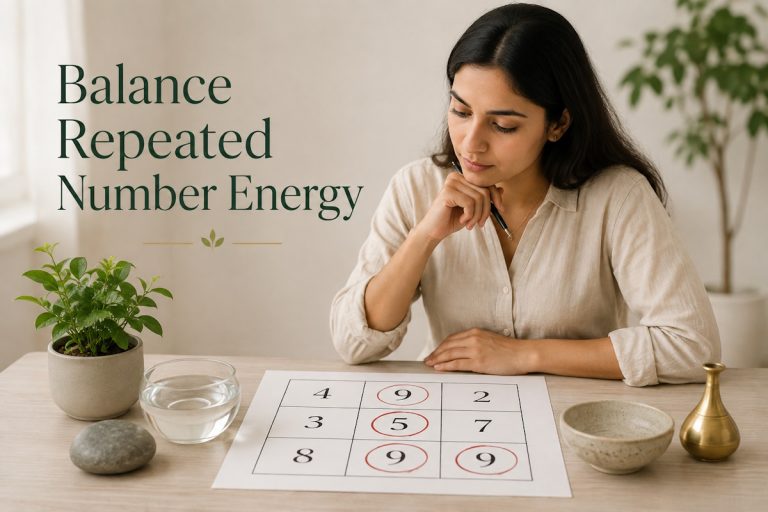
A repeated number indicates an intensification of that specific energy. While this can be a great strength, it can also lead to an imbalance if not managed. For example, multiple 9s might indicate great passion but also a tendency toward a quick temper or impulsiveness. Balancing this through your environment is key.
3. Can the Lo Shu Grid be applied to an office or business?
Yes, the grid is highly effective for commercial spaces. It can help determine the best placement for the CEO’s desk, the finance department, and the marketing team. Aligning the business’s physical layout with the lo shu magic square meaning can significantly enhance productivity and profitability.
4. Are missing corners in an apartment a major Vastu dosha?
Missing corners correspond to missing numbers in the grid, which can represent “missing” luck in certain life areas. However, these are common in modern buildings and can be corrected using advanced Vastu remedies such as pyramids, mirrors, or specific elemental colors to energetically restore the square’s balance.