When you buy a plot, the ground looks empty. No walls, no rooms, no obvious problems. This is exactly why plot-level Vastu matters more than house-level fixes later. Once concrete goes in, your choices shrink fast.
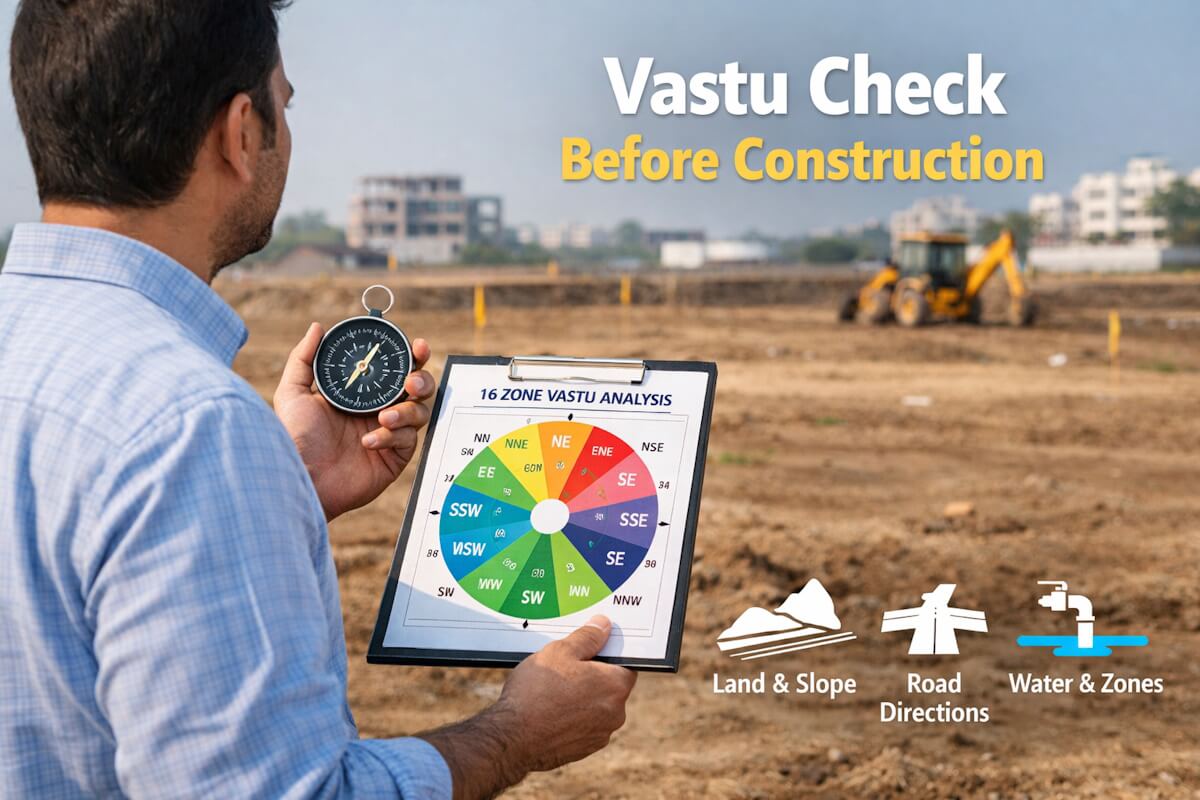
The 16 zone Vastu system helps you read a plot like a map before construction begins. It breaks the land into precise directional zones instead of only the eight directions most people know. This matters for modern plots, irregular shapes, and gated layouts where small mistakes carry long-term effects.
If you are a homeowner planning a house, a buyer choosing between plots, or a realtor advising clients, this approach gives clarity before money is locked in.
Let’s walk through how to apply 16 zone Vastu for plots before construction in a practical, ground-level way.
Why 16 Zones Matter Before Construction
Traditional Vastu talks about North, South, East, West, and their corners. That helps, but it often feels vague when you stand on a real plot with uneven roads, slope issues, or odd boundaries.
The 16 zone system divides each direction into sub-zones. Instead of one North, you get N, NNE, and NNW. Same for all sides.
This gives you answers to questions people ask all the time.
Why does one North-facing plot feel fine while another doesn’t?
Why does water placement work on one site and fail on another?
Why do some plots resist stability even with good construction?
The answer often sits in sub-zone imbalance, not the main direction.
How to Divide a Plot into 16 Zones
Before checking anything, orientation matters.
You need the exact North direction, not a guess. A proper compass reading or site plan with true North marked is non-negotiable. Magnetic drift and road alignment confuse people here.
Once North is fixed, the plot is divided into 16 equal angular segments.
Each zone controls specific aspects of life and construction behavior. Even an empty plot shows signs once you know where to look.
The Northeast Family of Zones (NNE, NE, ENE)
This is the most sensitive part of the plot.
NNE (North-Northeast)
This zone connects with movement of opportunities and external support.
Before construction, check if:
- The land here feels lighter and more open
- No heavy storage, debris, or dumping happens here
- Natural slope moves slightly away from this zone
Roads touching NNE often bring networking benefits if the zone stays clean.
NE (Exact Northeast)
This is the heart of the plot.
Water flow, underground tanks, or natural moisture here are usually supportive. Dry, rocky, or elevated NE often causes delays and mental stress once construction starts.
You want openness here. Even fencing should feel lighter.
ENE (East-Northeast)
This zone affects clarity and decision-making.
Watch for:
- Sharp cuts or missing corners
- Electrical poles or transformers hitting this zone
- Overgrown trees blocking sunlight
Plots with ENE disturbance often lead to repeated plan changes during construction.
The East Zones (ENE, E, ESE)
East controls growth and visibility.
East (Exact East)
Morning sunlight exposure matters more here than shape.
Check:
- Is there a road or open space here?
- Are neighboring buildings casting long shadows?
Blocked East reduces momentum even if other zones are strong.
ESE (East-Southeast)
This zone connects with fire and activity.
Avoid:
- Water bodies
- Borewells
- Low depressions
If the plot naturally dips here, plan elevation correction before construction begins.
The Southeast Family (ESE, SE, SSE)
This side governs energy use, expenses, and action.
SE (Exact Southeast)
This is the fire zone.
Good signs include:
- Slight elevation
- Dry soil
- Exposure to sunlight
Bad signs include underground water veins or marshy soil. These often cause budget overruns later.
SSE (South-Southeast)
This zone impacts consistency and discipline.
Watch for:
- Cracks in soil
- Repeated digging history
- Old pits filled without compaction
Plots with SSE disturbance often feel productive at first and unstable later.
The South Zones (SSE, S, SSW)
South gets misunderstood. It is not bad. It just demands balance.
South (Exact South)
This zone prefers weight.
Good indicators:
- Higher ground
- Solid boundary walls
- Large trees outside the plot
Open South roads are workable only if other zones are strong.
SSW (South-Southwest)
This zone supports long-term holding power.
Avoid:
- Deep slopes
- Missing corners
- Drainage lines cutting through
Investors should watch this zone carefully. Weak SSW often causes resale delays.
The Southwest Family (SSW, SW, WSW)
This is the stability engine of the plot.
SW (Exact Southwest)
This zone anchors wealth and control.
Before construction:
- Ensure maximum elevation here
- Avoid borewells or septic tanks
- Check for soil firmness
Plots that feel heavy here often support multi-story construction better.
WSW (West-Southwest)
This zone governs storage and endurance.
Loose soil or frequent water seepage here leads to structural issues later. Fixing it before foundation saves serious money.
The West Zones (WSW, W, WNW)
West controls gains and completion.
West (Exact West)
Evening sunlight and airflow matter here.
Check if:
- The plot feels boxed in
- There is excessive moisture retention
Good West plots support steady income patterns.
WNW (West-Northwest)
This zone connects with movement and adaptability.
Avoid heavy permanent obstructions here. Light structures work better.
The Northwest Family (WNW, NW, NNW)
This side governs transitions and support systems.
NW (Exact Northwest)
Air movement is key.
Good signs:
- Natural breeze flow
- Open space or road
Bad signs:
- Tall solid walls nearby
- Water stagnation
Residential plots benefit when NW stays light.
NNW (North-Northwest)
This zone influences help from others.
Plots with cuts here often create dependency issues later. Balanced NNW supports teamwork and external assistance.
The North Zones (NNW, N, NNE)
North deals with growth and liquidity.
North (Exact North)
This zone loves openness.
Before construction:
- Keep it clutter-free
- Avoid heavy boundary extensions
- Check if slope moves outward
Commercial buyers should pay extra attention here.
Plot Shape and 16 Zone Compatibility
A perfect rectangle is rare now. What matters is how missing or extended portions fall within zones.
Missing NE, SW, or SSE zones create deeper issues than missing mid-zones. Extensions in SE or SW need correction planning before layout finalization.
Don’t reject a plot blindly. Assess which zones are affected and whether corrections are possible at ground level.
Roads, Slopes, and Corners in 16 Zone Vastu
Roads touching different zones behave differently.
- NE roads support growth
- SE roads increase activity and spending
- SW roads need strong internal elevation
Slope direction matters more than people think. A plot sloping from SW to NE usually supports smoother construction flow.
Corner plots need extra attention since two zones stay exposed.
Why Plot-Level 16 Zone Vastu Matters Across Countries
Plot-related Vastu issues show up globally, especially where land is expensive and construction decisions are irreversible. The mistakes may look different, but the consequences follow similar patterns.
In United States, buyers often focus on plot size, zoning permission, and resale value while ignoring orientation and sub-zone behavior. Corner plots with open South-West or disturbed North-East zones are common. Construction moves fast, but homeowners later face stability issues, repeated renovations, or difficulty settling into the house despite good design.
In United Arab Emirates, villa plots in gated communities are tightly regulated. Buyers cannot shift boundaries, roads, or service lines. When transformer rooms, internal roads, or drainage lines cut through sensitive 16 zones like NE or SSE, residents often experience delays, cost overruns, or long-term discomfort that cannot be corrected after construction.
In South Africa, uneven terrain and natural slopes are common. Plots frequently slope the wrong way or hold moisture in critical zones like SE or WSW. Builders who ignore zone-based slope behavior often face foundation stress, water issues, or repeated maintenance problems years after completion.
Across these regions, one lesson stays consistent. Once construction begins, zone-level corrections become limited and expensive. Plot-level 16 Zone analysis helps buyers and builders spot long-term risks early, when adjustments are still practical.
Borewells, Septic, and Underground Planning
This is where early planning saves future regret.
- Borewells work best in NNE, NE, or ENE
- Septic zones suit WNW or S
- Underground tanks avoid SE and SW
Decide these before architectural drawings begin. Shifting later is messy and expensive.
High-Rise and Gated Community Plots
If you are buying within a layout or tower base plot, you still check zones.
- Entry gate location
- Open spaces inside the compound
- Overhead tanks and transformer rooms
Your individual plot zone balance still affects outcomes, even inside large projects.
Final Thoughts for Buyers and Builders
16 zone Vastu for plots before construction is not about fear or superstition. It is about reading land behavior before locking yourself into concrete decisions.
Spend time on the plot. Walk it. Stand in each zone. Notice soil, slope, light, and airflow. These signs show up before charts do.
If something feels off, it usually is. Fixing it early costs planning. Fixing it later costs peace.
If you’re serious about building something that lasts, this step is not optional.