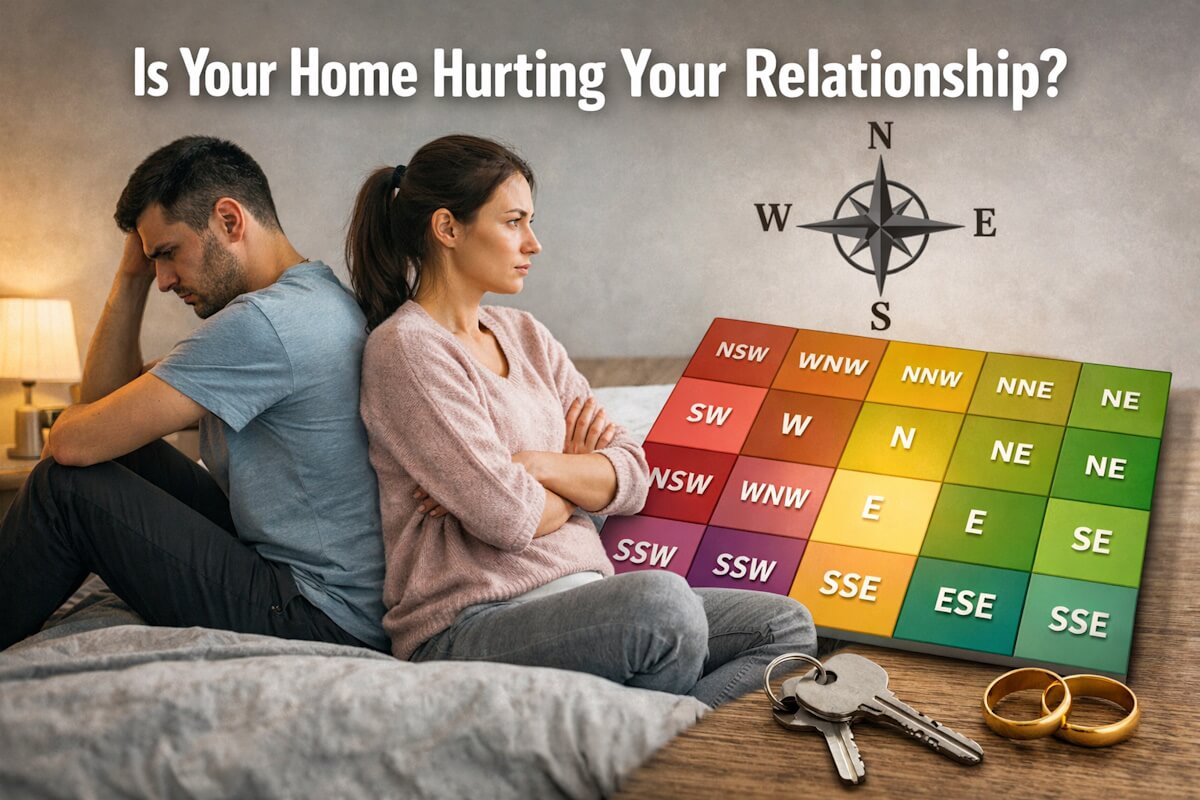
You and your partner can be doing everything “right” on the surface and still feel stuck. Conversations go nowhere. Small issues turn into long silences. Intimacy fades. Respect feels uneven. When this keeps repeating inside the same home, it is worth looking at the space itself, not just the people in it.
This article breaks down how relationship and marriage problems often show up through the lens of 16 Zone Vastu. Not theory. Not spiritual fluff. Real patterns seen in apartments, villas, duplex homes, and even rented flats where couples feel disconnected without knowing why.
If you live together and something feels off, read this slowly. You might recognize your home in it.
Why relationships react strongly to space
Relationships are emotional, physical, and mental. Your house constantly affects all three. Bedrooms influence intimacy. Kitchens affect communication. Toilets impact respect and patience. Storage areas quietly carry old emotional weight.
In 16 Zone Vastu, each direction holds a specific role. When that role is disturbed, the impact often shows up first in close relationships. Marriage becomes the pressure point.
You may think it is stress from work or money. Sometimes it is. Many times, the space is amplifying it.
The South-West zone and emotional stability between partners
South-West controls stability, commitment, and emotional grounding. When this zone is weak or misused, marriages feel shaky even if the bond is strong.
Common real-life problems linked to South-West imbalance:
- You feel insecure in the relationship for no clear reason
- One partner dominates while the other withdraws
- Fear of separation even during minor conflicts
- Repeated trust issues without evidence
Typical layout mistakes:
- Master bedroom missing in South-West
- Toilet or kitchen placed here
- Lightweight furniture and empty corners
- Cracked walls or water seepage
When South-West lacks weight and structure, the relationship lacks emotional safety. Couples argue more because neither feels fully anchored.
If your master bedroom is here and feels calm, heavy, and private, it often acts like glue for the marriage.
South-East zone and constant arguments
South-East represents fire, emotions, and impulsive reactions. This zone affects how couples fight and how quickly anger rises.
When South-East is disturbed:
- Arguments escalate fast
- Small issues turn explosive
- One partner becomes reactive or aggressive
- Emotional outbursts followed by guilt
Common triggers:
- Bedroom in South-East
- Red or overly bright colors in sleeping areas
- Kitchen missing or wrongly placed
- Electronic clutter and heat buildup
Couples sleeping in South-East often report passion mixed with chaos. Attraction stays strong, peace disappears. Over time, this leads to emotional exhaustion.
If this is your bedroom, you may notice that fights happen late at night or over trivial matters.
North-West zone and instability in commitment
North-West governs movement, uncertainty, and change. It plays a major role in commitment patterns.
Relationship signs of North-West imbalance:
- On-off relationships
- One partner avoids responsibility
- Third-party interference
- Frequent thoughts of separation or escape
Common layout issues:
- Master bedroom in North-West
- Excessive windows and airflow
- Mirrors reflecting the bed
- Too many travel-related items
This zone makes energy restless. Couples living here often feel connected but unsettled. One foot always feels outside the relationship.
If your marriage feels like it never fully settles, North-West deserves attention.
North-East zone and emotional disconnect
North-East is the mind and emotional clarity zone. When disturbed, couples stop understanding each other.
Common relationship symptoms:
- Miscommunication
- Feeling unheard or unseen
- Emotional distance without anger
- Silent resentment
Typical Vastu mistakes:
- Toilet in North-East
- Heavy storage blocking the corner
- Dark colors and clutter
- No natural light
Couples often say, “We don’t fight, we just don’t talk.” This usually traces back to North-East issues.
A clear, open North-East supports emotional honesty. When blocked, partners retreat inward.
East zone and respect between partners
East governs growth, respect, and how partners see each other.
Signs of East imbalance:
- Loss of mutual respect
- Constant criticism
- One partner feeling undervalued
- Ego clashes
Common causes:
- Blocked windows
- Heavy wardrobes in East
- Bathroom or store room
- Dirty or unused space
Respect erosion kills marriages quietly. East-related issues show up slowly and feel personal, even when they are environmental.
West zone and dissatisfaction
West relates to fulfillment and expectations.
When this zone is disturbed:
- One partner feels unfulfilled
- Comparison with others
- Constant dissatisfaction
- Complaints without solutions
Common problems:
- Bedroom cluttered with storage
- Unused or dark spaces
- Broken items left unattended
West issues create the feeling that “something is missing” in the relationship. Even happy moments feel incomplete.
South zone and control struggles
South influences discipline and authority.
Relationship patterns here include:
- Power struggles
- Stubbornness
- Refusal to compromise
- Silent dominance
Typical mistakes:
- Open entrances
- Lightweight furniture
- Excessive red or dark tones
When South energy becomes aggressive, partners stop listening and start competing.
North zone and emotional availability
North is linked to openness and emotional exchange.
Imbalance signs:
- Emotional withdrawal
- Overthinking
- One-sided emotional effort
Common causes:
- Blocked pathways
- Excess storage
- No movement or airflow
North problems often show up when one partner feels they are carrying the relationship alone.
Kitchens, toilets, and their hidden impact on marriage
Many couples focus only on bedrooms. Big mistake.
Kitchen issues affect communication. A badly placed kitchen creates misunderstandings and sharp words.
Toilets affect respect. Toilets near bedrooms or in sensitive zones slowly erode dignity and patience between partners.
Repeated patterns seen in homes:
- Toilet sharing a wall with bed
- Kitchen in North-East or South-West
- Leaking taps causing subconscious stress
These things sound minor. Over time, they hit deep.
Why 16 Zone Vastu explains problems that counseling misses
Counseling looks at behavior. 16 Zone Vastu looks at triggers that never switch off.
If you argue in the same rooms.
If emotional distance feels stronger at home than outside.
If vacations improve your bond but it falls apart again after returning.
That is not coincidence.
Space keeps repeating the same emotional cues.
Can corrections help without moving homes?
Yes, in many cases.
Simple shifts like:
- Changing sleeping direction
- Reducing clutter in key zones
- Adjusting room usage
- Improving light and weight balance
These changes often calm the relationship without a single conversation.
Not magic. Just environment working with you instead of against you.
Why These Relationship Patterns Repeat Across Countries
Relationship stress linked to space is not limited to one culture. The same zone-related issues appear in modern homes across different countries, shaped by lifestyle and housing patterns.
In United States, many couples live in large homes where bedrooms and workspaces are spread without emotional zoning. Home offices often cut into sleeping areas, weakening intimacy and increasing emotional distance. Couples often feel disconnected even while sharing the same house.
In Australia, open-plan living is common. While it feels spacious, poor zone boundaries often overstimulate emotions. Bedrooms falling in South-East or North-West zones frequently lead to frequent arguments, impatience, and unresolved conflicts.
In United Arab Emirates, homes are often well-built but heavily climate-controlled. Strong fire zones combined with long work hours create emotional exhaustion. Power struggles and lack of emotional availability between partners are common patterns.
Across these regions, the takeaway stays the same. When zones supporting stability, communication, and emotional grounding are disturbed, relationships absorb the pressure first.
When relocation becomes necessary
Sometimes the layout is too extreme. Examples include:
- Toilet exactly in North-East
- Missing South-West
- Entrance cutting through critical zones
In such homes, emotional stress keeps returning. Couples feel relief only when they step out.
Knowing this early saves years of frustration.
What to do next
Walk through your home with fresh eyes. Notice where you fight. Notice where you avoid talking. Notice where you feel calm together.
Your house is already telling you the story.
16 Zone Vastu simply gives it language.
If you are serious about fixing relationship or marriage problems, do not look only at words and promises. Look at walls, corners, directions, and usage.
Your relationship lives there too.