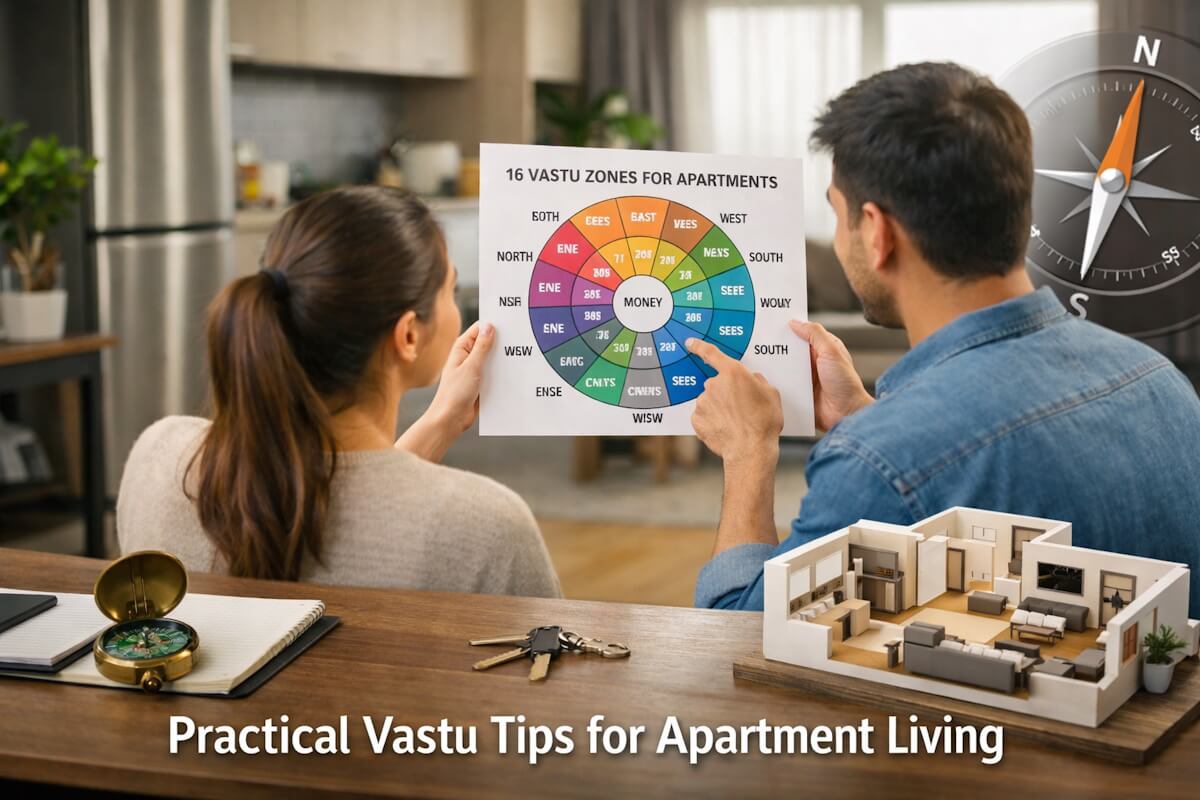
If you live in an apartment or are planning to buy one, this question probably crossed your mind at some point. You hear about 16 Zone Vastu from consultants, YouTube videos, or builders using it as a selling line. Then reality hits. Your flat is 800 or 1,100 square feet. Walls are fixed. Balconies are where they are. You do not control the plot shape or the building orientation.
So you wonder.
Does 16 Zone Vastu really apply to apartments and small flats?
Or is it meant only for independent houses and villas?
Let’s break this down in a practical way, without hype or fear-based talk. Just real guidance that helps you decide what to follow and what to ignore.
Understanding What 16 Zone Vastu Actually Means
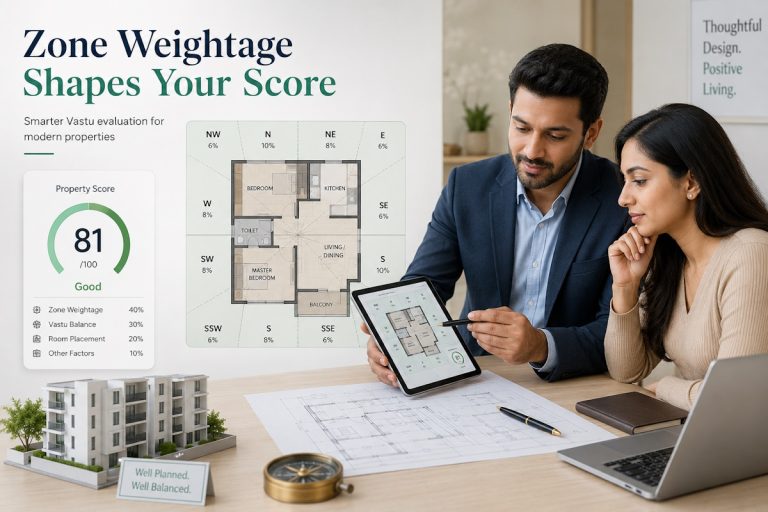
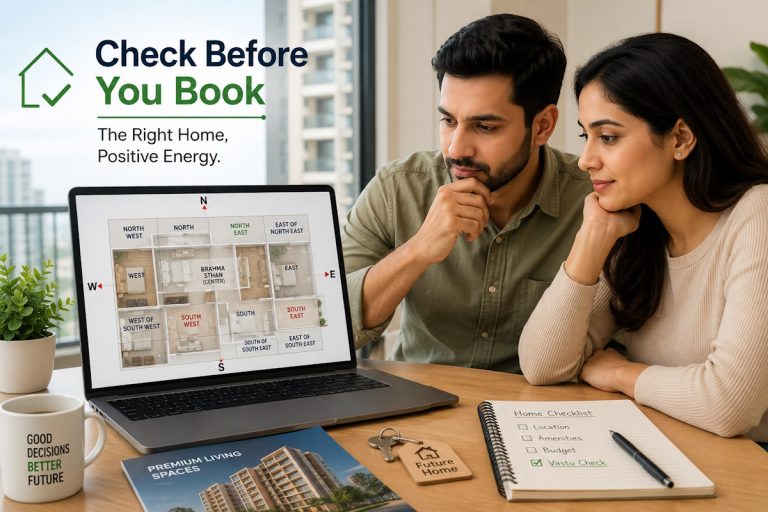
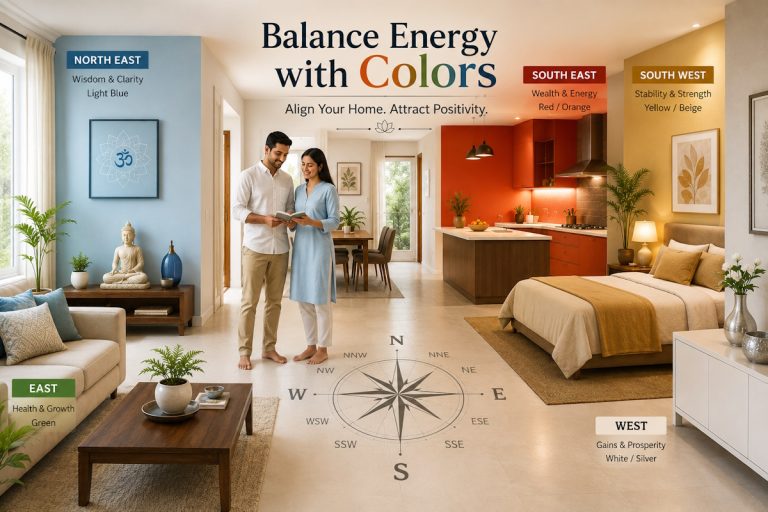
Traditional Vastu divides a space into directions like North, South, East, and West. Over time, this expanded into eight directions. The 16 Zone approach goes one step further. Each direction is split again, creating sixteen micro-zones such as NNE, ENE, ESE, SSE, and so on.
Each of these zones is linked with specific life themes. Money flow, health, relationships, stability, mental peace, and growth all get assigned zones. On paper, it looks very detailed and precise.
In independent houses, this system makes more sense. You usually have control over room placement, entry points, open spaces, and structural changes. In apartments, things get tricky fast.
That does not mean it is useless. It just means the way you apply it has to change.
The Biggest Limitation in Apartments
Apartments are vertical homes. Your flat sits inside a larger structure that already decided many Vastu factors before you ever saw the floor plan.
You do not control:
- The building’s plot orientation
- Staircase and lift positions
- Structural walls
- Neighboring flats and shared walls
Most 16 Zone Vastu rules assume open land planning first and construction later. Apartments work in reverse.
Trying to apply every rule blindly often creates confusion or stress. Some people end up thinking their flat is doomed because the kitchen sits in a “wrong” sub-zone or the toilet touches a sensitive angle.
That mindset helps no one.
What Still Works in Small Flats
Even with limitations, some parts of 16 Zone Vastu remain useful when handled smartly.
The key is scale and priority.
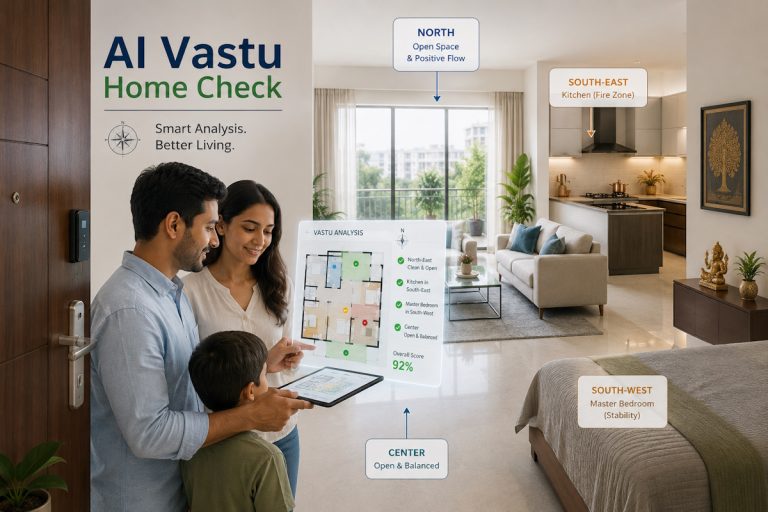
In apartments, Vastu works more like internal zoning rather than plot-based planning.
Rooms still hold weight. Furniture placement still matters. Usage of spaces matters a lot.
For example, if your living room covers multiple zones, you can still activate the better zones through seating, lighting, and movement patterns.
You are not redesigning the building. You are tuning the space you actually live in.
Entrance Direction and Micro-Zones
Main door direction is one of the most discussed parts of 16 Zone Vastu. In apartments, this is usually the first and last thing people can control.
Micro-zones like ENE or NNW are often labeled as strong or weak based on theory. In reality, the impact depends on how the entrance behaves.
Ask simple questions:
- Is the entry cluttered?
- Is it dark?
- Does it open straight into a toilet or kitchen?
- Is there airflow?
A slightly off micro-zone with good light, cleanliness, and smooth movement often performs better than a so-called perfect zone blocked by junk and poor lighting.
In small flats, function beats theory.
Bedrooms and the 16 Zone Debate
People worry a lot about bedroom placement in micro-zones. This is where fear usually creeps in.
In apartments, bedrooms often overlap multiple zones. That alone breaks strict 16 Zone rules.
Instead of stressing over exact compass degrees, focus on usage inside the room.
Where is the bed placed?
Which wall supports your head?
Is there heavy storage above the bed?
Is the room calm or noisy?
If your master bedroom falls partly in South or Southwest, that is usually fine. Even if it leaks into a sub-zone considered average, stability matters more than precision here.
Children’s rooms and guest rooms can tolerate more flexibility.
Kitchen Placement in Small Flats
Kitchens cause the most panic.
In 16 Zone Vastu, fire-related zones are discussed in detail. In apartments, kitchens are often squeezed into corners due to plumbing lines.
If your kitchen is not in an ideal micro-zone, look at how fire energy behaves inside it.
Check these points:
- Stove placement and direction
- Sink and stove separation
- Ventilation quality
- Clutter around cooking area
A well-maintained kitchen with clear fire and water separation performs better than a technically correct zone filled with chaos.
You cook daily. Energy follows action.
Toilets and Bathrooms in Micro-Zones
This is another area where theory clashes with reality.
Most apartments come with fixed toilet positions that cannot move. Worrying endlessly about toilet placement in a specific sub-zone only creates anxiety.
Instead, manage what you can control.
Keep toilets dry, ventilated, and clean. Avoid leaks. Keep doors shut when not in use. Use light colors and proper exhaust fans.
These steps matter more in apartments than chasing perfect zoning.
Living Room and Multi-Zone Overlap
Living rooms in apartments usually sit across several zones. That is not a flaw. It is normal.
This space handles movement, conversation, relaxation, and social energy. It should feel open and breathable.
Use zoning within the room:
- Seating in calmer zones
- TV and electronics in heavier zones
- Open space where movement flows naturally
You are shaping behavior, not redrawing walls.
Balconies and Openings
Balconies often act as pressure valves in apartments. Their direction influences light, airflow, and mood.
A balcony in East or North brings in freshness. South or West balconies need shading and heat control.
Even if a balcony sits in a less favored micro-zone, plants, curtains, and seating use can soften its effect.
Do not seal balconies completely unless safety forces you to. Air matters more than textbook rules here.
What 16 Zone Vastu Cannot Fix in Apartments
This part needs honesty.
16 Zone Vastu cannot override:
- Poor construction quality
- Structural defects
- Bad maintenance
- Legal or layout issues
- Noise pollution or lack of sunlight
Some people expect Vastu tweaks to fix everything. That expectation leads to disappointment.
Vastu supports living quality. It does not replace common sense or good design.
When 16 Zone Vastu Is Still Worth Applying
There are situations where this system helps even in apartments.
- When choosing between two similar flats
- When doing interior renovation
- When placing heavy furniture or storage
- When planning a home office or study
- When correcting energy flow without breaking walls
Used selectively, it becomes a guide rather than a rulebook.
Mistakes People Make with 16 Zone Vastu in Flats
One common mistake is applying land-based rules to vertical living. Another is obsessing over degrees measured on phone apps without understanding magnetic variation or building orientation.
Some people also mix multiple Vastu systems and end up confused. Stick to one approach and apply it lightly.
Overcorrection causes more stress than benefit.
A More Realistic Way to Use 16 Zone Vastu
Think of 16 Zone Vastu as a lens, not a verdict.
Use it to:
- Improve placement decisions
- Understand why certain areas feel heavy or light
- Balance daily activities with space behavior
Ignore parts that demand structural changes you cannot make.
You live in the flat. The flat should support you, not control you.
So, Is 16 Zone Vastu Applicable for Apartments?
Yes, it is applicable.
No, it should not be followed rigidly.
In apartments and small flats, 16 Zone Vastu works best when adapted. Prioritize light, airflow, cleanliness, and sensible usage over strict compass precision.
If your home feels stable, restful, and functional, you are already doing many things right.
The goal is not perfection. The goal is comfort that lasts.
If you are buying, renovating, or simply trying to feel better in your space, use Vastu as support, not pressure.
Your home should feel like yours. That matters more than any grid.