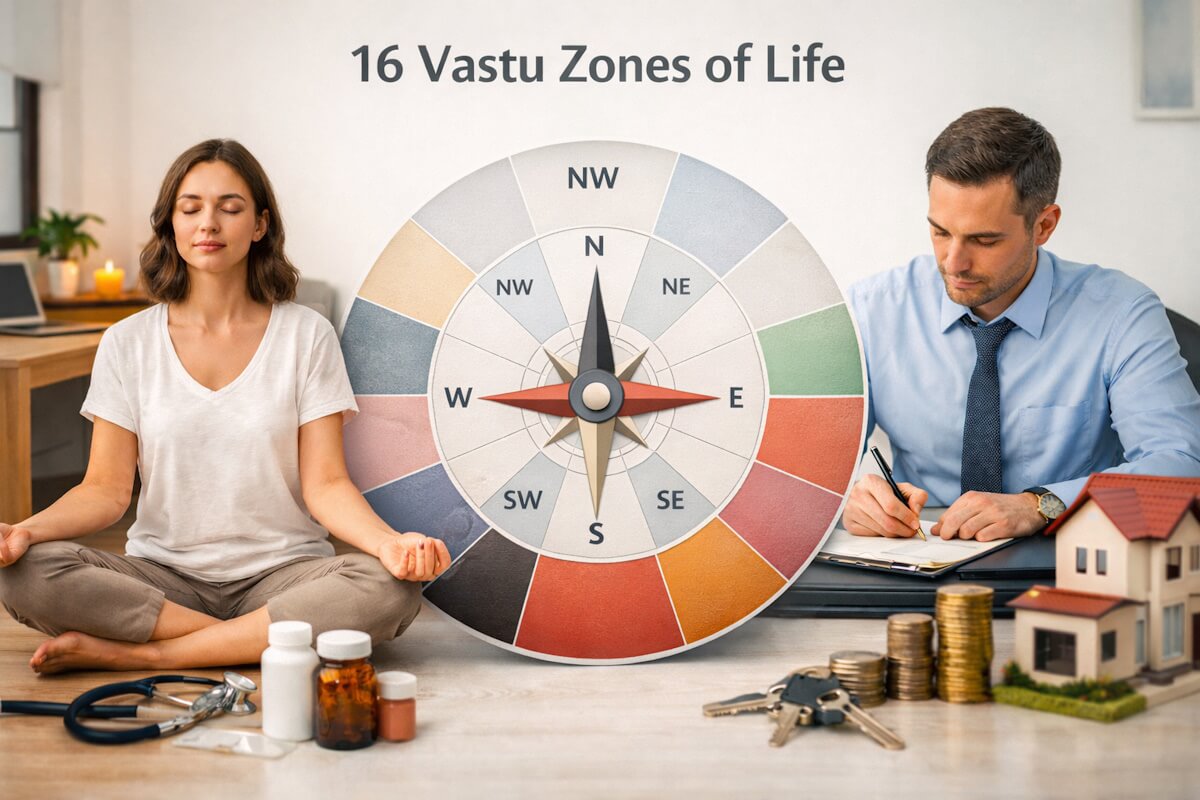
Your home is not just walls and furniture. It is a working system. Every direction inside it reacts differently to how you live, think, earn, rest, and grow. Vastu Shastra explains this through the concept of 16 zones, also called 16 directions. Each one controls a specific area of life because each carries a different natural energy pattern.
If you have ever felt stuck in one part of life even though everything looks fine on paper, the reason often sits quietly in one corner of your home. This article breaks down why each of the 16 zones controls a different life aspect and how that shows up in real homes, apartments, and commercial spaces.
No theory for theory’s sake. Just practical understanding you can actually use.
Understanding the 16 Zones Without Overthinking It
Most people know the 8 main directions. North, South, East, West, and the four corners. Vastu goes deeper by dividing these into 16 precise zones. Each zone is linked to a natural element, a planetary influence, and a type of human activity.
Why does this matter?
Because life itself is layered. Career, money, health, relationships, focus, sleep, reputation, stability, and growth don’t run on the same energy. A single direction cannot handle everything. That is why nature spreads influence.
Your house copies that system whether you follow Vastu or not.
North Zone – Cash Flow and Opportunities
The North zone governs income movement, business growth, and fresh opportunities. This is not about savings. It is about money coming in regularly.
In real homes, when the North is blocked with heavy storage, junk, or toilets, people often complain that money comes in but never stays. Or work keeps changing without stability.
If you run a business from home and struggle with receivables or delayed payments, check this zone first. A clean, open North supports smoother financial flow. Even in apartments, this direction reacts strongly.
North-Northeast – Mental Clarity and Decision-Making
This zone handles clarity, intuition, and judgment. It decides how clearly you think under pressure.
People living with clutter, dark colors, or electronic overload here often feel confused, anxious, or stuck between choices. Overthinking becomes normal.
In modern homes, this zone is often sacrificed for storage or extra cabinets. That is where trouble begins. Keep this area light and calm. It helps with focus, exams, interviews, and business decisions.
Northeast – Health, Healing, and Inner Stability
The Northeast is the most sensitive zone. It influences physical health, emotional balance, and recovery.
When this zone carries weight like kitchens, heavy wardrobes, or staircases, residents often report chronic health issues that refuse to fully resolve. Medical tests look normal but energy feels low.
This zone needs openness. Light colors. Clean air. Even a small prayer corner or quiet seating changes the feel of the whole home.
If health issues keep recurring without clear reasons, look here before blaming lifestyle alone.
East-Northeast – Learning and New Beginnings
This zone controls how you absorb new information and how easily new phases start.
Students struggling to concentrate often have toilets or clutter here. People planning startups or new ventures feel unexplained resistance when this zone is disturbed.
In apartments, this corner is commonly used for shoe racks or storage. That blocks fresh momentum. Even small changes here support learning, creativity, and smoother transitions.
East Zone – Social Image and Growth
East governs reputation, confidence, and how others perceive you.
If your efforts go unnoticed or people misunderstand your intentions, check this zone. Heavy curtains, dark walls, or blocked windows here reduce visibility in life.
For professionals, this affects promotions and recognition. For business owners, brand image and public trust.
Natural light here is not decoration. It is fuel.
East-Southeast – Energy Levels and Motivation
This zone handles drive, enthusiasm, and physical energy.
People who feel lazy, drained, or unmotivated despite sleeping well often have imbalance here. Kitchens placed incorrectly or cluttered electrical zones cause energy dips.
In offices, this zone affects employee enthusiasm. In homes, it decides whether mornings feel easy or exhausting.
Southeast – Fire, Money Use, and Spending Habits
The Southeast is linked to fire energy. It governs expenses, spending discipline, and how money is used.
If income is fine but savings never grow, or expenses keep popping up, this zone usually needs correction.
Kitchens belong here because fire energy works best in this direction. When kitchens move elsewhere, spending patterns often go out of control without obvious reasons.
This zone teaches discipline. When balanced, money feels easier to manage.
South-Southeast – Risk Taking and Courage
This zone controls bravery, initiative, and risk appetite.
When balanced, it supports calculated risks and bold moves. When disturbed, people either become overly fearful or reckless.
In real life, this shows up as hesitation to start projects or sudden losses due to impulsive decisions.
Heavy water elements or toilets here weaken courage. Proper balance steadies confidence.
South Zone – Stability and Responsibility
South governs discipline, responsibility, and long-term stability.
People lacking structure or struggling to stick to routines often have weak South zones. This affects career consistency and family responsibilities.
Bedrooms here support restful sleep when planned correctly. But water features or open spaces weaken grounding energy.
This zone makes you dependable. Without it, life feels scattered.
South-Southwest – Physical Strength and Endurance
This zone influences stamina, immunity, and physical resilience.
Repeated fatigue, slow recovery, or body aches with no clear cause often relate here.
Heavy structures support this zone. Lightness weakens it. That is why open balconies or water bodies here cause physical drain over time.
For elderly residents, this zone becomes critical.
Southwest – Relationships and Control
Southwest controls relationships, authority, and emotional security.
If family conflicts persist or one person dominates unfairly, check this zone. Incorrect bedrooms or missing weight here cause imbalance in power dynamics.
Master bedrooms belong here for a reason. It stabilizes relationships when used properly.
In business spaces, this zone affects leadership control.
West-Southwest – Anxiety and Overthinking
This zone affects mental pressure and stress handling.
When disturbed, people experience constant worry, sleep disturbances, or emotional heaviness.
In apartments, this zone often houses toilets or clutter. Over time, it creates psychological weight.
Keeping this area clean and grounded reduces mental noise.
West Zone – Gains and Rewards
West governs profits, returns, and rewards for effort.
If hard work does not translate into results, look here.
Blocked West zones delay gains. Open and balanced West zones help results catch up with effort.
In commercial spaces, this zone affects closing deals and client retention.
West-Northwest – Networking and Support
This zone controls friendships, partnerships, and helpful connections.
If you feel unsupported or people back out at the last moment, this zone needs attention.
Overloaded storage or dark colors here weaken external support. Proper airflow improves collaboration.
For freelancers and consultants, this zone quietly shapes success.
Northwest – Movement and Change
Northwest governs travel, transfers, job changes, and adaptability.
People stuck in unwanted situations often have imbalance here. Others face excessive instability when this zone is too open.
Rental properties respond strongly to this zone. Frequent tenant changes often link here.
Balance is key. Neither extreme works.
North-Northwest – Communication and Deals
This zone affects communication, negotiations, and agreements.
Misunderstandings, legal issues, or failed discussions often trace back here.
In offices, this zone influences client conversations. In homes, it affects family discussions.
Clarity here supports smoother communication without conflict.
Why the 16 Zones Work Together
Each zone handles one slice of life, but life never runs in isolation. A blocked Northeast affects health, which then affects work, which then affects money. That chain reaction is why fixing one corner sometimes improves multiple areas.
Ignoring zones does not stop them from working. It only removes your control.
You do not need to rebuild your home. Small shifts matter. Decluttering, light, placement changes, and awareness already start correction.
Before blaming luck or timing, look at your space.
Your home speaks. The 16 zones are its language.
Once you understand which zone controls what, decisions become easier. And life starts responding with less resistance.
If you want lasting change, start with direction.